
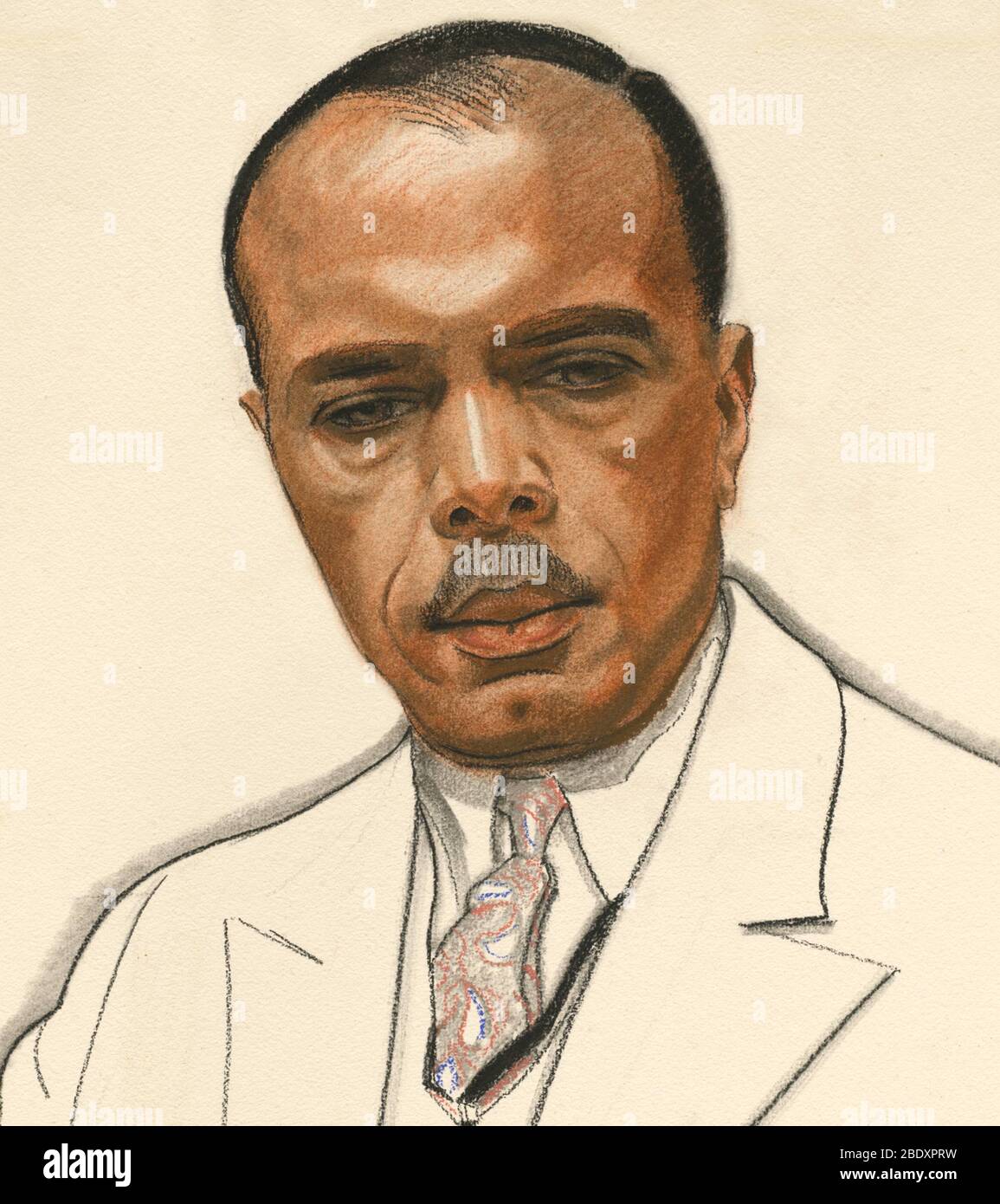
James Weldon Johnson stands as one of the most versatile, influential, and accomplished figures in American history, leaving an indelible mark on literature, diplomacy, and the civil rights movement. Born in Jacksonville, Florida, in 1871, Johnson navigated multiple professional worlds during a turbulent era of racial segregation and disenfranchisement. As a diplomat, an anthologist, a pioneering poet of the Harlem Renaissance, and a chief executive of the National Association for the Advancement of Colored People (NAACP), Johnson utilized his profound intellect and artistic gifts to systematically challenge racial injustice. His life's work demonstrated how cultural expression and political activism could intersect to reshape national identity and secure fundamental rights for African Americans.
Early Life, Education, and Formative Years in Florida
James Weldon Johnson was born on June 17, 1871, to parents who had migrated to Florida from the Bahamas. His mother, Helen Dillet Johnson, worked as a musician and schoolteacher, while his father, James Johnson, served as the head waiter at a prominent hotel. This household environment fostered a deep appreciation for education, music, and the arts from an early age. Johnson attended Stanton School, a segregated institution in Jacksonville where his mother taught, before enrolling at Atlanta University. At Atlanta University, he pursued a rigorous classical education, earning his bachelor's degree in 1894 and later returning for graduate studies.
Following the completion of his formal education, Johnson returned to Jacksonville to serve as the principal of Stanton School. Under his leadership, the school expanded from a primary institution into a grammar school that successfully incorporated high school grades, reflecting his commitment to advancing educational opportunities for Black youth in the South. During this period, Johnson also founded The Daily American, a short-lived daily newspaper targeted at the African American community. Although financial pressures forced the newspaper to close after a few months, this early journalistic enterprise honed his writing skills and sharpened his political awareness regarding the realities of the Jim Crow South.
Musical Collaboration and Entry into New York Literary Circles
In 1901, Johnson made a pivotal life decision, relocating to New York City alongside his brother, J. Rosamond Johnson, and their frequent collaborator, composer Bob Cole. Together, the trio formed a prolific songwriting team that achieved significant success within the vibrant theatrical world of Broadway and Tin Pan Alley. They composed numerous popular songs for musical comedies, capturing the contemporary appetite for syncopated rhythms while subtly pushing the boundaries of how African American artists were perceived in mainstream entertainment.
Among their most enduring creations was "Lift Every Voice and Sing," written in 1900 for a celebration of Abraham Lincoln's birthday at the Stanton School, where it was originally performed by a choir of 500 schoolchildren. Set to music by J. Rosamond Johnson, James Weldon Johnson’s inspiring lyrics transformed the composition into an anthem of resilience and hope. Decades later, the NAACP officially recognized the song as the "Negro National Anthem," and it remains a foundational cultural touchstone within African American communities and civil rights history.
Diplomatic Service and Global Perspectives
Seeking broader professional horizons and financial stability, Johnson entered the United States consular service in 1906, embarking on a diplomatic career under the administration of President Theodore Roosevelt. His appointments took him far from the domestic racial strife of the United States, offering him a unique vantage point on international affairs. Johnson served as the U.S. consul in Puerto Cabello, Venezuela, from 1906 to 1909, and subsequently as the consul in Corinto, Nicaragua, from 1909 to 1912.
His tenure in Nicaragua coincided with a period of severe political instability and armed rebellion against the regime of President Adolfo Díaz. Johnson managed complex diplomatic crises, coordinated the protection of American interests, and maintained detailed, insightful journals documenting United States military intervention in Central America. Although his diplomatic service provided valuable administrative experience and financial security, Johnson ultimately found that his political ambitions and racial consciousness drew him back toward the domestic struggle for civil rights, prompting his resignation from the consular service in 1913.
Literary Contributions and the Harlem Renaissance
Upon returning to the United States, Johnson immersed himself in the burgeoning cultural movement known as the Harlem Renaissance, emerging as one of its intellectual architects, mentors, and most respected writers. His literary output spanned multiple genres, including poetry, autobiography, sociological commentary, and cultural anthologies that sought to preserve and elevate African American artistic heritage.
Major Literary Works and Cultural Impact
Johnson's literary milestone arrived anonymously in 1912 with the publication of his groundbreaking novel, The Autobiography of an Ex-Coloured Man. Written during his time in Nicaragua, the novel explores the complex psychological and social dimensions of racial identity through the narrative of a light-skinned protagonist who can "pass" as white. The book offered a devastating critique of American racial hypocrisy while providing a nuanced examination of African American music, culture, and survival strategies. Although initially published anonymously to avoid controversy, the book was later reissued under Johnson's name in 1927, cementing his reputation as a visionary novelist.
As a poet, Johnson utilized both traditional poetic forms and dialect verse to capture the depth of Black experiences. His 1927 collection, God's Trombones: Seven Negro Sermons in Verse, stands as his masterwork in poetry. In this collection, Johnson transformed traditional folk sermons of traditional Black preachers into soaring literary verse, demonstrating that the vernacular and spiritual heritage of the rural South possessed profound artistic dignity. Furthermore, his editorial work, including The Book of American Negro Poetry (1922) and two volumes of spirituals, served to codify and validate the immense contributions of Black artists to the broader landscape of American literature.
| Year | Title | Genre | Significance |
|---|---|---|---|
| 1912 | The Autobiography of an Ex-Coloured Man | Novel | Explores racial passing, identity, and American prejudice. |
| 1922 | The Book of American Negro Poetry | Anthology | Established the legitimacy of African American poetic voices. |
| 1927 | God's Trombones: Seven Negro Sermones in Verse | Poetry | Elevates traditional folk sermons into high literary art. |
| 1933 | Along This Way | Autobiography | Details his multifaceted life, career, and civil rights activism. |
Leadership at the NAACP and Anti-Lynching Advocacy
Johnson’s transition from artist and diplomat to full-time civil rights organizer began in earnest in 1916, when he joined the NAACP as a field secretary. Working alongside executive secretary John R. Shillady and other civil rights pioneers, Johnson traveled extensively across the United States to investigate racial violence, establish new local branches, and mobilize grassroots resistance against Jim Crow laws. His organizational acumen significantly expanded the reach and influence of the NAACP during a period characterized by intense racial hostility and the resurgence of the Ku Klux Klan.
In 1920, Johnson achieved a historic milestone by becoming the first African American executive secretary of the NAACP. Under his dynamic leadership, the organization spearheaded some of the most aggressive legislative and legal battles of the era. Most notably, Johnson orchestrated the nationwide campaign for the Dyer Anti-Lynching Bill. Although filibustered and defeated in the United States Senate by Southern politicians, this landmark legislative effort brought national attention to the horrific reality of racial terror lynching, mobilized public opinion, and laid the crucial legal and political groundwork for future civil rights legislation.
Educational Leadership and Final Years
After stepping down from his executive role at the NAACP in 1930, Johnson transitioned into academia, accepting a professorship of creative literature and writing at Fisk University in Nashville, Tennessee. As the first holder of the Adam K. Spence Chair, Johnson dedicated his final years to mentoring a new generation of Black writers, intellectuals, and activists. He encouraged his students to ground their artistic creations in cultural authenticity while remaining deeply engaged with the social and political struggles of their communities.
In addition to his teaching responsibilities, Johnson continued to write, publishing essays, critical commentary, and his comprehensive autobiography, Along This Way, in 1933. His life tragically ended on June 26, 1938, when a train struck the car he was driving in Wiscasset, Maine. His sudden death elicited widespread mourning across the nation, with thousands attending memorial services in Harlem and Jacksonville to honor a man who had dedicated his entire existence to the advancement of human dignity, artistic excellence, and racial equality.
Frequently Asked Questions
What is James Weldon Johnson best known for?
James Weldon Johnson is best known for writing the lyrics to "Lift Every Voice and Sing," often called the "Negro National Anthem," and for serving as the first African American executive secretary of the NAACP. He was also a leading figure of the Harlem Renaissance, a diplomat, and the author of The Autobiography of an Ex-Coloured Man.
How did James Weldon Johnson contribute to the Harlem Renaissance?
Johnson contributed to the Harlem Renaissance both as a writer and as a cultural critic. Through his anthologies, such as The Book of American Negro Poetry, and his own poetry collection, God's Trombones, he championed African American artistic expression, validated vernacular culture, and mentored younger writers during a pivotal cultural awakening.
What was the significance of the Dyer Anti-Lynching Bill?
The Dyer Anti-Lynching Bill, heavily championed by Johnson during his tenure as executive secretary of the NAACP, sought to make lynching a federal crime and hold local law enforcement accountable for failing to protect prisoners from racial mobs. Although blocked by Southern senators, the campaign permanently thrust the horror of lynching into the national spotlight.
Did James Weldon Johnson serve in government?
Yes. Before his prominent career in civil rights activism and literature, Johnson served in the United States diplomatic corps. President Theodore Roosevelt appointed him as the U.S. consul in Puerto Cabello, Venezuela (1906–1909) and later in Corinto, Nicaragua (1909–1912).
What themes are explored in The Autobiography of an Ex-Coloured Man?
Published anonymously in 1912, the novel explores the complex realities of racial identity, the phenomenon of "passing" as white, the psychological toll of American prejudice, and the rich cultural traditions of African American music, particularly ragtime and spirituals.
Recommended Next Actions
To deepen your understanding of James Weldon Johnson's multifaceted legacy, consider exploring his primary literary works, starting with The Autobiography of an Ex-Coloured Man and God's Trombones. Additionally, examining archival collections housed at institutions such as Yale University's Beinecke Rare Book and Manuscript Library provides direct access to his correspondence, drafts, and historical records detailing his monumental impact on American civil rights and literature.
Image Gallery
Select an image to open it in a new tab.

Omar Farooq
EdTech Innovation and Virtual Pedagogy Journalist
