
To become an air traffic controller, you must be a U.S. citizen under the age of 31, pass the Air Traffic Skills Assessment (ATSA), and complete a rigorous medical and security clearance process. Candidates then undergo several months of intensive training at the FAA Academy before beginning on-the-job training at a designated air traffic facility.
Becoming an air traffic controller (ATC) is one of the most demanding yet rewarding career paths in the aviation industry. As of 2026, the Federal Aviation Administration (FAA) continues to prioritize the recruitment of new controllers to manage the increasingly complex national airspace. This roadmap outlines the specific requirements, testing procedures, and training milestones necessary to navigate this highly competitive field.
The Core Prerequisites for Eligibility
Before submitting an application through the federal government’s hiring portal, candidates must meet several non-negotiable criteria. The FAA maintains strict standards because the role involves the safety of thousands of lives daily.
Citizenship and Age Requirements
All applicants must be citizens of the United States. Furthermore, there is a statutory age limit for entry-level air traffic controllers. You must be age 30 or younger at the time the application window closes. This age restriction exists because the mandatory retirement age for controllers is 56, and the FAA requires a specific window of service to maximize the return on the extensive training investment. There are rare exceptions for those with prior military air traffic control experience, but for the general public, the "under 31" rule is absolute.
Education and Work Experience
Applicants typically fall into one of two categories regarding their background. You must have either:
- A four-year bachelor’s degree from an accredited college or university.
- Three years of full-time work experience that demonstrates "progressive responsibility." This means the FAA is looking for roles where you have moved up in rank or handled increasing levels of complexity and decision-making.
- A combination of education and experience that totals three years.
While a degree in aviation or "Air Traffic-Collegiate Training Initiative" (AT-CTI) is beneficial, it is not strictly required for general public hiring bids. However, graduating from a CTI program can place you in a preferred "Pool 1" during the hiring process.
Navigating the Application Pools
The FAA typically hires through "Off-the-Shelf" (OTS) announcements on USAJOBS.gov. These windows are often short, sometimes open for only a few days once a year. Understanding which "pool" you belong to is critical for your application strategy.
Pool 1: Preferred Candidates
Pool 1 consists of candidates who have completed an FAA-approved CTI program or those with specific military controller experience. These individuals often receive priority consideration and may have a slightly different testing sequence.
Pool 2: General Public
Pool 2 is for the general public who meet the basic education or work experience requirements. This is the largest group of applicants. Because the volume of applicants is high, the FAA uses the Air Traffic Skills Assessment (ATSA) as a primary filter to identify those with the cognitive aptitude for the job.
The Air Traffic Skills Assessment (ATSA)
The ATSA is a computer-based proctored exam designed to measure the specific cognitive abilities required for air traffic control. It does not test aviation knowledge; rather, it tests your ability to process information quickly and accurately.
Key Modules of the ATSA
- Memory/Variables: You must remember values assigned to letters while simultaneously solving basic math problems.
- Spatial Visualization: This section requires you to identify the relative position of aircraft based on compass headings and visual cues.
- Conflict Resolution: Often considered the most difficult part, you are presented with a screen of moving dots (aircraft) and must prevent them from colliding using a keypad to change their paths.
- Differences and Math: Speed-based arithmetic that tests your ability to calculate differences between numbers under time pressure.
- Personality Test: This measures your stress tolerance, rule-following tendencies, and teamwork aptitude.
The results are categorized as Best Qualified, Well Qualified, Qualified, or Not Qualified. In the current 2026 hiring environment, receiving a "Best Qualified" score is almost essential to receive a Tentative Letter of Employment (TOL).
The "Tier 2" and Medical Clearances
Once you receive a TOL, you enter the "clearance" phase. This is often the longest part of the roadmap, sometimes taking six months to over a year.
The Class II Medical Certificate
Air traffic controllers must meet the medical standards for a FAA Class II Medical Certificate. This includes vision requirements (correctable to 20/20), normal color vision, and hearing within specific decibel ranges. Chronic conditions like epilepsy or certain cardiovascular issues are generally disqualifying.
Psychological Evaluation (MMPI-2)
All candidates must take the Minnesota Multiphasic Personality Inventory (MMPI-2). If your results show "atypical" patterns, you may be sent for a "Tier 2" evaluation. A Tier 2 evaluation involves a more intensive interview with an FAA psychologist. This process is designed to ensure candidates can handle the extreme psychological stress of the control room.
Security and Background Investigation
Since air traffic control is a position of public trust and national security, you will undergo a comprehensive background check. This includes a review of criminal history, credit scores, and past drug use. While some minor past indiscretions may be waived, any history of significant drug use or felony convictions is usually a hard barrier.
The FAA Academy: Oklahoma City
If you clear the medical and security hurdles, you will be sent to the Mike Monroney Aeronautical Center in Oklahoma City. This is the "boot camp" for controllers.
The Academy lasts approximately 2 to 4 months, depending on whether you are assigned to the Terminal (Tower) or En Route (Center) track.
- Basics: All students start with an introductory course on aviation law, weather, and navigation.
- Non-Radar: Students learn to separate aircraft using only procedural rules and time, without the aid of a radar screen.
- Radar/Simulation: The final and most difficult phase involves high-fidelity simulators where instructors throw complex traffic patterns and emergencies at you.
The Academy is a high-pressure environment with a significant "washout" rate. If you fail to meet the minimum scores on your final evaluations, your employment with the FAA is terminated.
Understanding Facility Types
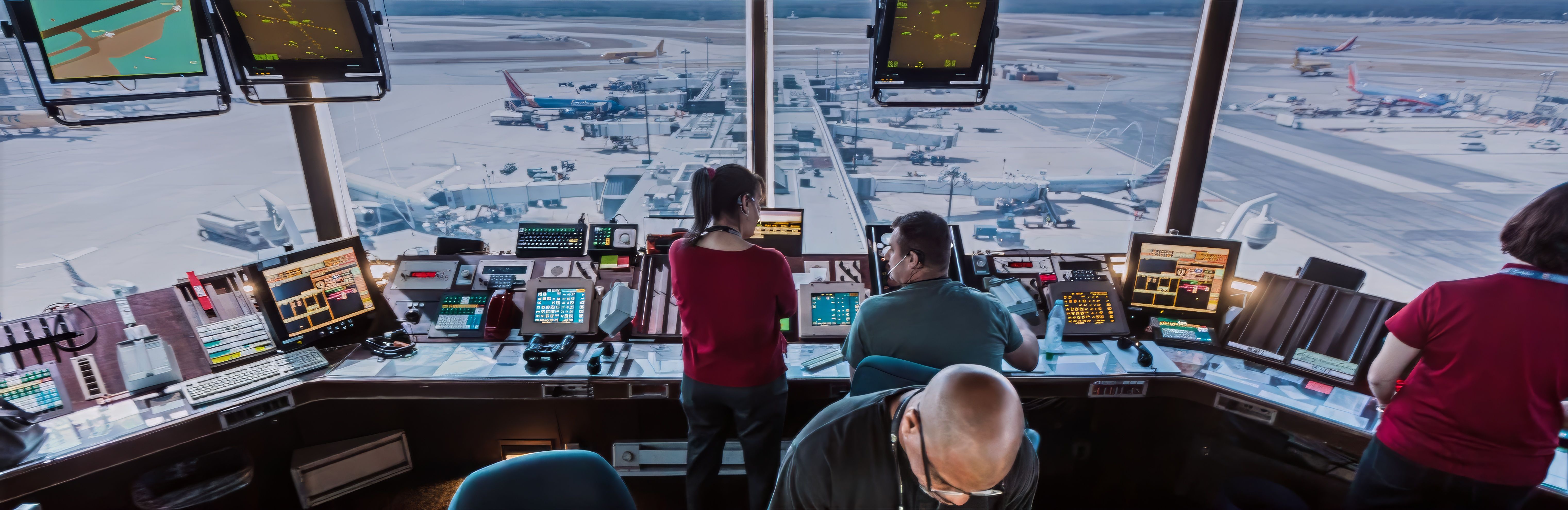
Upon graduation from the Academy, you will be assigned to a facility based on your performance and the needs of the FAA. Your career path will look very different depending on the type of facility you are assigned to.
| Facility Type | Primary Role | Complexity | Average Traffic Volume |
|---|---|---|---|
| ATCT (Tower) | Controls aircraft on the ground and in the immediate vicinity of the airport. | Visual-based, high intensity during takeoffs/landings. | Varies from small regional to major hubs. |
| TRACON | Manages aircraft transitioning between the tower and the high-altitude center. | High-speed maneuvering and sequencing. | Heavy, often involving multiple airports. |
| ARTCC (Center) | Controls high-altitude, long-distance flights across large regions. | Radar-based, focusing on long-range separation. | Consistently high, managing thousands of square miles. |
On-the-Job Training (OJT) and Certification
Graduating from the Academy does not make you a fully certified controller. You are considered a Developmental Controller. When you arrive at your assigned facility, you begin OJT.
During OJT, you work under the direct supervision of a Certified Professional Controller (CPC). You must "check out" on various positions within your facility. For a small tower, this might take six months. For a complex TRACON or ARTCC, it can take two to three years to become a CPC.
Certification is the final "practical" step in the roadmap. Once you are a CPC, you have the authority to control traffic independently and are eligible for significantly higher pay scales.
Compensation and Career Outlook in 2026
As of 2026, air traffic control remains one of the highest-paying professions that does not strictly require a graduate degree. The FAA uses the Air Traffic Control Pay Plan (ATPP), which ties salary to the complexity and volume of the facility where you work.
- Academy Pay: While at the Academy, you receive a basic training salary plus a per diem for housing and food.
- Developmental Pay: Once you reach your facility, your pay increases as you certify on different positions.
- CPC Salary: Fully certified controllers at high-level facilities can earn between $140,000 and $190,000 annually, including locality pay and differentials for night, Sunday, and holiday work.
The career outlook is stable, as the FAA faces an ongoing wave of retirements from the "post-1981 strike" hiring surge. This means consistent hiring opportunities for the next several years for those who can meet the rigorous standards.
Frequently Asked Questions
Can I become an air traffic controller if I am color blind?
No. Standard color vision is a requirement for the FAA Class II Medical Certificate. Controllers must be able to distinguish between various colored lights (such as light gun signals from a tower) and colored symbols on radar displays. If you fail the initial plates test, you may be able to take an alternative "Operational Color Vision Test," but complete color blindness is a disqualifier.
Is there any way to bypass the age 31 limit?
The only common way to bypass the age 31 limit is if you have prior air traffic control experience from the military. In some cases, veterans can apply up to age 35 or higher depending on specific "retired military" hiring announcements. For all other applicants, the law requires you to be hired before your 31st birthday.
How much does it cost to go through the FAA Academy?
There is no tuition for the FAA Academy. In fact, the FAA pays you a salary while you are in training. The government also provides a per diem to cover the cost of lodging and meals in Oklahoma City. The primary "cost" is the risk; if you do not pass the Academy, you do not have a job to return to.
What is the difference between "Pool 1" and "Pool 2" in hiring?
Pool 1 includes graduates of CTI programs and veterans with aviation experience. Pool 2 includes all other members of the general public. While Pool 1 candidates are often processed first, the FAA usually hires a significant number of candidates from both pools to meet its staffing targets.
Can I choose which city I work in?
Generally, no. At the end of the FAA Academy, students are presented with a list of available vacancies across the country. The highest-ranking student in the class gets first pick from the list, the second-ranking student picks next, and so on. You must be prepared to relocate anywhere in the United States or its territories.
Final Recommendations for Aspiring Controllers
The road to becoming an air traffic controller is defined by hurdles. To maximize your chances of success, start by monitoring the FAA's official jobs page and setting up an account on USAJOBS with a saved search for "2152" (the federal occupational code for Air Traffic Control).
While waiting for a hiring bid, focus on physical health and maintaining a clean background. If you are still in your early 20s, consider a CTI program to gain a competitive edge. If you are approaching the age 31 cutoff, ensure your application is flawless, as you may only have one or two opportunities to apply before you are aged out of the system.
Image Gallery
Select an image to open it in a new tab.






Zara El-Hashem
Sociocultural Dynamics and Academics Writer
