The Legacy of Whitney Houston and Brandy’s Cinderella: A Cultural Milestone

Rodgers & Hammerstein's Cinderella, starring Brandy Norwood and Whitney Houston, is a landmark 1997 television film celebrated for its diverse "colorblind" casting and vocal excellence. As the first production to feature a Black Cinderella, it redefined the classic fairy tale, garnering massive ratings and a permanent place in pop culture history.
The Genesis of a Revolutionary Production
The 1997 adaptation of Rodgers & Hammerstein's Cinderella did not begin as a Brandy vehicle. Originally, the project was conceived in the early 1990s as a vehicle for Whitney Houston herself to play the titular role. However, as the project lingered in development at CBS and eventually moved to Disney for their Wonderful World of Disney revival, Houston felt she had outgrown the role of the ingenue.
Demonstrating her prowess as an executive producer, Houston made a pivotal decision: she would take on the role of the Fairy Godmother and hand-picked Brandy Norwood to be the new Cinderella. At the time, Brandy was a rising star with a hit television show (Moesha) and a successful music career. Houston’s mentorship of Brandy became the emotional core of the production, both on and off-screen. This passing of the torch was not merely a casting choice; it was a symbolic move that allowed Houston to mentor the next generation of Black talent while maintaining creative control over the film’s vision through her company, BrownHouse Productions.
The production was a massive undertaking for television. With a budget of approximately $12 million—an astronomical figure for a TV movie in the late 90s—the sets were lush, the costumes were intricate, and the casting was intentionally designed to reflect a multicultural world. This "colorblind" approach meant that the King (Victor Garber) and Queen (Whoopi Goldberg) could have a son (Paolo Montalbán) of Filipino descent, and Cinderella could be Black while her stepsisters were of different races (played by Veanne Cox and Natalie Desselle-Reid).
The Power of the Whitney and Brandy Partnership
The chemistry between Whitney Houston and Brandy Norwood is the engine that drives the film. In the 1990s, Houston was the definitive "Voice" of her generation, and Brandy was the "Vocal Bible" for younger singers. Their collaboration on the song "Impossible" remains one of the most celebrated moments in musical theater history.
During the recording sessions, Houston famously pushed Brandy to find her own voice rather than imitating her mentor. This dynamic translated perfectly to the screen. The Fairy Godmother is depicted not as a distant magical entity, but as a cool, fashionable, and empowering mentor who encourages Cinderella to find the strength within herself.
Key elements of their partnership included:
- Vocal Contrasts: Houston’s powerful, gospel-inflected mezzo-soprano provided a grounding force against Brandy’s husky, jazz-influenced "flute-like" tones.
- On-Set Mentorship: Brandy has frequently recounted how Houston’s presence helped her overcome the pressures of being the first Black Disney princess.
- Executive Vision: Houston’s role as producer ensured that the production maintained high standards for hair, makeup, and costume design that specifically celebrated Black beauty.
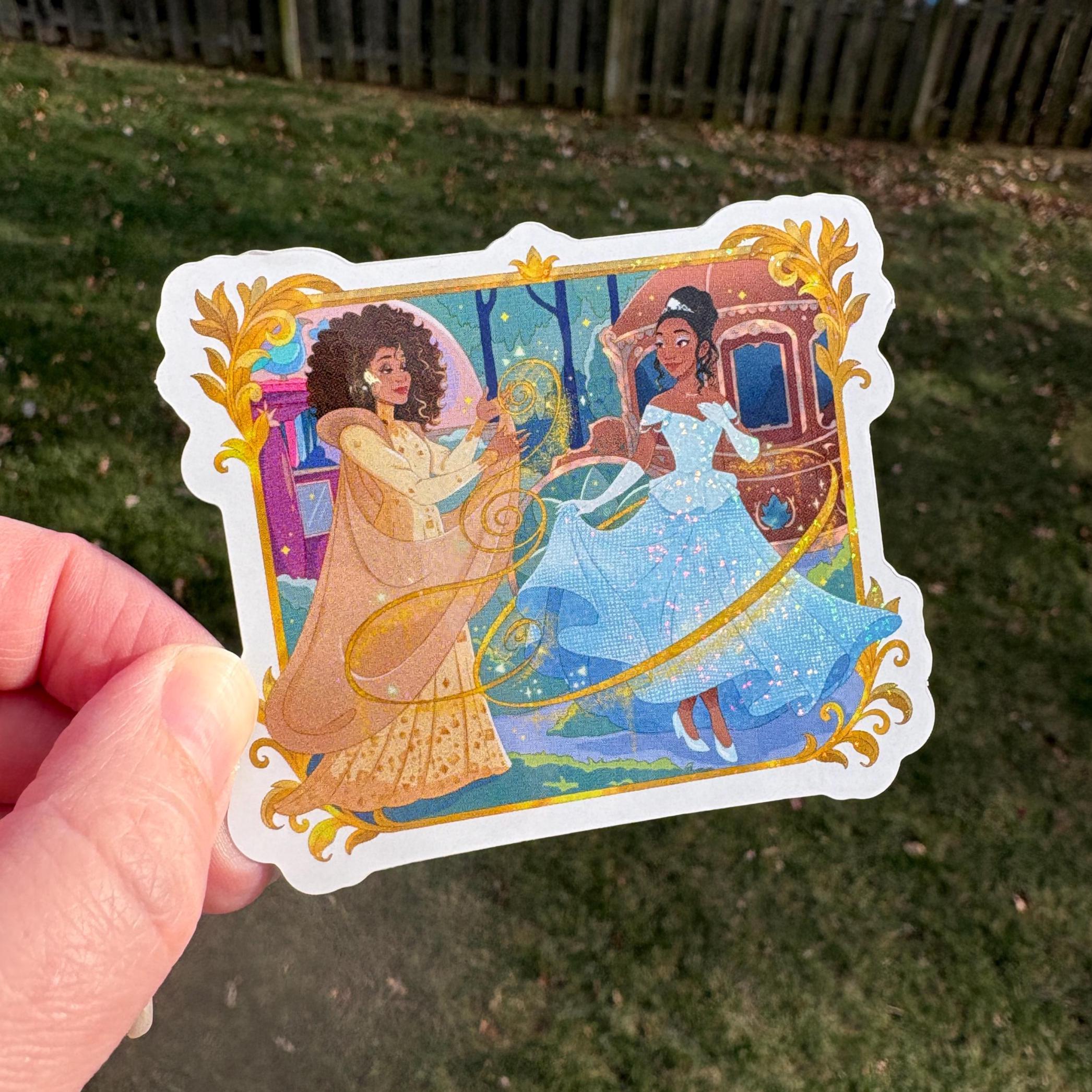
Technical Excellence: Set Design, Costumes, and Choreography
Beyond the star power of its leads, Cinderella was a technical triumph. Director Robert Iscove and choreographer Rob Marshall (who later directed the Oscar-winning Chicago) brought a cinematic scale to the television screen. The dance sequences, particularly during the ball, were athletic and complex, moving away from the more static staging of previous television musicals.
The costume design by Ellen Mirojnick was equally transformative. Rather than sticking to a specific historical period, the costumes were a "fractured fairy tale" blend of 18th-century silhouettes and 1900s opulence, using a vibrant color palette that popped on screen. Cinderella’s iconic blue gown was not just a dress; it was a statement of elegance and modern royalty that has been referenced in fashion circles for decades.
The production also utilized "The Sweetest Sounds" (from the musical No Strings) as an opening number to establish the romantic longing of both Cinderella and the Prince. By pulling from other Rodgers & Hammerstein works, the producers deepened the emotional stakes of the story, ensuring that the characters felt like three-dimensional people rather than archetypes.
The Impact of Colorblind Casting in 1997
In 1997, the concept of "colorblind casting" was not as widely accepted or practiced as it is today. The decision to cast a multiracial family for the royals and a Black lead for Cinderella was met with some skepticism from industry traditionalists. However, the film’s success proved that audiences were not only ready for diversity but hungry for it.
The film premiered on November 2, 1997, and was watched by an estimated 60 million viewers. It was a ratings juggernaut that helped revitalize the Wonderful World of Disney brand. More importantly, it provided representation for an entire generation of children of color who had never seen themselves reflected in the "happily ever after" narrative.
| Role | Actor | Significant Contribution |
|---|---|---|
| Cinderella | Brandy Norwood | First Black woman to play the role in a major film/TV production. |
| Fairy Godmother | Whitney Houston | Executive producer and mentor; provided the film’s vocal anchor. |
| Queen Constantina | Whoopi Goldberg | Brought star power and comedic timing; insisted on wearing real jewelry. |
| King Maximillian | Victor Garber | Represented the musical theater pedigree of the production. |
| Prince Christopher | Paolo Montalbán | Brought Asian-American representation to a leading romantic role. |
| Stepmother | Bernadette Peters | Broadway legend who provided a "campy" but formidable antagonist. |
| Lionel | Jason Alexander | Added comedic relief and high-energy musical performance. |
Musical Analysis: Adapting the Rodgers & Hammerstein Score
While the original 1957 Cinderella score was written for Julie Andrews, the 1997 version made several key changes to accommodate its soulful cast. The arrangements were updated to include more contemporary R&B inflections without losing the classic Broadway feel.
- "In My Own Little Corner": Brandy’s rendition focused on the character's internal resilience.
- "Impossible": This was transformed into a powerhouse duet. The 2026 retrospective view of this song recognizes it as a masterclass in vocal arrangement, blending Houston’s runs with Brandy’s harmonies.
- "Ten Minutes Ago": A classic waltz that showcased the chemistry between Brandy and Paolo Montalbán.
- "Stepsisters' Lament": Played for broad comedy, highlighting the diverse casting of the stepfamily.
- "Do I Love You Because You're Beautiful?": A tender moment that solidified the film's theme that true beauty comes from within.
The addition of the song "Falling in Love with Love" (from The Boys from Syracuse) for Bernadette Peters allowed the production to showcase her Broadway veteran status, giving the "wicked stepmother" more depth and a showcase for her vocal talents.
Legacy and the 2021 Disney+ Revival
For years after its initial airing, the 1997 Cinderella was difficult to find. Due to complex licensing agreements involving the Rodgers & Hammerstein estate, the film was not readily available on streaming services during the early 2010s. This changed in February 2021, when Disney+ finally added the film to its library following a massive social media campaign by fans.
The arrival of the film on streaming introduced it to a whole new generation and allowed original fans to celebrate it in high definition. In 2022, ABC aired a 25th-anniversary special titled Cinderella: The Reunion, A Special Edition of 20/20, which featured interviews with Brandy, Paolo Montalbán, Whoopi Goldberg, and the producers. The special highlighted how the film paved the way for subsequent diverse casting in Disney projects, such as the 2023 live-action The Little Mermaid.
As of 2026, the film remains a "top-tier" nostalgic asset for Disney, frequently trending on social media during Black History Month and the holiday season. It stands as a testament to the fact that when diverse voices are given the resources and platform of a major studio, they can create something timeless.
Cultural Significance in the Modern Era
The legacy of Whitney and Brandy’s Cinderella extends beyond the screen. It is studied in film and cultural studies courses as a prime example of successful "non-traditional" casting. Unlike some modern attempts at diversity that feel forced or reactionary, the 1997 Cinderella succeeded because it focused on the talent first. The world of the film felt organic; the diversity was not a "point" of the plot, but a natural characteristic of the kingdom.
Furthermore, the film served as a career milestone for Brandy, solidifying her as a multi-hyphenate talent. For Whitney Houston, it remains one of her most significant contributions as a producer, proving her eye for talent and her commitment to creating opportunities for other artists of color.
Frequently Asked Questions
Where can I watch Whitney and Brandy’s Cinderella in 2026?
The film is currently available for streaming on Disney+. It can also be purchased through digital retailers like Amazon Prime Video, Apple TV, and Vudu. Physical DVD and Blu-ray copies exist but are often treated as collector's items.
Why was this version of Cinderella so significant?
It was the first time a person of color was cast as Cinderella in a high-profile production. It also featured a multiracial cast where race was never mentioned, setting a new standard for representation in Hollywood. The production values and the star power of Whitney Houston and Brandy made it a definitive version for the 90s generation.
Did Whitney Houston produce the movie?
Yes, Whitney Houston was an Executive Producer through her production company, BrownHouse Productions. She was heavily involved in the casting, the musical arrangements, and the overall creative direction of the film.
Is the soundtrack available on streaming platforms?
Yes, the soundtrack is available on major music streaming platforms like Spotify, Apple Music, and Amazon Music. It features all the songs from the film, including the additions from other Rodgers & Hammerstein musicals.
Who played the Prince in the 1997 Cinderella?
The Prince was played by Paolo Montalbán. His casting was also historic, as it provided a leading romantic role for a Filipino-American actor, further contributing to the film's diverse representation.
Final Recommendation
If you have not revisited this version of Cinderella recently, it is well worth a rewatch in 2026. Its message of self-empowerment and its celebration of diversity remain as relevant today as they were in 1997. For those looking to share a classic musical with a younger generation, this production serves as the perfect entry point, combining traditional fairy tale magic with a modern, inclusive spirit. Whether for the powerhouse vocals of "Impossible" or the vibrant costume design, it remains a "must-watch" in the Disney catalog.
Image Gallery
Select an image to open it in a new tab.


Lars Thomsen
Global Labor Markets and Economic Strategy Editor
