
As of 2026, the current Florida scrub jay (Aphelocoma coerulescens) population is estimated to be between 3,700 and 4,200 breeding pairs, totaling approximately 7,400 to 8,400 adult individuals. While populations in large, managed landscapes like the Ocala National Forest remain relatively stable, smaller, isolated groups continue to face significant threats from habitat fragmentation and lack of fire management.
Understanding the Florida Scrub Jay: Florida's Only Endemic Bird
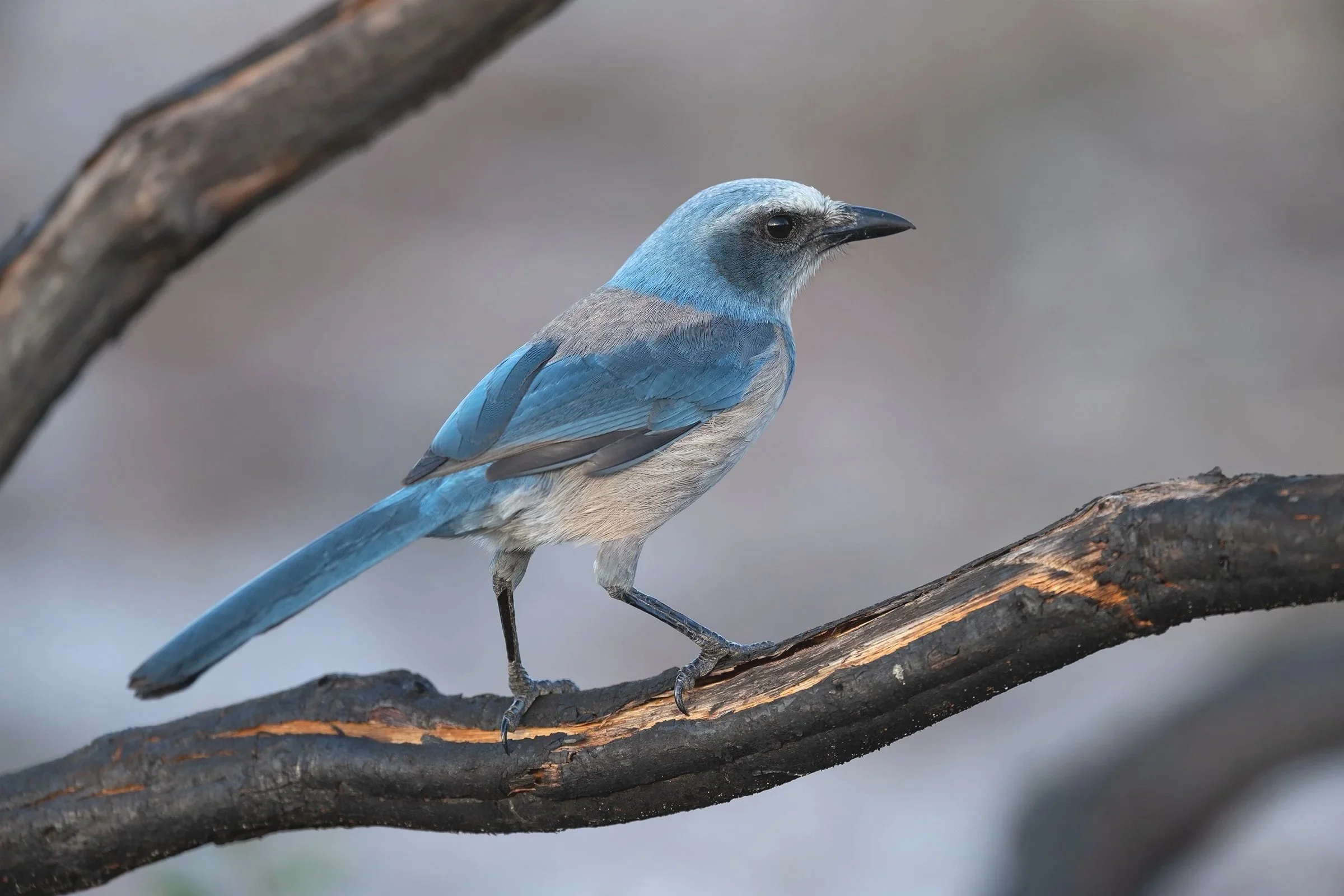
The Florida scrub jay is a biological treasure, distinguished as the only bird species found exclusively within the state of Florida. Unlike its cousins, such as the Blue Jay, the scrub jay has very specific habitat requirements, living only in the rare and dwindling "scrub" ecosystems characterized by low-growing oaks and sandy soil.
One of the most fascinating aspects of their biology is their cooperative breeding system. In this social structure, adult offspring remain with their parents for one or more years to help raise subsequent broods. These "helpers" assist in feeding the young and, perhaps most importantly, serve as sentinels to watch for predators like hawks and snakes. This social complexity makes their population dynamics more intricate than those of most other passerines, as a successful population requires not just individual birds, but stable family units within a contiguous habitat.
Historically, the species ranged across much of the Florida peninsula. However, throughout the 20th century, their numbers plummeted by more than 90% as their habitat was converted into citrus groves, cattle pastures, and residential developments. By the time they were federally listed as a Threatened species under the Endangered Species Act in 1987, the population was already in a state of crisis.
Current Population Estimates and Distribution in 2026
In 2026, the distribution of the Florida scrub jay is highly fragmented. The population is no longer a single, cohesive unit but rather a series of isolated "metapopulations." Wildlife biologists categorize these populations based on the size of the protected land they inhabit and the level of active management being performed.
Major Strongholds: The Pillars of Survival
The survival of the species currently hinges on three primary "strongholds" where large tracts of land allow for self-sustaining populations:
- Ocala National Forest (Marion and Lake Counties): This remains the largest continuous population of Florida scrub jays. Because the U.S. Forest Service implements large-scale prescribed burns, the habitat is maintained in the early-successional state the birds require. As of 2026, this area supports roughly 1,000 breeding pairs.
- Merritt Island National Wildlife Refuge / Cape Canaveral (Brevard County): This coastal population is vital. It benefits from the restricted access and land management associated with the Kennedy Space Center. The population here has shown resilience, hovering around 400 to 500 breeding pairs.
- The Lake Wales Ridge (Highlands and Polk Counties): Home to the Archbold Biological Station, this region is a global center for scrub jay research. Dedicated conservation efforts here have stabilized several critical sub-populations, contributing roughly 600 breeding pairs to the statewide total.
Fragmented and Vulnerable Populations
Outside of these strongholds, the picture is more complex. Dozens of smaller populations exist in counties like Volusia, Sarasota, and Charlotte. Many of these groups consist of fewer than 10 families. Biologists refer to these as "sinks" or "remnant populations." Without active intervention—specifically translocation programs where birds are moved from strongholds to smaller sites—many of these groups would likely face local extinction within a decade.
The Role of Habitat Management: Why Fire is Essential
The primary factor determining the Florida scrub jay population is the health of the Florida scrub ecosystem. This is a pyrogenic habitat, meaning it is born of and maintained by fire. In the absence of regular fire (every 5 to 15 years), the scrub oaks grow too tall and the canopy closes.
When the scrub becomes overgrown, the jays can no longer survive for several reasons:
- Predator Visibility: Scrub jays rely on a clear line of sight to spot predators. In dense, tall vegetation, they are easily ambushed by Cooper’s Hawks or feral cats.
- Foraging Requirements: Jays store thousands of acorns in open, sandy patches during the fall. If the ground becomes covered in leaf litter or dense grass due to lack of fire, they cannot bury or retrieve their winter food supply.
- Nesting Success: Overgrown scrub often leads to higher rates of nest predation.
In 2026, the success of the Florida scrub jay population is directly correlated with the frequency of prescribed burns. State agencies like the Florida Fish and Wildlife Conservation Commission (FWC) and non-profits like The Nature Conservancy work tirelessly to mimic natural fire cycles that have been suppressed by human development.
Population Comparison by Key Management Region (2026 Data)
The following table outlines the estimated breeding pairs and current population status across the primary geographic regions in Florida as of the 2026 monitoring season.
| Region | Primary Habitat Type | Estimated Breeding Pairs (2026) | 5-Year Population Trend | Management Priority |
|---|---|---|---|---|
| Ocala National Forest | Inland Sand Pine Scrub | 1,050 | Stable | Prescribed Fire |
| Merritt Island / Canaveral | Coastal Scrub | 480 | Stable | Habitat Connectivity |
| Lake Wales Ridge | Ancient Dune Scrub | 620 | Increasing | Genetic Diversity |
| Southwest Florida (Sarasota/Charlotte) | Mesic/Flatwood Scrub | 180 | Decreasing | Translocation |
| North-Central (Volusia/Marion) | Isolated Scrub Patches | 210 | Fluctuating | Corridor Restoration |
| South-Central (Okeechobee/Highlands) | Private Lands/Ranches | 110 | Decreasing | Land Acquisition |
Translocation and Genetic Rescue: New Frontiers in 2026
One of the most significant developments in Florida scrub jay conservation over the last decade has been the refinement of translocation. This involves capturing birds from "source" populations (like Ocala) and moving them to "recipient" sites that have been restored but lack birds.
By 2026, translocation has moved from an experimental technique to a standard management tool. This process is vital for "Genetic Rescue." Because many populations are separated by miles of urban development, jays can no longer fly between them. This isolation leads to inbreeding, which reduces egg hatching success and weakens the birds' immune systems. Moving birds between these isolated islands of habitat ensures that genetic diversity remains high enough for the species to adapt to changing environmental conditions.
The US Fish and Wildlife Service (USFWS) oversees these movements, ensuring that the removal of birds from source populations does not negatively impact the stability of the donor group.
Challenges Facing the Species in 2026
Despite intensive management, several hurdles remain that prevent the Florida scrub jay from being "downlisted" from Threatened to recovered.
1. Urban Encroachment and "Jay-Human" Conflicts
As Florida's human population continues to grow, residential areas often push right up against scrub preserves. This leads to several issues:
- Feeding: Well-meaning residents often feed jays peanuts or bread. This is detrimental because it makes the birds lose their fear of humans and can lead to "mistimed" nesting, where birds lay eggs before the natural peak of insect abundance.
- Road Mortality: Scrub jays fly low to the ground. In areas where roads bisect habitat, collisions with vehicles are a leading cause of adult mortality.
2. Climate Change and Coastal Squeeze
Coastal populations, such as those at Merritt Island, face the threat of sea-level rise. As the water rises, the specific scrub habitat they depend on may be squeezed against inland development, leaving the birds with nowhere to go. Furthermore, increased frequency and intensity of hurricanes can destroy nesting seasons and physically displace birds from their territories.
3. Predation and Invasive Species
The introduction of feral cats and the expansion of native predators like the American Crow (which thrives in human-altered landscapes) put constant pressure on scrub jay nests. In fragmented habitats, the "edge effect" is more pronounced, making it easier for predators to find and raid nests.
The Role of Citizen Science: JayWatch
The monitoring of the current Florida scrub jay population would be impossible without the help of citizen scientists. The Audubon Florida JayWatch program is a critical initiative where trained volunteers assist professional biologists in conducting annual surveys.
During the summer months, these volunteers visit known territories to count the number of adult birds and, crucially, the number of juveniles that have successfully fledged. This data provides the "Recruitment Rate"—a key metric that tells biologists whether a population is growing, stable, or in decline. In 2026, JayWatch data is integrated into statewide GIS mapping to help prioritize which lands need immediate prescribed fire or mechanical clearing.
Expert Guidance: How to Support Scrub Jay Recovery
For those looking to contribute to the stabilization of the Florida scrub jay population, experts suggest the following actions:
- Support Land Acquisition: Many remaining scrub patches are on private land. Supporting organizations like the Archbold Biological Station and state "Florida Forever" funding helps bring these lands into public trust.
- Avoid Feeding Wildlife: If you live near a scrub jay territory, do not feed them. It disrupts their natural foraging behavior and increases their risk of predation.
- Plant Native: While jays need specific scrub oaks (Quercus inopina, Quercus geminata), planting native Florida plants in your yard supports the overall insect biomass that the birds need to feed their young.
- Landscape Awareness: Support your local government's efforts to conduct prescribed burns. These fires may be a temporary smoky nuisance, but they are the literal lifeblood of the Florida scrub.
Frequently Asked Questions
What is the difference between a Blue Jay and a Florida Scrub Jay?
While both are members of the Corvidae family, Florida scrub jays lack the crest (the "topknot" of feathers) found on Blue Jays. Scrub jays are also slightly larger, have a longer tail, and lack the white spotting and black "necklace" seen on Blue Jays. Behaviorally, scrub jays are much more terrestrial and social.
Are Florida scrub jays endangered?
They are currently listed as Threatened under the Federal Endangered Species Act. While they are not yet "Endangered" (at immediate risk of extinction), their limited range and specific habitat needs keep them in a precarious position.
Where can I see a Florida scrub jay in the wild?
Some of the best places for public viewing in 2026 include the Lyonia Preserve in Volusia County, Oscar Scherer State Park in Sarasota County, and the Helen and Allan Cruickshank Sanctuary in Brevard County. Always stay on marked trails and observe from a distance.
Why can't scrub jays just move to a different type of forest?
Florida scrub jays are "habitat specialists." They have evolved over millions of years to thrive in the nutrient-poor, sandy soils of the scrub. They are physically and behaviorally adapted to this environment. They cannot compete with other bird species in dense hardwood forests or pine flatwoods.
Does the 2026 population represent a recovery?
The 2026 estimate of ~4,000 breeding pairs is a significant improvement over the lows of the late 20th century, but it is still far below the numbers required for delisting. A "recovered" population would likely need to reach 10,000 pairs across multiple stable, connected landscapes.
Practical Recommendation for Conservation Support
If you are a landowner or a concerned citizen, the most effective way to help the Florida scrub jay in 2026 is to advocate for habitat connectivity. Isolated populations are the most at risk. Supporting "wildlife corridors" that connect existing preserves allows birds to disperse naturally, reducing the need for expensive and stressful human-led translocations. By focusing on the landscape as a whole rather than just individual patches of scrub, we can ensure the long-term survival of this unique Floridian species.
Image Gallery
Select an image to open it in a new tab.

Simon Caldwell
Enterprise Technology and Systems Editor
