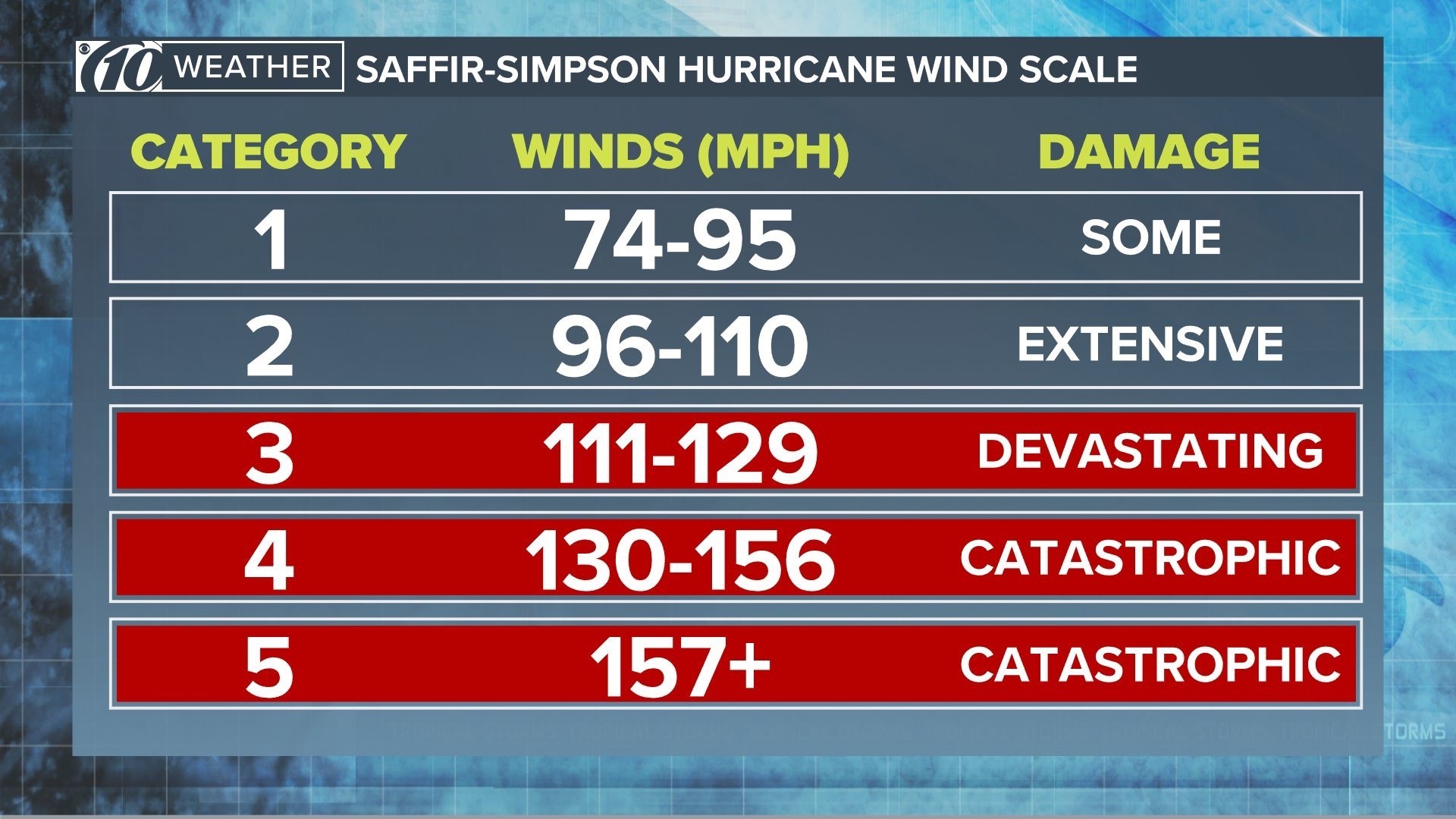
A Category 5 hurricane is the highest classification on the Saffir-Simpson Hurricane Wind Scale, defined by sustained winds of 157 miles per hour (252 km/h) or higher. Storms of this magnitude cause catastrophic damage, including total structural failure of buildings, long-term loss of utility infrastructure, and environments rendered uninhabitable for weeks or months following landfall.
The Saffir-Simpson Hurricane Wind Scale Defined
To understand what a Category 5 hurricane represents, one must first understand the framework used to classify these storms. The Saffir-Simpson Hurricane Wind Scale, developed in the early 1970s by civil engineer Herbert Saffir and meteorologist Robert Simpson, is a 1 to 5 rating based solely on a hurricane's maximum sustained wind speed. This scale is used by the National Hurricane Center (NHC) and other meteorological agencies to estimate potential property damage and flooding near the coast.
It is important to note that the scale does not account for other potentially deadly hazards such as storm surge, rainfall-induced floods, or tornadoes. However, wind speed serves as a primary indicator of a storm's overall kinetic energy. While a Category 1 storm features winds of 74–95 mph, a Category 5 storm represents an exponential increase in destructive power. Because the force of wind increases with the square of its velocity, a 160-mph wind is not just twice as destructive as an 80-mph wind; it is significantly more powerful, capable of exerting massive pressure on structures that were never designed to withstand such loads.
As of 2026, the Saffir-Simpson scale remains the global standard for the Atlantic and Eastern Pacific basins. It serves as the primary trigger for mandatory evacuation orders issued by local and state authorities. When a storm reaches "Major Hurricane" status (Category 3 or higher), the level of preparation required shifts from property protection to life-saving measures. A Category 5 designation is the "ceiling" of this scale, representing a storm with no theoretical upper limit on its wind speeds.
The Physical Anatomy of a Category 5 Storm
A Category 5 hurricane is a masterpiece of atmospheric physics, characterized by extreme low pressure and a highly organized structure. At the center of these storms lies the eye, a region of relative calm and incredibly low barometric pressure. Surrounding the eye is the eyewall, where the most intense winds and heaviest rains are concentrated. In a Category 5 storm, the eyewall is often very compact—a phenomenon known as a "pinhole eye"—which allows the storm to rotate faster, similar to an ice skater pulling their arms in during a spin.
The barometric pressure in a Category 5 hurricane is typically below 920 millibars (mb). For context, standard sea-level pressure is approximately 1013 mb. The lower the pressure, the steeper the pressure gradient, which acts as the engine driving the catastrophic wind speeds. These storms require specific environmental conditions to reach such intensity: warm ocean surface temperatures (usually above 80°F or 26.5°C), high atmospheric moisture, and very low vertical wind shear. If wind shear is high, it "tilts" the storm, preventing it from concentrating its energy into the tight, symmetrical core necessary for Category 5 status.
In the 2024 and 2025 seasons, meteorologists observed an increasing frequency of "rapid intensification," where a storm jumps multiple categories within a 24-hour window. This is often fueled by exceptionally deep pools of warm water in the Gulf of Mexico or the Caribbean. When a storm transitions from a Category 2 to a Category 5 in a single day, it leaves coastal populations with very little time to execute complex evacuation plans, making the Category 5 designation a critical emergency communication tool.

Catastrophic Damage and Environmental Impact
The term "catastrophic" is used specifically by the National Weather Service to describe the impact of a Category 5 hurricane. At this intensity, the built environment faces near-total destruction. Most framed homes will experience complete roof failure and wall collapse. Even reinforced masonry structures are at risk if wind-borne debris—which can include vehicles, large trees, and pieces of other buildings—impacts the structure at high velocities.
Infrastructure Failure
The destruction extends far beyond housing. Category 5 winds are capable of snapping or uprooting the vast majority of trees in an affected area, which in turn brings down the entire electrical grid. Power poles and high-voltage transmission towers are often twisted or toppled. In major Category 5 landfalls, such as Hurricane Andrew (1992) or Hurricane Michael (2018), power outages lasted for months in the hardest-hit zones because the infrastructure had to be completely rebuilt from the ground up rather than simply repaired.
Water and Sanitation
Water systems often fail due to a lack of electricity for pumps and the physical destruction of water mains. This creates a secondary health crisis, as clean drinking water becomes unavailable and sewage systems overflow. The combination of structural debris and flooded roads makes these areas inaccessible to emergency responders, effectively isolating survivors in a high-risk environment.
Long-term Displacement
A Category 5 strike often results in permanent changes to a region's geography and demographics. When a town is leveled by 160-mph winds, the economic cost of rebuilding to modern codes can be prohibitive. This leads to long-term displacement of residents and a slow, painful recovery process that can span a decade or more.
Comparing Hurricane Categories
To visualize the massive gap between a "minor" hurricane and a Category 5 storm, it is helpful to compare the sustained wind speeds and the expected types of damage.
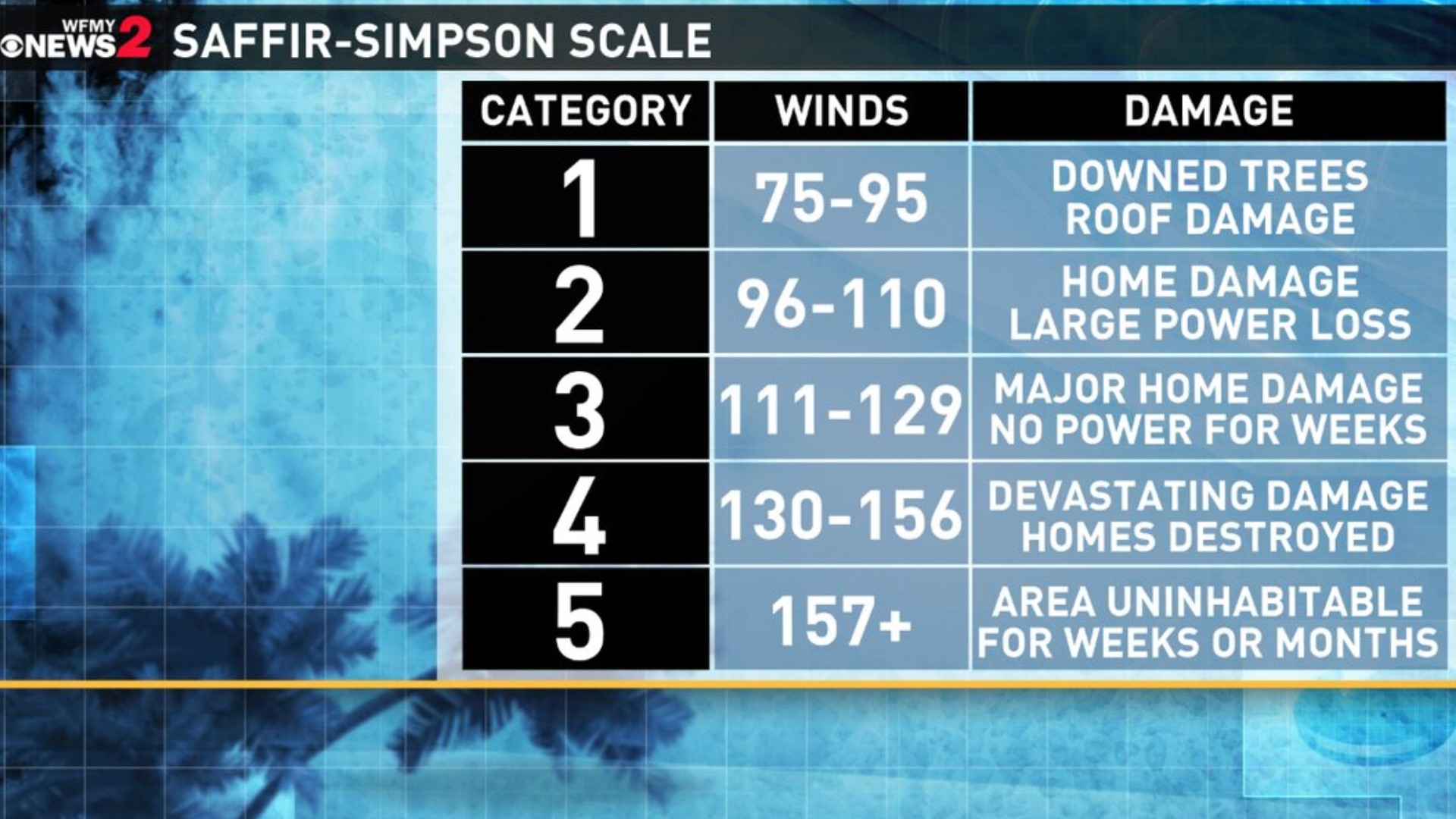
| Saffir-Simpson Category | Sustained Winds (mph) | Damage Level | Expected Structural Impact |
|---|---|---|---|
| Category 1 | 74–95 mph | Very dangerous | Damage to roof shingles, vinyl siding, and gutters. Large tree branches snap. |
| Category 2 | 96–110 mph | Extremely dangerous | Major roof and siding damage. Shallow-rooted trees toppled. Near-total power loss. |
| Category 3 | 111–129 mph | Devastating | Significant damage to sturdy homes. Many trees snapped. Electricity and water unavailable for days. |
| Category 4 | 130–156 mph | Catastrophic | Severe damage to roofs and some exterior walls. Most trees snapped. Areas uninhabitable for weeks. |
| Category 5 | 157+ mph | Catastrophic | Total roof failure and wall collapse. Most trees uprooted. Power outages lasting months. |
Notable Category 5 Hurricanes in History
While Category 5 storms are rare, their names are often etched into history because of the sheer scale of the disasters they cause. In the Atlantic basin, only a few dozen storms have ever reached this intensity.
- The Labor Day Hurricane (1935): This remains one of the most intense hurricanes to ever hit the United States, with a central pressure of 892 mb. It devastated the Florida Keys, killing hundreds and sweeping an entire relief train off the tracks.
- Hurricane Camille (1969): Camille made landfall in Mississippi with sustained winds estimated at 175 mph. The destruction was so complete that many buildings were wiped clean off their foundations, leaving only concrete slabs.
- Hurricane Andrew (1992): Andrew leveled entire neighborhoods in South Florida. It was the storm that led to the radical overhaul of Florida's building codes, which are now some of the strictest in the world.
- Hurricane Michael (2018): Michael was originally classified as a Category 4 but was upgraded to a Category 5 after post-season analysis. It devastated the Florida Panhandle and Tyndall Air Force Base, proving that even modern building standards struggle against sustained 160-mph winds.
- Hurricane Beryl (2024): Beryl was a historic storm, becoming the earliest Category 5 hurricane on record in the Atlantic. Its rapid intensification in early July served as a stark warning about the impact of rising ocean temperatures on storm peak intensity.
The Role of Storm Surge in Category 5 Events
While the Category 5 rating is defined by wind, the most lethal aspect of these storms is often the storm surge. As the low pressure and high winds of the hurricane move toward the coast, they literally push a wall of water ahead of them. For a Category 5 storm, this surge can exceed 20 feet, easily overtopping levees and flooding inland areas that are miles from the beach.
The storm surge acts like a battering ram, using the weight of the ocean to crush buildings that the wind may have already weakened. In the case of Category 5 storms, the surge is often high enough to reach the second story of coastal buildings. Because water weighs approximately 1,700 pounds per cubic yard, the force of a moving surge is irresistible. This is why evacuation is the only viable survival strategy for anyone in a surge zone during a Category 5 event.
Preparation and Safety: Surviving the Unsurvivable
When a hurricane is forecast to reach Category 5 intensity, the window for preparation is extremely narrow. Government agencies like FEMA and the National Hurricane Center emphasize that these are not storms you can "ride out" in a standard residential structure.
Mandatory Evacuation
If you are in a mandatory evacuation zone for a Category 5 storm, the only safe action is to leave immediately. These zones are calculated based on the risk of storm surge and the likelihood that emergency services will be unable to reach you. By the time the winds reach Category 5 strength, it is too dangerous for police, fire, or EMS to be on the roads.
Structural Reinforcement
For those in areas adjacent to the direct strike zone, structural reinforcement is vital. This includes:
- Hurricane Shutters: Impact-rated shutters protect windows from debris. If a window breaks, the internal pressure of the house can rise rapidly, causing the roof to be blown off from the inside.
- Garage Door Bracing: Garage doors are often the weakest point of a home. If the garage door fails, the wind can easily enter and lift the roof.
- Roof Straps: Modern hurricane straps tie the roof trusses directly to the wall studs and the foundation, providing a continuous load path that can help a home stay intact.
Survival Kits
In 2026, disaster kits should include at least two weeks of supplies. Because Category 5 damage is so extensive, the "three days of supplies" rule is no longer considered adequate for major events. Essential items include clean water (one gallon per person per day), non-perishable food, a hand-cranked radio, solar chargers for communication devices, and all necessary medications.
The Future of Category 5 Hurricanes: Is "Category 6" Necessary?
In recent years, there has been significant debate among climate scientists and meteorologists regarding whether the Saffir-Simpson scale needs to be expanded. With storms like Hurricane Patricia (2015) reaching sustained winds of 215 mph and the 2024 season seeing record-early intensification, some argue that a "Category 6" designation is needed to describe storms with winds exceeding 190 mph.
Proponents of an expanded scale argue that it would better communicate the heightened risk of these "mega-storms." However, the NHC has maintained that since Category 5 already denotes "catastrophic" damage where most structures are destroyed, adding a higher category might not change the public's response. From a practical safety standpoint, once a storm reaches Category 5, the survival advice remains the same: evacuate. Regardless of the nomenclature, the trend toward more frequent and more intense hurricanes remains a primary concern for coastal planning and insurance markets in 2026.
Frequently Asked Questions
What is the minimum wind speed for a Category 5 hurricane?
A hurricane reaches Category 5 status when its maximum sustained winds reach at least 157 mph (252 km/h). Sustained winds are measured over a one-minute average at a height of 10 meters. Gusts within a Category 5 storm can significantly exceed this 157-mph threshold, sometimes reaching over 200 mph.
Can a Category 5 hurricane happen in any ocean?
While "hurricane" is the term used in the Atlantic and Northeast Pacific, the same physical phenomenon occurs in other basins. In the Northwest Pacific, they are called "Super Typhoons" when they reach similar intensities, and in the Indian Ocean or South Pacific, they are known as "Severe Tropical Cyclones." All these terms describe the same level of catastrophic cyclonic activity.
How common are Category 5 hurricanes?
Category 5 hurricanes are relatively rare. In the Atlantic basin, they occur on average about once every few years. However, there are periods of higher activity; for instance, the 2005 season saw four Category 5 storms (Emily, Katrina, Rita, and Wilma). Since 2016, there has been a notable increase in the frequency of storms reaching this peak intensity.
Will a "Category 6" be added to the scale in 2026?
As of 2026, the National Hurricane Center and the World Meteorological Organization have not officially added a Category 6 to the Saffir-Simpson scale. While researchers use the term to describe storms with winds over 192 mph in academic papers, the official public safety scale remains capped at Category 5.
What is the most dangerous part of a Category 5 hurricane?
While the 157+ mph winds cause massive structural damage, the storm surge is historically the most lethal component. The surge is a massive wall of water pushed onto land by the storm's winds and low pressure, which can cause deep flooding and drown anyone who has not evacuated.
Practical Recommendation for Coastal Residents
If you live in a hurricane-prone area, your primary goal should be to determine your evacuation zone and flood risk long before a storm develops. For a Category 5 hurricane, traditional "sheltering in place" is not a safe option for most residential buildings.
- Review your insurance policy to ensure you have separate wind and flood coverage, as standard homeowners' insurance rarely covers surge damage.
- Invest in permanent window protection (shutters or impact glass).
- Have a pre-planned evacuation destination at least 50–100 miles inland, staying with friends, family, or in a hotel outside the surge and high-wind zones.
- Always follow the guidance of local emergency management officials immediately—a Category 5 storm allows no margin for error or delay.
Image Gallery
Select an image to open it in a new tab.




Ingrid Bjornson
Global Cyber Policy and Regulation Analyst
