Why Valentine's Day Falls on February 14: History, Calendar Dynamics, and Traditions

Valentine's Day falls on February 14 because Pope Gelasius I established the Feast of Saint Valentine on that date in 496 AD. The designation commemorated Christian martyrs named Valentine while replacing or Christianizing the ancient Roman festival of Lupercalia. Geoffrey Chaucer later linked the date to romantic love during the fourteenth century.
The Historical Origins of February 14
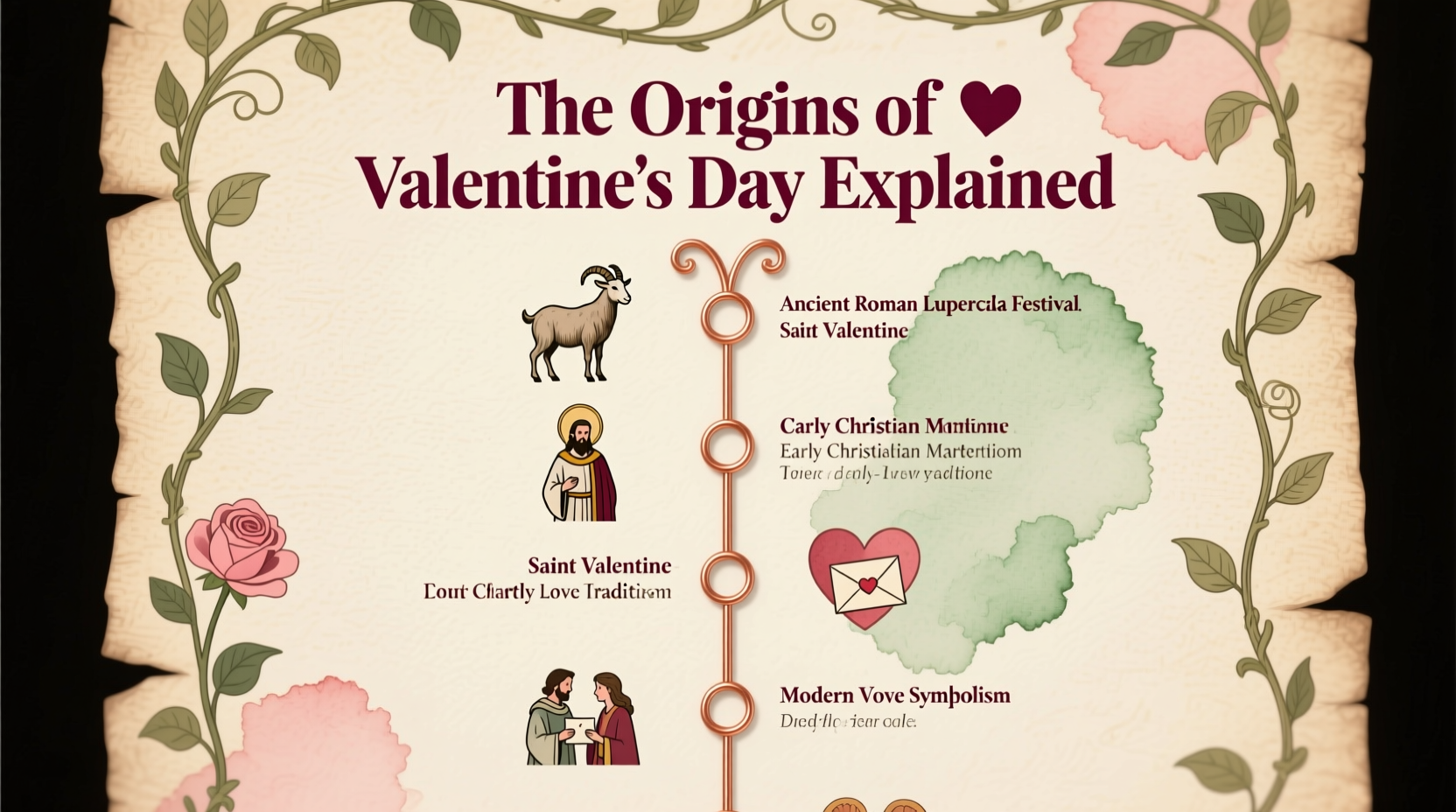
Understanding why Valentine's Day falls on February 14 requires tracing a complex historical timeline that spans ancient Roman pagan rites, early Christian martyrdom, medieval literary traditions, and modern commercial evolution. Far from being a modern creation, the fixed calendar placement of February 14 is rooted in centuries of ecclesiastical history and secular cultural adaptation.
Early Christian Martyrs Named Saint Valentine
The Catholic Church recognizes at least three distinct saints named Valentine (Valentinus), all of whom died on or near February 14 in the third century AD. Because early historical records are sparse, their biographies frequently overlap in popular legend.
The most prominent account involves Saint Valentine of Rome, a priest who performed clandestine marriages for young soldiers under the reign of Emperor Claudius II. Claudius had banned marriages for young men, believing single men made superior soldiers. Valentine defied the imperial decree, continuing to join couples in matrimony until his arrest, torture, and eventual execution on February 14, around 269 AD.
Another prominent figure was Saint Valentine of Terni, a bishop who suffered martyrdom under Emperor Aurelian around 273 AD. A third Saint Valentine was martyred in the Roman province of Africa, though few details survive regarding his life. In 496 AD, Pope Gelasius I officially canonized the date by declaring February 14 as the Feast of Saint Valentine. Gelasius famously declared that Saint Valentine was among those "whose names are justly revered among men, but whose acts are known only to God," acknowledging the uncertainty surrounding the martyr's exact biographical details.
The Roman Festival of Lupercalia
Before Pope Gelasius I designated February 14 as a saint's day, mid-February was marked by the ancient Roman pastoral festival of Lupercalia. Held annually from February 13 through February 15, Lupercalia was dedicated to Faunus, the Roman god of agriculture and fertility, as well as Romulus and Remus, the legendary founders of Rome.
Lupercalia was a purification and fertility ritual. Members of the Luperci, an order of Roman priests, gathered at the Lupercal cave on the Palatine Hill. They sacrificed goats and a dog, smeared the blood onto young priests, and cut strips of hide from the sacrificed animals, called februa. Priests ran through the streets of Rome, lightly striking women and crops with these leather thongs. Women welcomed the touch, believing it guaranteed fertility and eased childbirth.
Historians debate whether Gelasius intentionally created the Feast of Saint Valentine on February 14 to supplant Lupercalia directly. While Gelasius did write a polemic condemning Roman nobles who still observed Lupercalia in the late fifth century, the Christian feast focused initially on solemn religious remembrance rather than romantic partnerships.
Medieval Literature and Geoffrey Chaucer
The connection between February 14 and romantic love did not emerge until the High Middle Ages. During the fourteenth century, poets in England and France began romanticizing the date as the seasonal turning point when birds select their mates.
English poet Geoffrey Chaucer is widely credited with establishing the literary association between Valentine's Day and romance. In his 1382 poem Parliament of Fowls, written to celebrate the engagement of King Richard II to Anne of Bohemia, Chaucer wrote:
"For this was on Seynt Valentynes day,Whan every foul cometh ther to chese his make."
Chaucer’s work popularized the belief that February 14 marked the start of avian mating season. European aristocracy embraced courtly love traditions during this period, exchanging handwritten love notes, poetry, and floral tokens every February 14. By the fifteenth century, French and English nobles regularly sent "valentines" to their betrothed. The oldest surviving Valentine's letter in English was written in 1477 by Margery Brews to her fiancé John Paston, tenderly addressing him as her "right well-beloved Valentine."
How Calendar Dynamics Affect February 14
Because Valentine's Day falls on a fixed calendar date (February 14) rather than a floating day of the week (such as Thanksgiving or Mother's Day), its placement across the seven-day week shifts every year. This static date format creates distinct economic, social, and logistical patterns for celebrants and businesses.
Day-of-the-Week Rotations and Leap Years
The Gregorian calendar operates on a 365-day common year, which equals 52 weeks plus one extra day. As a result, fixed dates like February 14 advance by one day of the week in standard years. However, because leap years insert an extra day (February 29) every four years, February 14 skips an additional day following a leap year.
This rotation significantly impacts consumer behavior:
- Weekend Celebrations (Friday through Sunday): When February 14 falls on a weekend, restaurant reservations spike, hotel bookings rise, and long-weekend travel increases.
- Weekday Celebrations (Monday through Thursday): When February 14 falls mid-week, floral deliveries to offices peak, evening dining is concentrated into a single night, and celebrations often spill over into the adjacent weekend.
The calendar schedule below demonstrates the day-of-the-week shifts for February 14 from 2024 through 2032, highlighting the impact of leap years.
| Year | Day of the Week | Year Type | Operational Impact on Celebrations |
|---|---|---|---|
| 2024 | Wednesday | Leap Year | High office-based floral deliveries; dining concentrated in mid-week evening |
| 2025 | Friday | Common Year | High demand for weekend travel, extended restaurant bookings |
| 2026 | Saturday | Common Year | Peak restaurant and hospitality revenue; distributed dining times |
| 2027 | Sunday | Common Year | Strong brunch and dinner demand; early-evening dining trends |
| 2028 | Monday | Leap Year | Celebrations split between prior weekend and Monday evening |
| 2029 | Wednesday | Common Year | Mid-week dining; high reliance on e-commerce and advance flower delivery |
| 2030 | Thursday | Common Year | Early weekend start for hospitality; elevated evening dining reservations |
| 2031 | Friday | Common Year | Peak weekend getaway demand and nightlife hospitality volume |
| 2032 | Sunday | Leap Year | High Sunday brunch activity; strong weekend travel demand |

Religious and Liturgical Significance of the Date
The spiritual status of February 14 has changed significantly within Christian denomination calendars over the past century. While the date remains firmly fixed in the popular global calendar, its liturgical role varies depending on the religious tradition.
Roman Catholic Calendar Revisions of 1969
For centuries, February 14 was observed throughout the Western Church as an official feast day on the Roman Catholic Calendar of Saints. However, following the Second Vatican Council, Pope Paul VI instituted a comprehensive reform of the liturgical calendar.
In 1969, the Holy See promulgated the Mysterii Paschalis, which reorganized the General Roman Calendar. Because historical documentation regarding Saint Valentine's life was deemed insufficient to justify a mandatory global feast day, Saint Valentine’s commemoration was removed from the universal liturgical calendar. The Church reassigned February 14 as the official feast day of Saint Cyril and Saint Methodius, ninth-century brothers who evangelized the Slavic peoples and developed the Cyrillic alphabet.
Despite this change, the Catholic Church still recognizes Saint Valentine as a validly canonized saint. Local parishes and specific dioceses may still observe the Memorial of Saint Valentine on February 14 under optional local liturgical rules.
Eastern Orthodox Traditions
The Eastern Orthodox Church celebrates Saint Valentine, but not on February 14. Orthodox liturgical tradition distinguishes between the different historical martyrs named Valentine:
- Saint Valentine the Presbyter of Rome is commemorated on July 6.
- Hieromartyr Valentine, Bishop of Interamna (Terni) is commemorated on July 30.
Consequently, in predominantly Orthodox nations, February 14 historically held no native religious significance. However, secular globalized celebrations of Valentine's Day on February 14 have gained popularity in many Orthodox countries alongside traditional saints' days.
Modern Celebrations and Global Logistics
The fixed placement of Valentine's Day on February 14 creates complex economic and logistical demands worldwide. The holiday relies on global supply chains that must synchronize harvesting, manufacturing, and distribution to meet a strict deadline.
- Floriculture Harvest (South America/Africa)
- Cold-Chain Air Freight Freight
- Wholesale Distribution Centers
- Local Florists & Retail Stores
- Consumer Delivery on February 14
The Floral and Agriculture Supply Chain
Fresh cut flowers—particularly red roses—represent one of the largest economic sectors tied directly to February 14. Because flowers are highly perishable, the agricultural industry operates on precise timelines leading up to the date.
High-altitude regions near the equator, such as the Savannah of Bogotá in Colombia and the Pichincha province in Ecuador, supply a major portion of cut roses to North America. In Africa, Kenya and Ethiopia harvest millions of stems for European markets.
- Harvesting Window: Growers trim and prepare millions of rose stems in late January to ensure blooms peak precisely for February 14.
- Cold-Chain Logistics: Cut flowers are immediately chilled to preserve freshness, loaded onto refrigerated cargo aircraft, and flown to international hubs such as Miami International Airport or Amsterdam Airport Schiphol.
- Customs Inspection: Agricultural authorities inspect incoming shipments for pests and diseases under strict deadline pressures.
- Final Delivery: Local florists and fulfillment centers process orders to execute millions of deliveries exclusively within a 48-hour window ending on February 14.
The Confectionery and Greeting Card Industries
The industrialization of Valentine's Day cards began in the nineteenth century. In the 1840s, American entrepreneur Esther Howland, known as the "Mother of the American Valentine," mass-produced lace and embossed paper valentines in the United States.
Today, greeting card publishers and confectionery manufacturers spend months planning for February 14. According to trade data from retail organizations:
- Chocolate Production: Confectioners design specialized heart-shaped packaging and seasonal product lines that hit retail shelves immediately following New Year's Day.
- Card Distribution: Millions of printed valentines are distributed globally, ranging from children's classroom exchange cards to high-end romantic cards.
- Digital Adaptations: E-commerce platforms and digital greeting services experience peak traffic on February 13 and February 14 for last-minute gift delivery.
Common Misconceptions About February 14
Several popular myths surround the origins and observance of Valentine's Day. Historical analysis helps clarify the facts behind these common misunderstandings.
Myth 1: Hallmark Invented Valentine's Day
A common modern belief is that greeting card companies invented Valentine's Day to generate sales. While greeting card manufacturers popularized mass-produced valentines in the nineteenth and twentieth centuries, the holiday's connection to February 14 dates back to 496 AD, and its romantic association began in the 1300s with Chaucer. Card companies commercialized an existing cultural tradition rather than inventing it.
Myth 2: Lupercalia Was Identical to Modern Valentine's Day
While Lupercalia occurred in mid-February, its rituals bore little resemblance to modern celebrations. Lupercalia was an animal sacrifice and purification ritual aimed at protecting livestock and encouraging human fertility. It involved no romantic cards, gift exchanges, or expressions of personal affection. The romantic elements associated with February 14 developed centuries later through medieval poetry.
Myth 3: February 14 Marks the Mating Season of All Birds
Geoffrey Chaucer's poetic assertion that birds choose their mates on February 14 reflected medieval English folk beliefs rather than precise ornithological science. While certain bird species in Southern Europe begin nesting behaviors in mid-February, birds in Northern Europe generally begin mating later in the spring. Chaucer used the date as a literary allegory for romantic pairing.
Frequently Asked Questions
Why does Valentine's Day always fall on February 14?
Valentine's Day falls on February 14 because Pope Gelasius I declared that date as the Feast of Saint Valentine in 496 AD. The date honors early Christian martyrs named Valentine who were executed in Rome during the third century.
Is Saint Valentine still an official Catholic saint?
Yes, Saint Valentine remains an officially recognized saint in the Catholic Church. However, during the 1969 revision of the General Roman Calendar, his mandatory global feast day was removed due to sparse historical records, making February 14 an optional local commemoration rather than a universal feast.
How did February 14 become associated with love and romance?
The romantic association began in fourteenth-century Europe, primarily through the writings of poets like Geoffrey Chaucer. Medieval folk culture held that birds began mating in mid-February, which led nobles to exchange romantic letters and tokens on February 14.
What ancient festival occurred around February 14?
The ancient Roman festival of Lupercalia took place from February 13 to February 15. It was a pastoral purification ritual dedicated to agricultural fertility and the founders of Rome, which Pope Gelasius I later sought to replace with Christian observances.
Does Valentine's Day fall on the same day of the week every year?
No. Because Valentine's Day is tied to a fixed calendar date (February 14) rather than a dynamic day (like the second Sunday in February), it shifts by one day of the week in standard years and two days following a leap year.
Practical Guidance for Celebrating February 14
Managing plans around a fixed-date holiday like February 14 requires strategic preparation, particularly when adjusting for weekday or weekend calendar shifts.
- Check the Day of the Week Early: Identify whether February 14 falls on a weekday or weekend to plan effectively. When February 14 falls on a weekday, book dinner reservations three to four weeks in advance, as peak dining hours (6:30 PM to 8:30 PM) fill quickly.
- Schedule Floral Deliveries in Advance: If shipping flowers to a workplace on a weekday, schedule delivery for February 13 or early morning on February 14 to avoid carrier delays caused by high seasonal volume.
- Consider Alternative Celebration Windows: When February 14 falls mid-week, consider celebrating on the preceding or following weekend. This offers flexible restaurant seating, lower travel costs, and a less rushed environment.
- Verify Liturgical Observances: For those observing religious traditions, note that Catholic parishes may observe the Feast of Saints Cyril and Methodius on February 14, while Orthodox churches observe Saint Valentine's feast days in July.
Image Gallery
Select an image to open it in a new tab.

Akira Tanaka
International Academic Trends Correspondent
