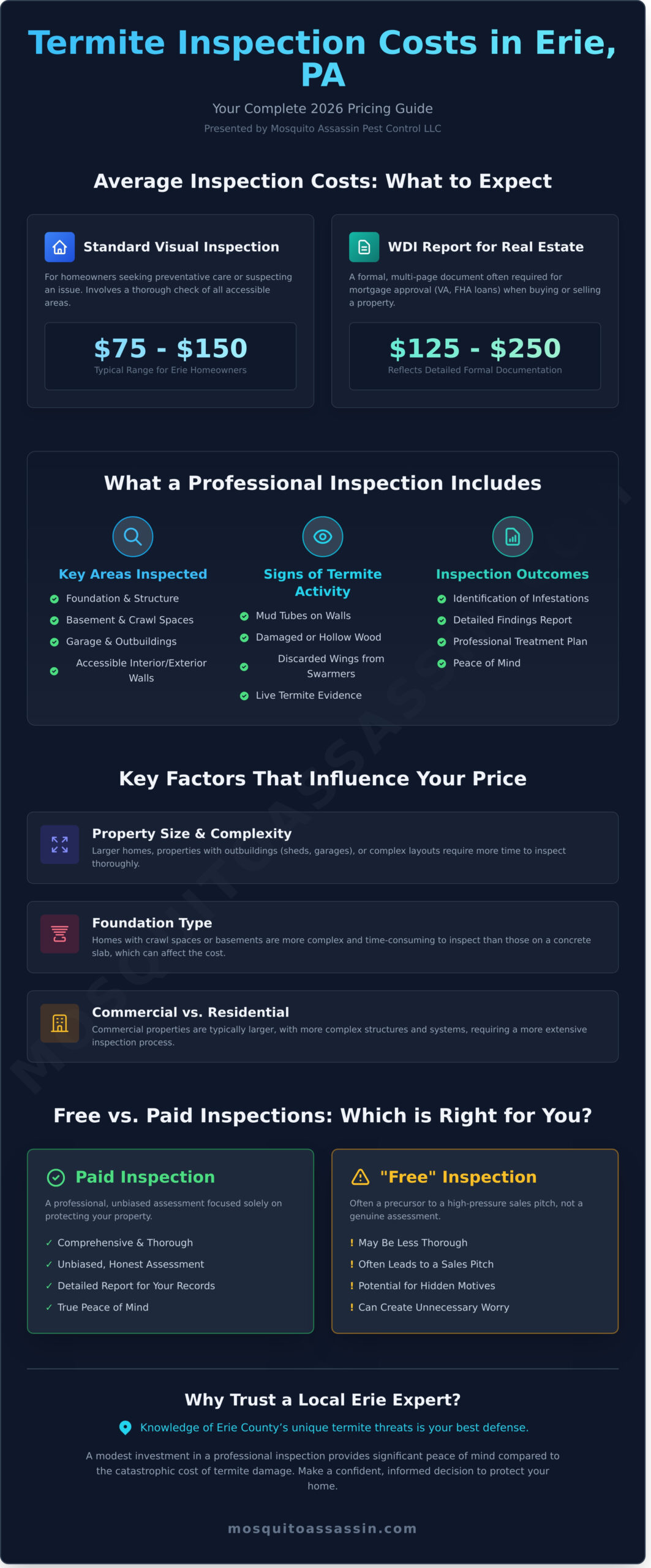
In 2026, VA loan guidelines allow the veteran or active-duty service member to pay for the termite inspection fee in all U.S. states and territories. While the buyer is now permitted to cover this cost, the responsibility remains negotiable between the buyer and seller, often determined by the terms of the initial purchase agreement.
Termite inspections, technically referred to as Wood Destroying Insect (WDI) inspections, are a critical component of the Department of Veterans Affairs (VA) home loan process. Because termites and other wood-boring pests can significantly compromise the structural integrity of a home, the VA mandates these inspections in specific geographic regions. For many years, the rules surrounding who could pay for these inspections were rigid and often confusing for both buyers and real estate professionals. As we navigate the 2026 real estate market, understanding the current landscape of cost responsibility is essential for a smooth closing.
The Evolution of VA Termite Inspection Rules
To understand the current responsibility for costs, it is necessary to look at the significant policy shift that occurred a few years ago. Historically, the VA prohibited veterans from paying for termite inspections in the vast majority of states. This "non-allowable" fee was intended to protect veterans from excessive closing costs, but in competitive housing markets, it often became a hurdle. Sellers, faced with multiple offers, were sometimes reluctant to accept VA offers because they were forced to pay for the inspection.
In June 2022, the VA issued Circular 26-22-11, which fundamentally changed this dynamic. This circular updated the VA Lenders Handbook to allow veterans to pay for termite inspections, regardless of the property's location. This policy remains the standard in 2026. By removing the prohibition, the VA leveled the playing field, allowing VA buyers to make their offers more competitive by volunteering to cover the inspection fee.
Determining If an Inspection Is Required
Not every VA loan requires a termite inspection. The necessity is based on the Termite Infestation Probability Map (TIP Map) maintained by the Department of Housing and Urban Development (HUD). The VA uses this map to categorize regions into "Very Heavy," "Moderate to Heavy," "Slight to Moderate," and "None to Slight" infestation areas.
- Very Heavy and Moderate to Heavy Regions: In these areas, an inspection is mandatory for almost all existing properties. This includes much of the southern United States, the West Coast, and the Eastern Seaboard.
- Slight to Moderate Regions: The VA appraiser's discretion often determines the need here. If the appraiser sees evidence of wood-destroying insects, they will flag the property, necessitating a professional inspection.
- None to Slight Regions: Inspections are rarely required unless the appraiser notes specific concerns.
Even if the VA does not technically mandate it for a specific zip code, many lenders still require a WDI report as a condition of the loan to protect their collateral.

Who Pays for the Termite Inspection Fee in 2026?
Under the current 2026 guidelines, there are four primary parties who can cover the cost of the termite inspection:
The Veteran (Buyer)
As established by the 2022 policy update, the veteran can now pay the fee out of pocket or as part of their closing costs. This is often the preferred route in a "seller’s market" where the buyer wants to minimize the financial burden on the seller to ensure their offer is accepted.
The Seller
The seller remains a common source of payment. In many standard real estate contracts, the seller traditionally pays for the termite inspection and provides a "clear" report to the buyer. If the veteran does not wish to pay, their real estate agent must ensure the purchase contract explicitly states that the seller is responsible for this fee.
The Lender
In some cases, the lender may choose to cover the cost of the inspection as a credit to the borrower. This is usually factored into the overall interest rate or loan structure.
The Real Estate Agent
While less common, a real estate agent may offer to pay for the termite inspection as a courtesy to their client to facilitate the closing of the deal.
Negotiating Inspection Costs in the Purchase Contract
Because the VA no longer dictates who must pay (it only dictates who can pay), the responsibility for the cost is a point of negotiation. When drafting an offer in 2026, buyers should work closely with their agents to decide how to handle this.
- The Buyer-Paid Strategy: This makes the offer look "cleaner" to a seller. If the veteran pays, there is one less expense the seller has to worry about at the closing table.
- The Seller-Paid Strategy: This preserves the veteran's cash on hand. For buyers with limited liquid assets, asking the seller to cover the $100 to $200 inspection fee is a standard request.
It is important to note that if the seller pays for the inspection, it counts toward the 4% seller concession limit if it is categorized as a "concession" rather than a standard closing cost. However, in most jurisdictions, a termite inspection is viewed as a standard closing cost and does not impact that 4% cap.
Wood-Destroying Insect (WDI) Report Requirements
The inspection must be performed by a qualified pest control professional. The results are typically documented on Form NPMA-33 (Wood Destroying Insect Inspection Report). The inspector is looking for more than just termites; they are also checking for:
- Powderpost beetles
- Old house borers
- Carpenter ants
- Carpenter bees
The report will categorize findings into two main sections: visible evidence of active infestation and visible evidence of previous infestation. To satisfy VA Minimum Property Requirements (MPRs), the report must generally show that the home is free of active infestations.
| Feature | Details and Responsibility |
|---|---|
| Mandatory Regions | Determined by the HUD/VA TIP Map (High/Moderate zones). |
| Inspection Fee Payer | Negotiable: Veteran, Seller, Lender, or Agent. |
| Treatment Cost Payer | Negotiable, but usually the Seller to meet MPRs. |
| Form Used | National Pest Management Association Form NPMA-33. |
| Report Validity | Typically valid for 90 days from the date of inspection. |
| New Construction | Requires Form HUD-92051 (Compliance Inspection Report). |
Responsibility for Termite Treatment and Repairs
There is a significant difference between the cost of the inspection and the cost of treatment or repairs. If the WDI report comes back "dirty"—meaning it shows evidence of an active infestation or structural damage caused by insects—the VA will require the issue to be addressed before the loan can close.
Who Pays for Treatment?
If active termites are found, the property must be treated. While the veteran is now allowed to pay for this treatment, it is almost always negotiated for the seller to cover it. Since the VA will not guarantee the loan until the infestation is remediated, the seller is incentivized to pay for treatment to ensure the sale goes through.
Who Pays for Structural Repairs?
If termites have caused damage to the floor joists, sill plates, or other structural elements, these must be repaired to meet VA MPRs. Structural repairs can be expensive. In 2026, as in previous years, if a seller refuses to pay for these repairs and the buyer cannot or will not cover them, the loan will likely be denied. The veteran can pay for these repairs, but they should exercise caution before investing significant capital into a home they do not yet own.
State-Specific Nuances and "No-Charge" States
Prior to the 2022 rule change, nine states were known as "no-charge" states where veterans were allowed to pay the fee under certain conditions, while in others they were strictly barred. As of 2026, these regional distinctions have mostly vanished regarding the legality of the veteran paying. However, local "customary" practices still exist.
For example, in states like Texas or Florida, it is still very common for the seller to pay for the WDI report as a matter of local tradition. In contrast, in the Pacific Northwest, buyers more frequently take on this cost. Veterans should consult with a local VA-savvy lender to understand the "customary" expectations in their specific market, even if the VA rules allow for flexibility.
Common Pitfalls and Troubleshooting
1. The 90-Day Expiration
VA termite inspections are generally only valid for 90 days. If the closing process is delayed beyond this window, a new inspection may be required. Parties must decide who will pay for the second inspection.
2. Detached Structures
The VA requires an inspection of the primary dwelling and any "on-site" structures that add value to the property, such as a detached garage or a guest house. If the inspector charges extra for these additional buildings, the same rules of cost responsibility apply.
3. Clear Report vs. Treatment
A "clear" report doesn't always mean the home never had termites; it means there is no active infestation. If the report shows "prior treatment," the VA may require documentation (such as a warranty or invoice) proving the treatment was performed correctly.
Frequently Asked Questions
Can a veteran pay for a termite inspection in 2026?
Yes. Following the policy update in Circular 26-22-11, veterans are permitted to pay for termite inspection fees in all states. This allows VA buyers to be more competitive in markets where sellers are reluctant to pay for buyer-mandated inspections.
What happens if the termite inspector finds damage?
If the inspector finds structural damage, the VA appraiser will likely require a professional contractor to certify that the home is structurally sound. These repairs must be completed, and the home must be re-inspected before the VA loan can move to the closing stage.
Does the VA require a termite inspection on new construction?
For new homes, the builder is usually required to provide evidence of termite prevention (such as soil treatment or physical barriers). This is documented via HUD forms and is typically a builder-absorbed cost rather than a buyer or seller negotiation point.
Is a termite inspection required for a VA IRRRL?
Generally, no. An Interest Rate Reduction Refinance Loan (IRRRL), also known as a VA Streamline Refinance, does not typically require a pest inspection or an appraisal, as the VA has already vetted the property during the original purchase.
Can the termite inspection fee be rolled into the VA loan amount?
No. The termite inspection is considered a closing cost or an "out-of-pocket" expense. It cannot be added to the total loan balance, though it can be covered by lender credits or seller concessions.
Practical Recommendation for 2026 Buyers
If you are a veteran purchasing a home in 2026, the best course of action is to address the termite inspection in your initial purchase offer. Do not leave it to chance. If you are in a competitive market, consider offering to pay for the inspection yourself to make your offer more attractive. However, always include a contingency that requires the seller to pay for any necessary treatment or repairs found during that inspection. This protects your interests while demonstrating to the seller that you are a serious and flexible buyer.
Consult with a real estate agent who has specific experience with VA transactions. They can provide insight into local market customs and ensure that the language in your contract aligns with current VA appraisal and inspection requirements, preventing last-minute delays at the closing table.
Image Gallery
Select an image to open it in a new tab.
Lars Thomsen
Global Labor Markets and Economic Strategy Editor
