
Cloud security encompasses the technologies, policies, and controls used to protect data, applications, and infrastructure within cloud environments. As of 2026, it functions through a shared responsibility model where cloud service providers secure the underlying hardware and global infrastructure, while customers remain responsible for securing their data, configurations, and access credentials.
The Foundation of Cloud Security: The Shared Responsibility Model
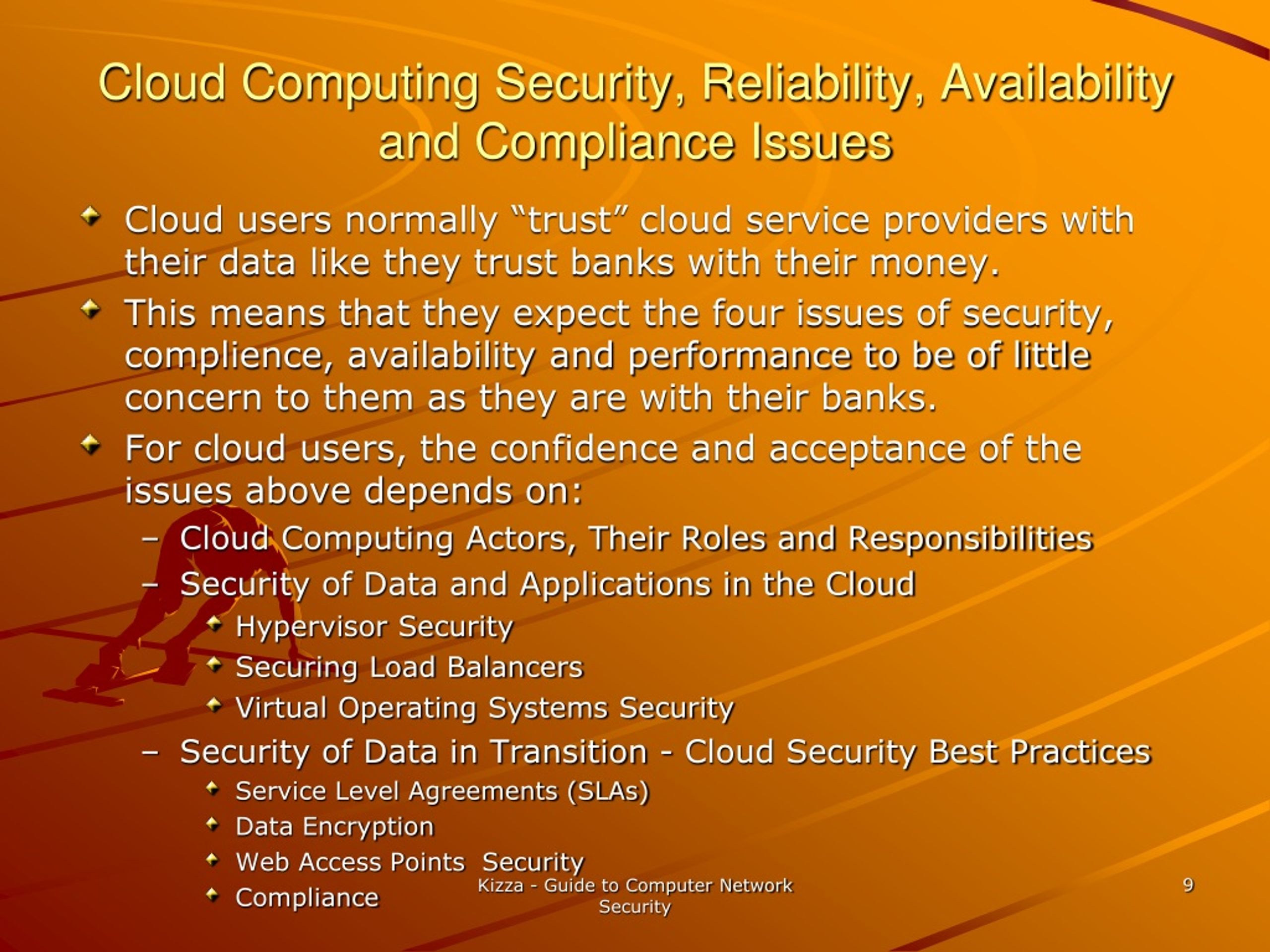
To understand cloud security, one must first grasp the concept of "Shared Responsibility." This framework defines the division of labor between the Cloud Service Provider (CSP)—such as Amazon Web Services (AWS), Microsoft Azure, or Google Cloud—and the customer. The primary cause of cloud-related security breaches remains the misunderstanding of this boundary, leading to misconfigured resources.
Provider Responsibilities: Security "of" the Cloud
The provider is responsible for the physical security of the data centers, including power, cooling, and physical access controls. They also manage the "fabric" of the cloud, which includes the compute, storage, database, and networking software that powers the environment. In 2026, providers utilize advanced AI-driven monitoring to detect hardware failures and potential intrusions at the hypervisor level before they impact the tenant.
Customer Responsibilities: Security "in" the Cloud
The customer is responsible for everything they place in the cloud. This includes the guest operating system (for IaaS), application software, and, most importantly, the data. Customers must configure Identity and Access Management (IAM) policies, manage encryption keys, and ensure that network traffic is restricted through firewalls and security groups.
The weight of this responsibility shifts depending on the service model:
- Infrastructure as a Service (IaaS): The customer has the most responsibility, including patching the OS and managing the network stack.
- Platform as a Service (PaaS): The provider manages the OS and runtime, while the customer focuses on application security and data.
- Software as a Service (SaaS): The provider manages almost everything; the customer is primarily responsible for data management and user access.
Key Security Pillars in Modern Cloud Environments
As we navigate 2026, the cloud security landscape has matured around five critical pillars. These pillars represent the technical depth required to maintain a robust posture against sophisticated cyber threats.
1. Identity and Access Management (IAM)
IAM is the new perimeter. In traditional computing, firewalls protected a physical location. In the cloud, identity is the only constant. A robust IAM strategy relies on the principle of Least Privilege, ensuring that users and services have only the permissions necessary to perform their tasks.
By 2026, Multi-Factor Authentication (MFA) has moved beyond SMS codes to FIDO2-compliant hardware keys and biometric passkeys as the standard. Furthermore, Cloud Infrastructure Entitlement Management (CIEM) tools are now essential for managing "identity sprawl," where thousands of non-human identities (like service accounts and Lambda functions) require precise permission auditing to prevent privilege escalation.
2. Data Protection and Encryption
Data protection involves securing information in three states: at rest, in transit, and in use.
- At Rest: Data stored on disks is protected using AES-256 encryption. Organizations now frequently use "Bring Your Own Key" (BYOK) or "Hold Your Own Key" (HYOK) models to maintain control over encryption keys independently of the provider.
- In Transit: Encryption via TLS 1.3 or higher ensures that data moving between the user and the cloud, or between cloud services, cannot be intercepted.
- In Use: A significant development in 2026 is the widespread adoption of Confidential Computing. This uses hardware-based Trusted Execution Environments (TEEs) to encrypt data while it is being processed in memory, protecting it even from the cloud provider's administrators.
3. Network Security and Micro-segmentation
In the cloud, network security is software-defined. Micro-segmentation allows administrators to divide the cloud environment into small, isolated zones. If one web server is compromised, the attacker cannot "move laterally" to the database server because the network policy explicitly forbids communication between those segments. Virtual Private Clouds (VPCs) and Private Links are used to ensure that sensitive data never touches the public internet.
4. Visibility and Continuous Monitoring
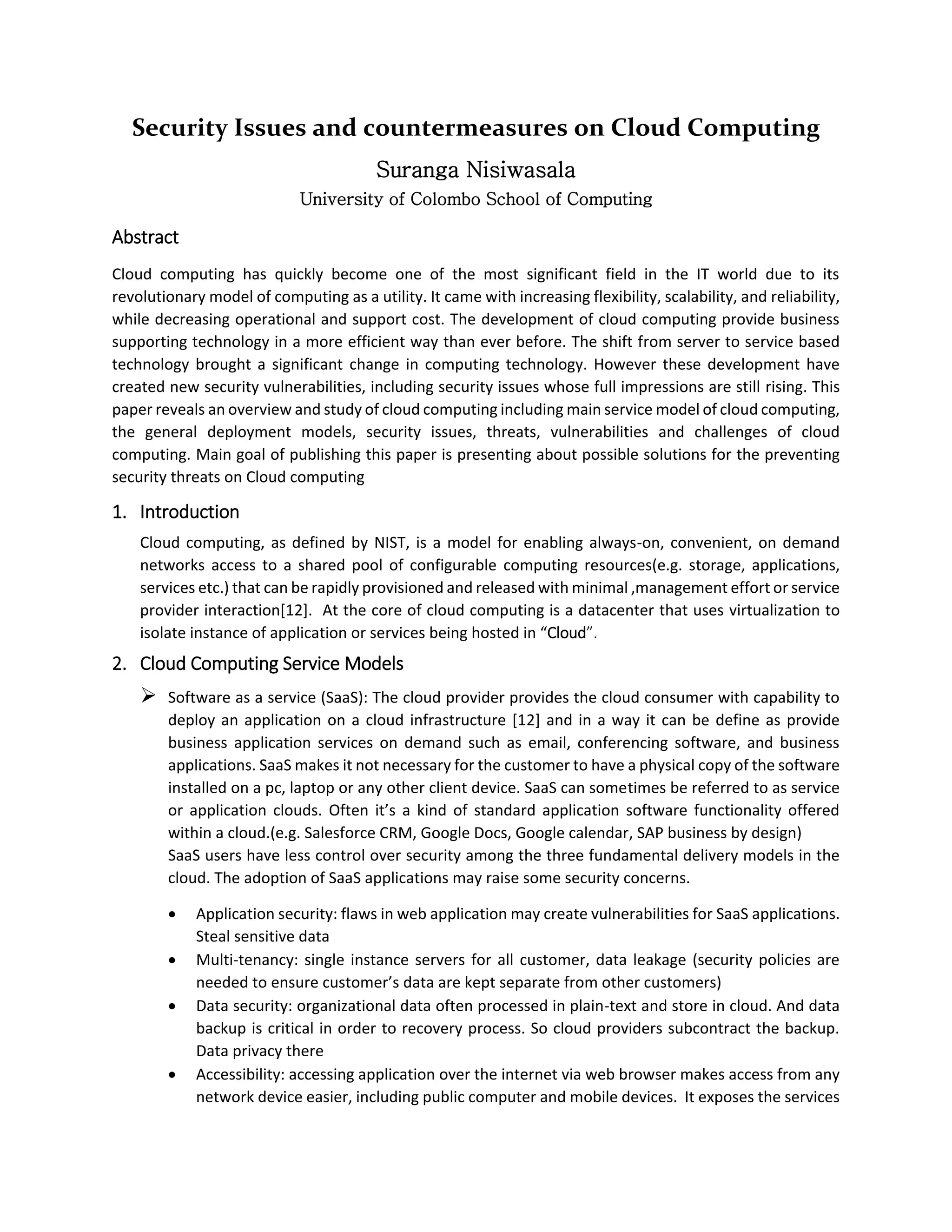
You cannot secure what you cannot see. Cloud-Native Application Protection Platforms (CNAPP) have become the standard in 2026 for providing a "single pane of glass" view. These platforms combine Cloud Security Posture Management (CSPM), which looks for misconfigurations like open S3 buckets, with Cloud Workload Protection Platforms (CWPP), which monitor the behavior of running containers and virtual machines for signs of malware or unauthorized execution.
5. Compliance and Governance
Cloud security is not just a technical challenge but a legal one. Organizations must comply with regional and industry-specific regulations such as GDPR (Europe), CCPA (California), and HIPAA (Healthcare). Cloud providers offer "Compliance-as-Code" tools that automatically audit the environment against these frameworks, providing real-time reporting for auditors.
Evolving Threats and Vulnerabilities in 2026
Despite advanced defenses, the threat landscape continues to evolve. Understanding the security aspects of cloud computing requires an awareness of contemporary risks.
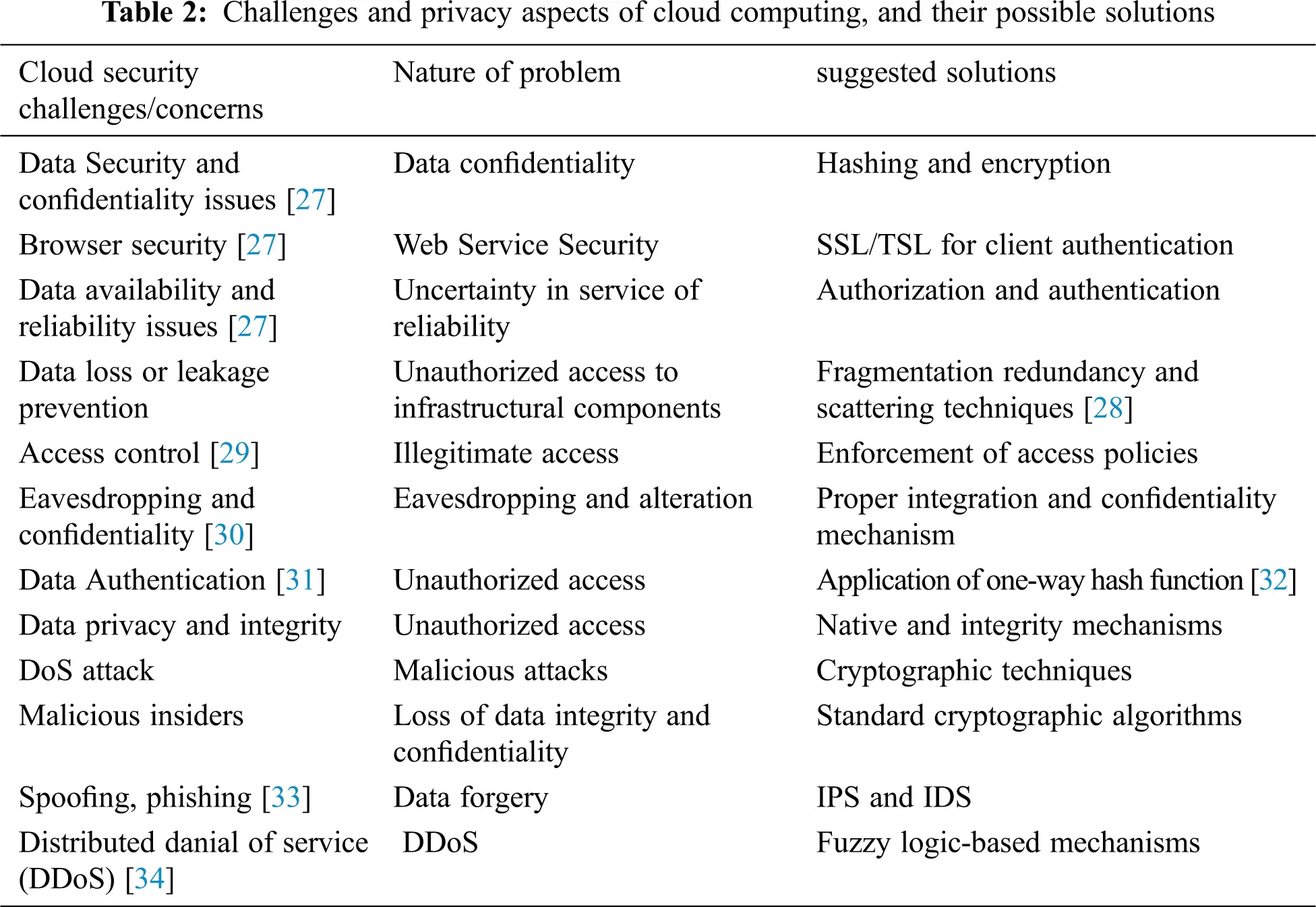
- Supply Chain Vulnerabilities: Modern cloud applications rely heavily on open-source libraries and third-party APIs. Attackers often target these dependencies to inject malicious code into the cloud environment.
- AI-Enhanced Phishing: Threat actors use generative AI to create highly convincing, localized phishing campaigns designed to steal cloud administrative credentials.
- Serverless Exploits: As organizations move toward serverless architectures (like AWS Lambda), attackers shift focus to event-injection attacks, where malicious data is passed to a function to trigger unauthorized actions.
- Cloud Misconfigurations: This remains the leading cause of data breaches. The complexity of cloud consoles can lead to accidental exposure of sensitive databases to the public web.
Technical Comparison of Cloud Security Models
The following table compares how security responsibilities and controls differ across the three primary cloud service models.
| Security Aspect | IaaS (Infrastructure) | PaaS (Platform) | SaaS (Software) |
|---|---|---|---|
| Physical Security | Managed by Provider | Managed by Provider | Managed by Provider |
| Operating System Patching | Customer Responsibility | Managed by Provider | Managed by Provider |
| Network Configuration | Customer Controlled | Provider Managed / Customer Configured | Managed by Provider |
| Identity Management | Full Customer Control | Customer Configured | Customer Configured |
| Application Security | Customer Responsibility | Customer Responsibility | Managed by Provider |
| Data Governance | Customer Responsibility | Customer Responsibility | Customer Responsibility |
| Encryption (At Rest) | Customer Configured | Often Provider Default | Managed by Provider |
Governance, Risk, and Compliance (GRC)
In 2026, the intersection of security and law is more complex than ever. The concept of Digital Sovereignty has forced many organizations to reconsider where their data resides. For instance, European organizations often require that data be stored and processed within EU borders to satisfy local regulations.
Effective governance involves setting "guardrails" rather than "gatekeeping." Instead of manually approving every cloud resource, security teams implement automated policies (using tools like Azure Policy or AWS Organizations) that prevent non-compliant resources from being created in the first place. For example, a policy might prevent any employee from launching a database that is not encrypted or is located in an unauthorized geographic region.
Best Practices for Implementation
To effectively manage the security aspects of cloud computing, organizations should adopt a Zero Trust architecture. This philosophy assumes that no entity—inside or outside the network—is inherently trusted.
- Automate Everything: Manual security checks cannot keep up with the scale of the cloud. Use Infrastructure as Code (IaC) scanning to find vulnerabilities before the code is even deployed.
- Centralize Logging: Ensure that logs from every cloud service are sent to a centralized Security Information and Event Management (SIEM) system. In 2026, these systems use machine learning to filter out "noise" and highlight only the most critical threats.
- Regular Penetration Testing: Automated tools are excellent, but they cannot replace human intuition. Conduct regular "Red Team" exercises to test the resilience of your cloud defenses against simulated attacks.
- Educate the Workforce: Security is a shared responsibility internally as well. Ensure developers understand secure coding practices and that executives recognize the risks associated with administrative access.
FAQ
What is the biggest security risk in cloud computing today?
As of 2026, the leading risk remains misconfiguration. Because cloud environments are highly dynamic and complex, a single mistake in a security group setting or a storage bucket policy can expose millions of records. Automated Cloud Security Posture Management (CSPM) is the primary defense against this risk.
Does the cloud provider have access to my data?
Technically, providers manage the underlying hardware, but they offer tools to prevent their own access. Through Confidential Computing and customer-managed encryption keys, you can ensure that the data is unreadable to anyone but your authorized users, including the provider's employees.
Is public cloud more secure than an on-premises data center?
Generally, yes. Major cloud providers invest billions of dollars annually in security, employing thousands of experts and utilizing hardware that most private companies could not afford. However, the cloud is only as secure as the customer's configuration. A "secure" cloud environment can still be breached if the customer uses weak passwords or leaves ports open.
How does Zero Trust work in the cloud?
Zero Trust operates on the principle of "never trust, always verify." It requires strict identity verification for every person and device trying to access resources on a private network, regardless of whether they are sitting in the office or working remotely. In the cloud, this is achieved through granular IAM policies, MFA, and continuous monitoring of device health.
What is "Compliance-as-Code"?
Compliance-as-Code refers to the use of automated scripts and policies to ensure that cloud resources meet regulatory standards (like SOC2 or ISO 27001). Instead of performing an audit once a year, the system continuously checks for compliance and can automatically "remediate" (fix) any issues it finds.
Practical Recommendation
For organizations looking to strengthen their cloud security posture in 2026, the immediate next action should be the implementation of a Cloud-Native Application Protection Platform (CNAPP). These platforms bridge the gap between development and security, providing the visibility needed to manage risks across multi-cloud environments. Additionally, move toward Confidential Computing for all highly sensitive workloads to ensure data remains encrypted even during active processing.
Image Gallery
Select an image to open it in a new tab.
Akira Tanaka
International Academic Trends Correspondent
