
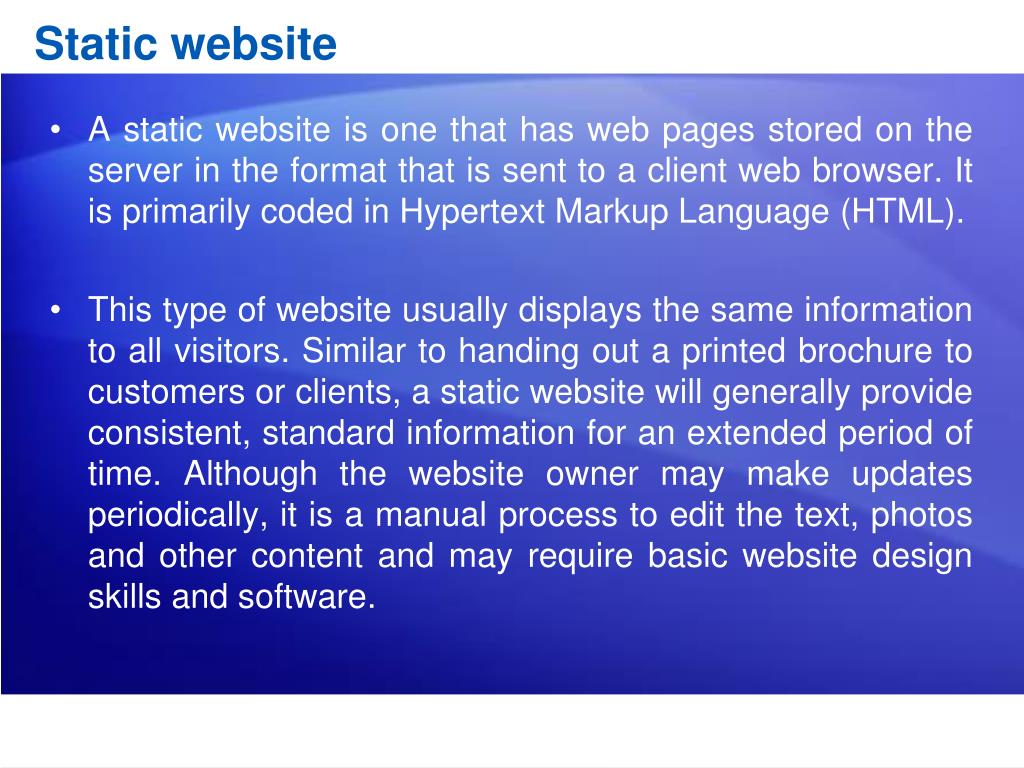
A static website serves pre-rendered HTML, CSS, and JavaScript files directly to a user's browser from a storage bucket or Content Delivery Network (CDN). Unlike dynamic sites, it requires no real-time server-side processing or database queries during the request-response cycle, resulting in superior performance, security, and cost-efficiency for content-driven digital experiences.
The Evolution of the Static Web
The concept of the static website has undergone a radical transformation. In the early days of the internet, every site was static—a collection of handwritten HTML files stored on a server. As the need for interactivity grew, the industry shifted toward dynamic server-side languages like PHP and databases like MySQL. However, the complexity and security vulnerabilities of these systems led to a resurgence of static architecture, modernized by the Jamstack (JavaScript, APIs, and Markup) movement.
As of 2026, the "static" designation no longer implies a lack of interactivity. Through client-side hydration and the integration of third-party APIs, modern static sites offer the same rich user experiences as their dynamic counterparts. The role of static sites today is to decouple the content presentation from the backend logic, ensuring that the heavy lifting of page generation happens during a "build step" rather than at the moment a user clicks a link.
This architectural shift addresses the primary bottleneck of the web: the server-side "wait time." By moving the generation process to the developer's build environment, the end-user receives a fully formed document instantly.
The Core Advantages: Why Static is Standard
Understanding the role of static websites requires an analysis of why organizations have moved away from traditional monolithic architectures. The benefits are not merely incremental; they are foundational to how the modern web operates.
Unmatched Performance and Speed
In the 2026 digital landscape, speed is the primary metric for user retention and search engine optimization. Static sites are inherently fast because they eliminate the "Time to First Byte" (TTFB) delays caused by database lookups and server-side logic execution.
When a user requests a page from a static site, the server—or more commonly, an Edge node—simply hands over an existing file. This process is significantly faster than a dynamic server assembling a page on the fly. Furthermore, static files are easily cached across a Global Content Delivery Network. This means a user in Tokyo receives files from a Tokyo-based server, while a user in London receives them from a London-based node, reducing latency to near-zero levels.
Enhanced Security Posture
Dynamic websites are frequent targets for cyberattacks because they expose numerous "entry points." Every database query and server-side script is a potential vulnerability for SQL injection or Cross-Site Scripting (XSS).
The role of a static website in a security-conscious environment is to minimize the "attack surface." Because there is no active database or application server running in the production environment, there is nothing for a hacker to exploit. The site consists of "read-only" files. While the build environment or the Headless CMS (Content Management System) must still be secured, the public-facing side of the website is virtually impenetrable to traditional web-based attacks.
Seamless Scalability and Reliability
Traditional dynamic sites often struggle with "The Slashdot Effect"—a sudden surge in traffic that overwhelms the server’s CPU and RAM, causing the site to crash. To prevent this, dynamic sites require complex load balancing and auto-scaling infrastructure.
Static websites are infinitely easier to scale. Since they are served via CDNs, they can handle massive spikes in traffic without any additional configuration. The CDN provider manages the distribution of traffic across thousands of servers globally. If one node fails, another takes its place, providing a level of redundancy that is both cost-prohibitive and technically difficult to achieve with dynamic hosting.
Comparing Static and Dynamic Architectures
To fully grasp the role of static websites, it is helpful to compare them directly with dynamic systems across key operational metrics.
| Feature | Static Website (SSG/Jamstack) | Dynamic Website (SSR/Monolithic) |
|---|---|---|
| Page Generation | At Build Time (Pre-rendered) | At Request Time (On-the-fly) |
| Data Fetching | Client-side via APIs | Server-side via Database |
| Hosting Requirement | Storage Bucket / CDN | Application Server + Database |
| Security Risk | Very Low (No server-side logic) | High (Database/Server vulnerabilities) |
| Scalability | Native to CDN | Requires complex Load Balancing |
| SEO Performance | Excellent (Fast and crawlable) | Good (Depends on server speed) |
| Developer Experience | High (Modern tooling, Git-based) | Moderate (Server management needed) |
The Technical Pillars: How Modern Static Sites Work
The role of static websites is supported by three primary technical pillars: Static Site Generators (SSGs), Headless CMS, and Global Edge Networks.
Static Site Generators (SSGs)
An SSG is a tool that takes source files (often written in Markdown or JSON) and templates (like React, Vue, or Svelte components) and compiles them into a directory of static HTML files. Popular examples in 2026 include frameworks like Next.js, Hugo, and Jekyll.
The generator automates the repetitive tasks of web development. For example, if a developer changes the site’s navigation menu, the SSG will re-build every page on the site to reflect that change during the deployment process. This ensures that the final output is consistent and optimized for the browser.
Headless CMS Integration
One common misconception is that static sites are difficult for non-technical users to update. This is where the Headless CMS plays a vital role. A Headless CMS provides a user-friendly interface for content editors to write blog posts or update product listings, but it does not dictate how that content is displayed.
When an editor saves a change in a Headless CMS like Contentful or Strapi, it triggers a "Webhook." This Webhook tells the SSG to start a new build. The generator fetches the updated content via an API, creates the new static files, and deploys them to the CDN. This workflow preserves the ease of content management while maintaining the benefits of static architecture.
Edge Computing and CDNs
The role of the CDN has evolved from a simple cache to a sophisticated computing environment. In 2026, many static sites leverage "Edge Functions." These are small pieces of code that run on the CDN node closest to the user. They allow static sites to perform "dynamic-like" tasks, such as geo-location redirects, A/B testing, or authentication checks, without ever needing to contact a centralized origin server.
When to Choose a Static Architecture
While the role of static websites is expanding, they are not a universal solution for every project. Choosing the right architecture depends on the specific requirements of the application.
Ideal Use Cases
- Corporate and Marketing Websites: These sites prioritize brand image, SEO, and fast loading times. Static sites excel here because they provide the best possible performance for landing pages.
- Documentation and Knowledge Bases: Documentation is typically text-heavy and hierarchical. Using an SSG allows developers to write in Markdown and generate a searchable, high-performance portal.
- Blogs and Digital Publications: For content creators, the security and speed of a static site ensure that the reader's experience is never interrupted by server lag or downtime.
- E-commerce Product Catalogs: While the "cart" functionality might be dynamic, the product pages themselves are often static to ensure they rank well in search engines and load instantly for shoppers.
Limitations and Challenges
The primary challenge of a static site is the build time. For a website with hundreds of thousands of pages, generating the entire site every time a single comma is changed can be inefficient.
To solve this, modern frameworks use Incremental Static Regeneration (ISR). This allows the system to update specific pages in the background without re-building the entire site. However, for platforms that require "real-time" interaction from millions of users simultaneously (such as a social media feed or a high-frequency trading platform), a fully static approach remains impractical.
The Hybrid Reality: Blurring the Lines
By 2026, the strict binary between "static" and "dynamic" has largely dissolved. Most high-end websites use a hybrid approach. The shell of the page and the primary content are served statically for speed, while dynamic elements—such as user comments, personalized recommendations, or shopping carts—are fetched from APIs once the page has loaded in the browser.
This "Best of Both Worlds" strategy allows developers to treat the website as a distributed application. The role of the static website in this context is to provide a reliable, fast foundation upon which dynamic features can be safely layered.
Cost Considerations and Operational Efficiency
From a business perspective, the role of static websites is often defined by the bottom line. Traditional dynamic hosting requires a server to be running 24/7, regardless of how much traffic the site is receiving. This results in "wasted" compute cycles and higher monthly bills.
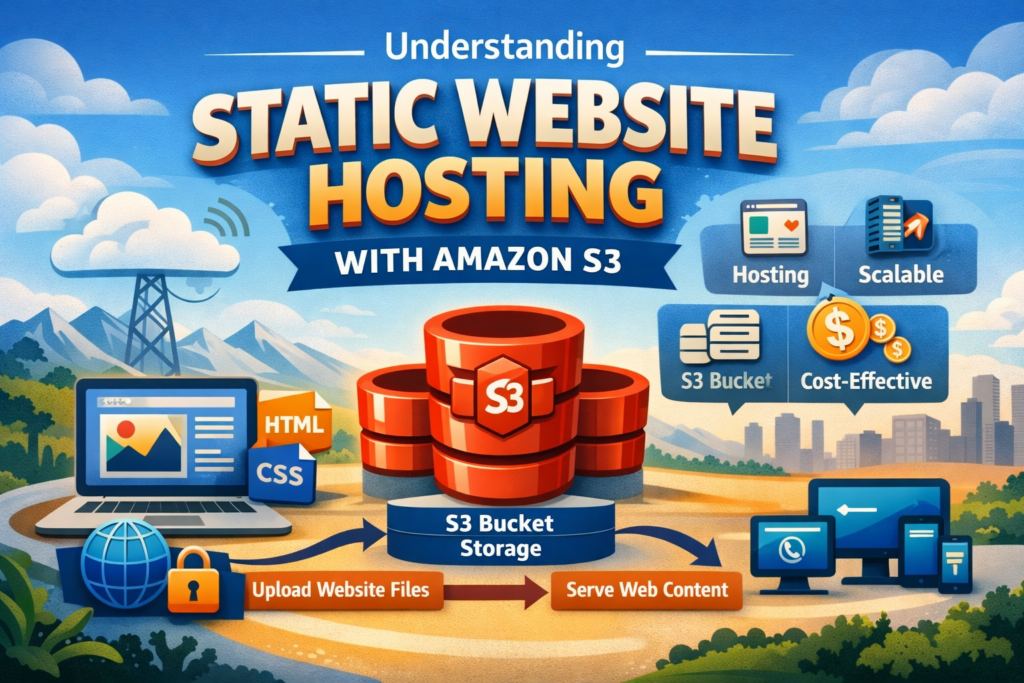
Static sites are typically hosted on "Serverless" infrastructure. You pay only for the storage of the files and the bandwidth used to serve them. For many small-to-medium-sized businesses, the cost of hosting a high-performance static site is virtually zero, as it often falls within the free tiers of major providers like Cloudflare Pages or GitHub Pages. Furthermore, the reduced need for dedicated DevOps staff to manage server security patches and database maintenance represents a significant long-term saving.
Implementation Steps: Moving to Static
For organizations looking to adopt a static architecture, the transition follows a standard lifecycle:
- Select a Framework: Choose an SSG that aligns with your team's existing skills (e.g., Next.js for React teams, Nuxt for Vue teams).
- Decouple Content: Identify a Headless CMS to house your data, separating it from the code.
- Configure CI/CD: Set up a Continuous Integration/Continuous Deployment pipeline (using tools like GitHub Actions) to automate the build process.
- Deploy to the Edge: Point your domain to a global CDN provider to ensure your static files are distributed worldwide.
- Audit Performance: Use tools like Google Lighthouse to verify that the static deployment is meeting speed and accessibility targets.
Frequently Asked Questions
Can I have a search bar on a static website?
Yes. Search on a static site is usually handled in one of two ways. You can use a third-party API service like Algolia or Meilisearch, which indexes your content and provides a search interface. Alternatively, for smaller sites, you can generate a static search index (a JSON file) that the browser downloads and searches locally using JavaScript. Both methods maintain the static nature of the hosting while providing full search functionality.
Is SEO better for static websites?
Generally, yes. Search engines prioritize "Core Web Vitals," which include loading speed and visual stability. Because static websites are pre-rendered, search engine crawlers can easily read the content without waiting for JavaScript to execute. This leads to faster indexing and potentially higher rankings compared to "Client-Side Rendered" applications that may be harder for bots to parse.
How do I handle forms and user input?
Since a static site has no backend to "post" a form to, developers use "Form-as-a-Service" providers. Services like Formspree, Basin, or the built-in form handling in platforms like Netlify capture the data and send it to your email or a database. This allows you to collect leads or feedback without managing your own server.
Do static websites take a long time to update?
With modern Incremental Static Regeneration (ISR), updates can be nearly instantaneous. While a full site rebuild might take minutes for a very large site, ISR allows the server to update only the changed page in the background. As soon as the new version is ready, it replaces the old one on the CDN, ensuring the user always sees the most recent content without a full deployment cycle.
Is a static website the same as a "Single Page Application" (SPA)?
Not necessarily. An SPA (like a basic React app) often loads a single blank HTML file and then uses JavaScript to build the interface. A static website (SSG) pre-builds every page into a full HTML file. While an SSG can "become" an SPA after it loads (a process called hydration), the primary difference is that the SSG provides content immediately upon the first request, whereas a pure SPA requires the browser to do the work.
Final Recommendation
For the vast majority of web projects in 2026—ranging from personal portfolios to enterprise marketing hubs—a static-first architecture is the most logical choice. The role of static websites is to provide a foundation of speed and security that dynamic systems cannot match without extreme complexity.
If your project is content-centric and does not require millisecond-level data updates for every user, you should prioritize a Static Site Generator coupled with a Headless CMS. This approach not only future-proofs your digital presence but also significantly reduces the overhead of maintenance and the risks associated with web security.
Image Gallery
Select an image to open it in a new tab.

Simon Caldwell
Enterprise Technology and Systems Editor
