
Arizona remains one of the few places in the United States that does not observe Daylight Saving Time. While most of the country moves their clocks forward in March and back in November, Arizona stays on Mountain Standard Time (MST) year-round. The only exception within the state is the Navajo Nation, which does observe the time change.
For residents, travelers, and businesses operating in 2026, understanding the nuances of Arizona’s timekeeping is essential for scheduling, logistics, and digital synchronization. Because Arizona does not "spring forward," its relationship with other time zones shifts twice a year. During the summer months, Arizona effectively aligns with Pacific Daylight Time (PDT), while in the winter, it aligns with Mountain Standard Time (MST) alongside states like Colorado and Utah.
The History of Arizona’s Exemption
To understand why Arizona opted out of the federal daylight savings rhythm, one must look back to the late 1960s. Following the passage of the Uniform Time Act of 1966, states were given the option to stay on standard time year-round through legislative action. Arizona initially complied with the federal shift in 1967, but the experiment was widely considered a failure by the local population.
The primary driver for the exemption is the state’s extreme desert climate. In a region where summer temperatures frequently exceed 110 degrees Fahrenheit (43 degrees Celsius), residents generally prefer the sun to set earlier in the evening. If Arizona were to observe Daylight Saving Time, the sun would stay up until nearly 9:00 PM during the peak of summer. This extra hour of daylight would mean an extra hour of intense heat, leading to significantly higher energy consumption as air conditioning units struggle to cool homes and businesses during the hottest part of the day.
In 1968, the Arizona Legislature officially voted to opt out of the time change. Since then, the state has maintained a consistent UTC-7 offset, providing a predictable schedule for its inhabitants while occasionally confusing those outside its borders.
The Navajo Nation Exception: A "Time Zone Donut"
The most complex aspect of time in Arizona involves the Navajo Nation. The Navajo Nation is a vast Native American territory that spans parts of Arizona, New Mexico, and Utah. Because the reservation covers multiple states, the tribal government chose to observe Daylight Saving Time to maintain a uniform time across its entire jurisdiction.
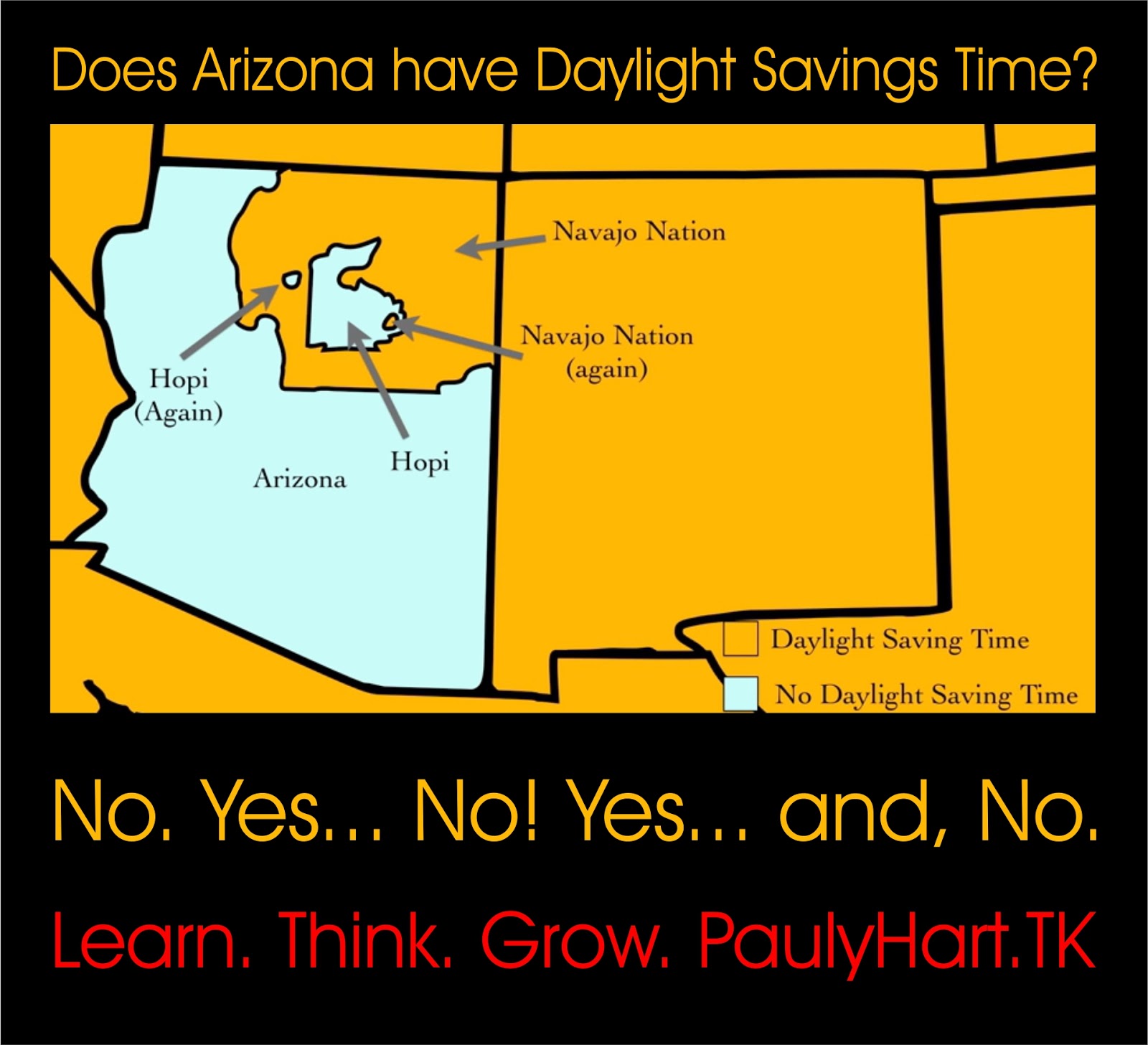
This creates a unique geographical phenomenon often referred to as a "time zone donut."
- The Outer Ring: Most of Arizona stays on Mountain Standard Time (No DST).
- The Middle Ring: The Navajo Nation, which surrounds the Hopi Reservation, observes Daylight Saving Time (Changes clocks).
- The Center Hole: The Hopi Reservation, which is entirely surrounded by the Navajo Nation, does not observe Daylight Saving Time, staying aligned with the rest of Arizona.
For a traveler driving from Flagstaff to the Navajo Nation and then into the Hopi Reservation during the summer of 2026, the time on their dashboard or smartphone could change three times within a relatively short distance. This discrepancy is particularly important for those attending tribal events, visiting government offices, or catching public transportation within these areas.
Time Zone Comparisons for 2026
In 2026, the national transition to Daylight Saving Time begins on Sunday, March 8, and ends on Sunday, November 1. During these windows, the "time gap" between Arizona and other major U.S. cities changes.
| Region / City | Time Difference (Nov 2, 2025 – March 7, 2026) | Time Difference (March 8, 2026 – Oct 31, 2026) |
|---|---|---|
| Los Angeles (PT) | AZ is 1 hour ahead | AZ is the SAME time |
| Denver (MT) | AZ is the SAME time | AZ is 1 hour behind |
| Chicago (CT) | AZ is 1 hour behind | AZ is 2 hours behind |
| New York (ET) | AZ is 2 hours behind | AZ is 3 hours behind |
| London (GMT/BST) | AZ is 7 hours behind | AZ is 8 hours behind |
The "Pacific Time" Illusion
A common misconception is that Arizona "switches" to Pacific Time in the summer. Technically, Arizona never leaves Mountain Standard Time. However, because California and the Pacific Northwest move their clocks forward to Pacific Daylight Time (which is also UTC-7), the two regions end up on the same clock for approximately eight months of the year. When the rest of the country "falls back" in November, Arizona remains at UTC-7 while the Pacific zone moves to UTC-8, putting Arizona one hour ahead again.
Impact on Business and Remote Work
In 2026, with the continued prevalence of remote work and globalized digital commerce, Arizona’s refusal to change clocks presents specific logistical challenges. Professionals working in Phoenix or Tucson must be hyper-aware of their colleagues' local times in New York or London.
Scheduling and Synchronization
Most modern calendar applications (Google Calendar, Microsoft Outlook, Apple Calendar) handle Arizona time automatically, provided the user selects "Phoenix" or "Arizona" as their specific time zone rather than "Mountain Time." If a user chooses "Mountain Time (US & Canada)," the software may assume the user wants to follow the standard DST rules used in Denver or Salt Lake City, leading to missed meetings in March and November.
Television and Broadcasting
For decades, television broadcasts in Arizona followed a "delayed" or "live" split. Live sports, such as NFL games or NBA playoffs, usually air at their "real-time" equivalent, meaning a game starting at 8:00 PM Eastern will air at 5:00 PM in Arizona during the summer. However, network primetime programming is often delayed by local affiliates to ensure "The Tonight Show" or local news airs at the traditional 10:00 PM or 11:00 PM slot, regardless of what the clock says in New York.
Energy Consumption and Environmental Factors
The primary argument for Daylight Saving Time has historically been energy conservation—the idea that more evening daylight reduces the need for artificial lighting. However, in the 21st century, the "energy" conversation has shifted from lighting to cooling.
Research conducted by various environmental groups and university studies in the Southwest suggests that for Arizona, DST would be an environmental detriment. Because the hottest part of the day typically occurs in the late afternoon (between 3:00 PM and 5:00 PM), pushing the "clock" forward would move that peak heat into the hours when most people are returning home from work. This leads to a massive surge in residential air conditioning usage. By keeping the sun "earlier" in the day, Arizona allows for a slightly longer cooling period in the evening, which eases the burden on the state's electrical grid.
Technological Considerations and Device Settings
In 2026, almost all smartphones, computers, and IoT (Internet of Things) devices utilize the Network Time Protocol (NTP) to stay accurate. These devices use a database known as the IANA Time Zone Database (or "Olson database"), which contains the historical and current time rules for every region on Earth.
Troubleshooting Auto-Updates
Occasionally, travelers entering Arizona from a neighboring state like Nevada or New Mexico might find their phones "jumping" between times if they are near the border. This happens because the phone connects to a cell tower in a different state. To prevent this, users frequently traveling near the border should:
- Go to Settings > General > Date & Time.
- Disable "Set Automatically."
- Manually select Phoenix, Arizona as the time zone.
This ensures that the device stays on MST regardless of which cell tower it pings. For smart home devices (thermostats, security systems), it is vital to verify that the location is set correctly to Arizona, otherwise, scheduled events like "turn on lights at sunset" may occur an hour earlier or later than intended after a national DST shift.
Potential Legislative Changes
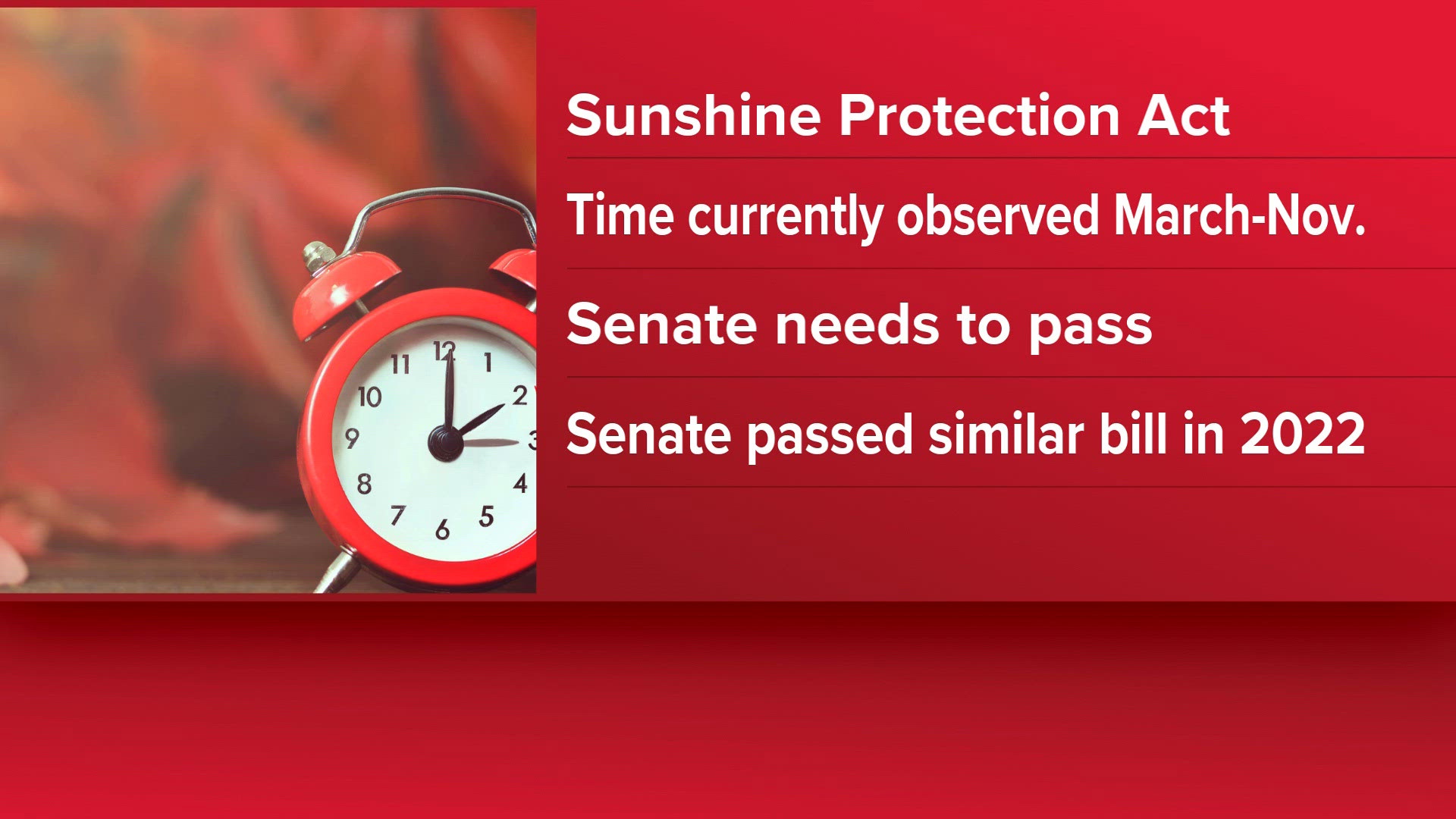
The debate over time changes is not limited to Arizona. In recent years, there has been a national movement in the United States to make Daylight Saving Time permanent (the Sunshine Protection Act). As of 2026, while several versions of this bill have circulated through Congress, Arizona remains steadfast in its position.
If the United States were to adopt permanent Daylight Saving Time, Arizona would likely face a choice:
- Maintain the status quo (Standard Time), which would leave Arizona permanently one hour behind the rest of the Mountain states and permanently aligned with the Pacific states.
- Transition to permanent Daylight Saving Time, which would align Arizona with the Mountain states year-round but would bring back the issue of late-evening heat that the state has avoided since 1968.
Currently, there is no significant political appetite within Arizona to change its long-standing exemption. The consensus among the state's residents and leadership is that the current system serves the desert environment best.
Practical Tips for Visitors in 2026
If you are planning a trip to the Grand Canyon, Sedona, or the Phoenix metropolitan area in 2026, keep these tips in mind to ensure you are always on time:
- Confirm Flight Times: Airlines always list flight times in the local time of the departure and arrival city. If your flight leaves Phoenix at 10:00 AM, it is 10:00 AM MST, regardless of what time it is in your home city.
- Check the Navajo Nation: If your itinerary includes Monument Valley or Antelope Canyon, verify with your tour guide which time they are following. Most guides in these areas will explicitly state whether they are on "Arizona Time" or "Navajo Time."
- Coordinate with Home: If you are calling friends or family back home, remember that from March 8 to November 1, 2026, you will be three hours behind the East Coast. From November 1 onward, you will only be two hours behind.
- Sun Protection: Regardless of what the clock says, the sun in Arizona is intense. An "earlier" sunset doesn't mean the ground cools down immediately; heat radiates from the pavement and desert floor long after the sun goes down.
Frequently Asked Questions
Does Phoenix ever change its clocks?
No, the city of Phoenix, along with the rest of the state (except the Navajo Nation), stays on Mountain Standard Time year-round. They do not observe the "spring forward" or "fall back" ritual used by 48 other states.
Why does the Navajo Nation use Daylight Saving Time while Arizona doesn't?
The Navajo Nation extends into New Mexico and Utah, both of which observe Daylight Saving Time. To keep a consistent time across their entire tribal land and to align with federal offices in other states, the Navajo Nation chooses to follow the national DST schedule.
Is Arizona on Pacific Time or Mountain Time?
Arizona is officially in the Mountain Time Zone. However, because it does not observe Daylight Saving Time, it shares the same clock time as the Pacific Time Zone (like California) during the spring and summer months. In the winter, it shares the same clock time as the Mountain Time Zone (like Colorado).
What happens to my smartphone clock when I enter Arizona?
Most smartphones use GPS and cell tower data to determine your location. When you cross the border into Arizona from a state that uses DST, your phone should automatically update to the correct local time. However, near the borders of the Navajo Nation, it is common for phones to toggle back and forth between the two different times.
When does the time change in 2026?
Nationally, Daylight Saving Time begins at 2:00 AM on Sunday, March 8, 2026, and ends at 2:00 AM on Sunday, November 1, 2026. Arizona will ignore both of these events, while the Navajo Nation will adjust its clocks accordingly.
Does the Hopi Reservation change time?
No. Even though the Hopi Reservation is entirely surrounded by the Navajo Nation, the Hopi tribe follows the rest of Arizona and does not observe Daylight Saving Time.
Next Actions for Managing Arizona Time
To avoid scheduling errors, travelers and remote workers should manually verify their digital calendar settings. Ensure your "Home Time Zone" or "Event Time Zone" is explicitly set to Phoenix rather than a generic "Mountain Time" setting. If you are conducting business within the Navajo Nation or the Hopi Reservation, always clarify the local time with your contact person at least 24 hours before your scheduled appointment.
Image Gallery
Select an image to open it in a new tab.


Lars Thomsen
Global Labor Markets and Economic Strategy Editor
