A Supernova Simple Definition Explained: How Cosmic Explosions Shape the Universe

A supernova is the sudden, immensely powerful explosion of a star at the end of its life cycle. This catastrophic cosmic event briefly outshines entire galaxies, releasing vast amounts of energy, light, and newly forged chemical elements into space while leaving behind extreme stellar remnants such as neutron stars or black holes.
What Is a Supernova? A Simplified Core Definition
To understand a supernova, it helps to imagine a star as a giant balancing act between two powerful physical forces. Throughout most of its active life, a star exists in a state called hydrostatic equilibrium. On one side, the immense weight of the star's own gravity constantly pulls all of its material inward toward the center. On the other side, intense heat produced by nuclear fusion in the star's core generates an outward pressure. As long as the star has nuclear fuel—primarily hydrogen—to burn, this outward thermal pressure balances the inward gravitational pull, keeping the star stable for millions or billions of years.
A supernova occurs when this delicate gravitational balance breaks down permanently. When a star runs out of usable fuel or gains excess mass from a binary companion, gravity takes complete control or a sudden nuclear chain reaction ignites out of control. The result is a cosmic explosion of unfathomable magnitude. During a supernova, a single star can radiate as much energy in a few weeks as the Sun will emit over its entire 10-billion-year lifetime.
Astronomers classify supernovas into two primary categories based on how the balance is broken: core-collapse supernovas (typically classified observationally as Type II, Type Ib, or Type Ic) and thermonuclear supernovas (classified primarily as Type Ia). Both mechanisms result in the destruction of the original star, but their physical triggers and chemical outputs differ significantly.
The Two Main Types of Supernovas Explained
While all supernovas represent catastrophic stellar deaths, the physical processes that drive them divide the phenomena into two distinct categories. Understanding these two mechanisms reveals how stars of different sizes and environment types meet their end.
Stellar Life Cycle Path: Low to Mid-Mass Star (<8 Solar Masses) -> White Dwarf -> Accretion/Merger -> Type Ia Supernova High-Mass Star (>8 Solar Masses) -> Supergiant -> Core Collapse -> Type II Supernova
1. Type Ia Supernovas (Thermonuclear Explosions)
Type Ia supernovas occur in binary star systems containing at least one white dwarf. A white dwarf is the dense, burnt-out core left behind after a low- to medium-mass star (similar to our Sun) sheds its outer layers. A typical white dwarf is about the size of Earth but contains a mass comparable to that of the Sun.
Because white dwarfs no longer generate heat through active nuclear fusion, they are held up by a quantum mechanical effect known as electron degeneracy pressure. However, electron degeneracy pressure has a strict physical limit known as the Chandrasekhar limit, which is approximately 1.4 times the mass of our Sun ($1.4 M_\odot$).
If a white dwarf orbits close enough to a companion star, its gravity can strip matter away from that companion—a process called accretion. Alternatively, two white dwarfs in a tight orbit may gradually spiral together and merge. In either scenario, once the white dwarf's mass approaches the Chandrasekhar limit, internal pressure and temperature rise to extreme levels.
This environment ignites a runaway carbon-oxygen nuclear fusion reaction throughout the star. Unlike normal stars, which expand and cool when heat increases, degenerate white dwarf material cannot regulate its temperature. The fusion wave sweeps through the star in seconds, completely disrupting and vaporizing the white dwarf without leaving a central stellar core behind.
2. Core-Collapse Supernovas (Type II, Ib, and Ic)
Core-collapse supernovas occur in massive stars that possess at least 8 to 10 times the mass of our Sun. These massive stars burn through their nuclear fuel rapidly compared to smaller stars, living for only tens of millions of years rather than billions.
Throughout its life, a massive star fuses lighter elements into progressively heavier ones inside a layered core that resembles an onion:
- Outer layers: Hydrogen fusing into Helium
- Middle layers: Helium fusing into Carbon, Oxygen, Neon, and Magnesium
- Inner layer: Silicon fusing into Iron
This fusion sequence reaches a absolute barrier at iron. The nuclear fusion of elements lighter than iron releases energy, generating the thermal pressure needed to combat gravity. Fusing iron atoms, however, requires an input of external energy rather than releasing it.
When a star builds up a central core of solid iron, energy generation in the core stops instantly. Deprived of outward radiation pressure, the core succumbs to its own enormous gravity and collapses inward in a fraction of a second, accelerating at a significant fraction of the speed of light.
As the inner core compresses into an ultra-dense sphere of neutrons, it reaches a threshold of nuclear density and snaps back slightly—an event known as core rebound. This rebound sends a powerful shockwave traveling outward through the falling outer layers of the star. Supported by a flood of elusive particles called neutrinos, the shockwave tears through the outer gas envelopes, blasting them outward into interstellar space at thousands of kilometers per second.

Step-by-Step Anatomy of a Stellar Explosion
To visualize how a massive star undergoes a core-collapse supernova, consider the timeline of events that unfold during its final moments:
- Fuel Exhaustion: The star completes its silicon-burning phase, leaving an inert iron core roughly the size of Earth but exceeding 1.4 solar masses.
- Catastrophic Core Collapse: Without nuclear heat to support it, the iron core collapses within roughly 0.2 seconds. Electrons and protons inside the core are crushed together under extreme pressure to form neutrons and neutrinos.
- Neutron Core Rebound: The core collapses until it reaches the density of an atomic nucleus. At this point, the strong nuclear force prevents further compression. The core stiffens and rebounds slightly.
- Shockwave Propagation: The rebounding core slams into the infalling outer layers of the star, creating a powerful outward-moving shockwave. Neutrinos generated in the core escape and heat the plasma directly behind the shockwave, giving it the energy needed to drive through the stellar surface.
- Stellar Ejection: The shockwave reaches the surface of the star, creating a brilliant flash of radiation across the electromagnetic spectrum. The outer layers of gas are ejected into interstellar space at speeds exceeding 10,000 to 30,000 kilometers per second.
- Luminosity Peak: Over the following days and weeks, radioactive isotopes synthesized during the explosion (primarily Nickel-56 decaying into Cobalt-56 and Iron-56) keep the expanding debris cloud glowing brightly.
What Remains After a Supernova?
A supernova explosion does not simply erase a star; it leaves behind exotic structural remnants and transforms the surrounding interstellar space. The exact nature of the remnant depends on the initial mass of the progenitor star and the category of the explosion.
Initial Stellar Mass Supernova Type Final Remnant ----------------------------------------------------------------------------------- White Dwarf (+ Accretion/Merger) -> Type Ia -> No central object (Debris cloud only) 8 to 20-25 Solar Masses -> Type II Core Collapse -> Neutron Star / Pulsar Greater than 25-30 Solar Masses -> Type II Core Collapse -> Stellar-Mass Black Hole
Neutron Stars and Pulsars
If the collapsing stellar core has a mass between approximately 1.4 and 2.1 solar masses, gravitational collapse is halted by neutron degeneracy pressure. The result is a neutron star—an object containing the mass of more than 400,000 Earths packed into a sphere only about 20 kilometers (12 miles) in diameter.
Neutron stars possess extreme magnetic fields and spin at rapid rates. When a neutron star emits focused beams of electromagnetic radiation along its magnetic poles that sweep past Earth like a lighthouse beam, astronomers observe it as a pulsar.
Black Holes
If the original star is exceptionally massive (typically greater than 20 to 30 solar masses), the mass of the collapsing core exceeds the limit that neutron degeneracy pressure can support (known as the Tolman-Oppenheimer-Volkoff limit). In this scenario, gravity wins entirely. The core continues collapsing past the neutron stage until its matter is concentrated into an infinitely dense point called a singularity, forming a stellar-mass black hole.
Supernova Remnants
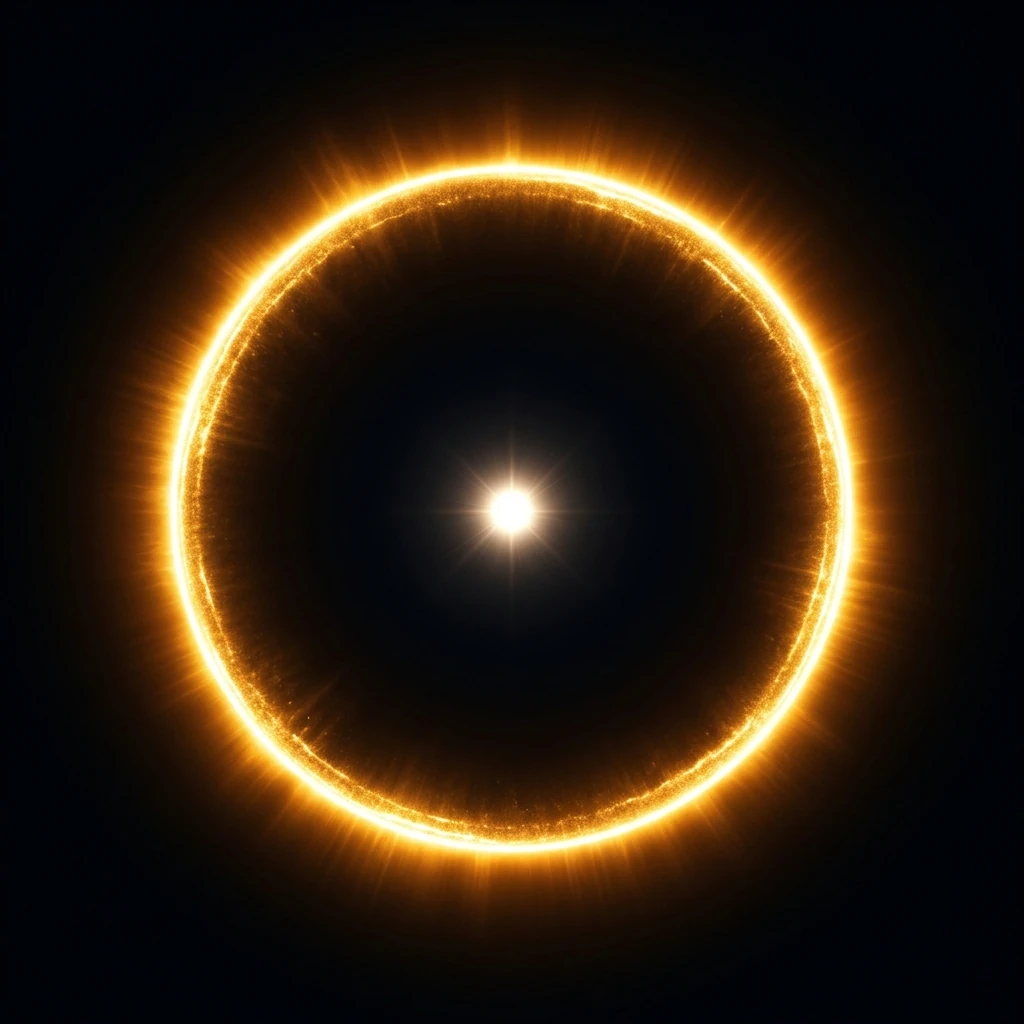
The gas and dust driven off by the explosion do not vanish. They expand outward into the interstellar medium, forming glowing nebulae known as supernova remnants. Famous examples include the Crab Nebula (M1), which originated from a supernova observed on Earth in the year 1054, and the Cassiopeia A remnant.
These expanding clouds sweep up surrounding gas, creating turbulent environments where shockwaves compress dust and initiate the formation of new generations of stars and solar systems.
Comparison: Type Ia vs. Type II Supernovas
The physical differences between the two main categories of supernovas shape how astronomers detect and analyze them. The following reference table outlines their defining characteristics:
| Property | Type Ia Supernova | Type II Supernova |
|---|---|---|
| Progenitor System | Carbon-Oxygen White Dwarf in a binary system | Single massive star (>8 Solar Masses) |
| Primary Trigger Mechanism | Thermonuclear runaway reaction | Gravitational core collapse |
| Hydrogen Spectral Lines | Absent (White dwarfs are stripped of hydrogen) | Present (Massive stars retain rich hydrogen outer layers) |
| Peak Absolute Brightness | Extremely consistent (~ -19.3 magnitude) | Variable depending on stellar mass and envelope size |
| Central Remnant | None (Star is completely destroyed) | Neutron Star, Pulsar, or Black Hole |
| Primary Elements Produced | Iron-peak elements (Iron, Nickel, Cobalt) | Intermediate-mass elements (Oxygen, Neon, Magnesium, Silicon) |
| Cosmological Utility | "Standard Candles" for measuring cosmic distances | Studying stellar evolution and galactic gas enrichment |
Why Are Supernovas Important to Science and Life?
Supernovas are far more than distant cosmic fireworks; they are essential drivers of cosmic chemistry, galactic evolution, and cosmological physics. Without supernovas, the rocky planets and complex biological life forms we observe today could not exist.
1. Cosmic Nucleosynthesis (The Origin of Elements)
During the Big Bang, the universe formed primarily hydrogen and helium, along with trace amounts of lithium. Almost all heavier elements on the periodic table were created inside stars or during stellar deaths—a process known as cosmic nucleosynthesis.
While normal stellar fusion produces elements up to iron, the violent environment of a supernova explosion provides the rapid neutron capture process (r-process) necessary to forge even heavier elements. Elements like gold, platinum, uranium, and iodine are created during supernova events and energetic neutron star mergers. The iron in human blood, the calcium in human bones, and the oxygen we breathe were all dispersed into space by ancient supernovas billions of years ago. As astrophysicist Carl Sagan famously stated, life on Earth is literally made of "star stuff."
2. Measuring the Expansion of the Universe
Because Type Ia supernovas explode when a white dwarf reaches a specific mass threshold, their intrinsic brightness is remarkably consistent. This predictability allows astronomers to use them as standard candles—cosmic distance markers that reveal how far away a distant galaxy is based on how faint the supernova appears from Earth.
In the late 1990s, teams analyzing distant Type Ia supernovas discovered that light from the most distant explosions was fainter than expected. According to research published through the NASA Astrophysics Data System, this landmark discovery proved that the expansion of the universe is accelerating, led by an unknown force now known as dark energy.
3. Triggering Star Formation
As supernova shockwaves travel through space at high speeds, they slam into cool clouds of interstellar gas and dust. This shockwave compresses the gas clouds, causing high-density regions to collapse under their own gravity. This process, known as shock-induced star formation, often triggers the birth of new star clusters and planetary systems.
Common Misconceptions About Supernovas
Despite their prominent role in popular science, several persistent myths surround supernova events:
- Myth 1: Our Sun will eventually explode as a supernova.
- Fact: The Sun does not possess enough mass to undergo a core collapse, nor does it have a binary companion to drive a Type Ia thermonuclear explosion. In about 5 billion years, the Sun will expand into a red giant and eventually shed its outer layers peacefully as a planetary nebula, leaving behind a stable white dwarf.
- Myth 2: Supernovas happen instantaneously without warning.
- Fact: While the core collapse itself occurs in fractions of a second, the progenitor star displays clear signs of instability, such as rapid mass loss, surface pulsations, and altered chemical compositions in its outer atmosphere, long before the final explosion.
- Myth 3: A nearby supernova could strike Earth without warning and destroy it tomorrow.
- Fact: To pose a severe threat to Earth's ozone layer through high-energy gamma rays and X-rays, a supernova would need to occur within roughly 30 to 50 light-years. Astronomers have cataloged all candidate massive stars in our immediate galactic neighborhood, and none of the stars within that dangerous distance zone are massive enough to undergo a supernova explosion.
Frequently Asked Questions
How often do supernovas happen in our galaxy?
In a galaxy the size of the Milky Way, astronomers estimate that a supernova occurs roughly two to three times per century. However, because dense clouds of interstellar dust block visible light along the galactic plane, many of these events occur out of direct optical view. Modern astronomical surveys monitor distant galaxies to observe hundreds of supernovas each year across the broader universe.
What is the difference between a nova and a supernova?
A nova is a much smaller thermonuclear explosion that occurs on the surface of a white dwarf. In a standard nova, the white dwarf accretes hydrogen gas from a companion star until the surface layer ignites, causing a temporary bright flare without destroying the white dwarf or stopping the accretion process. A supernova, by contrast, is a catastrophic event that completely destroys the white dwarf (Type Ia) or destroys a massive star's core (Type II).
What is a hypernova?
A hypernova—also referred to as a collapsar or super-luminous supernova—is a rare type of core-collapse explosion generated by an exceptionally massive, rapidly rotating star (typically greater than 30 to 40 solar masses). Hypernovas release up to 100 times more energy than a standard supernova and are frequently accompanied by long-duration gamma-ray bursts (GRBs).
How close would a supernova need to be to endanger life on Earth?
Astrophysical models published by major observatories indicate that a supernova would need to occur within roughly 30 light-years of Earth to cause severe biological damage. At that proximity, high-energy ionizing radiation could strip away Earth's protective ozone layer, exposing surface life to harmful solar ultraviolet radiation. The nearest potential supernova candidate, Betelgeuse, is located roughly 500 to 600 light-years away—well beyond the zone of atmospheric danger.
How long does a supernova stay visible in the sky?
When a supernova explodes, it reaches peak brightness within a few days to weeks. The expanding gas cloud then gradually cools and fades over several months to a few years. Historically significant supernovas within our galaxy, such as SN 1054 and SN 1572 (Tycho's Supernova), were bright enough to be seen with the naked eye during daytime for several weeks and remained visible at night for over a year.
Practical Next Steps for Astronomy Enthusiasts
If you want to observe, track, or learn more about supernovas using current astronomical resources, consider taking these practical steps:
- Monitor Real-Time Supernova Alerts: Follow automated sky surveys such as the Zwicky Transient Facility (ZTF) or the Vera C. Rubin Observatory's Legacy Survey of Space and Time (LSST). These projects continuously scan the night sky to detect new optical transients, including active supernovas.
- Participate in Citizen Science: Join community science initiatives through platforms like Zooniverse. Programs such as Supernova Hunters allow volunteers to cross-reference telescope images and help professional astronomers identify candidates before they fade.
- Explore Public Space Telescope Archives: Visit public imagery portals maintained by NASA, the European Space Agency (ESA), and the Space Telescope Science Institute (STScI) to explore high-resolution observations of supernova remnants captured by the Hubble Space Telescope and the James Webb Space Telescope.
Image Gallery
Select an image to open it in a new tab.
Ingrid Bjornson
Global Cyber Policy and Regulation Analyst
