Patriarchy is estimated to be between 6,000 and 12,000 years old, emerging primarily during the Neolithic Revolution. It developed as human societies transitioned from nomadic hunter-gatherer groups to settled agricultural communities, where the concepts of private property, sedentary land ownership, and patrilineal inheritance began to reshape social hierarchies.
While popular imagination often views male dominance as an "eternal" or "natural" state of human existence, historical and archaeological evidence suggests otherwise. For the vast majority of human history—spanning hundreds of thousands of years—human social structures were largely egalitarian or based on complementary roles rather than rigid hierarchies. The shift toward patriarchy was not a single event but a slow, multifaceted process that intertwined economic shifts, environmental pressures, and the institutionalization of social power.
The Pre-Patriarchal Era: Paleolithic Egalitarianism
To understand how old patriarchy is, one must first look at what existed before it. For approximately 95% of human history, humans lived as hunter-gatherers. Anthropological studies of contemporary foraging societies, such as the !Kung San or the Hadza, provide a window into how our ancestors likely lived. These societies are characterized by a high degree of egalitarianism.
In these contexts, food security depended on both hunting (primarily by men) and gathering (primarily by women). In many foraging environments, gathered plant foods provided up to 70% of the group's caloric intake, giving women significant economic leverage and autonomy. Decisions were typically made by consensus, and social status was fluid rather than inherited. Archaeological findings from the Paleolithic period support this, showing little difference in the burial goods or nutritional health between male and female remains.
The concept of "Man the Hunter" as the sole provider and "Woman the Gatherer" as a passive dependent is a modern projection that does not align with the archaeological record. Evidence of female hunters and male gatherers suggests that labor divisions were pragmatic and flexible, rather than dictated by a patriarchal ideology.
The Neolithic Revolution: The Seeds of Inequality
The transition from the Paleolithic (Old Stone Age) to the Neolithic (New Stone Age) around 10,000 BCE marked the single most significant shift in human social organization. This "Neolithic Revolution" involved the domestication of plants and animals and the establishment of permanent settlements.
The Impact of Sedentism and Private Property
As groups settled, the concept of "territory" and "property" emerged. Unlike nomadic life, where possessions must be carried and are therefore limited, settled life allowed for the accumulation of surplus food and material goods. This surplus became the first form of wealth.
With the accumulation of wealth came the desire to pass it on to one’s offspring. In a hunter-gatherer society, inheritance was of little consequence. In an agricultural society, however, the land and its yield were vital assets. To ensure that property stayed within a specific lineage, men sought to ensure the "legitimacy" of their heirs. This required the control of female sexuality and reproductive capacity, marking the foundational move toward patriarchal control.
The Shift in Labor Dynamics
The introduction of the heavy plow is often cited by historians, such as Ester Boserup, as a critical factor in the marginalization of women’s labor. Unlike hoe-farming, which women could perform while caring for children, plow-agriculture required greater upper-body strength and involved working far from the domestic sphere. As men took over the primary roles in food production, women were increasingly relegated to domestic labor and "reproduction"—producing the labor force (children) required to work the land.
The Institutionalization of Patriarchy (6,000 to 3,000 BCE)
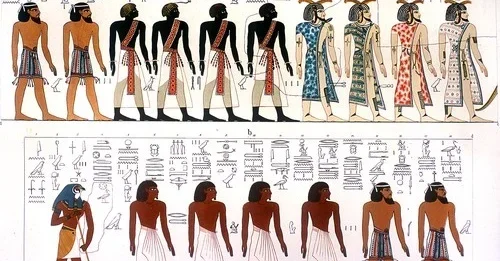
By the Bronze Age, the informal shifts of the Neolithic began to solidify into legal and religious institutions. It is during this period—roughly 5,000 to 6,000 years ago—that we see the clear emergence of patriarchal states in Mesopotamia, Egypt, and the Indus Valley.
Historian Gerda Lerner, in her seminal work The Creation of Patriarchy, argues that the institutionalization of patriarchy occurred in stages. One of the first steps was the "exchange of women" between tribes to form alliances. Women became the first "commodity" traded for the benefit of the group.
The Code of Hammurabi and Legal Subjugation
By the time of the Code of Hammurabi (c. 1754 BCE) in ancient Babylon, patriarchy was fully codified in law. These laws treated women as the property of their fathers or husbands. Adultery by a woman was a capital offense because it threatened the purity of the male lineage, whereas men were largely free to engage with concubines or enslaved women.
The Role of Militarization
As settlements grew into city-states, the need for defense and the desire for conquest led to the rise of a specialized warrior class. Warfare is inherently patriarchal; it prioritizes physical force and creates a hierarchy where those who "protect" (men) hold power over those who are "protected" (women and children). The glorification of the warrior-hero in early epics, such as the Epic of Gilgamesh, reflects this cultural shift toward celebrating masculine dominance and conquest.
Comparing Social Structures Across History
The following table outlines the fundamental differences between the egalitarian foraging structures that dominated most of human history and the patriarchal agricultural structures that followed.
| Feature | Hunter-Gatherer (Paleolithic) | Early Agricultural (Neolithic/Bronze) |
|---|---|---|
| Primary Economic Unit | The Mobile Band | The Settled Household/Kinship Group |
| Resource Distribution | Sharing/Reciprocity | Accumulation/Private Property |
| Labor Division | Flexible and Overlapping | Rigid (Domestic vs. Public) |
| Inheritance | Non-existent or Communal | Patrilineal (Father to Son) |
| Social Structure | Egalitarian Consensus | Hierarchical/State-Controlled |
| Status of Women | Autonomous and Productive | Dependent and Reproductive |
| View of Nature | Relational/Animistic | Dominant/Exploitative |
The Biological Myth: Why Patriarchy is Not "Natural"
A common argument used to justify the age and persistence of patriarchy is the "biological imperative." This theory suggests that because men are generally physically stronger and do not bear children, they were "destined" to lead. However, modern evolutionary biology and anthropology have largely debunked this as the sole cause.
Physical strength does not translate directly to political power in human societies. In fact, for most of our history, social intelligence, cooperation, and the ability to share resources were the primary drivers of survival. Furthermore, childbearing did not historically "sideline" women; in foraging societies, women remained highly mobile and economically active while nursing.
Patriarchy is a cultural construct, not a biological one. If it were biological, we would see it consistently across all human timeframes and cultures. Instead, we see a clear historical "start date" associated with specific economic and environmental changes. This distinction is crucial because it implies that if patriarchy was created by humans to solve specific problems (like property management), it can be modified or dismantled by humans as those problems or societal needs change.
The Spread of Patriarchy: Globalization of a System
While patriarchy emerged independently in several "cradles of civilization," its global dominance was accelerated by two major forces: organized religion and colonialism.
Religious Codification
The shift from polytheistic, earth-centered religions (which often featured powerful goddesses) to monotheistic, sky-god religions (Judaism, Christianity, Islam) provided a divine justification for male rule. When the "Creator" is envisioned as a Father, the earthly father’s authority is seen as a reflection of the divine order. By the Middle Ages, these religious frameworks had deeply embedded patriarchal norms into the fabric of European, Middle Eastern, and North African societies.
Colonialism and the Erasure of Matrilineal Cultures
As European powers expanded during the Age of Discovery and into the 19th century, they encountered many indigenous cultures that were matrilineal (where lineage and property pass through the mother) or egalitarian. Through conquest and the imposition of European legal systems, these structures were often systematically dismantled. For example, many Native American tribes and West African societies had complex systems where women held significant political and land-owning power, which were forcibly replaced by patriarchal colonial models.
Current Perspectives in 2026
As of 2026, the study of the origins of patriarchy has been revolutionized by high-resolution paleogenetics. By analyzing ancient DNA (aDNA) from Neolithic burial sites, researchers have been able to track migration patterns and kinship structures with unprecedented accuracy. Recent data suggests that the transition to "patrilocality"—where women leave their birth families to live with their husband’s kin—became dominant in Europe and parts of Asia much faster than previously thought, often following the arrival of pastoralist groups like the Yamnaya.
These findings confirm that the "age" of patriarchy is not a uniform number globally. While some regions transitioned 8,000 years ago, others maintained egalitarian or matrilineal structures until just a few centuries ago. This variability proves that patriarchy is a historical development rather than a human universal.
Frequently Asked Questions
Did matriarchy exist before patriarchy?
There is little archaeological evidence for a "pure" matriarchy where women held total power over men in the way patriarchy functions today. However, many "matrifocal" or "matrilineal" societies existed (and some still do) where women held central social, economic, and spiritual roles, and power was shared more equitably.
Is patriarchy found in animal species?
Dominance hierarchies exist in many species, but "patriarchy" as a systemic social and legal institution is unique to humans. Among our closest relatives, chimpanzees are patriarchal and aggressive, while bonobos are female-centered and peaceful. This suggests that humans had the evolutionary "choice" to follow either path.
Why did patriarchy become the global standard?
Patriarchy proved to be highly "efficient" for state-building and military expansion. Societies that could mobilize large numbers of men for war and control the reproduction of women to grow their populations often conquered those that were more egalitarian and less expansionist.
Can we pinpoint an exact year patriarchy began?
No, it was a gradual process. Most historians point to the window between 8,000 BCE (the rise of agriculture) and 3,000 BCE (the rise of the first states) as the period where the foundations were laid.
Is the age of patriarchy ending?
While patriarchal structures remain deeply embedded in global economics and politics in 2026, the last century has seen the most rapid dismantling of these norms in human history. The rise of women's education, reproductive autonomy, and legal rights marks a significant shift away from the Neolithic model.
Practical Recommendations for Further Study
To gain a deeper understanding of this topic, readers should look toward interdisciplinary sources that combine history, archaeology, and sociology.
- Read Foundational Texts: Start with The Creation of Patriarchy by Gerda Lerner for a historical perspective, and The Chalice and the Blade by Riane Eisler for a look at the cultural shifts.
- Explore Ancient DNA Research: Follow updates from the Max Planck Institute for Evolutionary Anthropology, which frequently publishes new findings on the social structures of ancient populations.
- Analyze Local History: Look into the pre-colonial history of your specific region. Many areas have "hidden" histories of matrilineal or egalitarian structures that were overwritten by later patriarchal systems.
- Support Comparative Anthropology: Study modern egalitarian societies to understand how different social models operate in practice today.
Understanding that patriarchy is a relatively recent development in the context of the human timeline—roughly 10,000 years out of 300,000 years of Homo sapiens existence—is essential for envisioning future social structures that are not bound by the same hierarchical constraints.
Image Gallery
Select an image to open it in a new tab.
Lars Thomsen
Global Labor Markets and Economic Strategy Editor
