The Most Isolated Country in the World: A Comprehensive Geopolitical and Geographic Analysis

The Democratic People's Republic of Korea (North Korea) is the most isolated country in the world regarding political, social, and digital connectivity. While the Pacific nation of Kiribati holds the title for geographic remoteness, North Korea’s "Hermit Kingdom" status remains unparalleled due to state-mandated seclusion, extreme travel restrictions, and a disconnected national intranet.
Defining the "most isolated" country requires a multi-dimensional approach. Isolation is rarely a singular metric; it is a combination of physical distance, political policy, economic sanctions, and technological barriers. As of 2026, the global landscape features several nations that exist on the periphery of the international community, each isolated for vastly different reasons. This analysis explores the primary candidates for the title, focusing on the mechanisms that sustain their separation from the rest of the world.
The Paradigm of Political Isolation: North Korea (DPRK)
North Korea remains the definitive example of a "Hermit Kingdom." Its isolation is not a product of geography—it shares land borders with China, Russia, and South Korea—but rather a deliberate result of the Juche ideology, which emphasizes national self-reliance and strict internal control.
The Information Air Gap
The primary engine of North Korean isolation in 2026 is the control of information. While the rest of the world utilizes the global internet, North Korea operates on a closed domestic network known as Kwangmyong. This intranet provides access to state-sanctioned news, educational materials, and a limited number of internal websites, but it is physically and logically separated from the World Wide Web. For the average citizen, the "outside world" is a conceptual void, filtered through the lens of state media.
Technological isolation extends to hardware. Devices are often pre-loaded with government-monitored operating systems (such as Red Star OS) that track user activity and prevent the viewing of "illegal" media. This digital quarantine ensures that the population remains largely unaffected by global social trends, political movements, or cultural shifts.
Diplomatic and Economic Seclusion
Beyond technology, North Korea is isolated by a robust framework of international sanctions. These measures, largely imposed by the United Nations Security Council, restrict trade in everything from luxury goods to industrial machinery and energy resources. In 2026, these sanctions continue to limit the country's participation in global markets, forcing it to rely on clandestine ship-to-ship transfers and localized trade with specific partners like China.
The physical borders are among the most fortified in the world. The Demilitarized Zone (DMZ) separating North and South Korea is a 250-kilometer-long, 4-kilometer-wide strip of land that remains a literal and symbolic barrier to human movement. Even the northern border with China, which historically allowed for some leakage of information and trade, has seen increased surveillance and physical fencing over the last decade.
The Paradigm of Geographic Isolation: Kiribati and Tuvalu
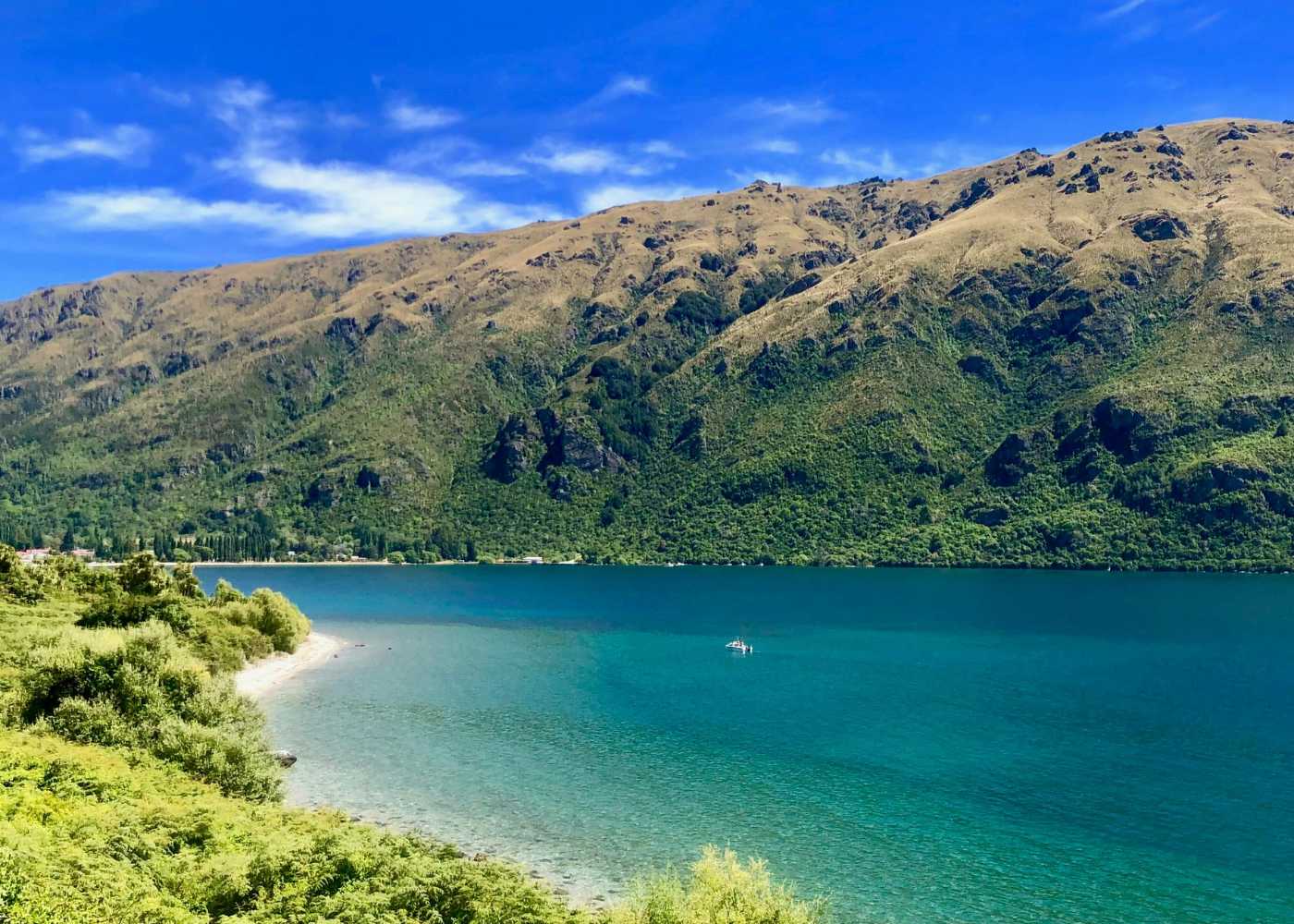
If isolation is measured in nautical miles from the nearest major landmass, the title shifts from East Asia to the Central Pacific. Here, sovereign nations like Kiribati and Tuvalu define isolation through sheer physical distance.
The Logistics of Remoteness
Kiribati consists of 33 coral atolls and islands dispersed across 3.5 million square kilometers of the Pacific Ocean. Its capital, South Tarawa, is thousands of miles from major economic hubs like Sydney, Tokyo, or Honolulu. In 2026, reaching Kiribati remains a significant logistical challenge. Flight schedules are infrequent, often relying on "island-hopper" routes that are subject to cancellation due to weather or technical issues.
Tuvalu, even smaller and more remote, faces similar hurdles. With a total land area of just 26 square kilometers, it is one of the world's smallest sovereign states. Its isolation is compounded by its lack of deep-water ports and limited runway infrastructure, making it one of the least visited countries on Earth.
Environmental and Existential Isolation
Geographic isolation for these nations is increasingly tied to environmental vulnerability. As sea levels rise, these low-lying atolls face "vertical isolation"—the threat of being submerged. This creates a unique form of geopolitical isolation where the country must negotiate for its very survival with a global community that is physically and often emotionally distant from their plight.
Comparative Metrics of Isolated Nations
To understand how different countries rank in terms of isolation, we must look at variables such as tourism, internet access, and diplomatic presence. The following table compares four nations that represent different facets of global isolation as of 2026.
| Feature | North Korea (Political) | Kiribati (Geographic) | Bhutan (Cultural) | Turkmenistan (Regulatory) |
|---|---|---|---|---|
| Primary Driver | State Policy/Sanctions | Physical Location | Controlled Tourism | Authoritarian Control |
| Internet Access | Restricted (Intranet) | Low (High Cost) | Moderate | Highly Censored |
| Annual Tourists | ~5,000 (Estimate) | ~6,000 - 8,000 | ~100,000+ (Regulated) | ~10,000 (Estimate) |
| Main Border Status | Highly Fortified | Maritime/Open | Controlled Land Borders | Strictly Monitored |
| Global Trade % | Extremely Low | Low (Import Reliant) | Moderate | Gas-Centric / Limited |
Cultural Isolation: The Case of Bhutan
Bhutan offers a different perspective: voluntary cultural isolation. For decades, the "Land of the Thunder Dragon" purposefully limited foreign influence to preserve its unique traditions and environment. While no longer "isolated" in the 20th-century sense, Bhutan maintains a policy of "High Value, Low Volume" tourism.
In 2026, the Sustainable Development Fee (SDF)—a daily tax for tourists—acts as a filter, ensuring that only a specific demographic of travelers enters the country. This creates a barrier to entry that is not based on hostility, but on the preservation of the Gross National Happiness (GNH) index. Bhutan’s isolation is a protective shell rather than a prison, demonstrating that isolation can be a tool for cultural sovereignty.
The Impact of Modern Technology on Isolation
As we move through 2026, the definition of isolation is being challenged by satellite technology. The proliferation of low-earth orbit (LEO) satellite constellations, such as Starlink, has the potential to bridge the geographic gap for remote islands.
- Closing the Geographic Gap: For nations like Tuvalu, satellite internet bypasses the need for expensive undersea fiber-optic cables, potentially ending centuries of informational isolation.
- Maintaining the Political Gap: In contrast, political isolation is resistant to technological fixes. In North Korea, the possession of a satellite dish or a device capable of connecting to foreign signals remains a serious crime. Technology only bridges the gap if the state allows it.
- Economic Disruption: Even with internet access, the high cost of shipping and the lack of physical infrastructure prevent remote nations from fully integrating into the global "just-in-time" supply chain.
Logistics: How to Access the World's Most Isolated Places
For those looking to bridge the gap and visit these locations, the requirements are stringent and the costs are high.
Entering North Korea (DPRK)
As of 2026, independent travel to North Korea is not permitted. All visitors must be part of a government-approved tour.
- Prerequisites: A valid passport and a North Korean visa, usually obtained via authorized travel agencies in Beijing or Vladivostok.
- Procedures: Visitors are accompanied by two state-sanctioned guides at all times. It is forbidden to wander alone or speak to citizens without permission.
- Costs: Tours typically range from $1,200 to $3,500 USD for a 5-day trip, covering flights from China, accommodation, and meals.
- Warning: Travelers must strictly adhere to local laws regarding the photography of military sites and images of the leadership.
Traveling to Kiribati or Tuvalu
The barrier here is not legal, but financial and physical.
- Prerequisites: Most nationalities can obtain a visa on arrival or are visa-exempt for short stays.
- Procedures: Flights usually originate from Fiji (Nadi) or Brisbane. Flights are often booked months in advance due to limited seating.
- Costs: A round-trip ticket from a major hub like Los Angeles or London can exceed $4,000 USD due to the multiple connections and low competition among carriers.
The Costs and Consequences of National Isolation
Isolation carries a heavy price tag for both the state and the individual. Economically, isolated countries suffer from a lack of economies of scale. Without access to global markets, the cost of basic goods is significantly higher, and the variety of available products is minimal.
Socially, isolation leads to a lack of "soft power." Countries like North Korea have little influence on global culture, and their citizens often lack the skills needed to compete in a globalized workforce if they ever do leave. For the geographically isolated, the "brain drain" is a constant threat; young people often leave remote islands for education in New Zealand or Australia and never return, further isolating the remaining population from modern development.
Common Misconceptions About Isolated Countries
There are several myths regarding the world's most remote or secluded nations that require clarification:
- Myth 1: Isolated countries are "stuck in the past." While they may lack modern consumer goods, many isolated states are highly sophisticated in specific areas. North Korea, for example, maintains an advanced cyber-warfare capability and a complex nuclear program despite its isolation.
- Myth 2: You cannot visit these places. With the exception of certain active conflict zones, almost every country on Earth is accessible if you have the funds and the patience to navigate the bureaucracy.
- Myth 3: Isolation equals safety. While isolated nations might be insulated from global financial crises or certain pandemics, they are often more vulnerable to localized disasters, as they lack the infrastructure for rapid international aid.
Frequently Asked Questions
Is North Korea still the most isolated country in 2026?
Yes, in terms of human rights, political transparency, and digital connectivity, North Korea remains the most isolated sovereign state. While it has limited diplomatic relations with a few countries, the internal population is almost entirely cut off from the global community.
Can citizens of isolated countries leave?
In geographically isolated nations like Kiribati, citizens are free to travel, provided they have the financial means and a valid passport. In politically isolated nations like North Korea, leaving the country without government permission is a criminal offense, often carrying severe penalties for the individual and their family.
Does "Point Nemo" belong to any country?
No. Point Nemo is the oceanic pole of inaccessibility, the place in the ocean farthest from land. It is located in the South Pacific Ocean and is not part of any sovereign territory. It is more isolated than any country, but it is not an inhabited landmass.
What is the most isolated country that is also a democracy?
Kiribati or Tuvalu are the primary candidates. They maintain democratic systems of government while being physically separated from the rest of the world by thousands of miles of ocean.
How has Starlink changed isolation in 2026?
Starlink and other LEO satellite providers have significantly reduced the "digital distance" for remote islands and rural areas in countries that allow the technology. However, it has had little effect on politically isolated nations that strictly regulate or ban the hardware.
Practical Recommendation for Researchers and Travelers
If you are researching or planning a visit to an isolated nation, prioritize verification of current entry requirements. Geopolitical climates can change rapidly; what was an open border in 2025 may be closed in 2026. For political isolation (DPRK, Turkmenistan), always consult your national foreign office for updated travel advisories. For geographic isolation (Kiribati, Tuvalu), focus on flight logistics and regional weather patterns, as these are the primary obstacles to access.
Image Gallery
Select an image to open it in a new tab.




Simon Caldwell
Enterprise Technology and Systems Editor
