
While both life insurance and custodial accounts are used to build wealth for minors, they are fundamentally different financial instruments. Life insurance is a legal contract providing a death benefit and potential cash value, whereas a custodial account (UGMA or UTMA) is a tax-advantaged brokerage account where the minor legally owns the assets and a custodian manages them until the minor reaches adulthood.
Understanding the distinction between these two vehicles is essential for parents, grandparents, and guardians planning for a child's financial future in 2026. Choosing the wrong path can lead to unintended tax consequences, loss of control over assets, or a significant reduction in college financial aid eligibility. This guide provides a technical breakdown of why life insurance is not a custodial account and how to determine which is right for your specific goals.
Defining the Fundamental Structures
To understand why life insurance is not a custodial account, we must first define the legal and operational frameworks of each. Although they are often mentioned in the same breath during "college savings" or "generational wealth" discussions, their DNA is entirely different.
What is a Custodial Account (UGMA/UTMA)?
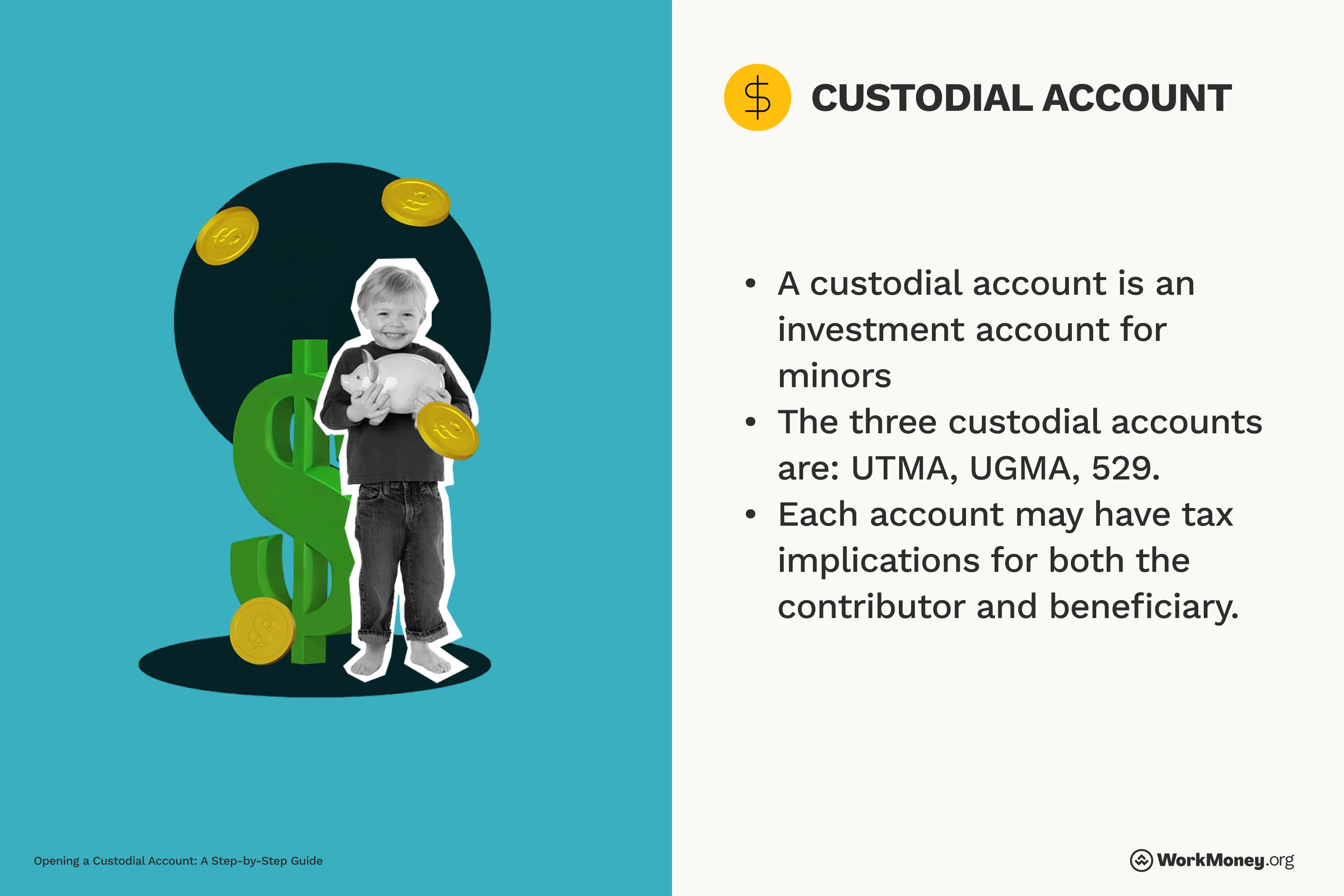
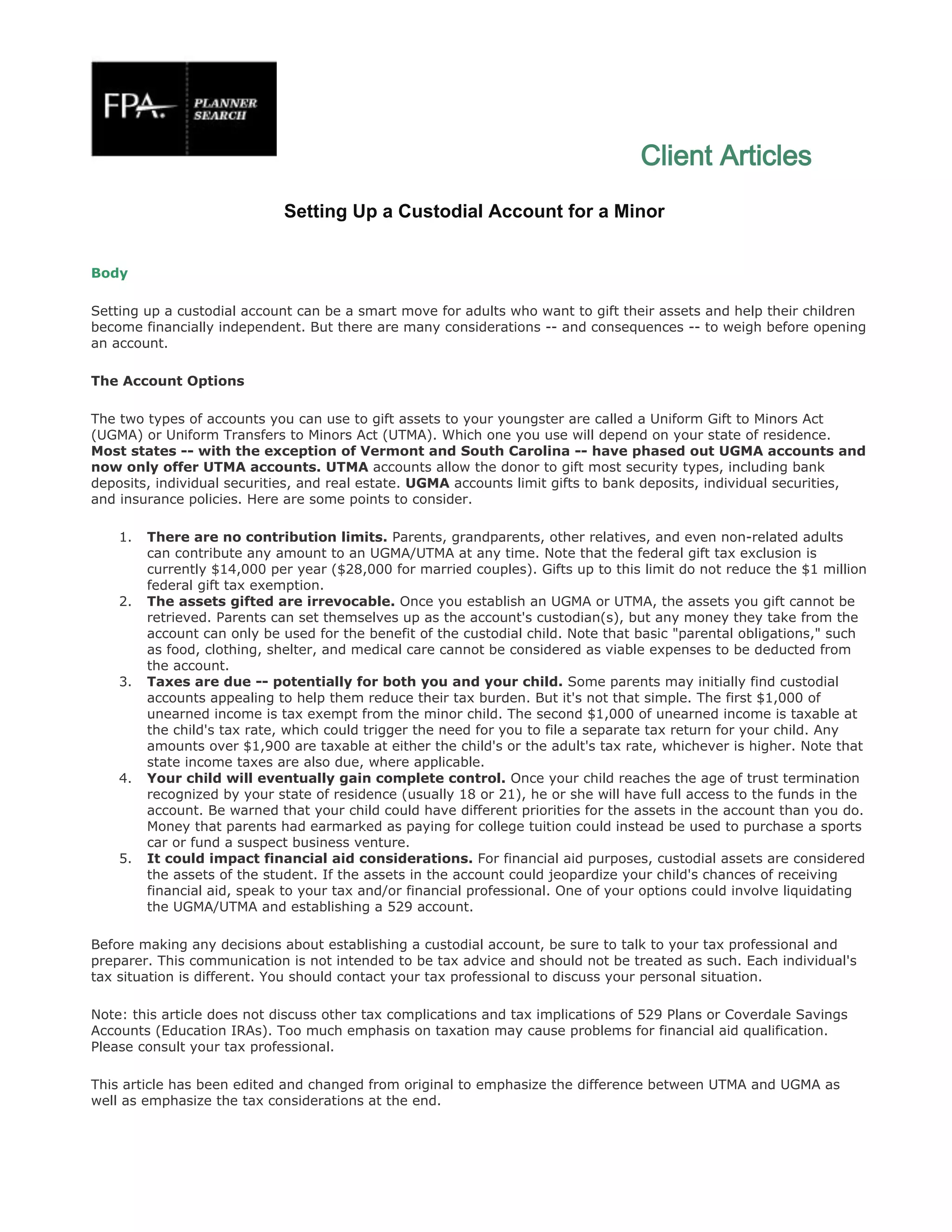
A custodial account is a financial account established for the benefit of a minor. These accounts are governed by state laws based on either the Uniform Gifts to Minors Act (UGMA) or the Uniform Transfers to Minors Act (UTMA). In these arrangements, a custodian (usually a parent or guardian) manages the assets—which can include cash, stocks, bonds, and in the case of UTMA, real estate—until the beneficiary reaches the age of majority.
The defining characteristic of a custodial account is irrevocable ownership. Once funds are placed into an UGMA or UTMA account, they belong to the minor. The custodian has a fiduciary duty to manage those funds for the minor's benefit, but they cannot take the money back for their own use.
What is Life Insurance (Permanent/Cash Value)?
Life insurance is a contract between a policyholder and an insurance company. While term life insurance only provides a death benefit for a specific period, permanent life insurance (such as Whole Life or Indexed Universal Life) includes a cash value component. This cash value grows over time based on fixed interest, dividends, or market performance.
Unlike a custodial account, life insurance is not an "ownership" arrangement for the child from day one. Instead, the policyholder (the adult) owns the policy, controls the cash value, and designates the beneficiary. The child may be the "insured" person, but they do not legally own the asset or have rights to the cash value unless the policyholder chooses to transfer ownership to them later in life.
Legal Ownership and the "Age of Majority" Problem
One of the most significant reasons life insurance is not a custodial account involves the transfer of control.
In a custodial account, the transfer of control is mandatory and automatic. Depending on the state and the type of account, once the child reaches age 18, 21, or 25, the custodian is legally required to hand over full control of the assets. The now-adult child can use the money for anything—whether that is a college tuition payment, a down payment on a house, or a fleet of expensive motorcycles. The donor has no legal recourse to stop the spending once the age of majority is reached.
In contrast, life insurance offers permanent control to the policyholder. Because the adult is the owner of the policy, they decide if, when, and how the child ever receives the money. The parent can maintain ownership of the policy indefinitely, even after the child becomes an adult. This allows the parent to ensure the funds are used for intended purposes or kept as a long-term safety net. If the parent decides the child is not responsible enough to handle the money at age 21, they simply keep the policy in their own name.
Tax Treatment and the "Kiddie Tax"
The tax implications of these two vehicles represent another major point of divergence. As of 2026, the Internal Revenue Service (IRS) applies different rules to the growth and distribution of these assets.
Taxation of Custodial Accounts
Custodial accounts are subject to the "Kiddie Tax" rules. Because the minor owns the assets, a portion of the unearned income (interest, dividends, and capital gains) generated within the account is taxed at the child’s lower tax rate, but income above a certain threshold (currently adjusted annually for inflation) is taxed at the parents' marginal tax rate. This can create a surprising tax bill for families if the account grows significantly. Furthermore, any realized gains from selling assets to pay for college will trigger capital gains taxes.
Taxation of Life Insurance
Life insurance enjoys a distinct tax status under IRS Code Section 7702. The cash value within a life insurance policy grows tax-deferred. This means there are no annual taxes on dividends or interest earned within the policy.
Furthermore, the policyholder can access the cash value through policy loans, which are generally not considered taxable income, provided the policy remains in force. If structured correctly, a parent can withdraw the basis (the amount paid in premiums) tax-free and then take loans against the remaining gain, effectively accessing the money for the child’s education or other needs without triggering the Kiddie Tax or capital gains taxes.
Impact on College Financial Aid (FAFSA)
For many families, the impact on the Free Application for Federal Student Aid (FAFSA) is the deciding factor in the life insurance vs. custodial account debate.
Assets held in a custodial account are considered the legal property of the student. Under current federal financial aid formulas, student-owned assets are assessed at a much higher rate (up to 20%) than parent-owned assets when calculating the Student Aid Index (SAI). This means that for every $10,000 in an UGMA account, the student's financial aid eligibility could decrease by $2,000 per year.
Life insurance cash value, however, is generally an "uncounted asset" on the FAFSA. It does not have to be reported as an asset on the application, meaning a parent could have significant wealth accumulated within a policy without it negatively impacting the child’s eligibility for need-based grants or subsidized loans. This makes life insurance a popular "shelter" for parents who want to save for their children while maximizing potential financial aid.
Comparison Table: Custodial Accounts vs. Permanent Life Insurance
| Feature | Custodial Account (UGMA/UTMA) | Permanent Life Insurance |
|---|---|---|
| Legal Owner | The Minor (Child) | The Policyholder (Parent/Adult) |
| Control of Assets | Custodian until age 18-25; then the child. | Policyholder maintains control indefinitely. |
| Tax Status of Growth | Taxed annually (Kiddie Tax rules apply). | Tax-deferred growth. |
| Withdrawal Rules | Must be for the benefit of the minor. | Loans/withdrawals for any purpose. |
| Death Benefit | None. | Provides a tax-free payout upon death. |
| FAFSA Impact | High (Counted as student asset at 20%). | None (Generally not a reported asset). |
| Contribution Limits | No limit (but Gift Tax rules apply). | Limited by policy MEC (Modified Endowment Contract) rules. |
| Asset Flexibility | Can hold stocks, bonds, ETFs, real estate. | Tied to the insurance carrier's products/performance. |
Flexibility and Use of Funds
The "how" and "why" of spending the money differs greatly between these two options.
With a custodial account, the funds must be used for the "benefit of the minor." While this is a broad definition—covering everything from summer camp to a first car—the custodian is legally prohibited from using the funds for personal expenses or for other siblings. Once the child reaches the age of majority, the legal requirement to use it for their "benefit" disappears because the child becomes the sole decision-maker.
Life insurance offers significantly more flexibility for the parent. Since the parent owns the cash value, they can use it for anything. They can use it to pay for the child's college, but if the child receives a full scholarship, the parent can use that same money for their own retirement, to help a different child, or to renovate their home. There is no legal mandate that the money must go to the child insured by the policy.
Why People Confuse the Two
The confusion often stems from the marketing of "Children's Whole Life" or "Headstart" policies. Insurance companies frequently promote these policies as a way to "provide for a child's future," which sounds very similar to the purpose of a custodial account.
Furthermore, both options involve a "transfer" of value to a minor. In an UTMA, the transfer is immediate and legal. In a life insurance policy, the "transfer" usually refers to the future possibility of transferring the policy ownership to the child when they are adults, or the payment of the death benefit to them. Because both are viewed as "saving for a child," the technical legal differences are often glossed over in sales presentations.
Technical Limitations: The MEC Warning
If you choose to use life insurance as a wealth-building tool for a minor, you must be aware of the Modified Endowment Contract (MEC) rules.
If you fund a life insurance policy too quickly—meaning you put in more cash than the IRS allows within a seven-year period—the policy becomes an MEC. Once a policy is classified as an MEC, it loses many of its tax advantages. Specifically, any withdrawals or loans are taxed as ordinary income to the extent there is a gain in the policy, and a 10% penalty may apply if the owner is under age 59½.
Custodial accounts do not have this specific "MEC" risk, though they are subject to standard gift tax reporting if contributions from a single donor exceed the annual exclusion limit ($18,000 in 2024, likely higher by 2026).
Common Pitfalls to Avoid
When navigating these financial waters, several mistakes can derail a long-term strategy:
- Underestimating the Child's Maturity: Many parents regret custodial accounts when their 18-year-old inherits a $50,000 balance and decides to spend it on a luxury vacation rather than tuition.
- Over-funding Life Insurance: Creating an MEC by accident can negate the tax benefits that made the policy attractive in the first place.
- Ignoring Fees: Life insurance policies often have high upfront costs and commissions. If the goal is short-term savings (less than 10-15 years), a custodial account or a 529 plan is almost always more cost-effective.
- Assuming FAFSA Permanence: Financial aid rules change. While life insurance is currently sheltered, future legislative updates could change how these assets are viewed.
Frequently Asked Questions
Can I convert a custodial account into a life insurance policy?
No, you cannot directly "convert" an UGMA or UTMA into a life insurance policy because the ownership structures are different. However, a custodian can use the funds within a custodial account to pay the premiums for a life insurance policy owned by the minor. In this scenario, the life insurance policy itself becomes an asset of the custodial account, and the same age-of-majority rules regarding control would apply.
Is the growth in a life insurance policy guaranteed?
It depends on the policy type. Whole Life insurance typically offers a guaranteed minimum growth rate and potential dividends. Indexed Universal Life (IUL) growth is based on the performance of a market index (like the S&P 500) and is not guaranteed, though it usually has a "floor" to prevent losses. Custodial accounts have no guarantees; their value fluctuates entirely based on the underlying investments (stocks, bonds, etc.).
Which is better for a child's college fund?
There is no single "better" option; it depends on your goals. If your primary goal is maximizing financial aid and maintaining control, life insurance is often preferred. If your primary goal is maximizing investment returns and you are comfortable with the child taking control at 18 or 21, a custodial account or a 529 College Savings Plan is usually more efficient.
Can a child be the beneficiary of a life insurance policy?
Yes, but it is often discouraged to name a minor as a direct beneficiary. Insurance companies cannot pay out death benefits directly to minors. Instead, the court would have to appoint a guardian to manage the money, which is a slow and expensive process. It is generally better to name a trust or a custodial arrangement as the beneficiary for the child's benefit.
Do I have to pay taxes when I transfer a life insurance policy to my child?
Generally, transferring ownership of a life insurance policy is considered a gift. If the policy’s fair market value exceeds the annual gift tax exclusion, you may need to file a gift tax return. However, no immediate income tax is usually triggered by the transfer itself.
Practical Recommendation
If you are looking for a vehicle that ensures you retain total control over the money and protects your child’s eligibility for financial aid, permanent life insurance is the superior choice. It functions as a private "family bank" that you control.
However, if you want a low-cost way to invest in the stock market for a child and you want the child to have legal right to that money as soon as they become an adult, a custodial account (UTMA/UGMA) is the appropriate tool.
For most families in 2026, the most robust strategy is often a hybrid approach: using a 529 plan for education, a custodial account for small gifts of stock, and a life insurance policy as a long-term, controlled wealth transfer vehicle. Always consult with a qualified financial advisor or tax professional to ensure your choice aligns with the latest IRS regulations and your specific state laws.
Image Gallery
Select an image to open it in a new tab.


Akira Tanaka
International Academic Trends Correspondent
