Why Goat Accents Matter in Animal Communication: Decoding Vocal Plasticity and Social Bonds
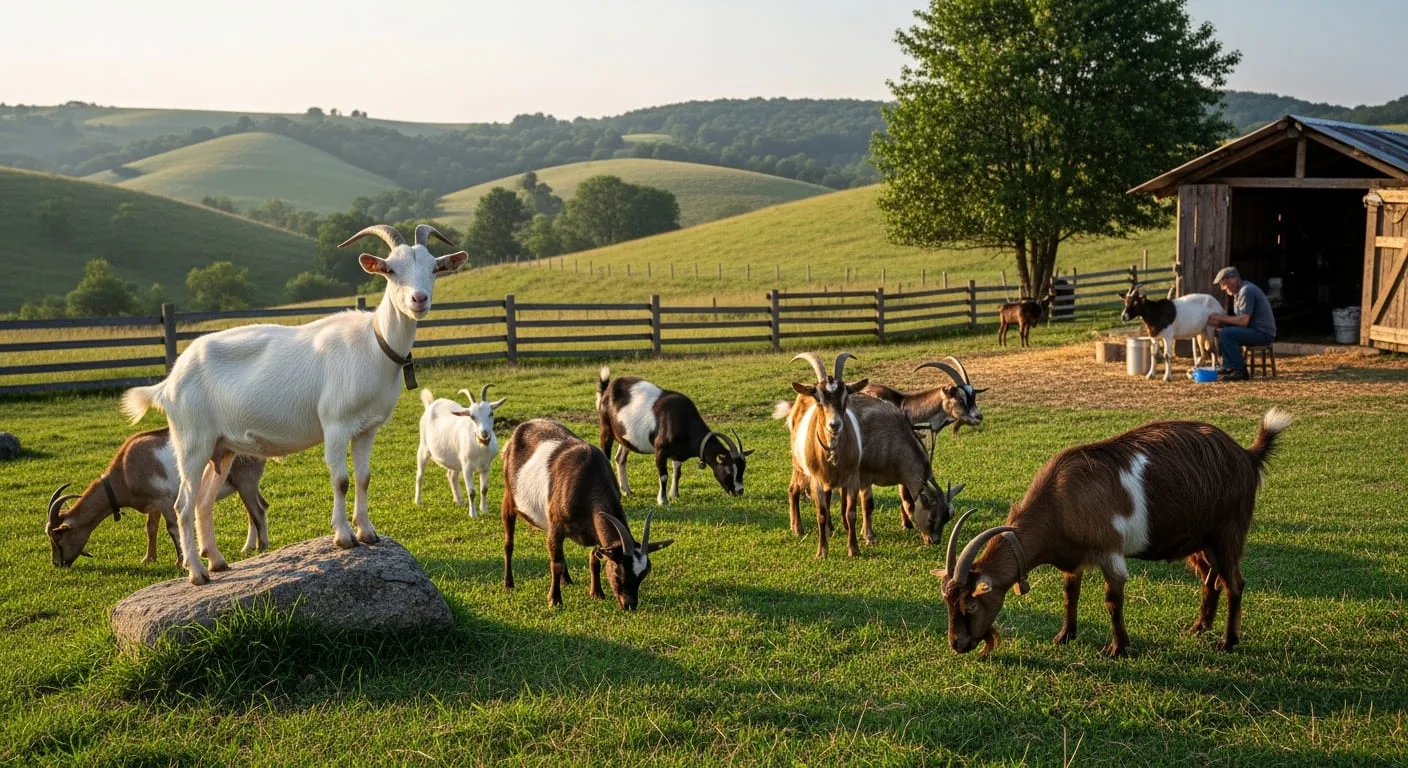
Goats exhibit a rare trait called vocal plasticity, where their calls shift to match the unique "accents" of their social group. This discovery proves that complex vocal learning is not limited to humans, whales, or birds, but exists in ungulates. Understanding these accents reshapes our knowledge of animal intelligence, social evolution, and livestock welfare.
For decades, the scientific community operated under the assumption that the vocalizations of mammals like goats, cows, and sheep were entirely innate. It was believed that a goat’s "bleat" was a hardwired genetic response, as static and unchangeable as the shape of their hooves. However, groundbreaking research led by the University of Roehampton and Queen Mary University of London fundamentally altered this perspective. By demonstrating that goats can develop group-specific accents, researchers opened a new window into the cognitive complexity of non-human animals.
As of 2026, the study of bioacoustics has advanced significantly, utilizing artificial intelligence to parse thousands of hours of animal recordings. We now understand that goat accents are not mere curiosities; they are vital components of social cohesion and survival. This article explores the mechanics of vocal plasticity in goats, the evolutionary reasons behind these dialects, and what this means for the future of animal behavior science.
The Scientific Discovery of Caprine Dialects
The pivotal shift in our understanding of goat communication occurred when researchers studied groups of pygmy goats. Initially, they expected that siblings would sound similar due to their shared genetics. However, the data revealed something far more complex. As kids (young goats) grew older and spent more time within their specific social groups, their calls began to converge with those of their peers, regardless of genetic relatedness.
This phenomenon is known as vocal convergence. In humans, we see this when a person moves to a new region and gradually adopts the local cadence and slang. In the animal kingdom, this was once thought to be an elite cognitive ability reserved for "high-intelligence" species such as dolphins, elephants, and parrots. Finding this in goats—a species often unfairly maligned as simplistic—suggests that the ability to modify vocalizations based on social environment is more widespread than previously imagined.
The 2012 study by Dr. Elodie Briefer and Dr. Alan McElligott remains the foundation of this field. Their team recorded the calls of kids at one week old and again at five weeks old. By analyzing the frequency, duration, and energy distribution of the bleats, they found that the "social group" factor was a stronger predictor of vocal similarity than "sibling" factor by the five-week mark.
Defining Vocal Plasticity in Ungulates
To understand why accents matter, we must first define vocal plasticity. This is the capacity of an individual to change its vocalizations in response to environmental or social cues.
Innate vs. Learned Communication
Most animals use "innate" calls. A dog’s bark or a cat’s hiss is largely instinctive. While the frequency or intensity might change based on emotion, the structure of the sound is hardcoded. Learned communication, or vocal learning, requires a feedback loop: the animal hears a sound, attempts to mimic it, and refines the output.
Goats sit in a fascinating middle ground. They do not "learn" to bleat from scratch, but they possess the plasticity to "tune" their bleats to match a group signature. This suggests a sophisticated neural pathway that connects auditory processing with vocal motor control—a prerequisite for the evolution of complex language.
The Mechanics of the Bleat
A goat's vocalization is influenced by the shape of the vocal tract, the vibration of the vocal folds, and the resonance within the nasal cavity. When goats adapt their accents, they are subtly altering the muscular tension in their larynx and the positioning of their tongue. These minute adjustments result in variations in fundamental frequency and formant structures, which are the specific spectral peaks of the sound that humans perceive as "tone" or "quality."

The Evolutionary Advantage of Social Accents
Evolution rarely preserves a trait unless it provides a survival or reproductive advantage. For goats, which are highly gregarious (social) animals, having a group-specific accent serves several critical functions.
1. Group Cohesion and Identity
In the wild, goats live in crags and mountainous terrain where visibility can be poor. Vocalizations act as an "acoustic tether." By sharing a common accent, members of a herd can quickly identify one another and distinguish their group members from outsiders or potential threats. This "password" system ensures that the group stays together during migration or when fleeing predators.
2. Predator Defense
When a herd is under pressure from a predator, communication must be instantaneous and unambiguous. If a "stranger" goat enters the territory and emits an alarm call with a different accent, the resident herd might ignore it or respond with confusion. A unified vocal signature ensures that warnings are recognized and acted upon immediately by everyone in the immediate social circle.
3. Parent-Offspring Recognition
While group accents are important, individual recognition remains vital. Mother goats (does) and their kids use vocal signatures to find each other in crowded environments. The ability of the kid to adapt its call to the "family" or "nursery group" style helps the mother filter out the noise of dozens of other screaming kids, ensuring she only invests resources in her own offspring.
Comparative Bioacoustics: Goats vs. Other Species
The discovery of goat accents placed them in an exclusive club of vocal learners. Below is a comparison of how different species utilize vocal plasticity and learning in their social structures as of 2026 data.
| Species | Level of Vocal Learning | Primary Function | Social Structure |
|---|---|---|---|
| Humans | High (Language) | Complex information exchange | Variable/Global |
| Bottlenose Dolphins | High (Signature Whistles) | Individual identification | Fission-fusion societies |
| Goats | Moderate (Vocal Convergence) | Group cohesion/Identity | Stable social herds |
| Greater Sac-winged Bats | High (Babbling/Song) | Territoriality/Mating | Harem-based |
| Domestic Dogs | Low (Emotional Modulation) | Alarm/State signaling | Human-centric/Pack |
| African Elephants | High (Mimicry) | Long-distance coordination | Matriarchal kinship |
This table illustrates that goats occupy a "bridge" position. They are not language-users in the human sense, but they possess the foundational building blocks—socially-driven vocal change—that underpin the evolution of complex communication systems.
Implications for Animal Welfare and Farming
The fact that goats have "feelings" about their social group that manifest in their voices has profound implications for modern agriculture. In 2026, many ethical farming standards have been updated to reflect our understanding of animal psychology and communication.
Stress Monitoring via Bioacoustics
Because we know goats adapt their voices to their group, we can use acoustic monitoring to detect stress. If a goat’s accent begins to drift or if the "harmony" of the herd’s vocalizations becomes fractured, it is often a leading indicator of illness, predator stress, or poor environmental conditions. Automated systems now allow farmers to monitor "herd vocal health" without intrusive physical exams.
The Impact of Herd Reorganization
Traditional farming often involves moving animals between different pens or selling individuals to different farms. Knowing that goats are acoustically sensitive to their social group suggests that breaking up these groups is more than just a physical relocation—it is a social disruption. A goat moved to a new herd must "re-learn" the local accent to be fully integrated. During this transition, they may experience higher cortisol levels and reduced social support, impacting their overall well-being.
Technical Challenges in Bioacoustic Research
Identifying a goat "accent" is not as simple as listening to a recording. It requires sophisticated digital signal processing (DSP). Researchers look at several key metrics:
- Jitter and Shimmer: These terms refer to the cycle-to-cycle variations in fundamental frequency and amplitude. High jitter often indicates stress, while consistent shimmer patterns can define a group accent.
- Formant Dispersion: This is the average distance between formant frequencies. It is often related to the length of the vocal tract and is a primary marker for group identity.
- Entropy: This measures the "randomness" or complexity of the sound. Socially integrated goats tend to have more standardized entropy levels within their specific group.
The challenge in 2026 remains the "cocktail party effect"—the difficulty of isolating a single goat's voice in a noisy barn. Researchers now use wearable "smart collars" equipped with contact microphones (accelerometers) that pick up vibrations directly from the larynx, ensuring the data is not contaminated by the rest of the herd.
The Future of Interspecies Communication
The study of goat accents is a stepping stone toward a larger goal: understanding the "intent" behind animal sounds. As AI models become more adept at identifying patterns in non-human communication, we are moving closer to a world where we can translate basic animal needs and emotional states.
If a goat can change its accent to fit in, what else is it capable of? Current research is looking into whether goats use specific "dialects" to describe different types of food or specific threats. If "accents" are the social glue, then the vocabulary might be the next frontier.
The discovery of vocal plasticity in goats serves as a humbling reminder that humans are not the only creatures with "culture." In the animal kingdom, culture is often defined as the transmission of behaviors through social learning rather than genetics. By matching their voices to their peers, goats are participating in a form of caprine culture that has existed for millennia, right under our noses.
Practical Recommendations for Goat Owners and Researchers
- Maintain Social Stability: Whenever possible, keep goat social groups together long-term. The "acoustic bond" they form is a key part of their psychological security.
- Observe Vocal Shifts: If you are introducing a new goat to a herd, listen for the gradual shift in its bleat over 4–6 weeks. This is a sign of successful social integration.
- Invest in Acoustic Enrichment: In 2026, some sanctuaries use "soundscapes" to calm herds. Understanding the natural frequency of a specific herd’s accent can help in creating a more soothing environment for rescued animals.
Frequently Asked Questions
Can all breeds of goats develop accents?
While the primary research focused on pygmy goats, vocal plasticity has been observed across various domestic breeds, including Nubians and Alpines. However, the "strength" of the accent may vary depending on how social the specific breed is. Breeds that have been bred for high gregariousness tend to show more pronounced vocal convergence than more independent breeds.
Do goats lose their accent if they are isolated?
Yes. Studies suggest that when a goat is isolated from its social group, its vocalizations can become erratic or revert to a more "base" genetic state. Isolation is highly stressful for goats, and the loss of social vocal tuning is often one of the first signs of cognitive decline or extreme emotional distress in the animal.
How long does it take for a goat to "pick up" a new accent?
In young kids, the shift is rapid, usually occurring within four to five weeks of birth. In adult goats, the process is slower but still possible. When an adult is introduced to a new herd, it may take several months for its vocalizations to align with the new group's frequency and cadence.
Is a goat accent the same as a language?
No. An accent is a matter of "how" a sound is made (phonetics and prosody), whereas language involves "what" is being said (syntax and semantics). Goats have accents, but there is currently no scientific evidence that they have a language with complex grammar. They communicate states, identities, and basic needs, but not abstract concepts.
Can humans hear the difference between goat accents?
To the untrained ear, most goats sound the same. However, experienced farmers and researchers can often distinguish between different "families" of goats based on the pitch and rhythm of their bleats. Digital analysis is usually required to confirm these differences scientifically, as many of the variations occur at frequencies or speeds that human hearing cannot easily process.
Does this mean goats are smarter than we thought?
"Intelligence" is a human construct, but these findings certainly prove that goats have higher social intelligence and more complex neural processing than previously credited. The ability to monitor, process, and mimic the sounds of others requires significant brain power and social awareness.
The next time you hear a goat bleat, remember that you aren't just hearing a random animal noise. You are listening to a social signal, a badge of group membership, and a sophisticated piece of evolutionary biological engineering.
Image Gallery
Select an image to open it in a new tab.
Celine Dubois
Contemporary Living and Global Arts Columnist
