
If you are facing garnishment in Indiana, your creditor has obtained a court order allowing them to collect a debt directly from your paycheck or bank account. Under Indiana law, specific exemptions and limitations protect a portion of your income, but you must take proactive steps to claim these protections and ensure your rights are fully upheld during the collection process.
The Legal Foundation of Garnishment in Indiana
Garnishment is a legal procedure where a creditor—having already obtained a court judgment against you—seeks to recover the unpaid debt by intercepting your assets. In Indiana, this process is governed by the Indiana Trial Rules and the Indiana Code, specifically Title 24, which addresses trade regulations and consumer credit.
It is critical to understand that a creditor cannot simply decide to garnish your wages. They must first sue you in a court of competent jurisdiction (usually a small claims or circuit court in your county), win the lawsuit, and obtain a formal judgment. Once the judgment is entered, the creditor must initiate a separate proceeding, known as proceedings supplemental, to execute the garnishment order.
The Role of Proceedings Supplemental
Proceedings supplemental are the "post-judgment" phase of a lawsuit. When a creditor requests a hearing, the court evaluates your ability to pay. During this time, the creditor may ask the court to issue a garnishment order against your employer or your financial institution. You have the right to receive notice of these proceedings. Ignoring a notice to appear in court for a proceedings supplemental hearing is a common mistake that often leads to a default order favoring the creditor.
Wage Garnishment: Limits and Exemptions
The most common form of garnishment involves your paycheck. Because the goal of Indiana law is to allow a debtor to maintain a basic standard of living while still satisfying debt, there are strict mathematical limits on how much can be taken from your earnings.
The Indiana Wage Garnishment Calculation
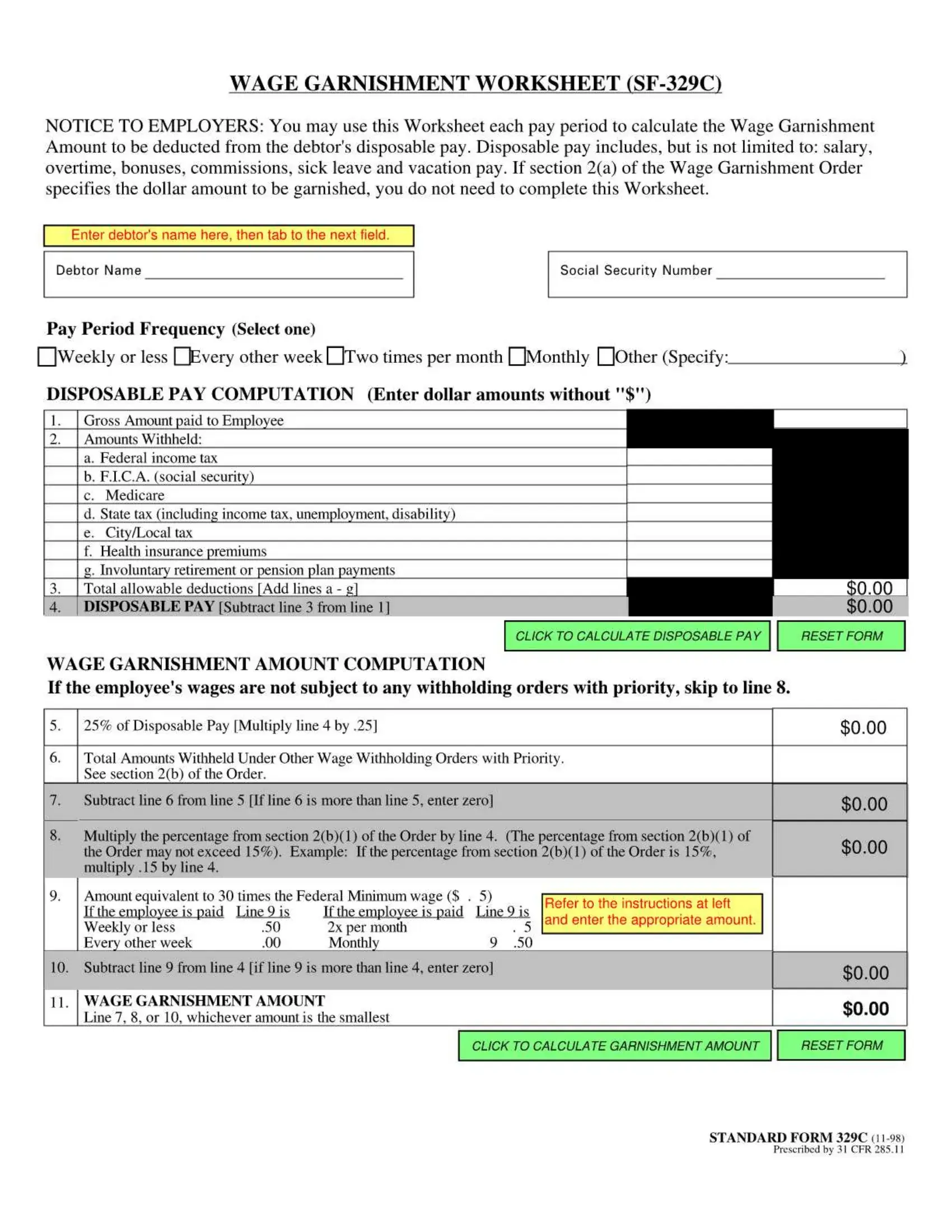
Indiana law (specifically Indiana Code § 24-4.5-5-105) provides a formula to determine the "disposable earnings" subject to garnishment. A creditor may garnish the lesser of:
- 25% of your disposable earnings for that week.
- The amount by which your disposable earnings for that week exceed 30 times the federal minimum hourly wage.
Disposable earnings are defined as the portion of your wages remaining after all legally required deductions (such as federal and state income taxes, FICA/Social Security, and state unemployment insurance) are removed. Health insurance premiums and voluntary 401(k) contributions are generally not subtracted when calculating "disposable earnings" for the purpose of garnishment limits.
Protections for Heads of Family and Low Earners
Indiana offers certain exemptions that may protect your income from garnishment depending on your total family status and income level. If your income falls below a certain threshold—or if you can demonstrate that your entire paycheck is necessary for the support of your dependents—you may be able to argue for a reduction in the garnishment amount during a court hearing.
Bank Account Garnishment (Account Seizure)
While wage garnishment happens periodically, a bank levy is usually a one-time "sweep" of your account. If a creditor secures an order to garnish your bank account, the bank is legally required to freeze the funds currently in your account up to the amount of the judgment.
Exempting Funds in Your Bank Account
Unlike wages, which are subject to a percentage cap, the money in your bank account is subject to your general Indiana personal property exemption. Under current Indiana law, you are permitted to exempt a certain amount of cash and personal property from seizure.
If your bank account contains funds that are specifically exempt under federal or state law, you must act quickly. Examples of exempt funds often include:
- Social Security benefits.
- Supplemental Security Income (SSI).
- Veterans benefits.
- Public assistance payments.
- Certain retirement account distributions.
When a bank account is garnished, the bank will often freeze the account, assess a "legal processing fee," and hold the remaining funds until the court directs them to release the money to the creditor. If you believe the funds are exempt, you must file a claim of exemption with the court immediately to stop the turnover of those funds.
Comparative Overview of Garnishment Types
| Feature | Wage Garnishment | Bank Account Garnishment |
|---|---|---|
| Duration | Ongoing until debt is paid | One-time sweep |
| Calculation | Percentage of disposable income | Total available balance |
| Notice | Court-ordered, employer notified | Frozen by bank, notification follows |
| Primary Defense | Exemption claims, hardship filing | Claiming exempt federal/state funds |
Steps to Take When Faced with a Garnishment Order
If you receive notice of a garnishment, panic can often lead to inaction. However, the legal system provides specific pathways for debtors to manage these situations.
1. Verify the Judgment
Review the documentation sent to you. Is the debt accurate? Was the original judgment entered correctly? If you were never served with the original lawsuit, you may have grounds to file a motion to set aside the judgment.
2. Attend All Court Dates
The most important action you can take is to show up to court. If the court holds a proceedings supplemental hearing, you have the opportunity to inform the judge of your financial hardship. You may be able to negotiate a payment plan that avoids the employer-notified garnishment process entirely.
3. Identify Exemptions
Consult Indiana’s exemption statutes. You have the right to protect a portion of your property. Completing the necessary forms to claim these exemptions is vital. If your income is already at or below the poverty line, you may be considered "exempt from execution," meaning the creditor cannot take your wages at all.
4. Consult Legal Aid or Counsel
If you cannot afford an attorney, search for "Indiana Legal Services." This organization provides resources for low-income Hoosiers facing civil legal issues, including debt collection and garnishment.
Common Mistakes to Avoid
- Ignoring Correspondence: Disregarding court notices will only result in an automatic judgment, limiting your ability to negotiate or prove your income is protected.
- Quitting a Job: Some debtors believe that quitting their job will stop a debt. This does not erase the judgment; the debt remains, and the creditor will eventually try to garnish your next employer or your bank accounts.
- Moving Money: Attempting to hide assets or move large sums of money after being served can be viewed by the court as fraudulent, potentially leading to additional legal penalties.
- Failing to Notify the Bank: If your Social Security or disability checks are deposited into a bank account that gets frozen, contact your financial institution immediately. Often, these funds are automatically exempt, but the bank may require you to provide evidence of the source of these funds.
Frequently Asked Questions
Can a creditor garnish my tax refund in Indiana?
Generally, a private creditor cannot garnish a federal tax refund through standard wage garnishment. However, if the debt is owed to a government entity (like unpaid state taxes or federal student loans), they have broader powers to seize tax refunds through administrative offsets.
How do I know if my wages are being garnished?
Your employer is required to notify you when they receive an order of garnishment. You will typically see a deduction on your pay stub labeled "garnishment" or "wage attachment." If you notice this, check your records to see if you previously received a court summons.
Can I file for bankruptcy to stop a garnishment?
Yes. An "automatic stay" is triggered the moment you file for bankruptcy under federal law. This stay immediately stops most collection activities, including existing garnishments. This is a complex legal procedure that should only be undertaken after consultation with a qualified bankruptcy attorney.
What is the difference between an execution and a garnishment?
An execution is the broader legal process of enforcing a judgment. Garnishment is a specific type of execution directed at third parties, such as your employer (for wages) or your bank (for cash assets).
How long does a garnishment last in Indiana?
A garnishment order typically remains in effect until the judgment, including any accrued interest and court costs, is paid in full. Employers are required to continue withholding the amount designated by the court until they receive a release order from the court or the debt is satisfied.
Next Steps and Professional Recommendation
If you are currently facing garnishment, your primary objective should be to contact the clerk of the court where the judgment was entered to obtain a copy of the specific garnishment order. Once you have the order, identify whether the math complies with the Indiana wage calculation rules.
If you are struggling to make ends meet, do not wait for the next paycheck to be docked. Reach out to a consumer rights attorney or legal aid provider in your area to determine if you qualify for a hardship exemption. Filing for a hearing to modify the payment schedule is often the most effective way to manage the financial impact of a judgment while you work toward resolving the debt.
Image Gallery
Select an image to open it in a new tab.



Celine Dubois
Contemporary Living and Global Arts Columnist
