How to Compare Auto Insurance Quotes in Iowa: A Practical Guide

Comparing auto insurance quotes in Iowa requires a systematic approach to ensure you receive accurate, apples-to-apples estimates based on your specific vehicle, driving history, and coverage needs. By understanding the state’s mandatory financial responsibility laws and gathering the necessary documentation, you can efficiently evaluate insurers to secure the best balance between premium costs and coverage adequacy.
Understanding Iowa’s Auto Insurance Requirements
Before seeking quotes, you must understand the legal baseline for driving in Iowa. According to the Iowa Insurance Division, all drivers are required to carry proof of financial responsibility. The state mandates minimum liability coverage limits to ensure that, in the event of an at-fault accident, the driver has the means to cover bodily injury and property damage expenses.
As of 2026, the minimum liability insurance requirements in Iowa are:
- $20,000 for bodily injury or death of one person in any one accident.
- $40,000 for bodily injury or death of two or more persons in any one accident.
- $15,000 for injury to or destruction of property of others in any one accident.
While these are the state-mandated floors, they are often insufficient for modern vehicle repair costs or significant medical liabilities. When comparing quotes, keep in mind that opting only for the state minimum may leave you personally vulnerable to lawsuits or high out-of-pocket costs if you are involved in a major accident.
Data Collection: Preparing for the Quote Process
The accuracy of an insurance quote depends entirely on the information you provide. Insurers use complex algorithms that evaluate your risk profile based on actuarial data. To get the most precise quote, assemble the following information before visiting an insurer’s website or calling an agent:
- Driver Information: You will need the full name, date of birth, and driver’s license number for every person who will be listed on the policy.
- Vehicle Details: Have your Vehicle Identification Number (VIN) ready. If you are comparing rates for a car you have not yet purchased, have the make, model, year, and approximate trim level available.
- Driving History: Be prepared to provide details on any accidents, traffic violations, or insurance claims from the past three to five years. Insurers will verify this through the Comprehensive Loss Underwriting Exchange (CLUE) report.
- Current Policy Information: If you currently have insurance, have your existing declarations page accessible. This allows you to compare your current coverage levels against new quotes to ensure you are comparing equivalent policies.
- Annual Mileage: Estimate your annual driving distance, as low-mileage drivers may qualify for specific discounts.
Essential Coverage Components to Compare
When looking at quotes, do not simply look at the bottom-line premium price. A lower premium often corresponds to higher deductibles or lower coverage limits. You must evaluate the policy structure based on these key components:
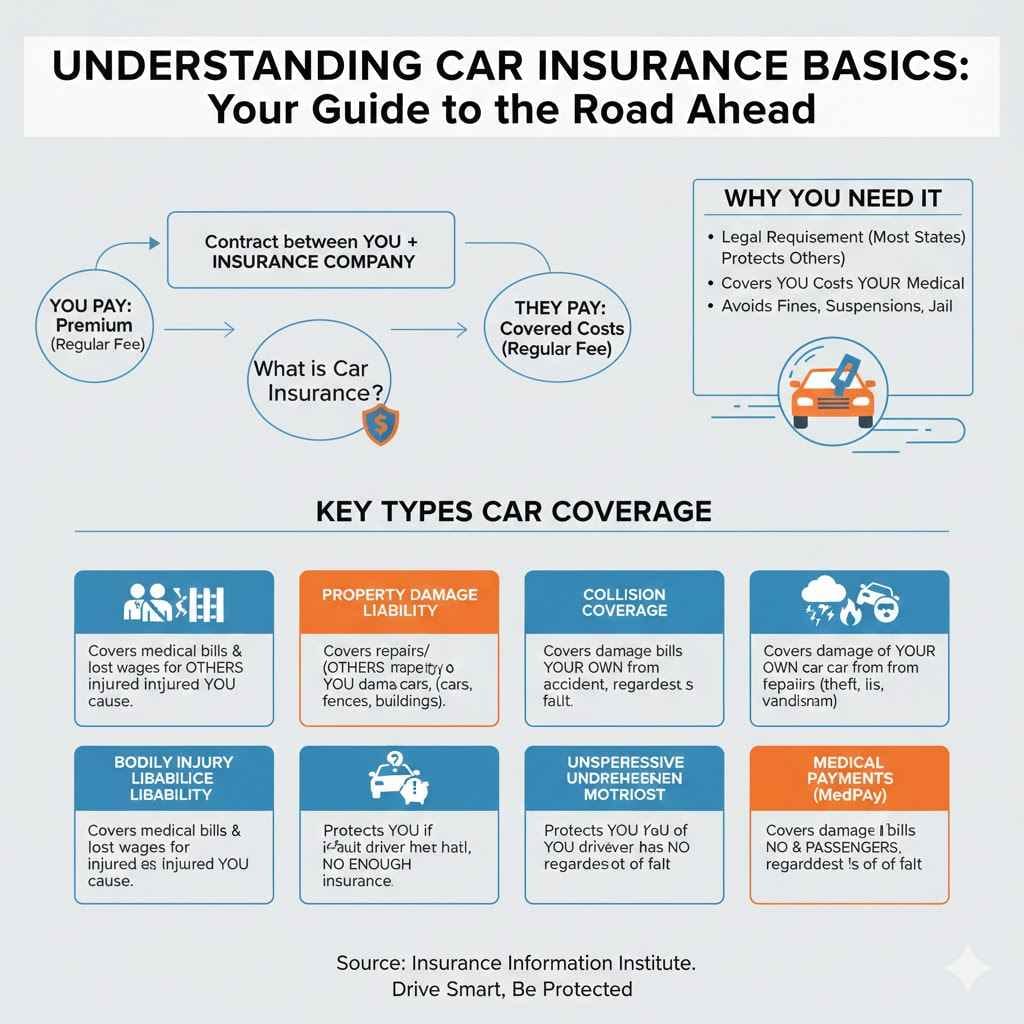
- Liability Coverage: This covers the damage you cause to others. It is the most critical component for legal compliance and asset protection.
- Collision Coverage: This pays for damage to your own vehicle resulting from a collision with another object or vehicle, regardless of fault.
- Comprehensive Coverage: This protects your vehicle against non-collision incidents, such as theft, vandalism, fire, or weather-related damage—an important consideration given Iowa’s susceptibility to severe storms and hail.
- Uninsured/Underinsured Motorist Protection: This covers your costs if you are struck by a driver who lacks insurance or carries insufficient limits to cover your damages.
- Deductibles: This is the amount you pay out-of-pocket before insurance kicks in. A higher deductible typically lowers your monthly premium but increases your financial burden during a claim.
Methods for Gathering Quotes
You have three primary avenues for obtaining and comparing quotes in Iowa. Each has distinct advantages depending on your preference for human interaction versus digital convenience.
Online Aggregators and Comparison Sites
Comparison websites allow you to input your information once and receive quotes from multiple carriers. While convenient, these sites often prioritize companies that pay for advertising rather than the providers with the most robust coverage. Use these as a starting point to identify which insurers serve your region, but be cautious about sharing your contact information, as you may receive unsolicited sales calls.
Captive vs. Independent Agents
- Captive Agents: These agents represent only one insurance company (e.g., State Farm or Allstate). While they have deep knowledge of their company’s specific products, they cannot compare rates from competitors for you.
- Independent Agents: These professionals work with multiple insurance carriers. They are often the best choice for a thorough comparison because they can analyze your profile and pull quotes from several companies to find the best market rate.
Direct-to-Consumer Insurers
Many insurers allow you to purchase policies directly through their website or mobile application. This is often the fastest route if you know exactly what coverage limits you require and do not feel you need professional advice.
Comparing Costs: Factors That Influence Your Premium
Insurers determine your rate based on risk. While some factors are out of your control, others can be adjusted to influence your quote:
| Factor | Impact on Quote |
|---|---|
| Driving Record | Accidents and violations significantly increase premiums for 3–5 years. |
| Credit-Based Insurance Score | In Iowa, insurers may use credit data to help predict the likelihood of future claims. |
| Vehicle Safety Features | Anti-lock brakes, airbags, and anti-theft devices can lead to policy discounts. |
| Coverage Limits | Increasing your liability limits raises your premium but enhances protection. |
| Deductible Amount | Choosing a higher deductible (e.g., $1,000 vs. $500) typically lowers your premium. |
| Policy Bundling | Insuring your home or renters policy with the same carrier often yields a "multi-policy" discount. |
Common Mistakes When Comparing Quotes
To ensure your comparison is valid, avoid these frequent pitfalls:
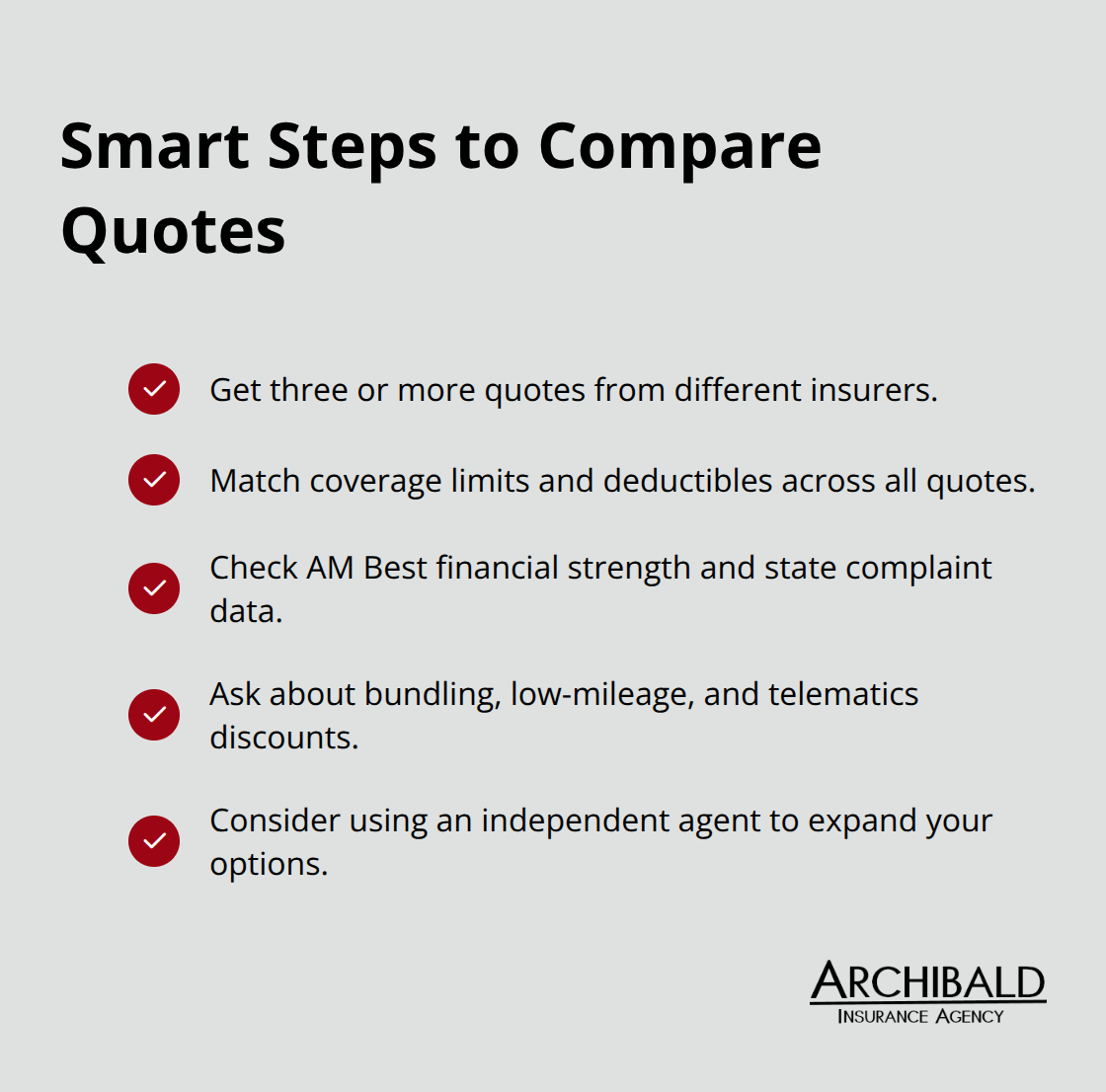
- Comparing "Apples to Oranges": Do not compare a quote with $20,000 liability limits against one with $100,000 limits. Always adjust the quote parameters so that all companies are bidding on the exact same coverage levels.
- Omitting Household Members: Failing to list all licensed drivers living in your home is considered insurance fraud by many carriers and can result in your policy being canceled or a future claim being denied.
- Ignoring Financial Strength: While price is important, ensure the company has a strong reputation for claims processing. You can check the AM Best financial strength ratings to ensure the company is stable enough to pay out claims.
- Focusing Only on Premiums: If you choose a carrier with the lowest premium but they have a reputation for difficult claim resolution or poor customer service, you may face significant frustration when you actually need to use the policy.
Evaluating Claims Service and Company Reputation
Once you have narrowed your quotes down to a few providers, look beyond the price tag. Research how the company handles claims. You can review the consumer complaint data provided by the Iowa Insurance Division to see if a specific company has a high volume of complaints relative to its market share. Additionally, consider looking at the company’s mobile app capabilities. In 2026, many consumers prefer insurers that offer easy photo-based damage estimation, which can significantly speed up the claims process after an incident.
Next Steps After Selecting a Provider
After you have compared your quotes and selected the best policy for your needs, follow these final steps to ensure your coverage is active:
- Review the Final Binder: Before signing, ask for a "binder" or the official declarations page. Review every line item to ensure it matches what you discussed with the agent.
- Cancel Your Old Policy: Do not cancel your old insurance policy until your new policy is officially in force to avoid any gap in coverage. A lapse in insurance can lead to increased rates in the future and potential legal issues with the Iowa Department of Transportation.
- Update Your Proof of Insurance: Once the policy is active, keep your digital or physical insurance card in your vehicle at all times. Iowa law requires you to provide proof of insurance upon request by law enforcement.
Frequently Asked Questions
Does my credit score affect my insurance rate in Iowa? Yes, insurers in Iowa are generally permitted to use credit-based insurance scores as one of many factors to determine your premium. They argue that this data is predictive of claim frequency. To improve your standing, maintain a strong credit history and ensure your report is free of errors.
Is gap insurance necessary for my new car? Gap insurance covers the difference between what you owe on your auto loan and the actual cash value of your vehicle if it is totaled. If you have a small down payment or a long-term loan, your car's value may depreciate faster than your loan balance. In this case, gap insurance is highly recommended as a safety net.
Can I get a discount for taking a defensive driving course? Many insurance providers in Iowa offer discounts if you complete an approved defensive driving or accident-prevention course. Contact your chosen insurer to see if they recognize specific certifications, as this can be an easy way to lower your annual premium.
What should I do if my insurance company cancels my policy? Insurers must provide advance notice before cancelling or non-renewing a policy, often for reasons like non-payment or high-risk driving behavior. If you receive a notice, contact the company immediately to discuss the reason. If you believe the cancellation is unfair, you may contact the Iowa Insurance Division for assistance with the complaint process.
How often should I compare insurance quotes? Even if you are satisfied with your current provider, it is a best practice to compare quotes every 12 to 24 months, or whenever you experience a major life event—such as a move, a change in your daily commute, or adding a new driver to your policy. This ensures your coverage continues to match your current lifestyle and financial needs.
Final Recommendation
The most effective way to compare auto insurance in Iowa is to identify your required coverage limits first, then request identical quotes from at least three different types of providers: an independent agent, a captive agent, and a major direct-to-consumer carrier. By aligning the coverage across all quotes, you transform a confusing sea of numbers into a clear, logical comparison, allowing you to choose the provider that offers the best value for your specific situation.
Image Gallery
Select an image to open it in a new tab.


Ingrid Bjornson
Global Cyber Policy and Regulation Analyst
