All Ball Python Morphs Explained in the Pet Trade: A Comprehensive Genetic Guide

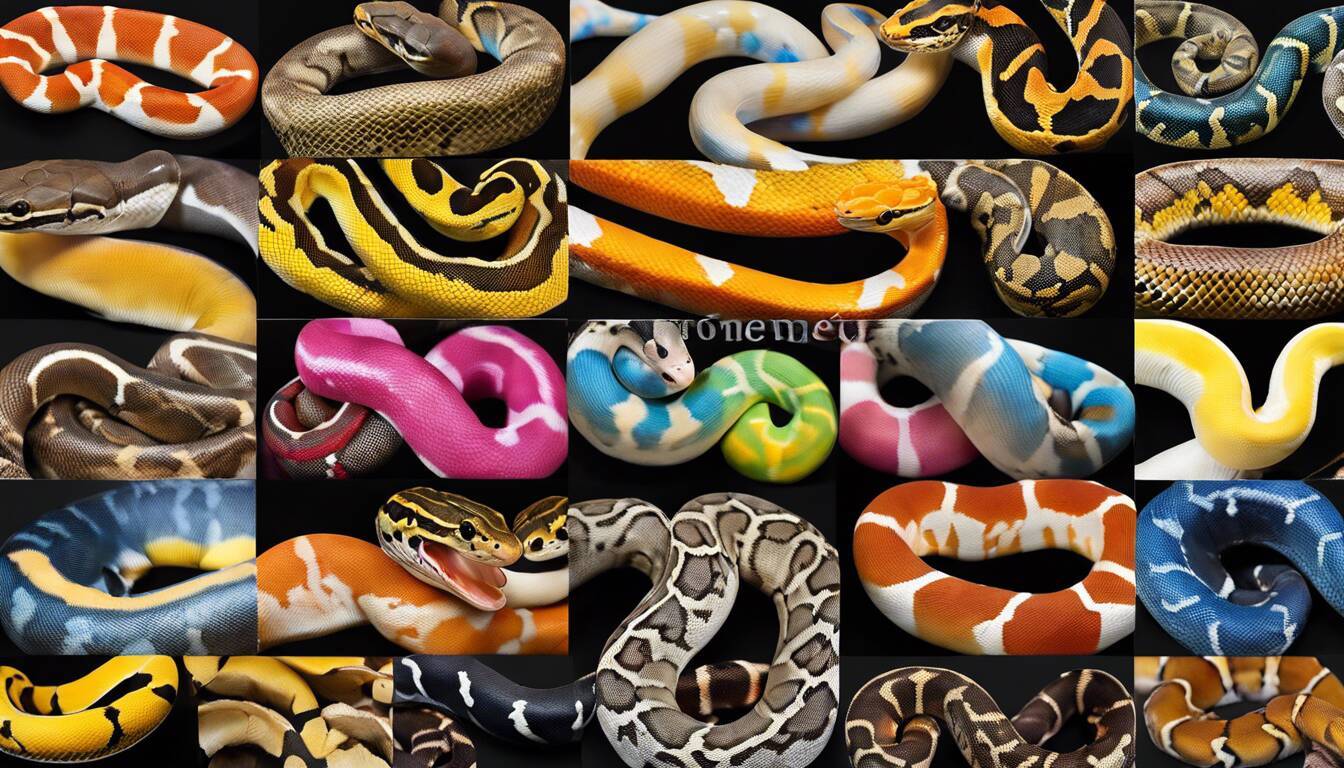
Ball python morphs are visual variations in color and pattern caused by specific genetic mutations. These variations, ranging from high-contrast albinos to complex pattern-shifting "designer" snakes, are the cornerstone of the modern reptile hobby. Understanding morphs requires a grasp of Mendelian genetics, including recessive, dominant, and incomplete dominant traits.
The ball python (Python regius) has become the most popular pet snake globally, largely due to its docile nature and the incredible diversity of its appearance. In the 2026 pet trade, there are over 7,500 recognized genetic combinations, often referred to as "morphs." While the wild-type (or "normal") ball python features a beautiful pattern of dark brown "alien heads" on a tan background with a white belly, breeders have spent decades isolating mutations that completely transform these aesthetics.
Understanding the Genetics of Ball Python Morphs
To navigate the world of morphs, you must first understand how these traits are inherited. Every ball python carries two copies of each gene (alleles)—one from the mother and one from the father. The interaction between these alleles determines whether a mutation is visual or hidden.
Recessive Morphs
A recessive trait only becomes visual if the snake inherits the mutated gene from both parents. If a snake has only one copy of a recessive gene, it is called "heterozygous" (or "het") for that trait. A "het" snake looks like a normal ball python but carries the genetic blueprint to produce visual offspring. Examples of popular recessive morphs include Albino, Piebald, and Clown.
Dominant and Incomplete Dominant Morphs
Dominant traits require only one copy of the gene to be visual. However, in the ball python trade, true dominant genes are rarer than incomplete dominant (often colloquially called "codominant") genes.
With incomplete dominant genes, one copy produces a visual effect (the "heterozygous" form), but two copies produce a drastically different, often more extreme visual effect (the "homozygous" or "super" form). For instance, one Pastel gene creates a bright yellow snake, but two Pastel genes create a "Super Pastel," which is significantly lighter and has a faded head.
Allelic Complexes
An allelic complex occurs when different mutations occupy the same location (locus) on a chromosome. When you breed two different morphs from the same complex together, they interact in unique ways. The most famous is the Blue Eyed Leucistic (BEL) Complex, which includes genes like Mojave, Lesser, Butter, and Phantom. Crossing any two of these will result in a nearly pure white snake with blue eyes.
Primary Morphs and Their Visual Characteristics
The "base" morphs are the building blocks used to create complex multi-gene designer snakes. Here is an explanation of the most influential genes in the 2026 pet trade.
The Clown Morph (Recessive)
Clown is arguably the most sought-after recessive gene in the history of the hobby. It simplifies the side patterns into reduced, tear-drop shapes and creates a distinct, wide dorsal stripe. Clowns also possess a unique "facial" pattern that looks somewhat like theatrical makeup. Because it interacts so well with other genes, it is a staple in high-end breeding projects.
The Piebald Morph (Recessive)
Commonly known as the "Pied," this mutation causes patches of pigmentless white scales to appear on the body, contrasted against a normal or enhanced pattern. The amount of white is random; some snakes are "low-white," showing mostly pattern, while others are "high-white," appearing almost entirely white with a small patch of color near the head or tail.
The Pastel Morph (Incomplete Dominant)
Pastel was one of the first "color" mutations discovered. It increases yellow pigmentation and reduces black, leading to a much brighter snake. A key identifying feature of the Pastel gene is the "blushing" or fading of the dark pigments on the head.
The Banana / Coral Glow Morph (Incomplete Dominant)
Banana and Coral Glow are visually identical genes that produce a striking lavender and yellow snake. As these snakes age, they often develop small black spots, similar to a ripening banana. This gene is unique because it is often "sex-linked," meaning certain males are statistically more likely to produce male or female offspring carrying the gene.
The Mojave Morph (Incomplete Dominant)
A member of the BEL complex, the Mojave has a distinct pattern of "alien heads" that are often more circular and open than a wild-type. They possess a yellowish-green hue and a clean white belly. When bred to another Mojave, they produce a visual Blue Eyed Leucistic.

Comparison of Common Ball Python Morphs
| Morph Name | Inheritance Type | Primary Visual Change | Key Identifying Feature |
|---|---|---|---|
| Albino | Recessive | Total loss of black pigment | Bright yellow and white with red eyes |
| Yellow Belly | Incomplete Dominant | Subtle color brightening | "Flaming" on side scales near the belly |
| Axanthic | Recessive | Loss of yellow/red pigment | High-contrast grey, black, and white |
| Spider | Dominant | Drastic pattern reduction | Fine, "web-like" black lines; white sides |
| GHI | Incomplete Dominant | Darkening/Pattern change | "General High Intensity"; deep dark tones |
| Enchi | Incomplete Dominant | Pattern/Color boost | Orange hues and wide, reduced patterns |
Designer Morphs: The Art of Combination
In 2026, the hobby has moved beyond single-gene snakes. "Designer" morphs are the result of stacking three, four, or even five genes into a single individual. These combinations often create visuals that look nothing like the original base morphs.
The Blue Eyed Leucistic (BEL)
This is a "Super" form created by combining two genes from the BEL complex (e.g., Mojave x Lesser). The result is a breathtaking, solid white snake with piercing blue eyes. These are highly prized for their clean aesthetic and "statue-like" appearance.
The Killer Clown
The Killer Clown is a combination of the Super Pastel (homozygous incomplete dominant) and the Clown (homozygous recessive). The Pastel genes brighten the yellow to an almost neon intensity, while the Clown gene clears the pattern, resulting in a high-contrast yellow and tan snake with very few dark markings.
The Panda Pied
The Panda Pied is the combination of Black Pastel or Cinnamon in its "Super" form along with the Piebald gene. The result is a starkly black-and-white snake. Because "Super Black Pastels" sometimes suffer from developmental issues, Panda Pieds remain rare and expensive.
Ethical Considerations and Health-Linked Morphs
While most ball python morphs are purely aesthetic and do not impact the snake's health, a few genes are linked to neurological or physical defects. Responsible keepers and breeders in 2026 emphasize the importance of transparency regarding these traits.
- The "Wobble" Effect: Certain genes, most notably the Spider, Champagne, Hidden Gene Woma, and Woma, are linked to a neurological condition called a "wobble." This can manifest as head tremors, Difficulty striking at prey, or "stargazing" (looking straight up and losing balance). While some snakes live normal lives, others are severely affected.
- Duck-billing and Kinking: Breeding certain genes in their "Super" forms, such as Black Pastel or Cinnamon, can occasionally result in facial deformities (duck-billing) or spinal kinks.
- Microphthalmia: The Super Butter or Super Lesser (Blue Eyed Leucistics) can sometimes be born with smaller-than-normal eyes, though this is relatively rare in well-managed breeding lines.
How to Identify and Verify Ball Python Morphs
Identifying morphs can be challenging, especially as combinations become more complex. In 2026, professional breeders use a combination of visual markers and lineage tracking to verify genetics.
- Check the Belly: Many genes, like Yellow Belly or Spark, are most visible on the "edges" where the side pattern meets the belly scales. This "flaming" is a key indicator.
- Look for Blushing: High-quality color enhancers like Pastel or Fire will "blush" the dark pigments, turning them into a faded grey or light brown.
- Pattern Disruption: Look for how the "alien heads" are shaped. Are they connected (banded), reduced (clown/enchi), or completely scrambled (leopard)?
- Use Genetic Calculators: Digital tools like those found on MorphMarket allow users to input the parents' genetics to predict the statistical outcome of a clutch.
- Proven Breeding: The only 100% certain way to verify if a snake is "Het" for a recessive trait is to breed it to a visual partner and produce visual offspring.
The Market and Cost of Morphs in 2026
The price of ball python morphs is determined by rarity, demand, and the complexity of the genetic "recipe."
- Entry-Level Morphs ($50 - $150): Single-gene incomplete dominants like Pastel, Mojave, and Yellow Belly are very affordable and make excellent first pets.
- Mid-Range Morphs ($200 - $600): Visual recessives like Albino or Piebald, and popular dual-gene combos like "Lemon Blast" (Pastel + Pinstripe).
- High-End "Investment" Morphs ($1,000 - $5,000+): New or rare recessives such as Monsoon, Stranger, or Tri-stripe, as well as multi-gene Clown combos.
FAQs
What is the rarest ball python morph?
In 2026, the Monsoon morph and certain high-expression Stranger combinations are among the rarest. Monsoon is a recessive trait that creates a chaotic, "water-droplet" pattern. Because it is difficult to combine with other genes without losing the effect, visual Monsoon snakes remain low in number and high in value.
Do different morphs have different temperaments?
No. There is no scientific evidence suggesting that color or pattern mutations affect the temperament of a ball python. All ball pythons, regardless of morph, are individuals. However, their behavior is largely influenced by their environment (husbandry) and how frequently they are handled. The only exception is snakes with a severe "wobble," who may strike defensively if they feel disoriented.
How do I know if my ball python is a "Normal" or a morph?
A "Normal" ball python has a dark brown/black base with tan/gold "alien head" spots and a clean white or slightly speckled belly. If your snake has red eyes, a white body, high-contrast yellow, or a missing pattern, it is almost certainly a morph. Comparing your snake to high-resolution photos on reputable breeder sites is the best way to identify it.
Can I keep two different morphs together?
Ball pythons are solitary animals and should not be housed together, regardless of their morph. Co-habitation causes significant stress, competition for heat sources, and potential injury. The only time they should be together is for supervised breeding purposes by experienced keepers.
Why do some morphs change color as they get older?
Many ball python morphs "brown out" or "fade" as they age. A bright yellow hatchling Pastel may become a duller tan-yellow as an adult. This is natural. Some genes, like Desert Ghost (recessive), are highly prized because they actually look better and brighter as the snake reaches maturity.
Final Recommendation for Prospective Owners
When entering the world of ball python morphs, it is easy to be overwhelmed by the thousands of options. For a first-time owner, I recommend selecting a morph based on visual appeal and health rather than investment value. Morphs like the Blue Eyed Leucistic, Banana, or Pinstripe offer stunning visuals without the ethical concerns of the "wobble" genes. Always purchase from a breeder who provides a "genetic guarantee" and can document the snake's feeding history and lineage. Using platforms like the World of Ball Pythons database can help you research specific genes before making a purchase.
Image Gallery
Select an image to open it in a new tab.



Ingrid Bjornson
Global Cyber Policy and Regulation Analyst
