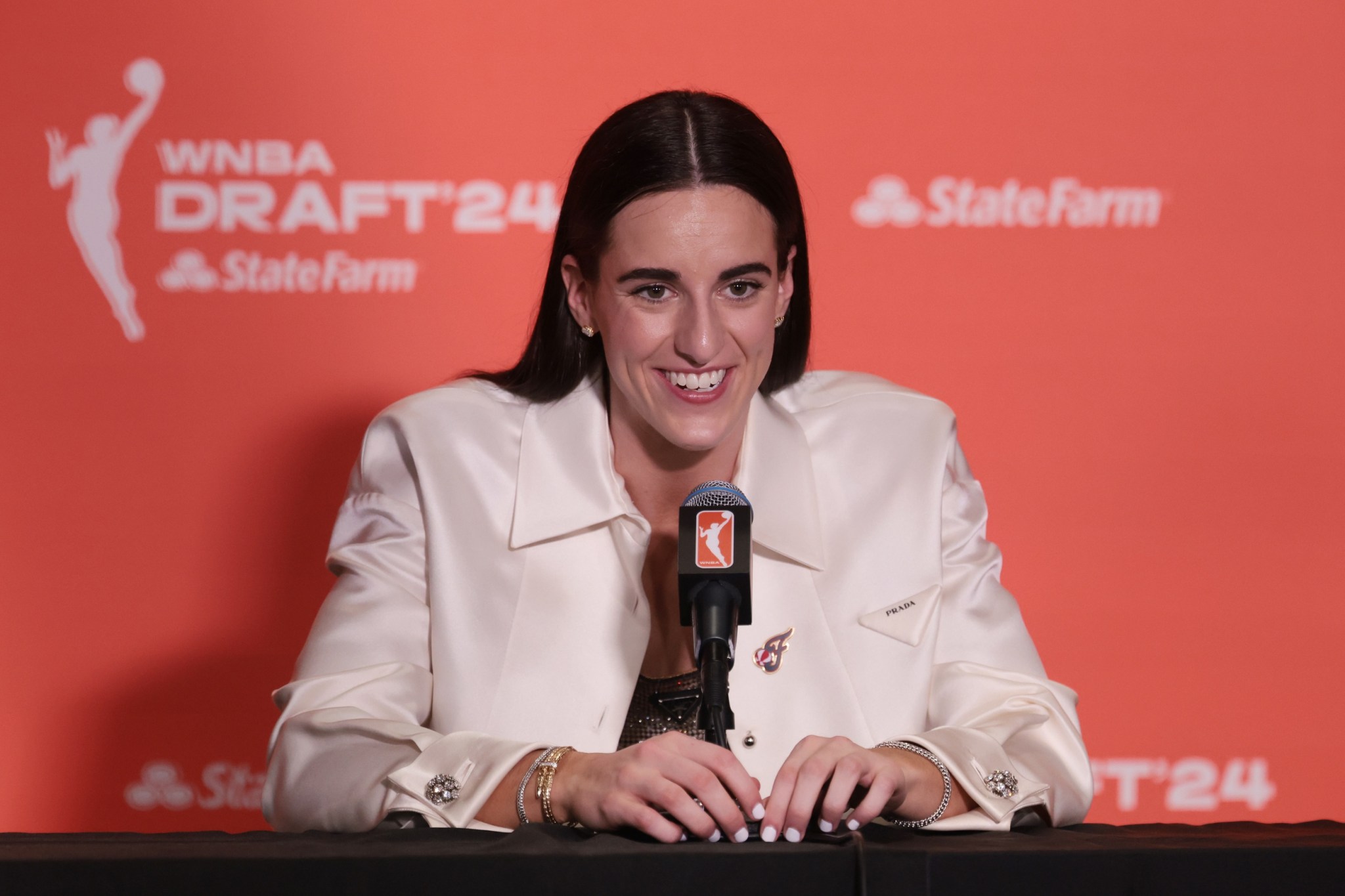
The 2024 WNBA profit and loss figures represent a critical shift from a subsidized sports model to a high-growth investment phase. While the league reported an operational loss of approximately $50 million, this deficit reflects massive infrastructure investments—such as charter flights and expanded marketing—intended to scale the league’s record-breaking revenue and billion-dollar media valuations.
The $50 Million Narrative: Decoding the 2024 Financial Headlines
In the summer of 2024, reports surfaced indicating that the WNBA was projected to lose roughly $50 million for the fiscal year. To the casual observer, this figure appeared to be a setback, especially given the unprecedented "Caitlin Clark effect" that saw ticket sales, jersey purchases, and television ratings skyrocket. However, in the world of professional sports finance, a "loss" on a balance sheet often masks a significant increase in enterprise value.
The 2024 loss was not a sign of a failing business but rather a deliberate choice to reinvest gross revenue into the league’s long-term viability. For decades, the WNBA operated on a lean model, often criticized for its lack of investment in player comfort and marketing. In 2024, the league pivoted. By absorbing higher operational costs to meet the moment of increased demand, the WNBA signaled to investors that it was no longer content with being a "niche" product. This matters because it changed the conversation from "Does the WNBA deserve to exist?" to "How much is the WNBA actually worth?"
Furthermore, the 2024 financial results must be viewed through the lens of the WNBA’s relationship with the NBA, which owns approximately 40% of the league. The accounting of profits and losses in professional sports is notoriously complex, often involving shared overhead and long-term capital calls. The 2024 deficit was effectively "growth capital," funded by both the NBA and external investors who saw the league’s valuation triple in just a few short years.
Revenue vs. Profit: The "Startup" Phase of a Mature League
To understand why the 2024 profit and loss matters, one must distinguish between gross revenue and net profit. In 2024, the WNBA's gross revenue was estimated to exceed $200 million—roughly double the $100 million generated in 2022. This exponential growth in top-line revenue is the most important metric for future media rights negotiations and expansion fees.
The reason the league still saw a net loss despite doubling its revenue lies in the "startup" mentality the league adopted. Even though the WNBA has existed since 1996, it spent much of that time in a defensive financial posture. The 2024 season marked the first time the league leaned into a "spend money to make money" strategy. This included:
- Digital Transformation: Massive upgrades to the WNBA App and League Pass infrastructure to handle millions of new concurrent users.
- Brand Partnerships: Hiring high-level marketing executives and agencies to capitalize on the mainstream crossover of players like Angel Reese and Caitlin Clark.
- Merchandising Scalability: Addressing the chronic shortages of player jerseys and team apparel by overhauling the supply chain.
For investors, a company that doubles its revenue while taking a strategic loss is often more attractive than a stagnant company that turns a small profit. This is why the 2024 financials were viewed as a success by Wall Street and private equity firms, even if critics used the $50 million figure to question the league's sustainability.

The Infrastructure of Success: Why Costs Increased
The primary driver of the 2024 expenditure increase was a long-overdue investment in the "product"—the players and their playing conditions. For years, one of the most contentious issues in the WNBA was the use of commercial flights. In 2024, the league finally committed to a full-time charter flight program for the entire season and playoffs.
The Charter Flight Mandate
The move to charter flights added an estimated $25 million to the league's annual expenses. While this significantly impacted the profit and loss statement for 2024, it was a non-negotiable requirement for a modern professional sports league. Charter flights allow for better recovery, reduced injury risk, and a more professional environment that attracts and retains top talent. By 2026, we can see that this investment was foundational in maintaining the high level of play that kept viewership numbers at record highs.
Marketing and Global Outreach
In 2024, the WNBA also invested heavily in global marketing. With the arrival of international prospects and the league’s desire to expand its footprint, the league increased its "burn rate" on advertising and international broadcasting partnerships. This was not "lost" money; it was the cost of acquiring a global audience that would eventually pay dividends in the 2025-2026 media rights cycle.
Valuation Growth vs. Annual Net Income
One of the most compelling reasons the 2024 profit and loss matters is the contrast between annual operational losses and the exploding valuation of WNBA franchises. If the league were truly "failing" due to a $50 million loss, expansion fees would be plummeting. Instead, the opposite occurred.
| Financial Metric | 2022/2023 Average | 2024/2025 Reported |
|---|---|---|
| Gross League Revenue | ~$100M - $125M | $200M+ |
| Expansion Fee (New Teams) | ~$50M | $50M - $150M+ |
| Average Franchise Valuation | ~$15M - $40M | $100M - $200M+ |
| Charter Flight Expense | $0 (Commercial) | ~$25M - $30M |
| Broadcast Reach | Standard Cable/Stream | Record-breaking OTA (ABC/ION/CBS) |
The table above illustrates a clear trend: while expenses (the "loss" side) increased, the asset value of the teams grew at a much faster rate. In 2024, the Golden State Valkyries expansion fee was a testament to this, with subsequent teams in Toronto and Portland reportedly fetching even higher prices. Investors are not paying $100 million+ for a team because of the current profit; they are paying for the future "upside" demonstrated by the 2024 revenue surge.
The Role of the New Media Rights Deal
The 2024 financial year was the ultimate "audition" for the WNBA's next media rights deal. Because the previous deal was undervalued and negotiated in a different media landscape, the 2024 season served as a proof of concept for broadcasters like Disney (ESPN/ABC), NBC, and Amazon.
The $50 million loss in 2024 mattered because it showed that the league was willing to "subsidize" its own growth to prove its value to these media giants. The result was a landmark media deal (part of the larger NBA package) that significantly increased the WNBA's annual distribution starting in 2025. Without the aggressive spending in 2024—which ensured games were high-quality, players were rested, and the brand was ubiquitous—the league would not have had the leverage to demand a seat at the multi-billion dollar table.
In professional sports, the "media rights" are the engine. The 2024 P&L was essentially the fuel used to start that engine. By 2026, we are seeing the fruits of this strategy, as the increased distribution has begun to close the gap between expenses and revenue, leading toward a path of sustainable profitability.
Future Implications for the CBA and Player Salaries
The 2024 financials also set the stage for the WNBA Players Association (WNBPA) to opt out of the current Collective Bargaining Agreement (CBA). When players saw the league's revenue doubling and valuations tripling, the "operational loss" argument became less effective for the league's front office during negotiations.
Players rightfully pointed to the $200 million+ in gross revenue as proof that the "pie" had grown. The 2024 P&L matters here because it provides the data for the next phase of player compensation. The 2024 season proved that the players are the primary drivers of value. Whether it was the rivalry between the Indiana Fever and the Chicago Sky or the continued dominance of the Las Vegas Aces, the 2024 financials proved that fans are willing to pay—and watch—in record numbers.
As we look back from 2026, the 2024 profit and loss statement was the document that ended the "charity" era of the WNBA. It shifted the burden of proof from the players to the owners, demanding a more equitable share of the massive revenue growth, regardless of the temporary accounting losses incurred during the expansion phase.
Comparative Analysis: WNBA vs. Other Professional Leagues
It is helpful to compare the WNBA's 2024 financial position with other major leagues during their growth phases. Historically, the MLS (Major League Soccer) and even the early NBA faced years of operational losses while building their infrastructure.
- MLS Comparison: For nearly two decades, the MLS operated at a loss while building soccer-specific stadiums. Today, franchise valuations have soared to over $500 million.
- NBA Context: In its early years, the NBA was a fringe league that struggled with consistency. It was only through centralizing media rights and aggressive marketing—similar to the WNBA's 2024 strategy—that it became a global powerhouse.
The WNBA is currently moving through this "Growth/Expansion" quadrant. The 2024 loss is a standard feature of a business that is scaling to meet a massive increase in market demand. In 2024, the WNBA finally stopped acting like a small business and started acting like a major league.
Frequently Asked Questions
Why did the WNBA lose $50 million in 2024 despite record attendance?
The $50 million loss was primarily due to increased "investment" expenses. While ticket and merchandise revenue reached all-time highs, the league simultaneously introduced high-cost items like a full-season charter flight program, upgraded digital technology, and expanded marketing budgets to capitalize on its newfound popularity.
Does the NBA still subsidize the WNBA’s losses?
The NBA owns approximately 40% of the WNBA, and while it has historically provided financial support, the 2024 season marked a shift. The "loss" was funded not just by the NBA but also by capital raised from external investors during a 2022 funding round and by the significant expansion fees paid by new franchise owners.
How did Caitlin Clark influence the 2024 profit and loss?
The "Caitlin Clark effect" was a primary driver of the revenue side of the 2024 P&L. Her arrival led to sold-out arenas (often in larger NBA-sized venues), record-breaking jersey sales, and the highest television ratings in league history. This surge in revenue provided the league with the confidence to increase spending on player travel and league infrastructure.
Are WNBA players' salaries affected by the 2024 loss?
In the short term, salaries are governed by the existing Collective Bargaining Agreement. However, the 2024 financial data showed a massive increase in gross revenue, which gave the players' union significant leverage to opt out of the CBA and negotiate for a higher revenue-sharing percentage and higher base salaries in the future.
Is the WNBA profitable as of 2026?
By 2026, the WNBA has moved closer to operational break-even or profitability, thanks to the new media rights deal that kicked in following the 2024/2025 cycle. The "losses" of 2024 are now viewed by economists as the necessary investment cost required to unlock the billion-dollar valuations the league now enjoys.
What were the biggest expenses for the WNBA in 2024?
The largest expense increases in 2024 were the charter flight program (approx. $25M), increased marketing and production for nationally televised games, and the hiring of additional league-level staff to manage the increased scale of operations and fan engagement.
Practical Guidance for 2026 Investors and Analysts
When evaluating the WNBA's financial health, focus on Enterprise Value (EV) rather than Net Income. In the current 2026 landscape, the 2024 P&L serves as the baseline for the "New WNBA" economy. Analysts should prioritize the following metrics when looking at the league’s trajectory:
- Media Rights Multiples: Compare the 2024 viewership growth against the final contract value of the current media deal to determine if the league is still undervalued.
- Expansion Fee Trends: Watch the pricing of the next round of expansion teams (Teams 16 and beyond) as a barometer for the league’s perceived market cap.
- Direct-to-Consumer (DTC) Growth: Monitor WNBA League Pass subscriber retention from the 2024 peak to see if the league has successfully converted "casual" fans into "loyal" fans.
Image Gallery
Select an image to open it in a new tab.




Zara El-Hashem
Sociocultural Dynamics and Academics Writer
