
The 1990 recession was primarily caused by a restrictive monetary policy implemented by the Federal Reserve to combat inflation, a sudden spike in oil prices following Iraq’s invasion of Kuwait, and the systemic "credit crunch" resulting from the Savings and Loan crisis. These factors converged to end the long economic expansion of the 1980s.
The Economic Climate of the Late 1980s
To understand the 1990 recession, which officially lasted from July 1990 to March 1991, one must examine the state of the United States economy in the years leading up to the downturn. The 1980s had been a period of significant growth and structural change. Following the brutal "double-dip" recession of the early 1980s, the U.S. entered a sustained period of expansion characterized by deregulation, tax cuts, and a surge in consumer spending.
However, by 1988, the seeds of the 1990 contraction were being sown. The economy was beginning to overheat. Unemployment had dropped to levels that many economists believed would trigger a "wage-price spiral," where low unemployment leads to higher wages, which in turn leads to higher prices for goods and services. Inflation, which had been tamed by Paul Volcker in the early 1980s, began to creep upward again, reaching nearly 5% by 1989. This prompted the Federal Reserve, then led by Alan Greenspan, to take defensive action.
Monetary Policy: The Federal Reserve’s Inflation Fight
The first major catalyst for the 1990 recession was the Federal Reserve’s decision to tighten monetary policy. Between 1986 and 1989, the Federal Reserve steadily raised the federal funds rate—the interest rate at which banks lend to one another overnight. The rate moved from approximately 5.8% in late 1986 to a peak of 9.8% in May 1989.
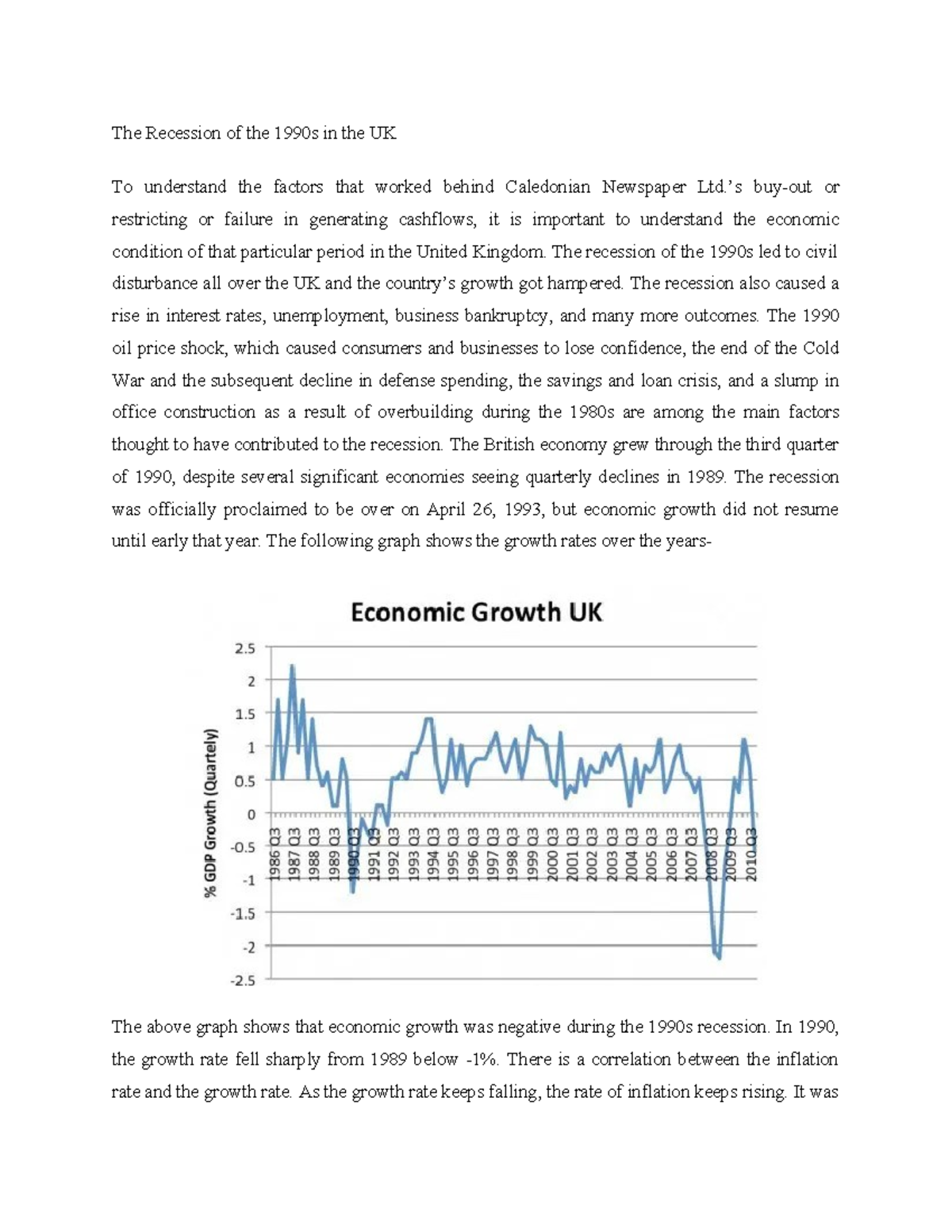
The goal was a "soft landing": slowing the economy just enough to cool inflation without triggering a recession. Historically, however, soft landings are notoriously difficult to achieve. The high interest rates made borrowing more expensive for businesses and consumers alike. Mortgage rates rose, cooling the housing market, and corporate investment began to slow as the cost of capital increased. By early 1990, the manufacturing sector was already showing signs of significant fatigue, and the GDP growth rate had slowed to a crawl. The economy was essentially balanced on a knife’s edge, awaiting a catalyst to push it into a full-scale contraction.
The Oil Price Shock: The Invasion of Kuwait
In August 1990, the necessary "shove" arrived in the form of a geopolitical crisis. Iraq, led by Saddam Hussein, invaded Kuwait. This event caused immediate panic in the global energy markets. The price of crude oil, which had been trading around $17 per barrel in June 1990, more than doubled to peak at over $36 per barrel by October 1990.
Oil price shocks have a dual-negative impact on the economy. First, they act as a "tax" on consumers. As gasoline and heating oil prices rise, households have less discretionary income to spend on other goods and services. Second, they increase the cost of production and transportation for almost every business, further fueling inflationary pressures. In 1990, this was particularly damaging because the Fed was already keeping interest rates high to fight inflation. The oil shock forced the Fed into a difficult position: if they cut rates to help the slowing economy, they risked letting the oil-induced inflation spiral out of control; if they kept rates high, they would deepen the recession.
This uncertainty significantly damaged consumer and business confidence. The University of Michigan Consumer Sentiment Index plummeted in the months following the invasion, as Americans feared a prolonged war in the Middle East and higher costs of living.
The Savings and Loan Crisis and the Credit Crunch
While the oil shock was the most visible trigger, a more systemic rot was hollowing out the financial sector: the Savings and Loan (S&L) crisis. Throughout the 1980s, many "thrifts" (savings and loan associations) had engaged in high-risk lending, particularly in commercial real estate, following a period of rapid deregulation.
When the real estate bubble of the late 80s began to burst—partly due to the Tax Reform Act of 1986, which removed many tax incentives for real estate investment—hundreds of these institutions failed. The federal government was forced to step in with a massive bailout through the Financial Institutions Reform, Recovery, and Enforcement Act of 1989 (FIRREA).
The fallout from the S&L crisis created a "credit crunch." Banks that survived became extremely risk-averse. Regulators tightened capital requirements, and lenders were hesitant to extend credit even to creditworthy businesses. This lack of available capital choked off investment and prevented many businesses from weathering the temporary downturn caused by the oil shock. Small and medium-sized enterprises, which rely heavily on bank loans for operational liquidity, were hit particularly hard, leading to widespread layoffs.
Structural Changes: The Tax Reform Act of 1986
The Tax Reform Act of 1986 (TRA86) is often overlooked in discussions of the 1990 recession, but its long-term effects were profound. Before 1986, real estate investment was heavily subsidized by tax laws that allowed for rapid depreciation and the use of "passive losses" to offset other income. This led to a massive oversupply of commercial office space and multi-family housing, as developers built for tax benefits rather than market demand.
TRA86 eliminated many of these loopholes. While this was a positive move for long-term economic efficiency, the immediate result was a sharp drop in the value of commercial property. By 1990, the commercial real estate market was in a state of collapse. This exacerbated the S&L crisis, as the collateral backing billions of dollars in loans vanished. The resulting decline in construction activity was a major drag on GDP during the 1990-1991 period.
Comparing the 1990 Recession to Other Economic Contractions
To understand the severity and nature of the 1990 recession, it is helpful to compare it to the major recessions that preceded and followed it.
| Feature | 1981-1982 Recession | 1990-1991 Recession | 2008-2009 Recession |
|---|---|---|---|
| Duration | 16 Months | 8 Months | 18 Months |
| Peak Unemployment | 10.8% | 7.8% | 10.0% |
| Primary Cause | Aggressive Fed Rate Hikes | Oil Shock & S&L Crisis | Subprime Mortgage Collapse |
| GDP Decline | -2.7% | -1.4% | -4.3% |
| Recovery Type | V-Shaped (Rapid) | U-Shaped (Jobless) | L-Shaped (Slow/Stagnant) |
| Monetary Policy | Extremely Tight (20% Rates) | Moderately Tight (10% Rates) | Zero-Bound (0% Rates) |
As shown in the table, the 1990 recession was relatively short and shallow compared to the "Great Recession" of 2008 or the Volcker-led recession of the early 80s. However, it was notable for its "jobless recovery." Although the technical recession ended in March 1991, the unemployment rate continued to rise for another 15 months, peaking at 7.8% in June 1992. This delay in labor market recovery had significant political consequences and shaped the economic discourse of the early 1990s.
The Role of Military Spending and the End of the Cold War
Another contributing factor was the "peace dividend." With the fall of the Berlin Wall in 1989 and the subsequent collapse of the Soviet Union, the U.S. began to scale back its massive defense budget. While this was a long-term fiscal benefit, the short-term impact was a reduction in government spending.
Regions of the country that were heavily dependent on defense contracting, such as Southern California and parts of New England, fell into deep localized recessions. Thousands of high-paying engineering and manufacturing jobs were eliminated as defense firms merged or downsized. This structural shift in the economy happened precisely as the broader cyclical recession was taking hold, making the downturn feel much more permanent to those in the defense sector.
Consumer Behavior and the Psychological Impact
The 1990 recession was also characterized by a significant shift in consumer psychology. The 1980s were defined by "conspicuous consumption," but by 1990, many households were heavily leveraged. When the recession hit and home prices began to stagnate or fall for the first time in decades, the "wealth effect" reversed.
Consumers became cautious. The uncertainty regarding the Gulf War—specifically whether it would become a "second Vietnam"—led people to postpone major purchases like cars and appliances. This drop in consumer demand created a feedback loop: lower demand led to lower production, which led to layoffs, which further lowered demand. This cycle was only broken once the Gulf War ended quickly and decisively in early 1991, restoring a measure of confidence to the American public.
The Impact on the 1992 Presidential Election
The causes and characteristics of the 1990 recession played a pivotal role in American political history. President George H.W. Bush, who had enjoyed record-high approval ratings following the success of Operation Desert Storm, saw his popularity vanish as the "jobless recovery" persisted.
The public perception was that the administration was out of touch with the economic suffering of average Americans. Bill Clinton’s 1992 campaign famously used the internal mantra, "The economy, stupid," to stay focused on the lingering effects of the 1990 downturn. Despite the recession having technically ended a year before the election, the stagnation in wages and the "credit crunch" in the housing market were enough to shift the political landscape, leading to a change in the White House.
Frequently Asked Questions
How long did the 1990 recession last?
The 1990 recession officially lasted for eight months, beginning in July 1990 and ending in March 1991, according to the National Bureau of Economic Research (NBER). However, the labor market remained weak for much longer, with unemployment not peaking until mid-1992.
Who was the President during the 1990 recession?
George H.W. Bush was the President of the United States throughout the entirety of the 1990 recession. The economic malaise following the recession is widely cited as a primary reason for his loss to Bill Clinton in the 1992 election.
Was the 1990 recession a "Great Depression" level event?
No. The 1990 recession was considered a "mild-to-moderate" downturn. While it caused significant hardship in specific sectors like real estate and defense, the overall decline in GDP was 1.4%, which is much less severe than the 26.7% decline seen during the Great Depression or the 4.3% decline during the 2008 financial crisis.
Why is it called a "jobless recovery"?
It is called a jobless recovery because economic output (GDP) began to grow again in early 1991, but the number of jobs continued to shrink. In many industries, companies used the recession as an opportunity to "lean out" operations through automation and restructuring, meaning they didn't need to hire back workers even as demand returned.
Did the 1990 recession affect the whole world?
Yes, the 1990 recession was part of a larger global slowdown. Countries like the United Kingdom, Canada, and Australia also experienced significant recessions during this period, often driven by similar factors such as high interest rates and the global oil price spike.
How did the Federal Reserve respond once the recession started?
Once the recession was clearly underway and the threat of war-induced inflation began to subside, the Federal Reserve aggressively cut interest rates. The federal funds rate was lowered from over 8% in late 1990 to 3% by 1992. These cuts eventually helped to stabilize the banking sector and fuel the long expansion of the 1990s.
Current Perspective and Next Actions
As of 2026, the 1990 recession remains a textbook case for economists studying how multiple "shocks"—monetary, geopolitical, and financial—can synchronize to derail an economy. For modern investors and policymakers, the primary lesson of 1990 is the importance of monitoring the "lagged effects" of interest rate hikes.
If you are analyzing current economic trends in 2026, it is vital to look beyond the headline GDP numbers. Pay close attention to credit availability and consumer sentiment indices. Much like in 1990, an economy can appear robust on the surface while structural weaknesses in the financial or energy sectors are preparing to converge. Investors should diversify their portfolios to include energy-hedged assets and maintain liquidity to navigate potential credit crunches that often follow periods of aggressive central bank tightening.
For more detailed historical data on the 1990-1991 period, readers should consult the Federal Reserve History archives or the Bureau of Labor Statistics reports from that era.
Image Gallery
Select an image to open it in a new tab.
Lars Thomsen
Global Labor Markets and Economic Strategy Editor
