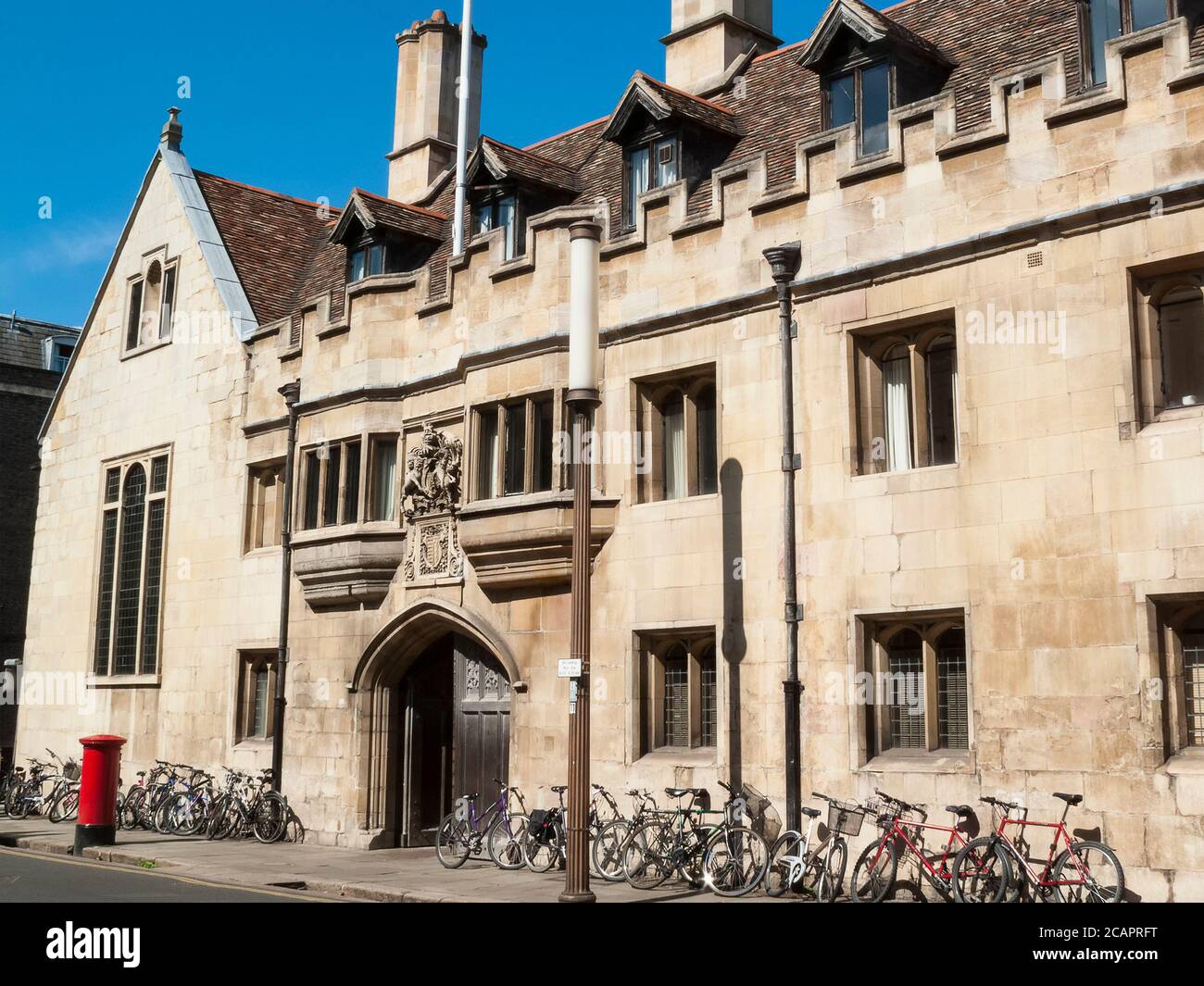
The University of Cambridge was founded in 1209 by a group of scholars who migrated from the University of Oxford. This departure followed a violent "town and gown" dispute in Oxford, leading these academics to seek a new location for study, which eventually gained formal royal recognition in 1231.
The Catalytic Origins: The Oxford Migration of 1209
The establishment of the University of Cambridge was not the result of a deliberate, planned institutional expansion but rather a consequence of civil unrest and legal conflict. In early 13th-century England, the only established university was Oxford. However, the relationship between the academic community (the "gown") and the local townspeople (the "town") was frequently strained by issues of jurisdiction, pricing of goods, and social conduct.
In 1209, a pivotal event occurred: a female resident of Oxford was killed. While the circumstances remain debated by historians, local authorities arrested several of the victim's housemates—scholars at the university. With the approval of King John, who was then embroiled in a dispute with the Pope and was generally hostile toward the clerical class to which scholars belonged, three of these clerks were hanged.
This execution was a direct violation of clerical immunity, which held that scholars should be tried under ecclesiastical law rather than secular law. In protest, the University of Oxford suspended its teaching. The faculty and student body dispersed to various locations, including Paris, Reading, and a small trading town in the fens: Cambridge.
Why Cambridge?
Cambridge was an attractive site for these displaced scholars for several reasons:
- Established Infrastructure: It was already a significant regional hub for trade and administration.
- Religious Presence: The town hosted several established religious houses and schools, providing a foundational environment conducive to learning.
- Proximity to Ely: The Bishop of Ely held significant ecclesiastical authority in the region, offering a potential layer of protection for the new community of scholars.
By late 1209, a sufficient number of academics had congregated in Cambridge to form a studium, the medieval precursor to a formal university.
Royal Recognition and Legal Consolidation (1231)
While 1209 marks the functional beginning of the university, it lacked the formal legal status required to operate as a self-governing corporation. In the medieval period, a university needed protection from the monarchy to prevent the local townspeople from exploiting the influx of students through exorbitant rents or unfair legal proceedings.
In 1231, King Henry III issued a series of royal writs that effectively granted the University of Cambridge its first formal recognition. These decrees were essential for the institution's survival and growth:
- Rent Control: The King empowered the university to appoint "taxors" who would work with local burgesses to set fair prices for student accommodation.
- Disciplinary Authority: The university was given the power to punish its own members, further entrenching the concept of academic autonomy.
- Protection of Scholars: The writs commanded the Sheriff of Cambridgeshire to protect the scholars and ensured that no "clerk" could remain in the town unless they were under the tutelage of a recognized master.
This royal intervention transformed the loose collection of scholars into a recognized legal entity. It distinguished Cambridge from other scholar-migrations of the era—such as those to Northampton or Salisbury—which failed to develop into permanent universities because they lacked sustained royal or ecclesiastical support.
The Emergence of the Collegiate System
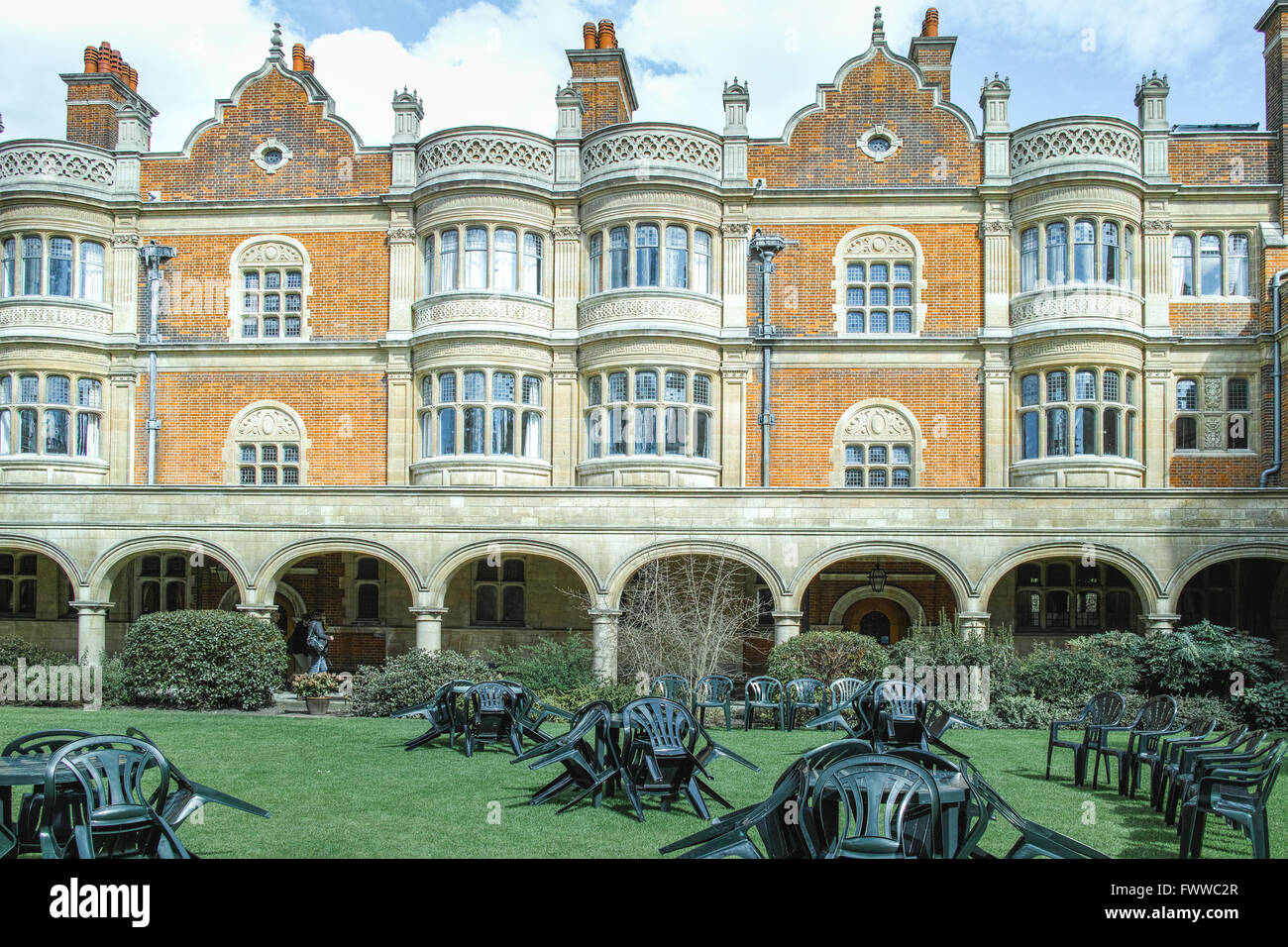
For the first several decades of its existence, the University of Cambridge had no colleges. Scholars lived in private hostels or rented rooms in the town. The university functioned primarily as a guild of teachers who examined students and granted degrees.
The shift toward the "collegiate" model, which defines Cambridge today, began in the late 13th century. These colleges were originally intended as charitable foundations to provide room, board, and financial support for scholars who had already completed their first degree and were studying for higher degrees in theology or law.
Peterhouse: The First College (1284)
In 1284, Hugo de Balsham, the Bishop of Ely, founded Peterhouse. He initially attempted to house his scholars alongside the monks at the Hospital of St. John, but the friction between the secular scholars and the regular monks proved too great. He eventually purchased two houses near the Church of St. Peter (now St. Mary the Less) to provide a dedicated residence.
Following the success of Peterhouse, the 14th and 15th centuries saw a boom in collegiate foundations, often backed by royalty or high-ranking church officials.
| College Name | Founding Year | Founder | Primary Purpose/Origin |
|---|---|---|---|
| Peterhouse | 1284 | Hugo de Balsham | First official college; model for the system. |
| Michaelhouse | 1324 | Hervey de Stanton | Merged later into Trinity College. |
| Clare Hall | 1326 | Richard de Badew | Re-founded by Elizabeth de Clare in 1338. |
| Pembroke | 1347 | Countess of Pembroke | First college to have its own chapel. |
| Gonville Hall | 1348 | Edmund Gonville | Later expanded as Gonville & Caius. |
| Trinity Hall | 1350 | Bishop of Norwich | Specifically for the study of Civil and Canon Law. |
| Corpus Christi | 1352 | Town Guilds | Unique founding by local townspeople. |
| King's College | 1441 | King Henry VI | Linked to Eton College; grand architectural scale. |
Papal Recognition and the Studium Generale (1318)
A critical milestone in the university's history occurred in 1318 when Pope John XXII issued a Papal Bull officially recognizing Cambridge as a studium generale.
In the medieval academic hierarchy, this was a prestigious designation. It meant that Cambridge was recognized as a center of learning for all of Christendom, and its masters were entitled to teach in any other university without further examination (ius ubique docendi). While Cambridge had already been functioning as a university for over a century, this formal recognition from the Papal Curia solidified its status on the international stage, placing it on par with older institutions like the University of Bologna and the University of Paris.
The Evolution of Governance and Curriculum
Throughout the 14th and 15th centuries, the university developed a sophisticated governance structure. The Chancellor emerged as the chief executive, responsible for maintaining order and representing the university’s interests to the Crown and the Church.
The curriculum was strictly defined by the medieval "Liberal Arts." Students first studied the Trivium:
- Grammar: The foundation of Latin, the language of all academic discourse.
- Logic: The art of reasoning and debate (dialectic).
- Rhetoric: The art of persuasive speaking and writing.
After completing the Trivium and receiving a Bachelor of Arts (BA), students could proceed to the Quadrivium:
- Arithmetic
- Geometry
- Music
- Astronomy
Completion of these seven arts led to the Master of Arts (MA) degree, which allowed the individual to teach. Only after obtaining an MA could a scholar pursue "higher" faculties: Theology, Canon Law, Civil Law, or Medicine.
Renaissance, Reformation, and the 16th-Century Expansion
The 16th century was a transformative era for Cambridge. The influence of Humanism led to a greater focus on Greek and Hebrew texts, moving away from purely scholastic theology. Figures like Erasmus, who was the Lady Margaret's Professor of Divinity from 1511 to 1514, brought international prestige to the university.
However, the Protestant Reformation posed a significant challenge. As King Henry VIII broke with Rome, the university had to navigate the transition from a Catholic institution to an Anglican one. In 1536, Henry VIII abolished the Faculty of Canon Law and mandated the study of Greek and Latin classics alongside mathematics and philosophy.
This period also saw the founding of Trinity College in 1546. Created by Henry VIII from the merger of Michaelhouse and King's Hall, Trinity was designed to be a massive, well-funded institution that would produce the elite administrators and clergy needed for the new Church of England. Its founding cemented Cambridge's role as a primary training ground for the British state.
Cambridge in the Modern Era (2026 Status)
As of 2026, the University of Cambridge celebrates 817 years of continuous operation. It has evolved from a small band of dissident Oxford scholars into one of the world's premier research institutions.
While the historical founding date remains 1209, the institution's identity has been continuously reshaped. The University Act of 1856 and subsequent reforms in the 20th century modernized its governance, removing religious tests for degrees and opening the institution to women (the first female students arrived at Girton College in 1869, though full membership was not granted until 1948).
In 2026, the university comprises 31 autonomous colleges and over 150 departments, faculties, and other institutions. The "Cambridge Phenomenon"—the cluster of high-tech and biotech firms surrounding the city—owes its existence to the university's foundational commitment to rigorous inquiry, a tradition that began in the early 13th century.
For researchers or students interested in the archival history of the university, the Cambridge University Archives maintain the original charters, including the 1231 writs of Henry III. General historical context on the era of university founding can be found via British History Online, which provides digitized versions of medieval records.
Frequently Asked Questions
Is Cambridge or Oxford older?
Oxford is older. While the exact founding date of Oxford is unknown, evidence of teaching exists as far back as 1096. It became a formal university around 1167. Cambridge was founded by Oxford scholars in 1209, making it the second-oldest university in the English-speaking world.
Why did the scholars leave Oxford for Cambridge?
They left due to a violent conflict between the townspeople and the university community. Following the execution of three scholars by local authorities, many academics fled Oxford in protest and in fear for their safety. Cambridge was chosen as a new location because it was already an established center of commerce and religion.
Who is considered the "founder" of Cambridge?
The university does not have a single individual founder. It was founded collectively by a group of scholars from Oxford. However, King Henry III is often credited with giving the university its first legal standing via the royal charter of 1231, and Hugo de Balsham is credited with founding the first college, Peterhouse, in 1284.
What is the oldest building in Cambridge?
The School of Pythagoras, currently part of St John's College, is widely considered the oldest secular building in Cambridge, dating back to approximately 1200—predating the formal founding of the university. The oldest college building still in use is the Old Court of Corpus Christi College, which dates to the mid-14th century.
How many colleges does Cambridge have today?
As of 2026, there are 31 colleges. These range from medieval foundations like Peterhouse (1284) to modern additions like Robinson College (1977). Each college is an independent legal entity with its own endowment, property, and governing body.
Practical Recommendations for History Seekers
For those wishing to explore the origins of the University of Cambridge first-hand in 2026, the following actions are recommended:
- Visit the University Archives: Located within the University Library, the archives house the original 1231 Royal Charters. Access usually requires an appointment and a valid research justification.
- Tour Peterhouse: As the oldest college, Peterhouse offers the clearest physical link to the 13th-century origins of the collegiate system. The college chapel and dining hall contain elements that reflect centuries of continuous use.
- Explore Great St. Mary’s: This is the University Church. Historically, before the university had its own buildings, congregations and even degree ceremonies were held here. It remains the physical and spiritual center of the university.
- Consult the 'VCH': The Victoria County History for Cambridgeshire provides the most exhaustive, peer-reviewed chronological account of the university’s administrative and legal development.
Image Gallery
Select an image to open it in a new tab.

Omar Farooq
EdTech Innovation and Virtual Pedagogy Journalist
