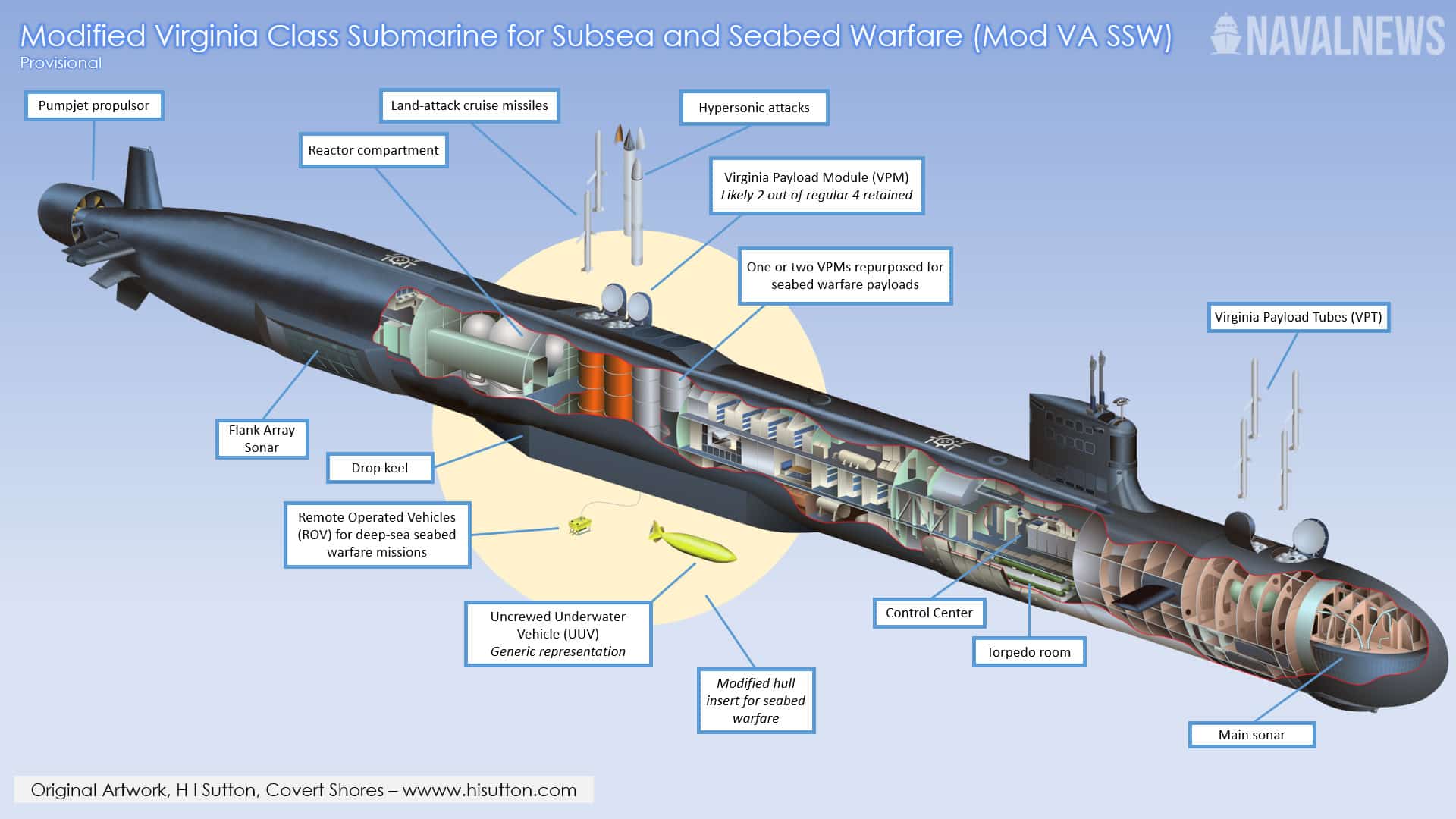
The United States Navy operates as the maritime branch of the United States Armed Forces, tasked primarily with maintaining, training, and equipping combat-ready naval forces capable of winning wars, deterring aggression, and maintaining freedom of the seas. It functions as a globally deployed force utilizing carrier strike groups, amphibious ready groups, submarine fleets, and aviation wings to secure international waterways, project national power, and protect maritime commerce worldwide.
Introduction to the United States Navy
The United States Navy traces its origins to the Continental Navy, established by the Continental Congress on October 13, 1775, during the American Revolutionary War. Following the adoption of the U.S. Constitution, the modern U.S. Navy was officially authorized by Congress through the Naval Act of 1794. Over the centuries, it has evolved from a small coastal defense force into the world's most powerful blue-water navy, possessing global reach, advanced technological platforms, and a vast network of personnel and facilities.
Operating under the Department of the Navy—one of the two uniformed services within the Department of Defense, alongside the Department of the Army—the Navy works in close coordination with the Department of the Air Force and the United States Coast Guard. Its primary constitutional and statutory mandate is to maintain freedom of navigation across international waters, ensuring that global trade routes remain open and secure against hostile state actors, piracy, and regional instability.
Strategic Objectives and Core Capabilities
The strategic doctrine of the U.S. Navy is guided by federal law, national security strategies, and maritime strategy documents published jointly by the Chief of Naval Operations, the Commandant of the Marine Corps, and the Commandant of the Coast Guard. These directives establish how the service projects power, deters potential adversaries, and defends the homeland from maritime approaches.
Power Projection and Deterrence
Power projection involves the ability of a nation to apply its military force outside its own territory. The U.S. Navy achieves this primarily through nuclear-powered aircraft carriers and carrier air wings, which can position tactical aircraft anywhere in the world without relying on foreign airbases. Strategic deterrence is maintained through the Ohio-class ballistic missile submarine fleet, which forms the sea-based leg of the United States nuclear triad. These submarines conduct continuous, undetectable patrols, ensuring an assured second-strike capability.
Sea Control and Maritime Supremacy
Sea control is the condition that allows the U.S. Navy to use a given area of the ocean for its own purposes while denying its use to an enemy. Achieving and maintaining sea control requires an integrated combination of surface combatants, attack submarines, mine warfare vessels, and maritime patrol aircraft. This capability underpins all other joint military operations, enabling the secure transport of troops, equipment, and logistical supplies across trans-oceanic lines of communication.
Humanitarian Assistance and Disaster Response
Beyond combat operations, the U.S. Navy frequently executes humanitarian assistance and disaster response (HADR) missions globally. Large-deck amphibious assault ships and hospital ships, such as the USNS Mercy and USNS Comfort, are uniquely equipped to provide medical care, fresh water, and logistical support to civilian populations devastated by natural disasters, earthquakes, or public health crises.
Organizational Structure and Leadership
The leadership structure of the U.S. Navy is divided into civilian administration and military operational command, ensuring civilian control of the military as mandated by the U.S. Constitution.
Civilian Leadership
At the apex of the Department of the Navy is the Secretary of the Navy (SECNAV), a civilian presidential appointee confirmed by the United States Senate. The SECNAV is responsible for the recruitment, organization, supply, equipment, training, mobilization, and demobilization of the Navy and the U.S. Marine Corps. The Secretary also oversees the construction, outfitting, and repair of naval ships, equipment, and facilities.
Military Leadership
The highest-ranking military officer in the Navy is the Chief of Naval Operations (CNO), a four-star admiral who is a member of the Joint Chiefs of Staff. The CNO acts as principal naval advisor to the President and the Secretary of Defense on naval matters. Operating forces of the Navy are assigned to various numbered fleets under the unified combatant commands, such as the U.S. Fleet Forces Command, U.S. Pacific Fleet, and U.S. Naval Forces Europe-Africa.
Fleet Composition and Major Vessel Classes
The combat power of the U.S. Navy is derived from a diverse array of specialized surface combatants, submarines, and amphibious ships. Each vessel class is engineered to perform specific mission sets ranging from anti-submarine warfare to air defense and strategic deterrence.
| Ship Class | Primary Mission | Key Characteristics |
|---|---|---|
| Nimitz & Gerald R. Ford-Class Carriers | Aviation Power Projection | Nuclear-powered, accommodates 70+ aircraft, flight deck length over 1,000 feet. |
| Arleigh Burke-Class Destroyers | Multi-Mission Air and Missile Defense | Aegis Combat System, SPY-1/SPY-6 radars, vertical launch missile systems. |
| Virginia-Class Attack Submarines | Anti-Submarine & Anti-Surface Warfare | Nuclear-powered, covert littoral operations, Tomahawk missile launch capability. |
| America & Wasp-Class Amphibious Assault | Marine Corps Landing & Aviation | Well decks or aviation-heavy configurations, carries vertical-lift aircraft and troops. |
| Ohio-Class Ballistic Missile Submarines | Strategic Nuclear Deterrence | Carries Trident II D5 ballistic missiles, continuous strategic deterrent patrols. |
Surface Combatants
Surface combatants include aircraft carriers, cruisers, and destroyers. The Arleigh Burke-class guided-missile destroyer serves as the backbone of the surface fleet, utilizing the Aegis Combat System to track and engage threats in multi-threat environments involving air, surface, and subsurface targets. Guided-missile cruisers provide broader area air defense for carrier strike groups.
Submarine Force
The Navy operates an all-nuclear-powered submarine force divided into fast-attack submarines (SSNs), guided-missile submarines (SSGNs), and ballistic missile submarines (SSBNs). Fast-attack boats specialize in intelligence, surveillance, reconnaissance, and hunting enemy warships, while SSGNs are converted ballistic missile hulls modified to carry up to 154 Tomahawk land-attack cruise missiles and host Navy SEAL teams.
Naval Aviation
Naval aviation integrates seamlessly with surface and sub-surface fleets. Carrier Air Wings comprise F/A-18E/F Super Hornets, F-35C Lightning II stealth fighters, EA-18G Growler electronic warfare aircraft, E-2D Advanced Hawkeye airborne early warning aircraft, and various rotary-wing assets like the MH-60R/S Seahawk for anti-submarine warfare and search-and-rescue operations.
Personnel, Training, and Force Readiness
The human element remains the most vital asset of the U.S. Navy. Maintaining a globally ready force requires rigorous recruitment standards, continuous professional military education, and specialized technical training across hundreds of rating specialties.
Officer and Enlisted Tracks
Navy personnel are broadly divided into commissioned officers and enlisted sailors. Commissioned officers hold leadership roles from division officer to fleet commander and are commissioned via the United States Naval Academy, Officer Candidate School, or the Reserve Officers' Training Corps. Enlisted sailors specialize in technical fields—ranging from nuclear engineering and cryptography to aviation mechanics and corpsmen—and advance through structured pay grades following competitive examinations and performance evaluations.
Training Infrastructure
Initial entry training for enlisted recruits occurs at Recruit Training Command in Great Lakes, Illinois. Following boot camp, sailors attend "A" schools to receive specific technical training for their designated rating. Officers and aviators undergo extensive flight, navigation, and leadership schooling at specialized centers such as Naval Air Station Pensacola and surface warfare officer schools.
Frequently Asked Questions
What is the primary mission of the U.S. Navy?
The primary mission of the U.S. Navy is to maintain, train, and equip combat-ready naval forces capable of winning wars, deterring aggression, and maintaining freedom of the seas to ensure global economic stability and national security.
How are ships in the U.S. Navy classified and designated?
U.S. Navy ships are classified using hull designation prefixes—such as CVN for nuclear-powered aircraft carriers, DDG for guided-missile destroyers, SSN for nuclear-powered attack submarines, and LCS for littoral combat ships—which identify their primary mission and propulsion type.
What is the difference between an aircraft carrier and an amphibious assault ship?
An aircraft carrier is optimized for launching fixed-wing fighter and strike aircraft to establish air superiority and execute power projection strikes. An amphibious assault ship is designed primarily to embark, transport, and land United States Marines and their equipment using helicopters, tiltrotor aircraft, and landing craft.
Where is the headquarters of the U.S. Navy located?
The administrative headquarters of the Department of the Navy is located at the Pentagon in Arlington, Virginia, operating under the civilian leadership of the Secretary of the Navy and the military direction of the Chief of Naval Operations.
How does the U.S. Navy support joint military operations?
The Navy supports joint operations by securing sea lines of communication, projecting tactical air power from carrier strike groups, inserting special operations forces globally, and providing secure logistics, missile defense, and communications relay capabilities to sister service branches.
Conclusion and Next Actions
The United States Navy remains a foundational pillar of global maritime security and national defense. For individuals seeking to engage with the service—whether through prospective military careers, historical research, or defense policy analysis—consulting official Department of Defense resources, the Naval History and Heritage Command, or official recruitment portals provides verified, up-to-date documentation regarding current operations, fleet status, and accession requirements.
Image Gallery
Select an image to open it in a new tab.
Zara El-Hashem
Sociocultural Dynamics and Academics Writer
