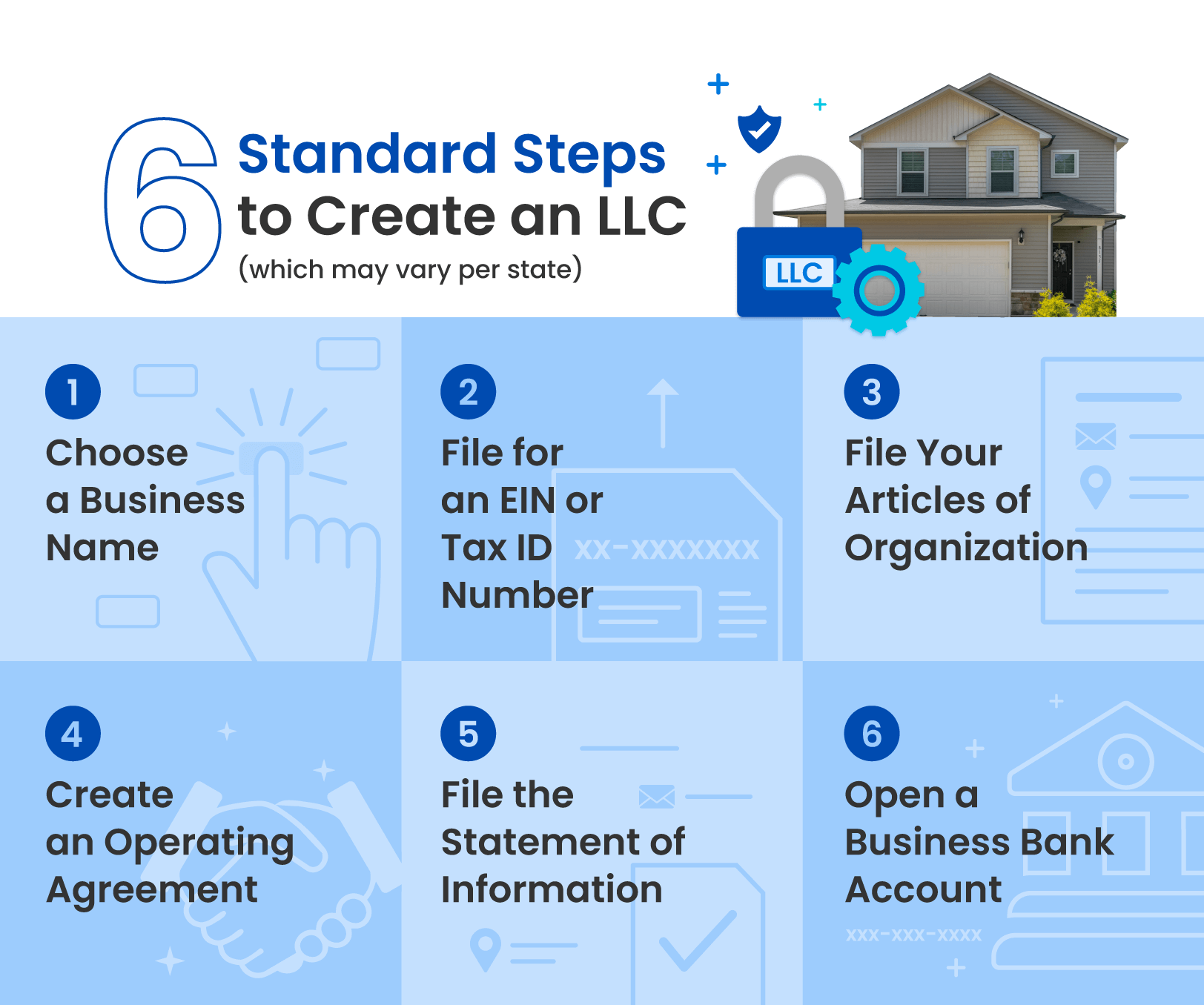
To start an LLC for rental properties, you must choose a business name, appoint a registered agent, and file Articles of Organization with your Secretary of State. Once formed, you must obtain an EIN, draft an operating agreement, and formally transfer the property title to the LLC while updating insurance and financing.
Understanding the Role of an LLC in Real Estate Investment
A Limited Liability Company (LLC) is a legal business structure that provides a "corporate veil" between your personal assets and your real estate business liabilities. For rental property owners in 2026, this remains the primary tool for mitigating risk. If a tenant or visitor is injured on the property and successfully sues the owner, the LLC generally ensures that only the assets owned by the company—the property itself and the business bank account—are at risk. Your personal residence, savings accounts, and vehicles are typically shielded from these legal judgments.
Beyond liability protection, an LLC offers significant tax flexibility. By default, a single-member LLC is treated as a "disregarded entity" by the IRS, meaning the rental income and expenses flow directly through to your personal tax return (Form 1040, Schedule E). This avoids the double taxation associated with C-corporations. Furthermore, an LLC allows for easier partnership structures if you decide to bring on investors, as you can define specific ownership percentages and management roles within a formal legal framework.
Step 1: Choose the Right Jurisdiction and Business Name
The first logistical step is deciding where to form your LLC. For most rental owners, the best jurisdiction is the state where the property is physically located. While states like Wyoming, Delaware, and Nevada are famous for "pro-business" laws and low taxes, registering a rental LLC in those states when the property is elsewhere often creates more paperwork. Most states require you to register as a "Foreign LLC" if you are "doing business" (owning and renting property) within their borders. This means you would end up paying filing fees and annual report fees in two states instead of one.
Once the jurisdiction is settled, you must select a name. In 2026, state databases are more integrated than ever, making name availability searches instantaneous. Your name must:
- Be distinguishable from any other entity registered in the state.
- Include a designator like "LLC," "L.L.C.," or "Limited Liability Company."
- Avoid restricted words (e.g., "Bank," "Insurance," or "University") unless you have specific licensing.
Many investors choose a name that corresponds to the property address (e.g., "123 Main Street Holdings, LLC") to keep multiple properties organized and separate.

Step 2: Appoint a Registered Agent
Every LLC is legally required to have a registered agent. This is an individual or entity designated to receive official legal documents, such as tax notices and service of process (lawsuits), on behalf of the business. The registered agent must have a physical street address in the state where the LLC is formed; a P.O. Box is not sufficient.
While you can technically act as your own registered agent if you reside in the same state as the property, many investors prefer to hire a professional registered agent service. Using a professional service ensures that a reliable party is always available during business hours to receive documents and provides an added layer of privacy, as the agent’s address—not your home address—becomes a matter of public record.
Step 3: File the Articles of Organization
The formal creation of your LLC occurs when you file the Articles of Organization (sometimes called a Certificate of Formation) with the Secretary of State’s office. This document is relatively straightforward and typically requires the following information:
- The LLC's name and principal place of business.
- The name and address of the registered agent.
- The purpose of the business (often a general statement like "any lawful business").
- The management structure (Member-managed vs. Manager-managed).
- The names of the organizers.
In 2026, filing fees generally range from $50 to $500 depending on the state. Most states now process these filings through online portals, with approvals often granted within 24 to 48 hours. It is vital to save the stamped, approved copy of this document, as you will need it to open bank accounts and secure financing.
Step 4: Draft a Comprehensive Operating Agreement
An Operating Agreement is an internal document that outlines how the LLC is run. Even if you are the sole owner (a single-member LLC), an operating agreement is essential. It reinforces the business's separate legal status, which is crucial if a court ever questions whether the LLC is a legitimate entity or just an extension of the individual owner.
The agreement should detail:
- Ownership Percentages: How much of the company each member owns.
- Management Rights: Who has the authority to sign contracts, buy or sell property, and manage day-to-day operations.
- Capital Contributions: What cash or property each member has invested.
- Distribution of Profits: How and when money is paid out to members.
- Dissolution Procedures: What happens to the assets if the members decide to close the business or if a member passes away.
Without an operating agreement, your LLC is governed by the default laws of your state, which may not align with your specific investment goals.
Step 5: Obtain an EIN and Open a Business Bank Account
An Employer Identification Number (EIN) is essentially a Social Security number for your business. You can obtain an EIN for free directly from the IRS website. This number is required for filing taxes and is almost always necessary to open a business bank account.
Once you have your EIN, you must open a dedicated business checking account. Never commingle funds. All rent checks must be deposited into this account, and all property expenses (repairs, taxes, insurance, mortgage) must be paid out of it. If you use your personal bank account to pay for a roof repair on an LLC-owned property, a creditor could argue that the LLC is not a separate entity, potentially "piercing the corporate veil" and leaving your personal assets vulnerable.
Step 6: Transfer Property and Update Financing
If you already own the rental property in your personal name, you must transfer the title to the LLC. This is typically done via a quitclaim deed or a warranty deed. The deed must be signed, notarized, and recorded with the county recorder’s office or the register of deeds.
However, this step carries a significant risk: the "Due on Sale" clause. Most residential mortgages contain a provision stating that if the property title is transferred, the lender has the right to demand full payment of the remaining loan balance immediately. Before transferring the title, contact your lender. Some lenders may allow the transfer if you remain the personal guarantor of the loan, while others may require you to refinance into a commercial loan specifically designed for LLCs.
Step 7: Complying with Federal and State Reporting
As of 2026, all new and existing LLCs must comply with the Corporate Transparency Act (CTA). This requires filing a Beneficial Ownership Information (BOI) report with the Financial Crimes Enforcement Network (FinCEN). You must provide the names, birthdates, and identification (such as a passport or driver's license) of everyone who owns 25% or more of the LLC or exercises substantial control over it.
Failure to file this report can lead to significant daily fines. Additionally, most states require an "Annual Report" or "Biennial Statement" to keep the LLC in good standing. These reports usually involve a small fee and verify that your registered agent and office address are still current.
Comparing LLC Structures for Real Estate
Investors with multiple properties often wonder if they should put everything in one LLC or separate them. The following table compares the most common strategies used in 2026.
| Structure | Best For | Pros | Cons |
|---|---|---|---|
| Single LLC | Beginners with 1-2 properties | Simplicity; one set of filing fees; easy tax filing. | If one property is sued, all assets in the LLC are at risk. |
| Multiple LLCs | Investors with high-value assets | Total isolation of risk; a lawsuit against Property A cannot touch Property B. | High administrative costs; multiple filing fees and bank accounts. |
| Series LLC | Investors in specific states (e.g., TX, DE, WY) | One "Master" LLC with "Cells" for each property; lower total fees. | Not recognized in all states; complex accounting and legal uncertainty. |
| Land Trust + LLC | Privacy-focused investors | Keeps your name off public records; easier title transfers. | Complex to set up; requires an attorney; does not provide liability protection on its own. |
Essential Insurance Updates
Setting up an LLC does not replace the need for insurance; the two work in tandem. When you move a property into an LLC, your personal homeowners insurance policy will likely become invalid because the owner of the property (the LLC) is no longer a natural person living in the home.
You must switch to a Landlord Policy or a Commercial General Liability policy that names the LLC as the "Named Insured." You may also want to consider an Umbrella Policy that provides additional coverage beyond the limits of your standard liability insurance. In 2026, many insurers offer specific "Real Estate Investment" bundles that cover lost rental income (if the property becomes uninhabitable) and specific liability risks like wrongful eviction or libel.
Frequently Asked Questions
Can I form an LLC after I already have tenants?
Yes, you can form an LLC at any time. However, once the LLC is formed and the property is transferred, you must notify your tenants in writing. You should also execute an "Assignment of Lease" or sign new lease agreements that name the LLC as the landlord. Ensure that all future rent payments are made to the LLC entity.
Does an LLC protect me from my own negligence?
An LLC protects you from "vicarious liability"—for example, if a contractor you hired accidentally hurts someone. It does not provide a total shield if you personally commit a negligent act. If you personally perform a faulty electrical repair that leads to a fire, you could still be sued personally for professional negligence, regardless of the LLC structure.
Is it more expensive to get a mortgage under an LLC?
Generally, yes. Mortgages for LLCs are considered commercial or investment loans rather than residential loans. They often come with slightly higher interest rates (0.5% to 2% higher), larger down payment requirements (20% to 30%), and shorter amortization periods. However, these loans do not appear on your personal credit report, which can be an advantage for debt-to-income ratios.
Do I need a lawyer to start a rental LLC?
While you can file the paperwork yourself through the Secretary of State website, consulting with a real estate attorney is highly recommended, especially for drafting the operating agreement and handling the deed transfer. A CPA should also be consulted to ensure you are maximizing depreciation and other tax benefits allowed under the Internal Revenue Code.
What is "Piercing the Corporate Veil"?
This is a legal term describing a situation where a court decides that a business owner and the business are not actually separate. This usually happens because the owner mixed personal and business money, failed to follow corporate formalities (like filing annual reports), or didn't have a separate bank account. If the veil is pierced, you lose your liability protection.
Practical Recommendation
If you are starting your real estate journey in 2026, your first action should be to consult with a tax professional to determine if a single-member LLC or an S-corp election is more beneficial for your specific income level. Once that is decided, file your Articles of Organization in the state where the property is located. Do not wait to open your business bank account; do it immediately after receiving your EIN to ensure every dollar associated with the property is tracked separately from day one. Finally, ensure your BOI report is filed with FinCEN within the required timeframe (usually 30-90 days for new entities) to avoid administrative penalties.
Image Gallery
Select an image to open it in a new tab.

Lars Thomsen
Global Labor Markets and Economic Strategy Editor
