The Legacy and Impact of Not Without My Daughter: A Comprehensive Analysis
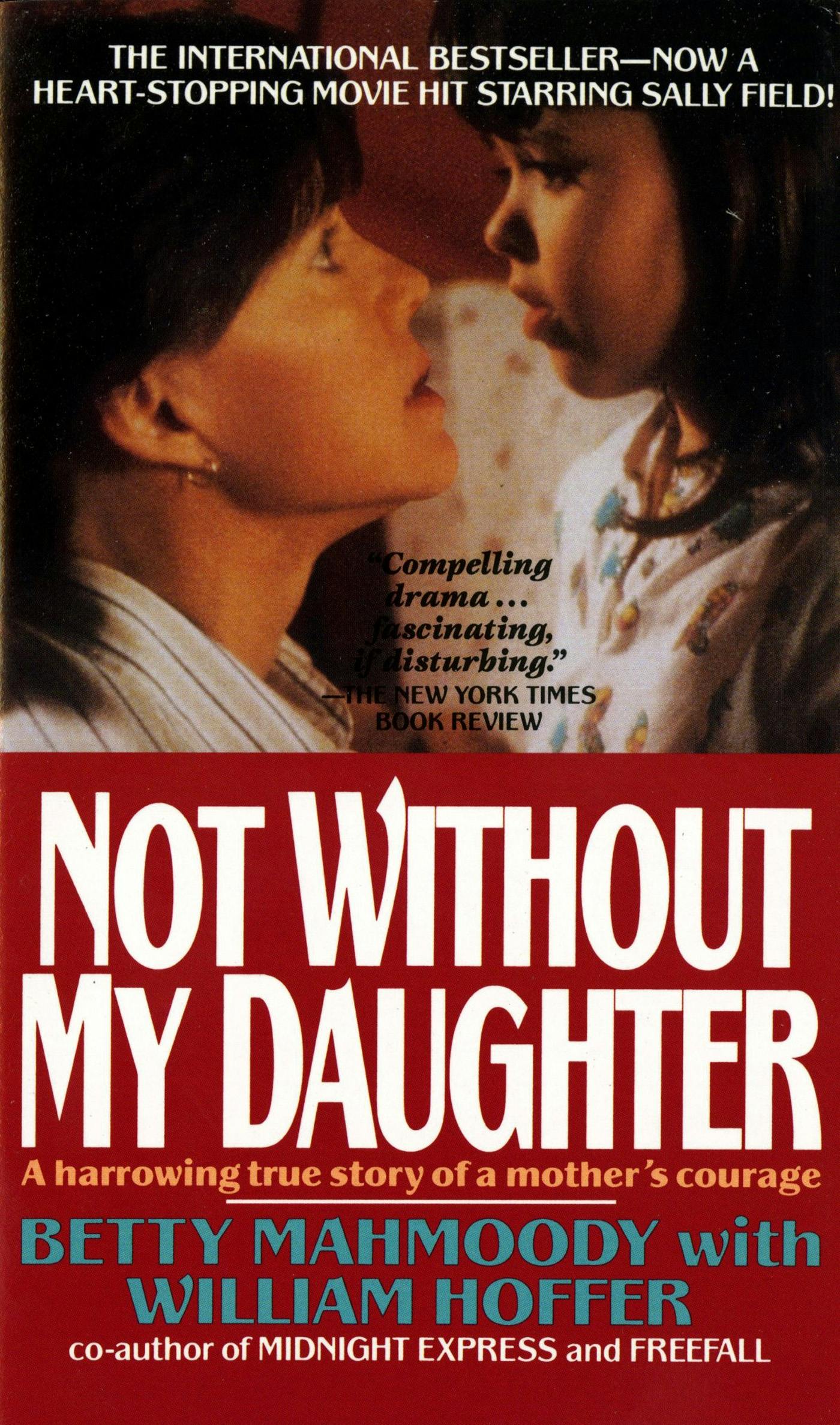
Not Without My Daughter is a 1987 non-fiction memoir by Betty Mahmoody and a 1991 film adaptation. It details Betty’s harrowing escape from Iran with her daughter, Mahtob, after her husband, Dr. Sayyed Bozorg Mahmoody, forcibly detained them in Tehran following the 1979 Islamic Revolution.
The story remains one of the most culturally significant accounts of international child abduction and the domestic tensions inherent in cross-cultural marriages during periods of geopolitical upheaval. As of 2026, the work continues to be studied for its insights into human rights, the complexities of Middle Eastern relations in the 1980s, and the psychological impact of domestic captivity.
The Genesis of the Narrative: Betty Mahmoody’s Journey
The core of "Not Without My Daughter" is the personal testimony of Betty Mahmoody, an American woman from Michigan. In 1984, she agreed to take a two-week vacation to Iran with her husband, Dr. Sayyed Bozorg "Moody" Mahmoody, and their four-year-old daughter, Mahtob. At the time, the Iran-Iraq War was raging, and the social fabric of Iran had been fundamentally altered by the 1979 Revolution.
Upon their arrival in Tehran, Moody revealed his true intention: he never intended for them to return to the United States. He became increasingly abusive and restrictive, confiscating Betty’s passport and money. The memoir describes a period of eighteen months during which Betty lived as a virtual prisoner in her husband's family home, navigating a society where she had no legal standing or rights regarding her child.
The Escape Across the Zagros Mountains
The narrative’s climax involves Betty’s high-stakes escape. Finding help through a network of sympathetic Iranians and professional smugglers, she and Mahtob traveled over 500 miles across the rugged Zagros Mountains into Turkey. This journey, conducted in mid-winter under the threat of capture by Revolutionary Guards, is a centerpiece of both the book and the film. The technical difficulty of such a crossing—requiring guides, clandestine transport, and survival in extreme weather—underscores the desperation Betty felt.
The Cinematic Adaptation: 1991 Film Analysis
In 1991, Metro-Goldwyn-Mayer (MGM) released a film adaptation of the book, directed by Brian Gilbert and starring Sally Field as Betty and Alfred Molina as Moody. The film served to amplify the story’s reach, bringing the issue of international child abduction into the mainstream global consciousness.
Production and Technical Execution
Because the filmmakers could not shoot in Iran due to the diplomatic climate, the production took place primarily in Israel. The set designers worked extensively to recreate 1980s Tehran, emphasizing the stark contrast between the vibrant, Westernized life Betty left behind and the restrictive, war-torn environment she entered.
- Sally Field’s Portrayal: Field’s performance was widely praised for capturing the vulnerability and eventual steely resolve of a mother fighting for her child’s freedom.
- Alfred Molina’s Role: Molina’s portrayal of Moody attempted to show the character’s descent from a respected anesthesiologist in the U.S. to a man radicalized by his return to his homeland, though the film was criticized for leaning into villainous tropes.

Sociopolitical Context: Iran in the 1980s
To understand the weight of "Not Without My Daughter," one must look at the historical context of the mid-1980s. The Iranian Revolution had replaced the monarchy with an Islamic Republic, leading to a drastic shift in the legal code, particularly regarding family law and the rights of women.
Under the new legal framework, the father was the sole guardian of a child. For Betty, this meant that there was no legal recourse within Iran to reclaim Mahtob or seek a divorce that would allow her to leave with her daughter. Furthermore, the U.S. and Iran had no diplomatic relations following the 1979 hostage crisis, making it impossible for the American embassy to intervene directly.
The Impact on International Family Law
The book and film were instrumental in highlighting the gaps in the Hague Convention on the Civil Aspects of International Child Abduction. While the convention was established in 1980, many countries, including Iran, were not signatories. This legal vacuum often meant that once a child was taken to a non-signatory country, the left-behind parent had almost no chance of legal recovery through international courts.
Controversies and Cultural Critique
Despite its commercial success, "Not Without My Daughter" has been the subject of significant academic and cultural debate. Critics often point to the work as a primary example of "Orientalism," a term popularized by Edward Said to describe the Western depiction of Eastern cultures as primitive or inherently hostile.
Accusations of Stereotyping
Many Iranian-Americans and scholars argued that the film, in particular, generalized the entire Iranian population based on the actions of one abusive man. The depiction of Iranian families as uniformly oppressive and the portrayal of Tehran as a bleak, dangerous city were seen by some as contributing to anti-Iranian sentiment in the United States.
However, supporters of the work emphasize that it is a personal memoir of domestic abuse. They argue that Betty Mahmoody was not attempting to provide a sociological study of Iran, but rather a firsthand account of her specific trauma and the legal hurdles she faced as a woman in that specific political climate.
The Husband's Rebuttal: "Without My Daughter"
In response to the global success of Betty’s story, Sayyed Bozorg Mahmoody sought to tell his side of the narrative. In 2002, a documentary titled Without My Daughter, directed by Alexis Kouros, was released. It followed Moody in his later years, living in Tehran and attempting to reconnect with Mahtob.
Moody’s Claims
In the documentary and various interviews before his death in 2009, Moody claimed that Betty’s account was exaggerated and influenced by American propaganda. He argued that he only wanted what was best for his daughter and that Betty had "kidnapped" Mahtob from her father. The documentary provides a starkly different visual and emotional tone, focusing on a lonely old man grieving the loss of his relationship with his child.
Mahtob Mahmoody: The Daughter’s Perspective
As she reached adulthood, Mahtob Mahmoody chose to address her history on her own terms. In 2013, she published her own memoir, My Name is Mahtob.
Healing and Faith
Mahtob’s book provides a crucial follow-up to her mother’s narrative. She describes the lingering trauma of her childhood in Iran but also discusses her journey toward forgiveness and the role of her Christian faith in her healing process. Unlike the 1991 film, which ends with their arrival in the U.S., Mahtob’s account details the years of fear they lived through, including the constant threat of her father or his associates attempting to find them in America.
Accessing the Work in 2026
For those looking to explore this story today, several avenues remain open for study and viewing. In 2026, both the literary and cinematic versions are accessible through digital and physical archives.
Streaming and Digital Access
The 1991 film is frequently available on major streaming platforms. Given the consolidation of studio libraries, it is often found on services such as MGM+ or Amazon Prime Video. High-definition digital rentals and purchases are the standard method for viewing the film.
Literary Formats
The original book by Betty Mahmoody and the follow-up by Mahtob are available in several formats:
- E-books: Kindle and Apple Books versions are the most common.
- Audiobooks: Narrated versions of both memoirs are available on platforms like Audible, which are particularly helpful for those interested in the emotional cadence of the storytelling.
- Physical Copies: Libraries and used bookstores continue to carry the 1987 hardcovers and subsequent paperbacks.
Comparative Overview: Book, Film, and Follow-up
The following table compares the different mediums and perspectives through which this story has been told.
| Feature | Not Without My Daughter (Book, 1987) | Not Without My Daughter (Film, 1991) | My Name is Mahtob (Book, 2013) |
|---|---|---|---|
| Primary Perspective | Betty Mahmoody (Mother) | Hollywood dramatization | Mahtob Mahmoody (Daughter) |
| Core Themes | Survival, Captivity, Escape | Emotional drama, Suspense | Forgiveness, Trauma, Faith |
| Cultural Impact | High; Best-seller status | Very High; Global awareness | Moderate; Focused on resolution |
| Treatment of Moody | Depicted as an abuser/captor | Antagonist/Villain trope | Complex; Source of fear/conflict |
| Resolution | Crossing into Turkey | Visual arrival at US Embassy | Lifelong psychological journey |
Practical Guidance for Research and Education
If you are researching "Not Without My Daughter" for academic or human rights purposes, it is recommended to engage with both Betty’s and Mahtob’s books to get a multi-generational view of the events.
- Verify Historical Context: Consult the United States Department of State archives regarding the Iran-U.S. relations during the 1980s to understand the lack of diplomatic assistance available at the time.
- Legal Research: For those interested in the legal aspects of child abduction, the National Center for Missing & Exploited Children (NCMEC) provides resources on international parental abduction and the current status of the Hague Convention.
- Cross-Reference Perspectives: Watch the 2002 documentary Without My Daughter to understand the husband's counter-narrative, which provides a more nuanced, albeit contested, view of the family dynamics.
Frequently Asked Questions
Is "Not Without My Daughter" based on a true story?
Yes, the book is a non-fiction memoir written by Betty Mahmoody. While the 1991 film takes some creative liberties for dramatic effect (such as simplifying the timeline or compressing characters), the fundamental events—the forced detention in Iran and the escape across the mountains—are based on actual occurrences.
What happened to the husband, Moody?
Dr. Sayyed Bozorg Mahmoody remained in Iran until his death in 2009. He never saw his daughter again, despite several attempts to contact her and the filming of a documentary expressing his desire for reconciliation. He continued to work as a doctor in Tehran for many years.
How did Betty Mahmoody escape Iran?
Betty escaped by making contact with an underground network of individuals who helped people flee the country. She and Mahtob were driven to the northwestern border of Iran, where they were guided on horseback and on foot through the Zagros Mountains into Turkey by professional smugglers.
Did Mahtob Mahmoody ever return to Iran?
As of her most recent public statements and her 2013 book, Mahtob has not returned to Iran. She has expressed that while she has an interest in her heritage, the trauma of her childhood and the potential legal/safety risks have prevented her from returning.
What are the main criticisms of the film adaptation?
The film is often criticized for its "black and white" portrayal of the conflict, where Western culture is seen as inherently "good" and Iranian culture as "bad." Some critics argue that the film ignored the complexities of Iranian society and contributed to negative stereotypes about Muslim men.
Final Recommendations
To gain a complete understanding of "Not Without My Daughter," readers should move beyond the 1991 film. While the movie is a powerful emotional experience, the original 1987 book provides much more detail regarding the daily life and psychological manipulation Betty experienced. Furthermore, reading Mahtob’s 2013 memoir is essential for anyone interested in the long-term effects of international child abduction and the possibility of finding peace after such a traumatic upbringing. For those interested in the legalities of these situations, the case remains a textbook example used in family law to illustrate the necessity of international treaties and the complexities of jurisdictional disputes.
Image Gallery
Select an image to open it in a new tab.




Zara El-Hashem
Sociocultural Dynamics and Academics Writer
