Timeline of the Bible: When and How the Scriptures Were Created
The Bible was not written at a single point in time but was composed over a period of approximately 1,500 years by more than 40 authors. The Old Testament was written and edited between roughly 1200 BCE and 165 BCE, while the New Testament was composed entirely within the 1st century CE, between 50 CE and 100 CE. The final canonization—the official selection of these books into a single volume—was largely completed by the late 4th century CE.
Understanding the Multigenerational Composition of the Bible
To understand when the Bible was created, one must distinguish between the oral traditions, the initial writing of individual scrolls, and the final assembly of the "canon." The process was a slow evolution from spoken stories to handwritten manuscripts on papyrus and parchment, eventually culminating in the bound codices that resemble modern books.
In the year 2026, biblical scholarship relies heavily on a combination of literary analysis, carbon dating of manuscripts, and archaeological findings to refine these dates. While traditional religious views often attribute books to specific historical figures (like Moses or Solomon), modern historical-critical methods examine linguistic patterns and historical references within the texts to determine their most likely periods of origin.
The Old Testament: A Millennium of Development
The Old Testament, or the Hebrew Bible (Tanakh), represents the vast majority of the biblical timeline. Its creation is generally divided into three major phases: the Torah (Pentateuch), the Prophets (Nevi'im), and the Writings (Ketuvim).
The Torah (The Pentateuch)
The first five books—Genesis, Exodus, Leviticus, Numbers, and Deuteronomy—are traditionally attributed to Moses. However, most contemporary scholars identify four distinct primary sources (often referred to as the J, E, D, and P sources) that were woven together.
While some of the poems and oral traditions within the Torah may date back to the 12th century BCE, the formal writing of these sources likely began during the divided monarchy (c. 9th–8th centuries BCE). The final "redaction" or editing of the Torah into the form we recognize today most likely occurred during and after the Babylonian Exile (6th–5th centuries BCE). This was a period of intense cultural preservation where Jewish leaders sought to codify their laws and history.
The Prophets and the Writings
The "Prophets" include historical accounts (like Joshua and Kings) and the oracles of figures like Isaiah and Jeremiah. These were composed between the 8th and 5th centuries BCE. The "Writings," which include poetry like the Psalms and wisdom literature like Job and Ecclesiastes, have a broader range.
The Book of Daniel is widely considered by historians to be the latest book of the Hebrew Bible, with parts of it likely written around 165 BCE during the Maccabean Revolt. By the time of Jesus in the 1st century CE, the Hebrew Bible was largely recognized as a stable collection of sacred texts, though the "Writings" section remained slightly fluid in some communities.
The Intertestamental Period and the Septuagint
Between the completion of the Hebrew Bible and the start of the New Testament, a significant development occurred: the translation of the Hebrew scriptures into Greek. Known as the Septuagint (LXX), this work began in the 3rd century BCE in Alexandria, Egypt.
The Septuagint was crucial because Greek had become the lingua franca of the Mediterranean world following the conquests of Alexander the Great. Most early Christians, including the authors of the New Testament, used the Septuagint as their primary version of the scriptures. This period also saw the creation of the Apocrypha—books included in the Septuagint and later Catholic and Orthodox Bibles, but excluded from the Hebrew and Protestant canons.
The New Testament: A Century of Rapid Documentation
Unlike the Old Testament, the New Testament was written in a relatively short window of about 50 to 60 years. All of its 27 books were composed in Koine Greek, the common language of the Eastern Roman Empire.
The Pauline Epistles (c. 50–65 CE)
Surprisingly, the earliest writings in the New Testament are not the Gospels, but the letters (epistles) of the Apostle Paul. His first letter to the Thessalonians is often dated to approximately 50–51 CE. Paul’s writings focused on establishing theology and providing practical guidance to early Christian communities across the Roman Empire.
The Gospels and Acts (c. 70–95 CE)
The four Gospels—Matthew, Mark, Luke, and John—were written in the decades following the death of Jesus.
- Mark: Generally considered the first Gospel, written around 70 CE, likely around the time of the destruction of the Second Temple in Jerusalem.
- Matthew and Luke: Written between 80 and 90 CE. Both authors are believed to have utilized Mark as a source, along with a hypothetical collection of Jesus' sayings known as "Q."
- John: The last of the four, written approximately 90–100 CE, featuring a more highly developed theological perspective.
The General Epistles and Revelation (c. 70–100 CE)
The remaining books, including the letters of Peter, John, Jude, and the Book of Revelation, were composed toward the end of the 1st century. Revelation is traditionally dated to the reign of Emperor Domitian (c. 95 CE), reflecting a period of Christian persecution.
The Process of Canonization: Creating "The Bible"
The Bible did not exist as a single "book" immediately after these texts were written. For centuries, various churches held different collections of scrolls. The process of canonization involved deciding which books were divinely inspired and authoritative.
For the New Testament, three main criteria were used:
- Apostolicity: Was the book written by an apostle or a close associate of one?
- Orthodoxy: Did the teaching align with the established faith of the church?
- Catholicity: Was the book widely used and accepted by churches throughout the empire?
The first list that matches the modern 27-book New Testament appeared in the Festal Letter of Athanasius in 367 CE. Subsequent church councils, such as the Synod of Hippo (393 CE) and the Council of Carthage (397 CE), formally ratified this list. It was during this late 4th-century period that the "Bible" as a unified volume became the standard for the Christian world.
Summary Timeline of Bible Creation
The following table outlines the estimated timeframes for the various components of the Bible based on historical and archaeological consensus.
| Period | Section / Event | Estimated Dates | Primary Language |
|---|---|---|---|
| 1200 – 900 BCE | Earliest Oral Traditions & Poetry | Late Bronze/Early Iron Age | Ancient Hebrew |
| 900 – 500 BCE | Torah & Early Prophets Written | Monarchic & Exilic Periods | Hebrew |
| 500 – 165 BCE | Completion of the Hebrew Bible | Post-Exilic/Hellenistic | Hebrew / Aramaic |
| 285 – 100 BCE | Septuagint Translation | Hellenistic Period | Greek |
| 50 – 65 CE | Pauline Epistles Written | Early Roman Empire | Greek |
| 70 – 100 CE | Gospels & Remaining NT Books | Late 1st Century | Greek |
| 367 – 397 CE | Final Canonization of the NT | Late Antiquity | Latin / Greek |
Archaeological Evidence and Accuracy
The discovery of the Dead Sea Scrolls in 1947 provided physical evidence that confirmed the age and accuracy of the Old Testament. These manuscripts, dating from the 3rd century BCE to the 1st century CE, contained fragments of every book in the Hebrew Bible except Esther. They demonstrated that the texts had been preserved with remarkable precision over a thousand years of copying.
As of 2026, advanced imaging technologies and AI-assisted multispectral analysis allow researchers to read previously illegible fragments of early papyri. These developments continue to support the timeline that the New Testament manuscripts we possess today are grounded in documents that began circulating within decades of the events they describe.
Common Misconceptions About the Bible's Creation
One common error is the belief that the Bible was "voted on" at the Council of Nicaea in 325 CE. In reality, the Council of Nicaea dealt primarily with the nature of Christ's divinity and the Arian controversy; the biblical canon was not its primary focus. The canon emerged through centuries of usage and consensus among the faithful, rather than a top-down political decree.
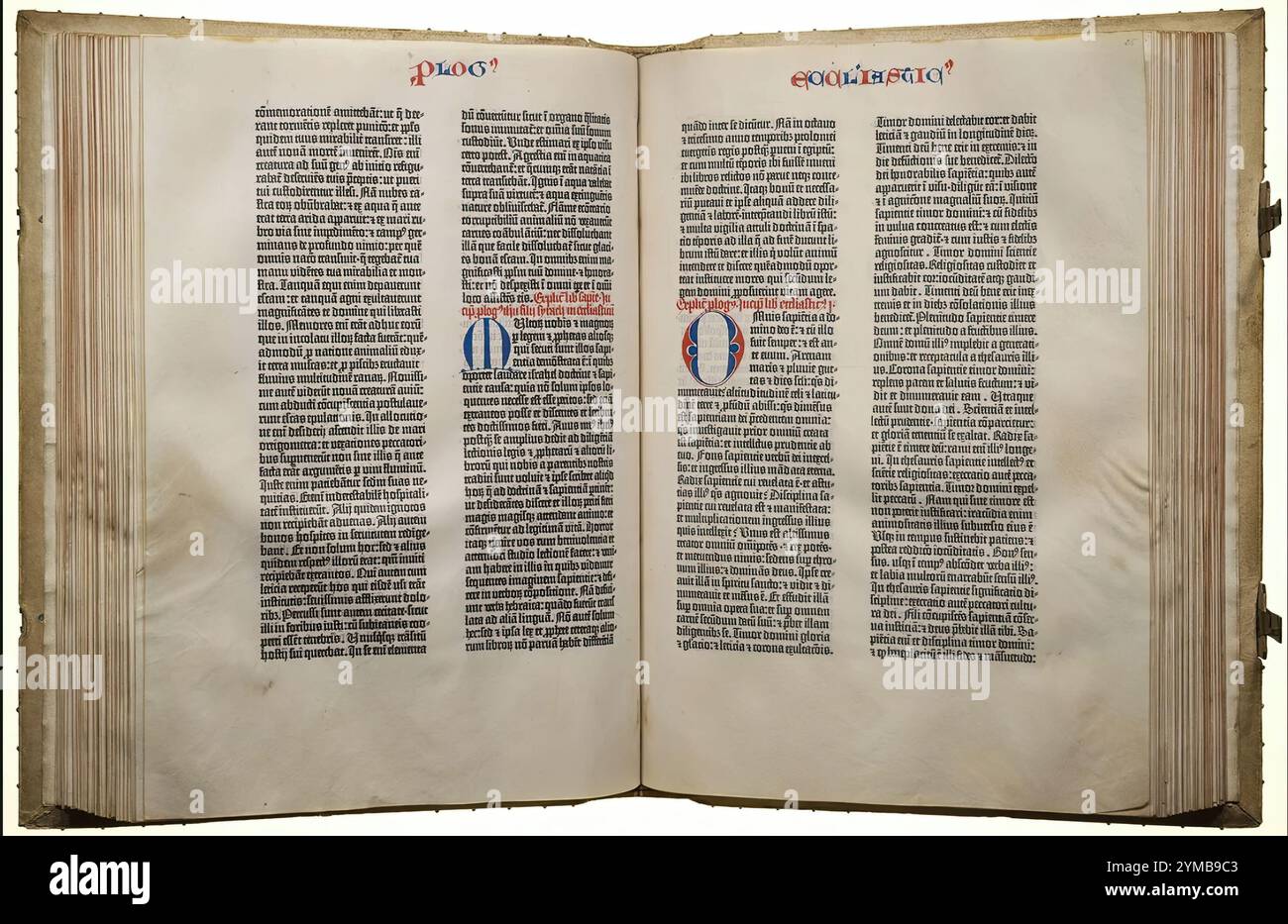
Another misconception is that the Bible was written in English or Latin originally. The original texts were almost exclusively Hebrew (Old Testament) and Greek (New Testament), with small portions of the Old Testament (Daniel and Ezra) in Aramaic. The Latin Vulgate, translated by St. Jerome in the late 4th century, became the standard for Western Christianity for a millennium, but it was itself a translation of the original languages.
FAQs
Who actually wrote the Bible?
The Bible was written by a diverse group of authors, including kings (David, Solomon), prophets (Isaiah, Amos), apostles (Peter, Paul), and even a physician (Luke). While many books bear the names of famous figures, many were likely composed by anonymous scribes and editors within those traditions.
Was the Bible written while Jesus was alive?
No. Jesus himself left no known writings. The earliest Christian documents, the letters of Paul, began to appear about 20 years after Jesus' crucifixion. The Gospels were written 40 to 70 years after his death, based on the accounts of eyewitnesses and early oral traditions.
Why are some Bibles longer than others?
The difference lies in the Apocrypha (or Deuterocanonical books). Roman Catholic and Eastern Orthodox Bibles include these books because they were part of the Greek Septuagint. During the Reformation in the 16th century, Martin Luther and other reformers chose to follow the shorter Hebrew canon, leading to the 66-book Bible used by most Protestant denominations today.
How do we know the dates are accurate?
Dating is determined through paleography (the study of ancient handwriting styles), radiocarbon dating of the physical materials (papyrus/parchment), and internal evidence (mentions of specific kings, wars, or the destruction of buildings like the Jerusalem Temple).
What is the oldest surviving copy of the Bible?
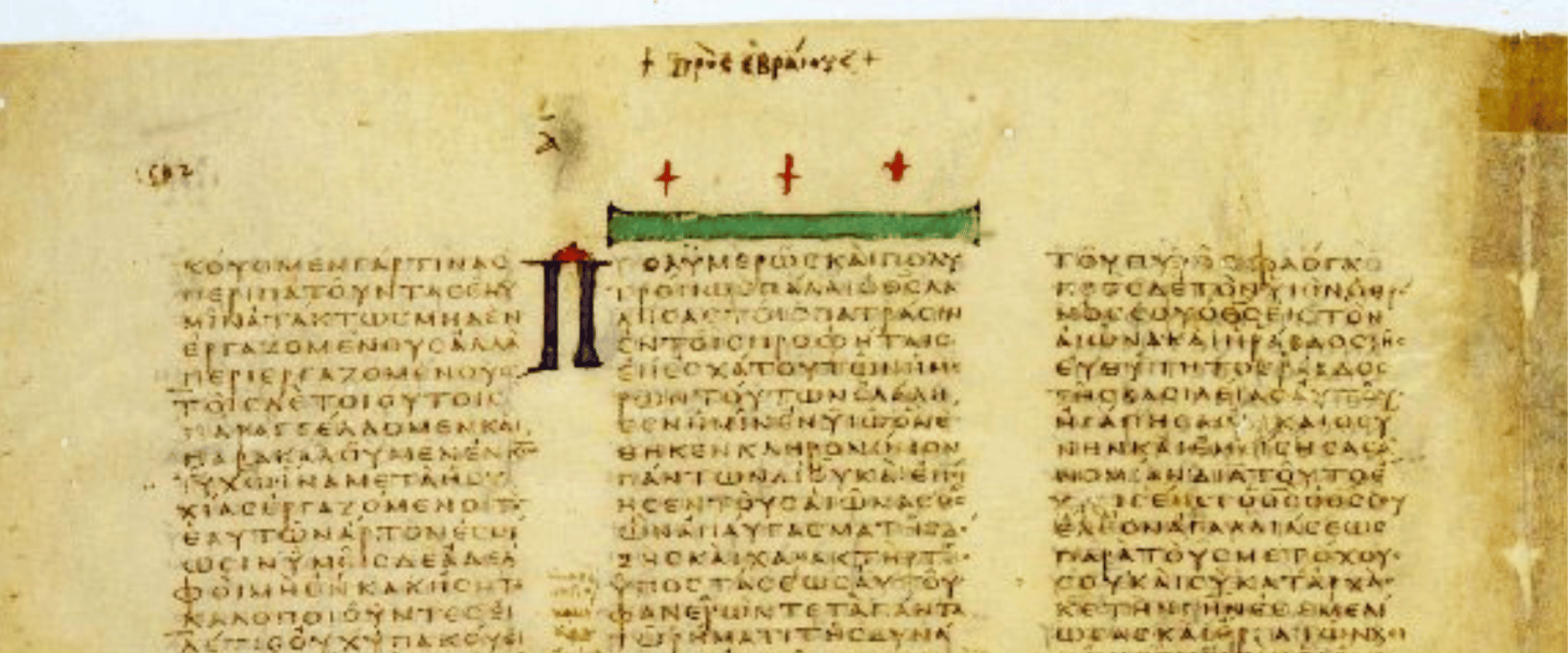
The Codex Vaticanus and Codex Sinaiticus, both dating to the mid-4th century CE (c. 325–350 CE), are the oldest nearly complete manuscripts of the entire Bible. Fragments of individual books, like the Rylands Library Papyrus P52 (a fragment of John), date back to the early 2nd century.
Practical Next Steps for Readers
For those interested in the historical development of the Bible, the following actions provide deeper insight:
- Consult a Study Bible: Modern editions like the Oxford Annotated Bible or the ESV Study Bible provide detailed introductory essays on the dating and authorship of each book.
- Explore Digital Archives: Visit the The Digital Dead Sea Scrolls to see the earliest surviving Hebrew manuscripts.
- Visit Museum Exhibits: Organizations like the British Library or the Museum of the Bible house significant early codices and papyri that offer a tangible connection to the history of the text.
- Academic Research: For a deep dive into the 2026 scholarly consensus on composition, search for journals published by the Society of Biblical Literature.
Image Gallery
Select an image to open it in a new tab.


Simon Caldwell
Enterprise Technology and Systems Editor
