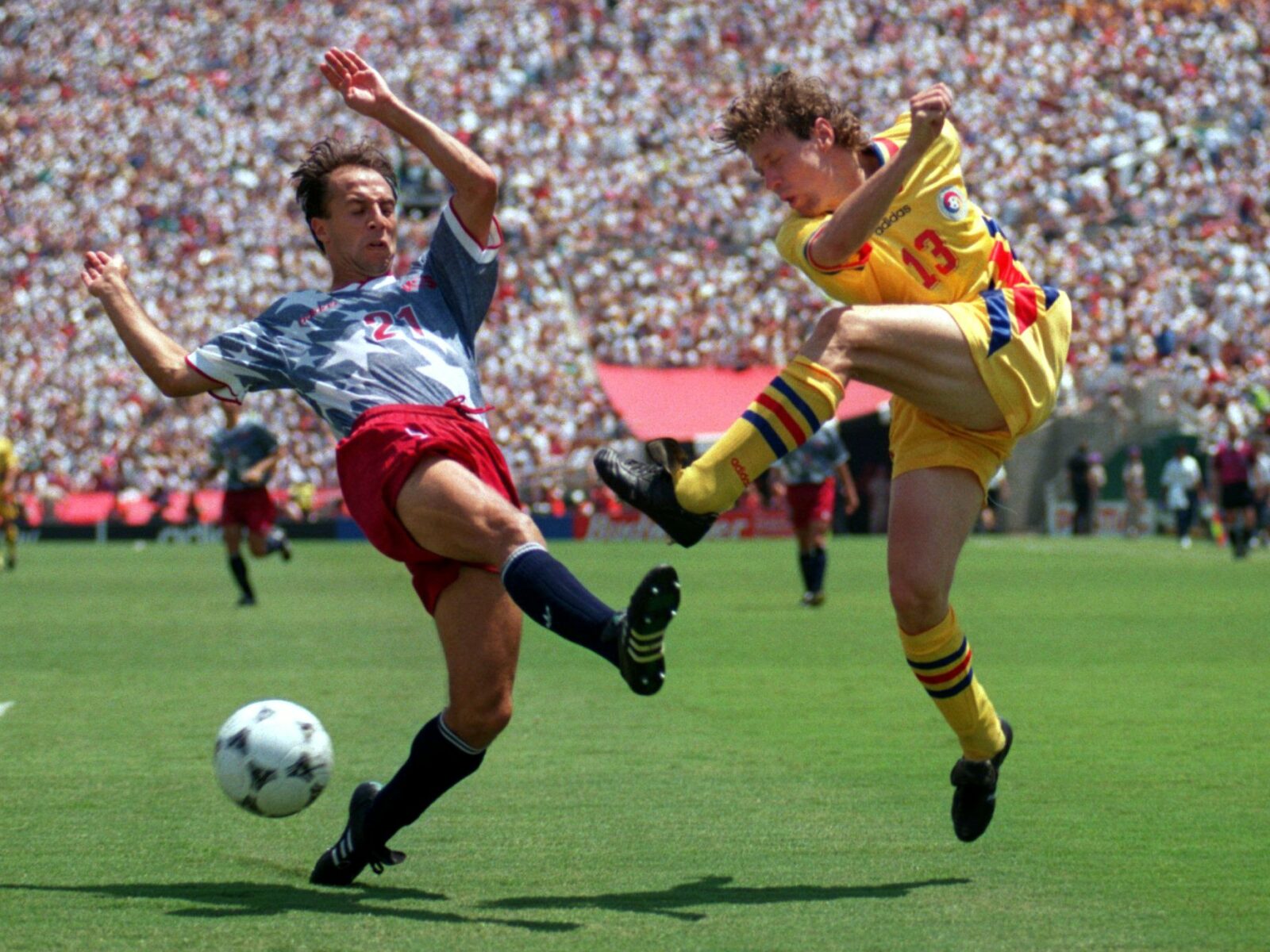
The 1994 FIFA World Cup, hosted across the United States from June 17 to July 17, 1994, marked a watershed moment for the sport of soccer in North America, setting attendance records, introducing modern tournament structures, and catalyzing the rapid growth of Major League Soccer.
Introduction to the 1994 FIFA World Cup
The selection of the United States as the host nation for the 15th edition of the FIFA World Cup surprised international observers in July 1988 when FIFA awarded the tournament to the country. At the time, the United States lacked a top-tier professional outdoor soccer league—the North American Soccer League (NASL) having folded in 1984—and association football, commonly known as soccer in North America, lagged far behind American football, baseball, and basketball in public consciousness.
Despite initial skepticism regarding domestic interest, logistical challenges posed by vast distances between host cities, and summer heat, the tournament became an overwhelming financial and cultural triumph. It established the benchmark for future international sporting events held in North America and permanently altered the landscape of American soccer. Understanding the 1994 World Cup requires examining the bidding process, the venues and infrastructure, the tournament format, the memorable matches, and the profound legacy it left behind.
The Bidding Process and Preparations
The path to the 1994 tournament began when FIFA awarded hosting rights during a meeting in Zurich on July 4, 1988. The United States beat bids from Brazil and Morocco. FIFA officials viewed the vast, economically powerful American market as a frontier for commercial expansion and global growth of the game.
Hosting the tournament required massive infrastructural adaptation. Unlike traditional soccer-heavy nations where stadiums were built exclusively for the sport, the United States utilized massive American football and multi-purpose stadiums. To accommodate soccer's standard field dimensions of 105 by 68 meters (115 by 74 yards), several venues had to remove seating rows or lay temporary natural grass over artificial turf surfaces.
Organizers selected nine state-of-the-art venues across the country to minimize travel fatigue where possible, though teams still faced significant cross-country flights. The host cities reflected the geographic and cultural diversity of the nation:
- Pasadena, California (Rose Bowl)
- Stanford, California (Stanford Stadium)
- Pontiac, Michigan (Pontiac Silverdome)
- East Rutherford, Jersey (Giants Stadium)
- Orlando, Florida (Citrus Bowl)
- Chicago, Illinois (Soldier Field)
- Dallas, Texas (Cotton Bowl)
- Foxborough, Massachusetts (Foxboro Stadium)
- Washington, D.C. (RFK Stadium)
The Pontiac Silverdome achieved historical significance as the first indoor venue to host a World Cup match, utilizing an advanced indoor turf management system to maintain natural grass under a domed roof.

Tournament Format and Regulations
The 1994 World Cup featured 24 national teams divided into six groups of four. The top two teams from each group, along with the four best third-place finishers, advanced to the knockout stage, which consisted of the Round of 16, Quarterfinals, Semifinals, Third-Place Playoff, and the Final.
A crucial regulatory change introduced for this tournament was the implementation of three points for a win in the group stage, replacing the traditional two-point system. FIFA instituted this rule to encourage attacking play and discourage defensive stalemates resulting in draws.
The tournament also coincided with strict regulatory enforcement of offside rules and aggressive play. Referees issued yellow and red cards decisively to protect players and maintain flow, yielding high match quality despite sweltering summer temperatures in venues like Dallas and Orlando, where afternoon matches required mandatory cooling breaks.
Key Matches, Drama, and Memorable Moments
The 1994 tournament delivered historic drama on the pitch, featuring legendary players, shocking upsets, and tragic storylines.
The Group Stage and Early Surprises
The opening match on June 17 at Chicago's Soldier Field saw defending champions Germany defeat Bolivia 1-0. However, the group stage quickly produced dramatic upsets. Romania, led by Gheorghe Hagi, stunned tournament favorites Colombia 3-1. Meanwhile, Saudi Arabia advanced to the knockout stage in their debut World Cup appearance, highlighted by Saeed Al-Owairan's brilliant individual goal against Belgium, where he dribbled past four defenders from his own half.
Tragedy struck the tournament when Colombian defender Andrés Escobar scored an own goal in a 2-1 defeat to the United States on June 22 at the Rose Bowl. The loss eliminated Colombia, and upon returning home, Escobar was tragically murdered in Medellin—a dark moment that shook the global soccer community.
The Maradona Controversy
Argentina arrived with high hopes, bolstered by the return of Diego Maradona. Maradona scored a brilliant goal against Greece and celebrated wildly into a television camera, a memorable image of the tournament. However, following Argentina's second group match against Nigeria, Maradona failed a drug test for ephedrine, resulting in his immediate expulsion from the tournament. Without their talisman, Argentina floundered and was eliminated in the Round of 16 by Romania.
The Knockout Rounds and the Final
The knockout phase featured tight tactical battles and brilliant individual performances. Roberto Baggio carried Italy through the rounds with crucial goals, rescuing his team against Nigeria in the Round of 16 and Spain in the Quarterfinals. Brazil, spearheaded by the dynamic strike partnership of Romário and Bebeto, displayed fluid attacking football under manager Carlos Alberto Parreira.
The final, held on July 17 at the Rose Bowl in Pasadena before a crowd of 94,194 spectators, pitted Brazil against Italy. On a blistering afternoon, neither side broke the deadlock through 90 minutes of regulation and 30 minutes of extra time, resulting in the first World Cup final decided by a penalty shootout.
After a tense exchange of penalties, Italy's talismanic forward Roberto Baggio stepped up for his team's fifth kick and shot the ball over the crossbar. The miss secured a 3-2 shootout victory (0-0 after extra time), crowning Brazil four-time World Cup champions and cementing the tournament's place in history.
Statistical Overview and Comparison with Prior Tournaments
The 1994 World Cup achieved unprecedented commercial and attendance success, shattering previous records despite American skepticism.
| Metric | 1986 (Mexico) | 1990 (Italy) | 1994 (United States) |
|---|---|---|---|
| Total Attendance | 2,394,031 | 2,516,215 | 3,587,538 |
| Average Attendance | 46,311 | 22,112 | 68,991 |
| Total Matches | 52 | 52 | 52 |
| Total Goals Scored | 132 | 115 | 141 |
| Average Goals Per Match | 2.54 | 2.21 | 2.71 |
The average attendance of 68,991 per match remains the highest in FIFA World Cup history, facilitated by the massive capacity of American football stadiums. Total cumulative attendance surpassed 3.5 million, a record that stood until the expanded 32-team and 48-team tournaments of later decades.
Legacy and Impact on American Soccer
The primary condition set by FIFA when awarding the 1994 tournament to the United States was the establishment of a viable professional domestic league. Fulfilling this commitment, the United States Soccer Federation launched Major League Soccer (MLS) in 1996.
While MLS experienced initial financial growing pains, it evolved into a stable, expanding competition with state-of-the-art soccer-specific stadiums across the United States and Canada. The 1994 World Cup created a generation of American soccer fans, inspired youth participation numbers to soar into the millions, and paved the way for the historic success of the United States women's national team in the 1999 FIFA Women's World Cup.
Furthermore, the infrastructural and logistical success of 1994 proved that the United States could successfully host mega-scale international athletic competitions without state-owned stadium projects, relying instead on existing world-class multi-purpose venues. This template laid the groundwork for co-hosting the 2026 FIFA World Cup alongside Canada and Mexico.
Frequently Asked Questions
Why was the 1994 World Cup held in the United States?
FIFA awarded the tournament to the United States in 1988 to expand the sport's global commercial footprint into the lucrative North American market, leveraging the nation's advanced transportation infrastructure and massive sports stadiums.
Who won the 1994 FIFA World Cup?
Brazil won the tournament, defeating Italy 3-2 on penalties after a 0-0 draw through extra time in the final match at the Rose Bowl in Pasadena, California.
Which player won the Golden Boot in 1994?
Oleg Salenko of Russia and Hristo Stoichkov of Bulgaria shared the Golden Boot award, having each scored six goals during the tournament.
What attendance records did the 1994 tournament set?
The 1994 World Cup set the all-time tournament record for average attendance, drawing 68,991 spectators per match, and achieved a total cumulative attendance of 3,587,538 across 52 games.
How did the 1994 World Cup impact American soccer?
The tournament directly fulfilled FIFA's requirement to establish a professional outdoor league, leading to the creation of Major League Soccer (MLS) in 1996, while dramatically increasing youth participation and mainstream sports media coverage of soccer in the United States.
Next Actions and Further Reading
For researchers, historians, and fans looking to explore the 1994 FIFA World Cup further, consulting official FIFA archives, historical documentaries such as ESPN's 30 for 30 features on the tournament, and tactical analyses of the Brazil and Italy squads offers deep insight. Those studying sports management can examine the logistical frameworks developed by the World Cup Organising Committee to understand how large-scale sporting events manage transportation, security, and multi-venue broadcasting on a continental scale.
Image Gallery
Select an image to open it in a new tab.


Ingrid Bjornson
Global Cyber Policy and Regulation Analyst
