The White Bronco Chase: A Definitive History of the O.J. Simpson Low-Speed Pursuit

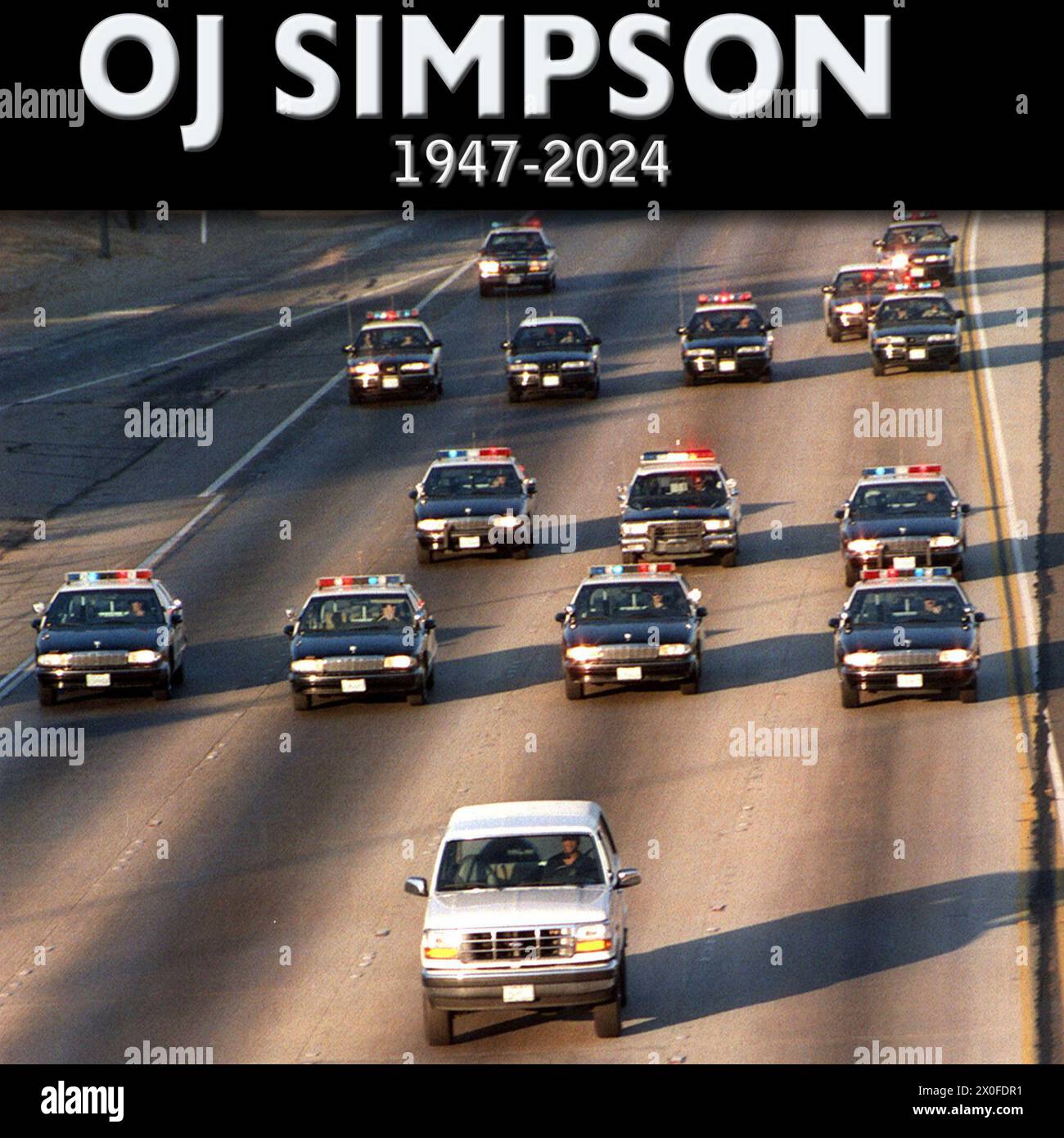
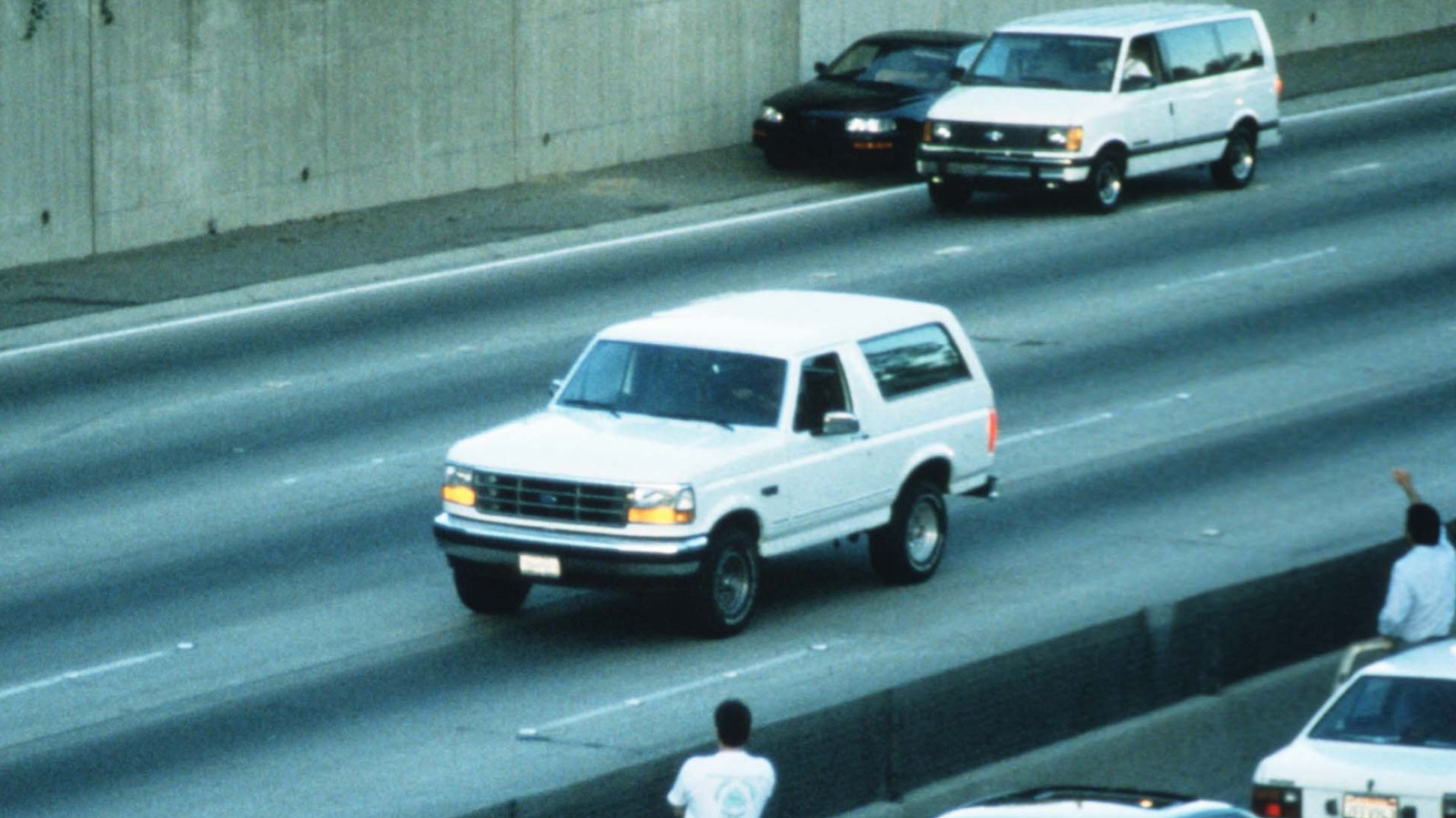
On June 17, 1994, an estimated 95 million viewers watched as a white 1993 Ford Bronco carrying O.J. Simpson led a caravan of police cars through the highways of Los Angeles. Driven by Al Cowlings, the low-speed pursuit lasted approximately two hours, covering 60 miles, and remains the most famous televised chase in American history.
The event was more than a police action; it was a cultural phenomenon that fundamentally altered the landscape of live news broadcasting, celebrity journalism, and the American legal system. As we look back from the perspective of 2026, the image of the white Bronco on the 405 Freeway remains an indelible symbol of the intersection between tragedy, fame, and the media’s power to captivate a global audience.
The Prelude: A Double Murder and a Missed Deadline
The events of June 17 cannot be understood without the context of the preceding five days. On the night of June 12, 1994, Nicole Brown Simpson and her friend Ron Goldman were brutally murdered outside Brown’s townhouse in Brentwood, Los Angeles. From the outset, O.J. Simpson, the legendary NFL star and Nicole’s ex-husband, was the primary person of interest.
Evidence gathered at the scene, including a blood-stained glove and DNA samples, led the Los Angeles Police Department (LAPD) to seek Simpson's arrest. By the morning of Friday, June 17, Simpson’s attorneys had negotiated a deal for him to surrender at 11:00 AM. When Simpson failed to appear, the LAPD officially declared him a fugitive.
At a late-afternoon press conference, LAPD Chief Willie Williams expressed the department's frustration, while Simpson’s friend and attorney, Robert Kardashian, read a rambling, emotional letter written by Simpson. The letter, which many interpreted as a suicide note, ended with the words: "Don't feel sorry for me. I've had a great life, made great friends. Please think of the real O.J. and not this lost person." This set the stage for the dramatic pursuit that would begin just hours later.
Anatomy of the Chase: Timelines and Logistics
The pursuit began at approximately 6:22 PM when a motorist spotted Simpson and his lifelong friend Al "A.C." Cowlings in a white Ford Bronco on the I-5 freeway in Orange County. When Orange County Sheriff’s deputies attempted to pull the vehicle over, Cowlings refused to stop, eventually leading police onto the 91 Freeway and then the 405 Freeway.
The Low-Speed Dynamic
Unlike the high-speed chases typical of Southern California, the Bronco maintained a steady speed of approximately 35 miles per hour. This was not due to a mechanical limitation of the Ford Bronco but rather the volatile psychological situation inside the vehicle. Al Cowlings, speaking to 911 dispatchers and police via a cellular phone, repeatedly warned that Simpson was in the backseat with a gun to his own head.
The LAPD and California Highway Patrol (CHP) made a tactical decision not to force the vehicle off the road or use a "PIT maneuver." They feared that any aggressive action would cause Simpson to pull the trigger, leading to a televised suicide. Consequently, more than 20 police cruisers trailed the Bronco at a respectful distance, creating a surreal, slow-motion parade.
The Route of the Pursuit
The chase spanned several major arteries of the Los Angeles freeway system, eventually heading north toward Simpson's estate in Brentwood.
| Time (approx.) | Location/Event | Key Detail |
|---|---|---|
| 6:22 PM | I-5 Freeway (Orange County) | First sighting of the Bronco by a citizen. |
| 6:45 PM | Transition to 91 Freeway | Police begin trailing the vehicle officially. |
| 7:15 PM | Transition to 405 North | Crowds begin gathering on overpasses. |
| 7:50 PM | Sunset Boulevard Exit | The Bronco exits the freeway toward Brentwood. |
| 8:00 PM | Rockingham Estate | The Bronco enters Simpson's driveway. |
| 8:50 PM | Arrest | Simpson surrenders after nearly an hour of negotiation. |

The Media Spectacle and the "Domino's Effect"
The Bronco chase was a watershed moment for broadcast journalism. It occurred during the 1994 NBA Finals between the Houston Rockets and the New York Knicks. NBC, the network carrying the game, took the unprecedented step of using a split-screen—showing the game in one corner and the live feed of the chase in the other. This marked one of the first times a breaking news event completely subverted major sporting or entertainment programming.
The audience for the chase was staggering. Approximately 95 million people in the United States alone tuned in. The "Domino’s Effect" refers to the record-breaking sales reported by pizza delivery chains that evening; because people were glued to their televisions and refused to leave their homes or even cook, Domino’s reported sales volume equivalent to a Super Bowl Sunday.
The coverage also elevated the role of the news helicopter. Every major station in Los Angeles deployed "choppers" to provide aerial views, turning the 405 Freeway into a literal stage. The commentary provided by anchors and reporters during those two hours helped solidify the 24-hour news cycle that would dominate the next three decades.
Behind the Wheel: The Role of Al Cowlings and Tom Lange
While the world focused on Simpson, the man driving the Bronco played a critical role in the outcome. Al Cowlings was a former NFL player and a teammate of Simpson's at both USC and with the Buffalo Bills. His loyalty to Simpson was absolute. During the chase, Cowlings’ frantic calls to 911 provided the only real-time information about the situation inside the car.
Simultaneously, LAPD Detective Tom Lange, who was one of the lead investigators on the murder case, managed to reach Simpson on his mobile phone. The recorded audio of their conversation is a haunting piece of history. Lange acted as a de facto crisis negotiator, calmly pleading with Simpson to "throw the gun out the window" for the sake of his children and his mother.
Simpson’s responses were disjointed. He apologized to the police for "putting them out" and expressed a desire to return to his home to see his mother. These conversations likely prevented a violent end to the pursuit, as Lange was able to build enough rapport to keep Simpson from acting on his suicidal ideations until they reached the Rockingham estate.
The Vehicle: What Happened to the White Bronco?
A common misconception is that the white Bronco used in the chase belonged to O.J. Simpson. In reality, Simpson owned an identical white 1993 Ford Bronco, but that vehicle had been seized by police as evidence earlier in the week because it contained traces of blood. The vehicle in the chase belonged to Al Cowlings.
After the chase and the subsequent trial, the "Cowlings Bronco" became a bizarre artifact of American pop culture. It was briefly owned by Simpson's former agent, Mike Gilbert, who kept it in storage for years to prevent it from being used for "tasteless" purposes. The vehicle has since been displayed at various locations, including the Alcatraz East Crime Museum in Pigeon Forge, Tennessee.
The Ford Bronco itself saw a paradoxical surge and then a decline in reputation. While the model became synonymous with the chase, Ford eventually discontinued the Bronco line in 1996 (though it was successfully revived decades later). For a generation of Americans, the specific silhouette of the 1993 Bronco will forever be linked to that Friday evening in June.
The Conclusion at Rockingham
When the Bronco finally reached Simpson’s estate on Rockingham Avenue, the tension reached its peak. SWAT teams were positioned around the perimeter, and snipers were on the roof. Simpson remained in the vehicle for nearly 45 minutes after arriving, holding a family photo and the handgun.
The standoff ended not with a tactical breach, but through negotiation. Simpson was eventually allowed to enter his home, use the restroom, and speak with his mother on the phone before being taken into custody. This transition from a high-stakes pursuit to a relatively quiet arrest was a relief to authorities, who feared a "suicide by cop" scenario in front of millions of viewers.
The Lasting Legacy of June 17, 1994
The Bronco chase was the catalyst for the "Trial of the Century." It established the themes of race, celebrity, and police conduct that would dominate the next year of legal proceedings. Furthermore, it changed how the public consumes news. The expectation of live, unedited access to unfolding events became the standard, paving the way for modern social media "lives" and continuous streaming news.
In the years following Simpson's death in 2024, historians have pointed to the chase as the moment the line between news and entertainment officially blurred. The fact that bystanders stood on freeway overpasses cheering for a double-murder suspect highlighted a deep-seated cultural divide and a fascination with celebrity that remains prevalent in 2026.
Frequently Asked Questions
1. How fast was the white Bronco going during the chase?The chase is famously referred to as "low-speed" because the vehicle rarely exceeded 35 miles per hour. Al Cowlings maintained this slow pace to ensure the safety of the pursuit and to allow time for negotiations with the police via cellular phone.
2. Was O.J. Simpson's Bronco the one in the chase?No. The Bronco driven by Al Cowlings was his own personal vehicle. O.J. Simpson’s personal Ford Bronco had been impounded by the LAPD for forensic testing several days prior, as it was a key piece of evidence in the investigation of the murders of Nicole Brown Simpson and Ron Goldman.
3. Why didn't the police stop the car?The primary reason was the report that Simpson was holding a gun to his head. Police supervisors feared that if they attempted to stop the vehicle using aggressive maneuvers, Simpson would commit suicide. The objective was a peaceful surrender, which they believed was more likely if they allowed the vehicle to reach its destination.
4. Where is the white Bronco now?As of 2026, the Al Cowlings Bronco is a featured exhibit at the Alcatraz East Crime Museum in Pigeon Forge, Tennessee. It has been preserved as a significant piece of American legal and cultural history.
5. How many people watched the O.J. chase live?Approximately 95 million people in the United States watched the pursuit live. This remains one of the highest-rated "news" events in television history, rivaling the viewership of major Super Bowls.
Practical Recommendation
For those interested in the forensic and legal details of the case, the official LAPD archives and the California State University, Northridge (CSUN) O.J. Simpson Trial Collection provide extensive primary source documents, including transcripts of the 911 calls made during the chase. Visiting the Alcatraz East Crime Museum offers a physical perspective on the vehicle itself, which is often smaller in person than it appeared on the wide-angle television lenses of 1994.
Image Gallery
Select an image to open it in a new tab.




Vivian Cho
Executive IT and Emerging Technologies Reporter
