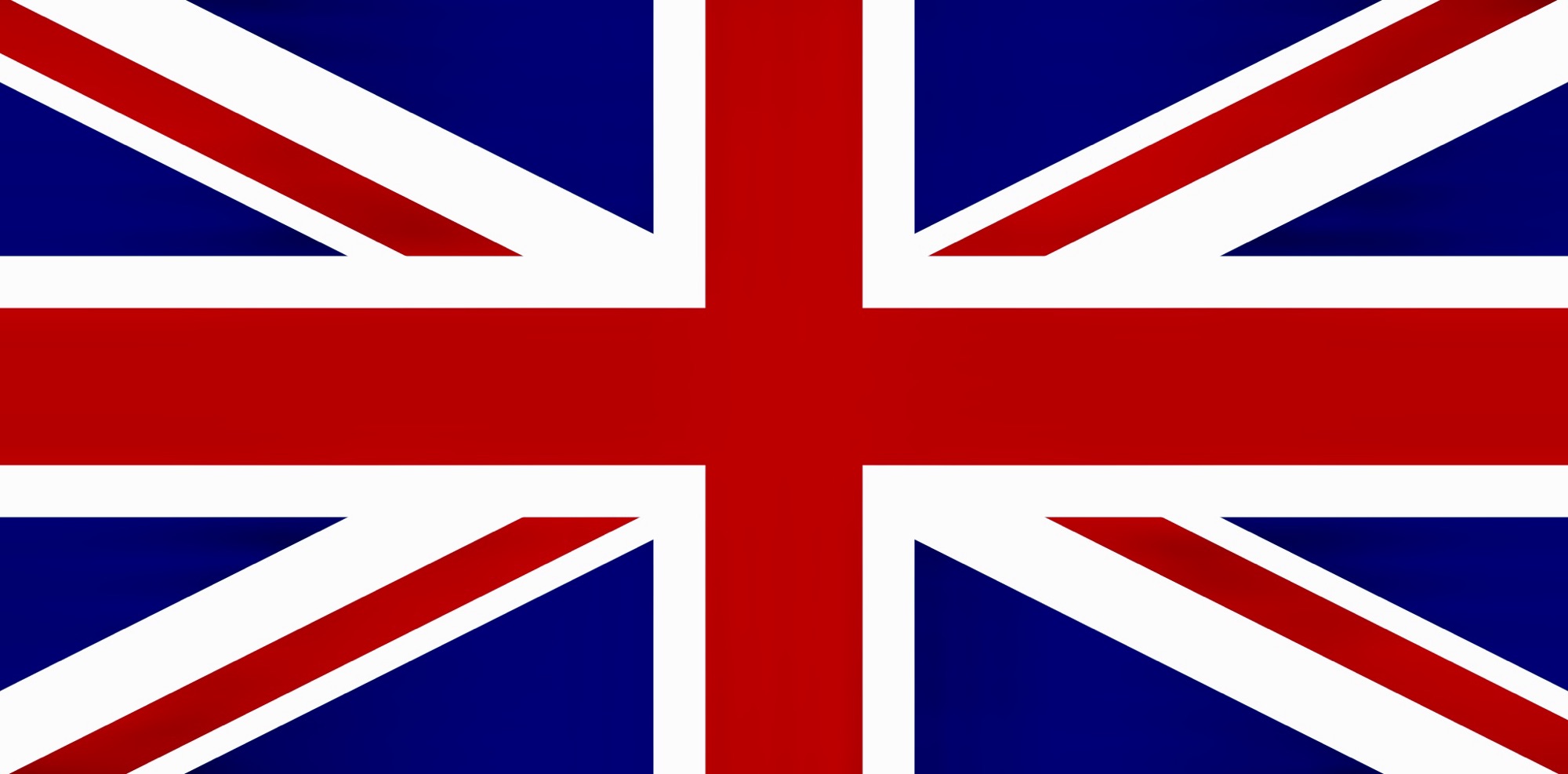
The United Kingdom’s flag, popularly known as the Union Jack, is a composite design made up of the individual heraldic crosses of three patron saints representing the historical kingdoms within the Union. It combines the red cross of St George (England), the white saltire of St Andrew (Scotland), and the red saltire of St Patrick (Ireland).
The Union Flag serves as the preeminent symbol of British identity, but its visual complexity is the result of centuries of political integration and heraldic compromise. To understand what the UK flag is made up of, one must look beyond the colors and shapes to the specific historical mergers that dictated its current form. As of 2026, the design remains unchanged since its last major revision in 1801, reflecting a constitutional history that continues to define the British Isles.
The Three Heraldic Components of the Union Flag
The Union Jack is not a single design but a superimposition of three distinct flags. Each component represents a nation within the United Kingdom, and the way they are layered follows strict rules of heraldry to ensure that no single nation completely obscures the others.
The Cross of St George (England)
The most prominent feature of the Union Flag is the upright red cross on a white background. This is the Cross of St George, the patron saint of England. In the Union Flag, this cross is "fimbriated"—meaning it is bordered by a thin white line. This white border is actually a remnant of the original white field of the English flag. Without this fimbriation, the red cross would rest directly on the blue field of the Scottish flag, which would violate the heraldic "rule of tincture," which dictates that "color" (red or blue) should not be placed upon "color."
The Saltire of St Andrew (Scotland)
The background of the Union Flag is a deep blue field, upon which rests a white diagonal cross, known as a saltire. This is the flag of St Andrew, the patron saint of Scotland. In the original 1606 version of the flag, the white saltire was the primary diagonal element. In the modern version, it shares the diagonal space with the Irish saltire.
The Saltire of St Patrick (Ireland)
The final addition to the flag was the red diagonal cross on a white background, representing St Patrick, the patron saint of Ireland. This was added in 1801 following the Act of Union with Ireland. Unlike the upright English cross, the red Irish saltire is not centered within the white diagonal strips. Instead, it is "counter-changed" with the white Scottish saltire.
The History and Evolution of the Design
The composition of the UK flag did not happen all at once. It evolved through two major stages of political union, reflecting the shifting power dynamics of the British monarchy and parliament.
The First Union Flag (1606)
Following the death of Elizabeth I in 1603, James VI of Scotland ascended to the English throne as James I. This "Union of the Crowns" meant that one monarch ruled two separate kingdoms. In 1606, James ordered a new flag to be created for use at sea to represent this personal union.
The first Union Flag combined the Cross of St George and the Saltire of St Andrew. At this time, the design featured the red English cross superimposed directly over the Scottish white saltire on a blue field. While it was used by the navy, it was not the national flag of the people; individuals in England and Scotland continued to fly their respective national crosses. It wasn't until the Acts of Union in 1707, which formally joined England and Scotland into the Kingdom of Great Britain, that this flag became the official national banner.
The Act of Union with Ireland (1801)
The flag we recognize today was finalized on January 1, 1801. This followed the Act of Union 1800, which incorporated the Kingdom of Ireland into the United Kingdom of Great Britain and Ireland. To represent Ireland, the Cross of St Patrick—a red saltire—was introduced.
The challenge for the College of Arms was how to include a third cross without making the flag look cluttered or implying that one of the two diagonal crosses was superior to the other. Their solution was the "counter-change," where the red and white diagonals are placed side-by-side rather than one on top of the other. This creates the slight asymmetry that is a hallmark of the Union Jack.

Technical Specifications and Dimensions
The UK flag is governed by specific ratios and color codes, though these can vary slightly depending on whether the flag is used for naval, military, or civil purposes.
Proportions and Ratios
The standard proportions of the Union Flag are typically 1:2. This means the flag is twice as long as it is high. However, the British Army often uses a ratio of 3:5. The width of the various stripes is precisely calculated based on the height (the "hoist") of the flag:
- The St George’s Cross: 1/5 of the flag's height.
- The White Fimbriation of St George: 1/15 of the flag's height.
- The Diagonal Saltires (combined): 1/5 of the flag's height.
- The St Patrick’s Red Saltire: 1/15 of the flag's height.
- The St Andrew’s White Saltire: 2/15 of the flag's height (though it appears split due to the red saltire).
Official Colors
The colors of the Union Flag are defined by the College of Arms and the Flag Institute. While "red, white, and blue" is the common description, the specific shades are:
- Union Flag Blue: Pantone 280 C.
- Union Flag Red: Pantone 186 C.
- White: Safe (Standard White).
| Component | Representing | Shape | Color |
|---|---|---|---|
| St George's Cross | England | Upright Cross | Red (Pantone 186 C) |
| St Andrew's Cross | Scotland | Diagonal Saltire | White |
| St Patrick's Cross | Ireland | Diagonal Saltire | Red (Pantone 186 C) |
| Field | Union | Background | Blue (Pantone 280 C) |
The Physics of Fabrication: What Modern Flags are Made Of
In the year 2026, the physical materials used to manufacture the Union Flag have evolved to balance traditional aesthetics with modern durability. While historical flags were made of heavy wool, today’s flags use synthetic polymers designed to withstand high winds and UV exposure.
Woven Polyester (Sewn Flags)
The highest quality Union Jacks are "sewn" rather than printed. These are typically made from 155gsm woven polyester, often referred to as "official flag bunting." This material mimics the look and feel of traditional wool but is significantly stronger. In a sewn flag, each individual component—the blue triangles, the white saltires, the red crosses—is cut from pre-colored fabric and stitched together. This creates a heavy, durable flag that "claps" in the wind.
Knitted Polyester (Printed Flags)
Most standard-use flags, such as those flown outside government buildings or homes, are made from 115gsm knitted polyester. These flags are digitally or screen-printed. The knitted structure allows the fabric to be slightly elastic, preventing it from ripping easily when caught in a gust of wind. The ink is usually dispersed through the fabric so that the design is visible on both sides (mirror image).
Sustainable Alternatives
By 2026, many manufacturers have shifted toward recycled PET (rPET) fabrics. These are made from recycled plastic bottles. These flags offer similar durability to standard polyester but have a much lower environmental footprint, which has become a priority for government procurement departments across the UK.
The Asymmetry and the "Upside Down" Rule
One of the most frequent questions regarding what the UK flag is made up of concerns its asymmetry. If you look closely at the white diagonals, you will notice that the red stripe of St Patrick is not in the middle.
In the half of the flag nearest the flagpole (the hoist), the white of St Andrew is above the red of St Patrick. In the half furthest from the pole (the fly), the red is above the white. This arrangement is the result of "counter-changing." Because Scotland joined the union before Ireland, the Scottish white saltire is given the "honorable" position in the first quarter of the flag (the top-left corner nearest the pole).
Warning: Flying the Union Jack upside down is considered a signal of distress. To ensure the flag is "right-side up," the broad white stripe (the Scottish saltire) must be at the top of the diagonal nearest the flagpole. If the thin red line is at the top in that corner, the flag is inverted.
Why is Wales Not Represented?
A common point of confusion is the absence of any Welsh symbol in the Union Flag. Wales is not represented by a cross, a dragon, or the color green/white.
The reason for this is historical rather than intentional exclusion. When the first Union Flag was created in 1606, Wales had already been legally incorporated into the Kingdom of England. Under the Laws in Wales Acts 1535 and 1542, Wales was treated as a principality of England rather than a separate kingdom. Therefore, the Cross of St George was considered to represent both England and Wales.
By the time of the 1801 update, the legal status remained the same. Although there have been modern calls to include the Red Dragon or the yellow-and-black Cross of St David, the flag has remained a fixed heraldic entity. Any change to include Wales would require a Royal Proclamation and a significant redesign of the "counter-changed" diagonals.
The Distinction Between "Union Jack" and "Union Flag"
There is a long-standing debate over whether the flag should be called the Union Jack or the Union Flag. Technically, both are correct, but they have different origins.
Historically, a "Jack" is a small flag flown from the "jackstaff" of a ship. In 1902, an Admiralty circular stated that either name could be used officially. In 1908, it was further clarified in Parliament that "the Union Jack should be regarded as the National flag." While some purists insist that it is only a "Jack" when at sea, common usage and government guidance in 2026 treat the terms as interchangeable in all contexts.
Usage and Protocol in 2026
The UK government maintains strict guidelines on when and how the Union Flag should be flown. These rules ensure the flag is treated with respect and remains a cohesive symbol of the four nations.
- Dignity: The flag should never touch the ground or be used as a table cover.
- Order of Precedence: When flown with other national flags, the Union Flag should occupy the "superior" position (usually the furthest to the left from the observer's perspective).
- Half-Mast: To signify mourning, the flag is flown one-third of the way down the flagpole. It is first hoisted to the top and then lowered to the half-mast position.
- Disposal: When a flag becomes worn or frayed, it should be disposed of in a dignified manner, usually by private burning or by tearing it into strips so that it is no longer recognizable as a flag.
FAQ
Why is the UK flag red, white, and blue?
The colors are derived from the individual flags of England (red and white), Scotland (blue and white), and Ireland (red and white). When these were combined, the dominant colors became the iconic red, white, and blue palette.
Does the flag represent Northern Ireland or the whole of Ireland?
The St Patrick's Saltire was originally added to represent the Kingdom of Ireland. Following the partition of Ireland in 1921, the flag remained unchanged and now represents the union of England, Scotland, and Northern Ireland.
Is the UK flag the same as the British flag?
Yes. "United Kingdom" and "Great Britain" are often used interchangeably in casual conversation regarding the flag, although technically "Great Britain" refers to the island containing England, Scotland, and Wales, while "United Kingdom" includes Northern Ireland. The flag represents the political union of the UK.
Can anyone fly the Union Jack?
Yes. In the UK, there are no longer restrictive planning laws regarding the flying of the national flag on private property. Any individual or business can fly the Union Jack without special permission, provided it is done in a respectful manner.
Why does the blue color sometimes look different?
The shade of blue has varied over time. Historically, it was a lighter "sky blue" (the shade of the Scottish flag). However, for the Union Flag, a darker "Navy Blue" (Pantone 280 C) was adopted because the darker dye was more durable and resistant to fading at sea.
Practical Recommendation
If you are looking to purchase or display a UK flag, prioritize a sewn woven polyester version if it is for permanent outdoor display. Printed flags are excellent for events and short-term celebrations, but the structural integrity of a sewn flag—where the individual crosses of St George, St Andrew, and St Patrick are physically stitched together—provides the most authentic and durable representation of the Union's historical components. Always remember to check the hoist-side diagonals to ensure the flag is not being displayed upside down.
Image Gallery
Select an image to open it in a new tab.




Simon Caldwell
Enterprise Technology and Systems Editor
