Joe Weider's Pioneering Influence in Bodybuilding History
Joe Weider fundamentally shaped modern bodybuilding by transforming it from a marginalized, carnival-esque sideshow into a mainstream commercial empire, creating the Mr. Olympia contest, and inventing structured training systems used globally today.
Introduction: The Architect of Modern Physical Culture
When examining the history of physical culture, few figures loom as large as Joe Weider. Operating alongside his brother Ben Weider, Joe transitioned bodybuilding from an obscure subculture practiced in dingy basements into a globally recognized industry encompassing fitness publishing, nutritional supplements, and international competitive federations. Before Weider introduced his systematic training principles, structured nutrition guidance, and promotional vision, weight training lacked standardized methodology. Trainees relied on ad-hoc routines, folklore, and scarce word-of-mouth advice.
This comprehensive analysis explores Joe Weider’s pioneering influence in bodybuilding history. It examines his founding of the International Federation of BodyBuilders (IFBB), the creation of iconic physique titles, the establishment of influential fitness magazines, and the development of the Weider System of Bodybuilding. By understanding these contributions, contemporary athletes and fitness professionals can better appreciate the historical foundations of modern strength training and physique sports.
The Genesis of the International Federation of BodyBuilders (IFBB)
In the mid-20th century, physique contests were largely controlled by restrictive organizations such as the Amateur Athletic Union (AAU), which viewed bodybuilding with suspicion and relegated it to a secondary status behind Olympic weightlifting. Recognizing that bodybuilders required an autonomous governing body dedicated solely to their sport, Joe and Ben Weider founded the International Federation of BodyBuilders (IFBB) in 1946.
The establishment of the IFBB marked a turning point in sports administration. For the first time, athletes had an international organization focused explicitly on the promotion, regulation, and standardization of physique competitions. Under the leadership of the Weider brothers, the IFBB expanded rapidly across North America, Europe, and eventually worldwide.
Key Objectives of the Early IFBB
- Autonomy: Providing bodybuilders with a dedicated platform independent of weightlifting authorities.
- Global Expansion: Establishing national federations in dozens of countries to standardize judging criteria.
- Professionalization: Creating distinct divisions for amateur and professional competitors, allowing athletes to earn a livelihood from their physiques.
Through strategic diplomacy and relentless promotion, the IFBB eventually achieved recognition as the world's premier governing body for bodybuilding, paving the way for the sport's global reach today.

Creating the Mr. Olympia and the Professional Era
Perhaps Joe Weider’s most enduring competitive legacy is the creation of the Mr. Olympia contest in 1965. Prior to this, winners of titles like the Mr. Universe were expected to retire from active competition, leaving a void in professional bodybuilding where athletes had no further titles to pursue or financial incentives to remain in top shape.
Joe Weider envisioned a contest exclusively for past champions—a true battle to determine the absolute greatest physique in the world. The inaugural contest was held at the Brooklyn Academy of Music in New York, where Larry Scott claimed the first of his two consecutive Sandow trophies.
| Year | Inaugural Event / Milestone | Significance |
|---|---|---|
| 1946 | Founding of the IFBB | Provided an independent governing body for competitive bodybuilders worldwide. |
| 1965 | First Mr. Olympia Contest | Established a premier professional showcase allowing champions to continue competing and earning. |
| 1953 | Launch of Muscle Builder | Created a dedicated media channel to disseminate training routines and nutritional advice. |
| 1950s | Codification of the Weider System | Standardized scientific training variables like progressive overload and periodization. |
The Mr. Olympia transformed the sport by injecting financial rewards, media attention, and fierce rivalry into professional bodybuilding. It created legendary matchups between iconic athletes such as Arnold Schwarzenegger, Sergio Oliva, Dorian Yates, and Ronnie Coleman, turning the competition into the undisputed Super Bowl of physique sports.
Building a Media Empire: Magazines and Marketing
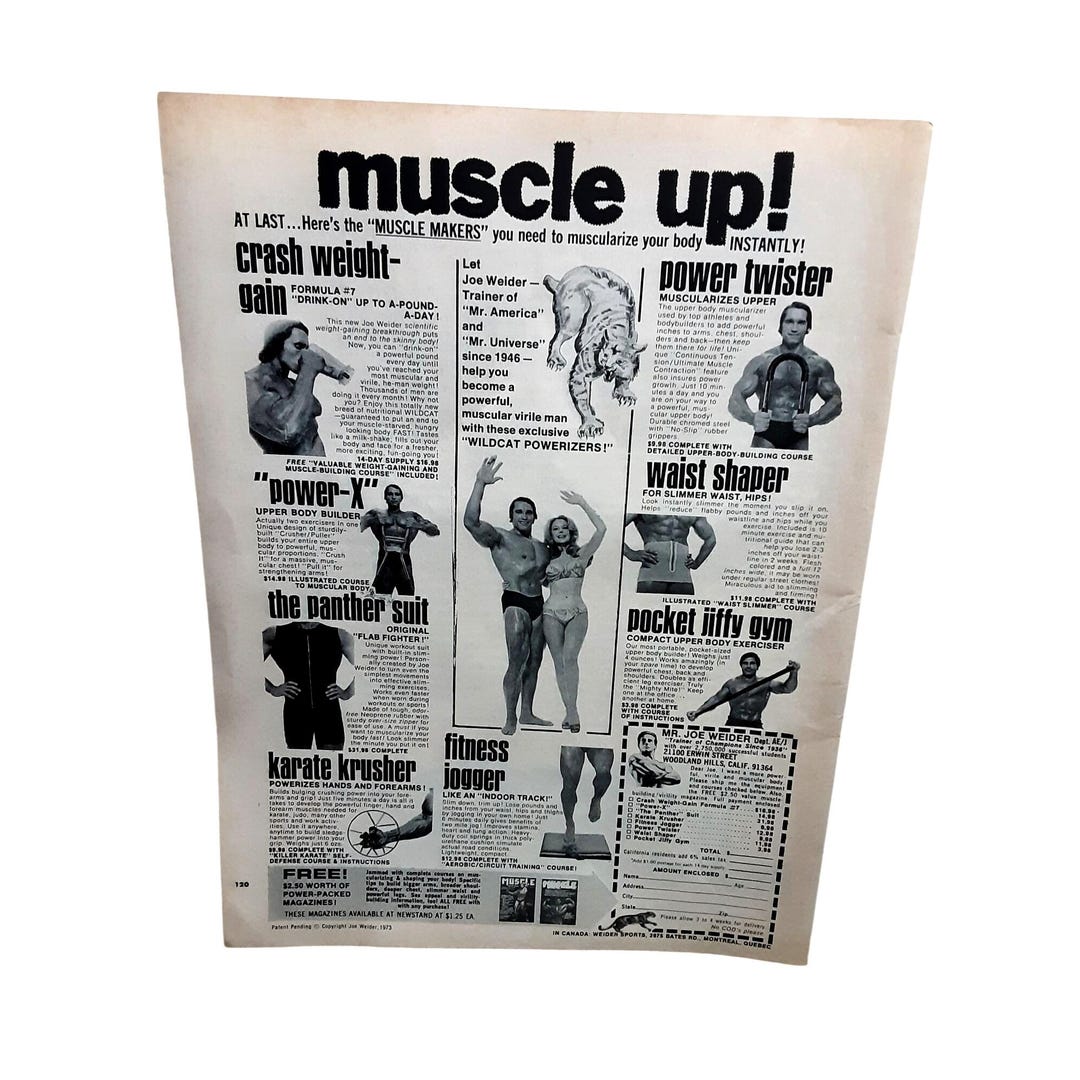
Joe Weider understood that physical culture could not grow without mass communication. Long before the digital era, he leveraged print media to educate the public, sell training equipment, and market his nutritional supplements.
Starting with Your Physique in the late 1930s (later evolving into Muscle Builder and eventually Muscle & Fitness), Weider built a publishing empire that reached millions of readers globally. He later acquired or launched titles such as FLEX, Shape, and Men's Fitness, catering to diverse demographics interested in health, weight loss, and athletic performance.
Innovations in Fitness Marketing
- Mail-Order Equipment: Weider popularized home gyms by selling barbells, dumbbells, and adjustable benches directly to consumers via magazine advertisements.
- Supplement Pioneering: Recognizing the role of nutrition in muscle hypertrophy, the Weider enterprise was among the first to market protein powders, weight gainers, and amino acid supplements.
- Celebrity Endorsement: Weider utilized star athletes, most notably recruiting a young Arnold Schwarzenegger from Austria to California in 1968, giving him a platform to launch an unprecedented crossover career in entertainment and business.
The Weider System of Training Principles
Beyond promotion and publishing, Joe Weider’s most enduring technical contribution is the Weider System of Bodybuilding. Working alongside advanced trainers and drawing from empirical observations in gyms, Weider cataloged and named a series of training principles designed to maximize muscular hypertrophy, strength, and definition.
Rather than viewing bodybuilding as merely lifting heavy weights, the Weider System approached it as a science involving manipulation of volume, intensity, frequency, and biological adaptation. While some of these principles were intuitive, Weider synthesized them into an accessible framework that coaches and athletes still reference today.
Core Principles of the Weider System
- Progressive Overload: Gradually increasing the weight, repetitions, or intensity of exercises over time to force muscular adaptation.
- Principle of Muscle Confusion: Periodically changing exercises, angles, and rep ranges to prevent the body from adapting completely to a static routine.
- Supersets: Performing two exercises back-to-back with no rest between them, typically targeting opposing muscle groups (e.g., biceps and triceps).
- Peak Contraction: Maintaining maximum tension on a target muscle at the point of greatest contraction during an exercise movement.
- Priority Training: Training lagging or weaker muscle groups first in a workout session while energy levels are highest.
Criticisms and Historical Evaluation
While Joe Weider’s contributions to bodybuilding are monumental, historical evaluations of his legacy also examine commercialization and scientific accuracy. Critics note that early Weider publications often exaggerated the efficacy of certain nutritional supplements or promised unrealistic, rapid muscle gains to sell products through mail-order advertisements.
Furthermore, some aspects of the Weider System were marketed as revolutionary scientific breakthroughs when they were actually empirical observations gathered from trial and error by elite competitors. However, sports scientists acknowledge that many Weider principles—such as progressive overload, periodization, and high-intensity techniques—align closely with modern exercise physiology regarding muscle hypertrophy.
Frequently Asked Questions
Who was Joe Weider?
Joe Weider was a Canadian bodybuilder, publisher, entrepreneur, and sports promoter who co-founded the International Federation of BodyBuilders (IFBB) and created the Mr. Olympia contest. He is widely recognized as a foundational figure in bringing modern bodybuilding into the mainstream.
What is the Weider System of Bodybuilding?
The Weider System is a collection of training principles and methods—such as progressive overload, supersets, and pyramid training—designed to optimize muscular growth, strength development, and physique conditioning.
Why did Joe Weider create the Mr. Olympia contest?
Joe Weider created the Mr. Olympia in 1965 to give past winners of major titles like the Mr. Universe a reason to continue competing professionally, allowing them to earn financial compensation and sustain their careers in the sport.
How did Joe Weider influence Arnold Schwarzenegger?
Joe Weider discovered Arnold Schwarzenegger through European physique magazines, sponsored his immigration to the United States in 1968, provided him with a living stipend and housing, and featured him extensively in his magazines, launching Schwarzenegger's global career.
Are Weider training principles still relevant today?
Yes. While exercise science has evolved, core concepts popularized within the Weider System, such as progressive overload, training frequency, and exercise variation, remain fundamental pillars of contemporary resistance training.
Conclusion and Legacy
Joe Weider’s pioneering influence in bodybuilding history is unmatched. By bridging the gap between athletic competition, media publishing, and commercial enterprise, he built the infrastructure that supports the modern fitness industry. From the establishment of the IFBB and the creation of the Mr. Olympia to the codification of structured training principles, Weider ensured that bodybuilding evolved from a fringe subculture into a respected, global discipline practiced by millions.
Image Gallery
Select an image to open it in a new tab.




Lars Thomsen
Global Labor Markets and Economic Strategy Editor
