Why Plastic Pollution in the Ocean Persists in 2026: A Deep Dive into Systemic Failures

The persistence of plastic in the ocean is driven by a widening gap between exponential plastic production and the limited global capacity for waste management. Despite increased international regulation and public awareness, plastic remains a primary pollutant because of its extreme durability, the economic advantages of virgin resins over recycled materials, and the fragmentation of global waste trade systems.
Plastic pollution is not a static environmental "accident" but a predictable outcome of modern industrial design and globalized consumption. As we navigate the midpoint of 2026, the data indicates that while some localized improvements have been made, the systemic drivers of ocean plastic remain largely intact. To understand why this problem persists, one must look beyond the visible floating debris and examine the intersection of polymer chemistry, global economics, and infrastructure limitations.
The Production-Consumption Paradox: Why Volume Outpaces Solutions
The most fundamental reason plastic problems persist is the sheer volume of material entering the economy. Global plastic production has continued to climb, surpassing 450 million metric tons annually. This growth is fueled by the petrochemical industry’s expansion, which views plastic as a primary hedge against declining demand for fossil fuels in the transportation sector.
When production grows at a rate of 3% to 5% annually, even significant improvements in recycling technology cannot keep pace. The "circular economy" remains more of an aspirational concept than a reality for most of the world. In many markets, virgin plastic—plastic made directly from fossil fuels—remains cheaper than high-quality recycled resins. This price disparity is often maintained by subsidies for the oil and gas industry, making it financially difficult for companies to switch to sustainable alternatives without strict legislative mandates.
Furthermore, the "on-the-go" consumption model that rose to prominence in the late 20th century has become deeply embedded in the infrastructure of developing and developed nations alike. Single-use packaging provides convenience and food safety at a very low cost, creating a path of least resistance for both manufacturers and consumers.
The Technical Barriers of Polymer Complexity
Not all plastic is created equal, and this complexity is a major reason why the problem persists. Modern packaging is often composed of multi-layer films—thin layers of different types of plastic, aluminum, and adhesives bonded together to provide specific barriers for oxygen or moisture.
From a technical standpoint, these materials are a nightmare to recycle. Mechanical recycling, the most common method, requires clean, sorted streams of a single polymer type (like PET or HDPE). When different materials are fused together, they cannot be separated efficiently, leading to "downcycling" at best (turning a bottle into a park bench) or landfilling at worst.
| Plastic Type | Common Uses | Recycling Challenges in 2026 |
|---|---|---|
| PET (1) | Water bottles, soda bottles | Highly recyclable, but often contaminated by colored caps and labels. |
| HDPE (2) | Milk jugs, shampoo bottles | High value, but degradation occurs after several recycling cycles. |
| PVC (3) | Pipes, medical tubing | Contains additives that can contaminate other recycling streams. |
| LDPE (4) | Grocery bags, shrink wrap | Frequently clogs machinery; low economic incentive to collect. |
| PP (5) | Yogurt tubs, car parts | Growing market, but historically has low collection rates. |
| PS (6) | Styrofoam, plastic cutlery | Extremely difficult to recycle profitably due to its lightweight nature. |
| Others (7) | Multi-layer pouches, BPA | Virtually impossible to recycle mechanically; requires chemical recycling. |

The "Invisible" Threat: Microplastics and the Degradation Cycle
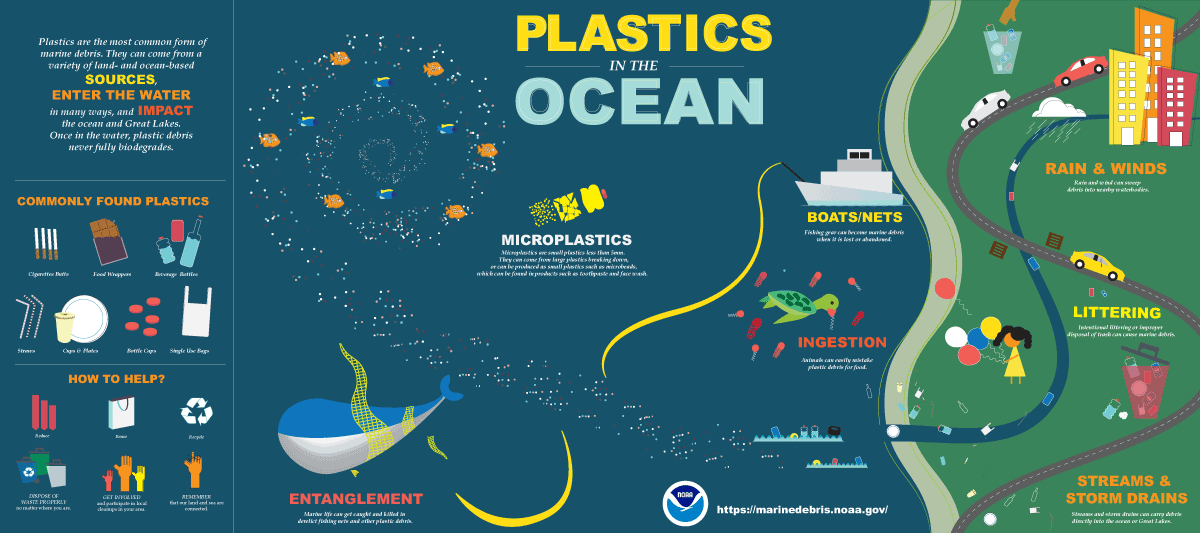
One of the most persistent aspects of the ocean plastic crisis is the transition from "macro" to "micro." Plastic does not biodegrade in the traditional sense; instead, it undergoes photodegradation, where sunlight and wave action break it into smaller and smaller pieces.
By 2026, we have reached a point where microplastics (fragments smaller than 5mm) and nanoplastics (particles smaller than 1 micrometer) are found at every level of the water column, from the surface to the Mariana Trench. This fragmentation makes "cleanup" missions inherently limited. While specialized vessels can scoop up large nets and bottles, they cannot effectively filter billions of microscopic particles without also removing the plankton that forms the base of the marine food web.
These microplastics act as "sponges" for persistent organic pollutants (POPs) already present in the water, such as PCBs and DDT. When marine organisms ingest these particles, the toxins bioaccumulate up the food chain, eventually reaching human populations through seafood consumption. The persistence of the problem is therefore not just about the plastic itself, but about its ongoing transformation into a biological hazard that is impossible to retrieve.
Infrastructure Gaps and the Global Waste Trade
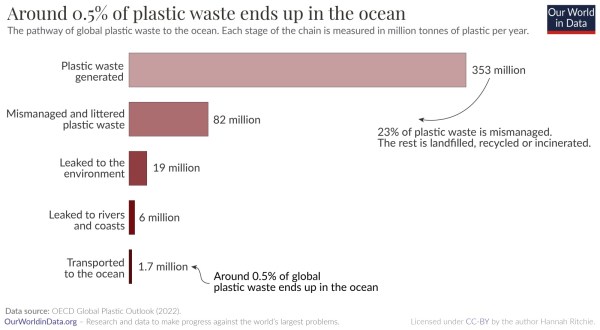
The geography of plastic leakage is highly concentrated. Research indicates that a small number of rivers—primarily in Asia and Africa—act as conduits for the majority of plastic reaching the ocean. This is often misinterpreted as a lack of environmental concern in these regions, but the reality is a massive infrastructure deficit.
Many rapidly developing nations have seen a surge in plastic consumption without a corresponding investment in waste collection and processing. In "sachet economies," where daily essentials are sold in tiny, non-recyclable plastic pouches, there is no formal system to manage the resulting waste.
This issue is exacerbated by the global waste trade. For decades, high-income nations exported their plastic waste to developing countries under the guise of recycling. However, much of this material was contaminated or unrecyclable, leading it to be burned in open pits or dumped in waterways. Although the Basel Convention was amended to restrict this trade, loopholes and illegal shipments persist in 2026, shifting the burden of plastic waste to regions least equipped to handle it.
The Role of "Ghost Gear" and Industrial Fishing
While consumer litter gets the most media attention, industrial sources are a primary reason for the persistence of large-scale marine debris. "Ghost gear"—lost, abandoned, or discarded fishing nets, lines, and traps—is estimated to make up at least 10% of all marine litter and a significantly higher percentage of the mass in "garbage patches."
Modern fishing gear is designed to be indestructible in a harsh marine environment. When these nets are lost, they continue to "fish" for decades, entangling whales, turtles, and fish in a cycle of "ghost fishing." Because these materials are lost far out at sea, outside of any single nation's jurisdiction, there is little incentive for private companies to recover them. The lack of a global, mandatory tracking system for commercial fishing gear remains a major policy failure as of 2026.
Economic Hurdles and the "Virgin Plastic" Advantage
The global economy is currently structured in a way that penalizes sustainability. Producing new plastic from ethane (a byproduct of natural gas fracking) is an incredibly optimized and cheap process. In contrast, the process of collecting, sorting, cleaning, and processing used plastic is labor-intensive and expensive.
Without policy interventions like Extended Producer Responsibility (EPR) or a global carbon tax, the market will always favor virgin plastic. EPR laws, which require manufacturers to pay for the end-of-life management of their products, are being implemented in more jurisdictions (such as the EU and several U.S. states), but they are not yet a global standard. As long as companies can externalize the environmental cost of plastic pollution—leaving the public and the environment to pay for the cleanup—the problem will persist.
The Limits of Current International Agreements
There was significant hope surrounding the UN Global Plastics Treaty (INC-5), but as of 2026, the transition from paper to practice is proving difficult. Many nations are struggling to balance the economic weight of their domestic plastic industries with the environmental necessity of production caps.
International law on the high seas is notoriously difficult to enforce. Even if a treaty mandates reductions in plastic leakage, monitoring the vast expanse of the world's oceans and the internal waste management systems of nearly 200 countries is a monumental task. The lack of standardized reporting and transparent data on plastic production and waste flows remains a barrier to progress.
Why Technical Solutions Are Not a Silver Bullet
Technological "fixes" are often presented as the primary solution to ocean plastic, but they have inherent limitations.
- Ocean Cleanup Systems: While devices like those from The Ocean Cleanup project are effective at removing concentrated surface debris, they cannot address the 99% of plastic that is estimated to sink to the seafloor or stay suspended in the water column.
- Chemical Recycling: Also known as advanced recycling, this involves breaking plastic back down into its chemical building blocks. While promising, it is currently energy-intensive, expensive, and has a significant carbon footprint, making it less of a "green" solution than often advertised.
- Bioplastics: Materials made from corn, sugarcane, or seaweed are often touted as the answer. However, many "biodegradable" plastics only break down in industrial composting facilities at high temperatures—not in the cold, oxygen-poor environment of the deep ocean. If a bioplastic bottle ends up in the sea, it may persist nearly as long as a conventional one.
Frequently Asked Questions
Why can't we just scoop all the plastic out of the ocean?
Most plastic in the ocean is not floating on the surface in large chunks. Over time, it breaks down into microplastics that are distributed throughout the water column. Filtering these would require processing vast amounts of seawater, which would inevitably kill the plankton and small organisms that are vital to the marine ecosystem. Furthermore, a large portion of ocean plastic eventually sinks to the deep sea floor, where it is inaccessible to current technology.
Is recycling actually helping reduce ocean plastic?
Recycling helps keep plastic out of landfills and the environment, but it currently only handles a small fraction (less than 10%) of global plastic waste. Because plastic degrades each time it is recycled, it cannot be recycled indefinitely. For recycling to be a major solution, we need better product design that uses single-material polymers and a significant increase in global waste management infrastructure.
Which countries are the biggest contributors to ocean plastic?
The biggest contributors are often rapidly developing nations in Southeast Asia and Africa that lack formal waste management systems. However, much of the plastic found in these regions originates in high-income countries that export their waste. Therefore, the responsibility is shared between the nations that produce and export the plastic and the nations where the leakage occurs.
What is "Ghost Gear" and why is it so dangerous?
Ghost gear refers to fishing equipment that has been lost or abandoned at sea. It is particularly dangerous because it is designed to be extremely durable and to catch marine life. Even without human operation, these nets continue to trap and kill fish, marine mammals, and birds for decades, and they eventually break down into harmful microplastics.
Can bioplastics solve the problem?
Not necessarily. Many bioplastics require specific industrial conditions to decompose. In the cold, dark environment of the ocean, many bioplastics behave exactly like traditional plastics, persisting for years and posing the same ingestion and entanglement risks to marine life.
Recommendations for Action
To address the persistence of plastic in the ocean, a shift from "downstream" cleanup to "upstream" prevention is required.
- Support Policy Change: Advocate for Extended Producer Responsibility (EPR) laws and bans on unnecessary single-use items that are difficult to recycle (like thin film plastics and expanded polystyrene).
- Reduce Consumption: Prioritize reuse systems and products with minimal packaging. Individual choices drive market demand for sustainable alternatives.
- Improved Design: Manufacturers must move toward "Design for Recycling," using mono-materials that can be easily processed in existing recycling streams.
- Global Infrastructure Investment: Support initiatives that fund waste management systems in high-leakage regions, treating waste management as a fundamental public utility similar to clean water or electricity.
Image Gallery
Select an image to open it in a new tab.


Zara El-Hashem
Sociocultural Dynamics and Academics Writer
