How to Memorize Faster for Better Recall: Science-Backed Strategies for Efficient Learning
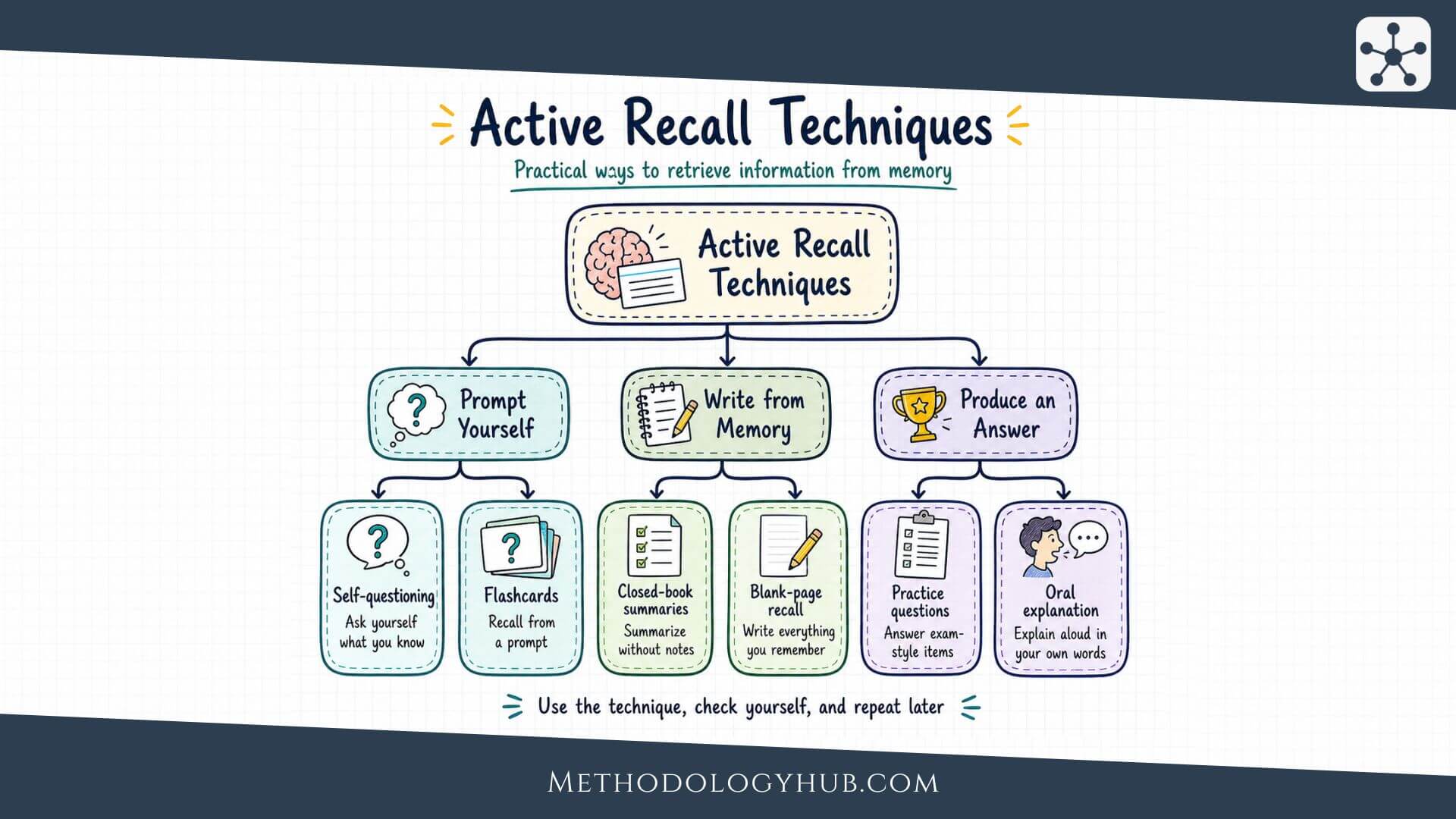
Memorizing information faster and improving long-term recall requires moving beyond passive repetition toward active cognitive engagement. By utilizing evidence-based techniques such as spaced repetition, mnemonic encoding, and the testing effect, you can strengthen neural pathways, significantly reducing study time while increasing the retention and accessibility of complex information.
The Cognitive Architecture of Memory
To improve how you memorize, you must first understand how memory operates. Human memory is not a singular bucket where data is dropped; it is a tripartite process consisting of encoding, storage, and retrieval.
Encoding: The Foundation of Retention
Encoding is the process of converting sensory input into a construct the brain can store. The speed and quality of this process depend heavily on "depth of processing." If you simply read a paragraph, you are performing shallow encoding, which is highly prone to forgetting. Deep encoding occurs when you relate new information to existing knowledge structures—a process known as elaborative rehearsal. By connecting a new concept to something you already understand, you create a complex neural web that makes the new information easier to trigger during recall.
Storage and Consolidation
Once information is encoded, the brain must stabilize it. This is the stage of consolidation, where neural connections are physically reinforced. Sleep plays a critical role here; during rapid eye movement (REM) and slow-wave sleep, the brain replays the day’s learning, transferring information from the hippocampus to the neocortex for long-term storage. Without adequate rest, your "faster" memorization attempts are effectively discarded by the brain before they can be secured.
Retrieval: The Ultimate Test
Recall is not merely looking back at what you stored; it is a reconstructive process. Every time you retrieve a memory, you modify it. This is why active recall—the act of forcing your brain to retrieve information without looking at the source material—is the most powerful tool for memorization. It requires the brain to navigate the retrieval path, strengthening that path each time it is traversed.
Proven Methodologies for Accelerated Learning
Memorizing faster does not mean shortcuts; it means using the brain's natural preferences for learning. These methodologies are designed to maximize neural efficiency.
Spaced Repetition (The Forgetting Curve)
Developed by Hermann Ebbinghaus, the "Forgetting Curve" illustrates how quickly information is lost if not reviewed. Spaced repetition counteracts this by prompting you to review material at increasing intervals. Instead of cramming for four hours on a Monday, you might study for 30 minutes on Monday, five minutes on Tuesday, two minutes on Thursday, and one minute on the following week. This spacing forces the brain to work harder to recall the information, which paradoxically cements it more deeply than passive review.
Mnemonic Devices and Elaborative Encoding
Mnemonic systems, such as the Method of Loci (the Memory Palace), leverage the brain's superior ability to recall spatial information and imagery. By assigning abstract data to specific physical locations in a visualized space, you utilize the hippocampal pathways evolved for spatial navigation to organize information. Similarly, using acronyms or vivid, often bizarre, imagery helps "hook" dry information into your long-term memory.
The Feynman Technique
Named after physicist Richard Feynman, this technique involves teaching a concept to someone else—or an imaginary audience—without using jargon. If you cannot explain a concept simply, you do not have it memorized; you have merely memorized the words. Simplifying the information forces you to deconstruct the core logic, which is the ultimate form of active encoding.

Comparing Learning Techniques: Efficiency vs. Retention
Understanding which tools offer the highest return on investment (ROI) for your time is critical for efficiency.
| Technique | Primary Mechanism | Best For | Time Investment |
|---|---|---|---|
| Active Recall | Retrieval practice | Complex concepts, facts | High (intense) |
| Spaced Repetition | Forgetting curve reset | Long-term maintenance | Low (long-term) |
| Method of Loci | Spatial association | Lists, sequences, names | Medium (training) |
| Rereading/Highlighting | Sensory exposure | Reviewing structure | Low (but ineffective) |
Note: While rereading is low-effort, research consistently shows it produces minimal long-term retention compared to the higher-effort active methods.
Practical Execution: A Step-by-Step System
To implement these strategies, follow this structured approach to ensure you aren't just memorizing faster, but memorizing better.
- Prime the Material: Before deep study, skim the material to identify headings, summaries, and key terms. This gives your brain a "mental scaffolding" to hang new details upon.
- Break into Chunks: Human working memory is limited to roughly four to seven items at once. Break complex topics into smaller, bite-sized "chunks." If you are memorizing a list of 20 items, group them into four sets of five.
- Implement Active Recall Immediately: Close the book after every section. Ask yourself, "What did I just read?" and force yourself to verbalize it. If you struggle, that struggle is the feeling of neural pathways being built.
- Schedule Review Cycles: Use digital tools or manual paper systems to track your review intervals. Ensure that you do not review a topic until you have started to forget it; this "desirable difficulty" is what creates long-term strength.
- Utilize Interleaving: Do not study one subject for five hours. Mix your subjects. The contrast between different types of information forces your brain to constantly "reload" its focus, which improves discrimination and conceptual understanding.
Common Pitfalls and Troubleshooting
Even with the right methods, learners often fall into traps that impede progress.
- The Illusion of Competence: This occurs when you read a page, understand it perfectly, and assume you have memorized it. Understanding is not the same as retention. You must test yourself after the book is closed to verify that the information has actually moved into long-term memory.
- Cognitive Fatigue: Studying for eight hours straight is counterproductive. Your brain's ability to consolidate memory diminishes after 90–120 minutes of intense focus. Take short, screen-free breaks to allow for "diffuse mode" processing.
- Neglecting Physical Health: Memorization is a biological process. Chronic stress releases cortisol, which inhibits the hippocampus. Dehydration and lack of physical exercise can also negatively affect synaptic plasticity. View sleep, nutrition, and hydration as prerequisites for cognitive performance rather than optional habits.
Frequently Asked Questions
Does listening to music help or hinder memory?
Listening to music with lyrics generally hinders the memorization of textual material because it creates "cognitive interference," where the brain attempts to process the language in the lyrics simultaneously with the information you are trying to study. Instrumental or ambient music is often better, though total silence is usually the most effective environment for intense encoding.
How many hours a day should I spend using these techniques?
Quality is significantly more important than quantity. Due to the limits of cognitive endurance, most people can only manage three to four hours of high-intensity, focused learning per day. Beyond that, the quality of your encoding drops, and you are better off prioritizing rest and physical recovery to solidify the day's intake.
Can I memorize faster if I am tired?
No. Sleep deprivation creates a significant barrier to the consolidation of new memories. During sleep, your brain processes the day's experiences; if you cut that process short, you are effectively deleting the information you spent time encoding. Prioritize at least seven to eight hours of sleep to ensure your brain has the time required to lock in new information.
What should I do if I keep forgetting the same information?
If you repeatedly fail to recall a specific fact, it is a sign that your initial encoding was too shallow. Stop relying on rote repetition. Instead, change your strategy: create a more vivid mental image, find a better analogy, or apply the Feynman technique to teach the concept back to yourself. Often, simply changing the "encoding path" allows the brain to grasp the information more securely.
Is there a "best" time of day to memorize?
While individuals have different chronotypes, most research suggests that the brain is most efficient at analytical and focus-heavy tasks during its peak alertness period—usually mid-morning. However, the most important factor is consistency. Establishing a daily "memorization window" is more effective than trying to time your sessions perfectly around circadian rhythms.
Next Steps for Mastery
Begin by selecting one complex topic you are currently trying to learn. Apply the Active Recall method during your next session: commit to reading only 20 minutes of material, then close the document and explain the content aloud for five minutes without looking. Keep a record of your "stumble points"—these are the gaps in your knowledge that require further elaboration. By focusing on your failures rather than your successes, you will optimize your memory performance effectively.
Image Gallery
Select an image to open it in a new tab.

Celine Dubois
Contemporary Living and Global Arts Columnist
