Why Episodes in Shrinking Often Miss the Mark: A Structural Analysis of Tone and Pacing
The series Shrinking often misses the mark when its attempt to balance grief-stricken, therapeutic drama with absurdist workplace comedy results in tonal dissonance. This misalignment occurs primarily when the script prioritizes quick-fire humor over the emotional stakes of the characters' psychological journeys, leaving viewers frustrated by the inconsistent weight given to serious mental health themes.
The Duality of Tone in Modern Dramedy
Shrinking, created by Brett Goldstein, Bill Lawrence, and Jason Segel, operates in a space known as "sad-com" or "dramedy." The show centers on Jimmy Laird, a therapist grieving his wife, who begins to break ethical barriers by telling his patients exactly what he thinks. While the premise is ripe for both laughter and profound reflection, the show’s episodes often struggle with the transition between these two modes.
When the writing pivots suddenly from a deeply sensitive session involving complex trauma to a slapstick moment in the office or a crude interaction with a neighbor, the audience may feel a sense of whiplash. This dissonance is not necessarily a failure of quality, but a failure of modulation. When a comedy series attempts to ground itself in the reality of bereavement, it demands a certain level of narrative respect. If the emotional payoff of a scene is undercut by an immediate, jarring punchline, the "mark" is missed because the audience is denied the space to process the weight of the moment.
Pacing Challenges and the Episodic Structure
The structure of a standard 30-minute episode places significant pressure on the narrative to keep moving. In Shrinking, there is a clear intention to mirror the life of a therapist—a profession defined by rapid-fire scheduling and the need to compartmentalize emotions. However, this structure often leads to episodes feeling crowded.
In many instances, the show attempts to juggle:
- Jimmy’s personal grief arc.
- The therapy sessions of three or more distinct patients.
- Paul and Gaby’s own evolving life crises.
- The broader ensemble dynamics with Liz and Sean.
When an episode tries to advance all these threads simultaneously, the pacing becomes frenetic. Because the show is character-driven, these arcs require patience and time to breathe. When the clock forces the episode to rush through a breakthrough or a setback to hit a pre-set comedic beat, the character growth feels earned in a mathematical sense rather than a human one. The viewer senses the mechanics of the script, which pulls them out of the immersive experience.
The Ethics of the "Aggressive Therapy" Trope
A primary point of contention for both critics and viewers is the premise of the therapist overstepping ethical boundaries. In the world of the show, Jimmy’s decision to intervene in his patients’ lives is framed as a rebellious, "real" approach to healing. However, this trope often misses the mark because it simplifies the complex, non-linear reality of psychotherapy.
The series often positions the protagonist as the one with the "right" idea, while the traditional, board-certified therapist (Paul, played by Harrison Ford) is positioned as the rigid, slightly out-of-touch alternative. While this provides a classic character foil dynamic, it occasionally undermines the gravity of the psychological conditions being depicted. When a patient’s life-altering trauma is "solved" through an impulsive, sitcom-style intervention, it can feel like a trivialization of the very subject matter the show aims to explore.
Comparing Tonal Balance in Contemporary Television
To understand why these episodes sometimes feel misaligned, it is helpful to look at how Shrinking compares to other recent works in the same sub-genre.
| Feature | Shrinking (2023-2026) | Ted Lasso | Fleabag |
|---|---|---|---|
| Primary Focus | Ethical boundary crossing | Optimistic leadership | Internalized trauma |
| Humor Style | Workplace/Absurdist | Whimsical/Earnest | Dry/Self-deprecating |
| Tonal Shifts | Frequent/Sudden | Infrequent/Gradual | Sharp/Intentional |
| Core Conflict | Personal grief vs. Ethics | External obstacles | Psychological barriers |
As seen in the table above, the shows that maintain a consistent "mark" generally commit to a primary tone for longer stretches. Fleabag, for example, uses humor to mask pain, meaning the comedy is an integral part of the character’s defense mechanism. In Shrinking, the comedy is often external to the trauma, which creates the divide in the viewer’s engagement.
The Role of Ensemble Dynamics
One reason Shrinking frequently finds itself at a crossroads is the size of its ensemble. A show with a large cast often requires each character to have a distinct "win" or "loss" in every 30-minute block. This often leads to a phenomenon where secondary characters act as plot devices to move the protagonist forward, rather than having their own agency.
When Liz (played by Christa Miller) or Brian (played by Michael Urie) are utilized primarily to deliver a punchline or to provide a sounding board for Jimmy’s ethical breaches, they lose the dimensionality that made them interesting in the first place. Episodes miss the mark when these supporting characters become static, serving only as mirrors for Jimmy’s growth rather than dynamic individuals with their own stakes in the narrative.
Identifying the Disconnect in Narrative Stakes
A common pitfall in Shrinking is the mismatch between the stakes for the patient and the stakes for the therapist. Often, a patient is undergoing a life-changing event—a divorce, a relapse, or a career collapse—yet the episode focuses on how that event impacts the therapist’s reputation or his relationship with his daughter.
This shift in focus can alienate viewers who are invested in the patient’s journey. When the show prioritizes the therapist’s emotional development over the actual resolution of the crisis that brought the patient to therapy in the first place, it creates a sense of imbalance. The patient ceases to be a human being and becomes an instrument for the lead character’s redemption, which can feel performative.
Frequently Asked Questions
1. Is the erratic tone in Shrinking a deliberate creative choice? Yes, the show intentionally blends comedy and drama. The "missed mark" occurs when this blend fails to find a harmonious rhythm, often due to the limitations of the half-hour episode format, which necessitates frequent tonal shifts to keep the plot moving.
2. Does the show accurately depict psychotherapy? No. While it captures the general environment of a therapy office, the core premise—that a therapist should intervene directly in a patient’s life—violates fundamental professional ethics. The show uses this as a plot engine rather than an accurate representation of clinical practice.
3. Why do some episodes feel more satisfying than others? Episodes that feel satisfying are usually those that dedicate time to a single narrative thread, allowing for a slower, more emotional build-up. Episodes that attempt to advance four or five subplots simultaneously often suffer from pacing issues and tonal jarring.
4. How does Harrison Ford’s character influence the show's balance? Paul acts as the "grounding" element. Episodes where he is given more screen time often feel more balanced because his character represents a more traditional, restrained approach to life and therapy, which offsets Jimmy’s volatility.
5. Is the "sad-com" format inherently flawed? Not necessarily, but it requires a delicate touch. A successful sad-com must ensure that the humor does not diminish the emotional stakes. In Shrinking, the episodes that miss the mark are those where the comedic beats function as "escapes" from the drama rather than ways to explore it.
Next Steps for Viewers and Analysts
If you find that the show is missing the mark for you, consider shifting your perspective from viewing it as a realistic drama to appreciating it as a high-concept character study. The show is not a procedural about therapy; it is a fable about a man trying to fix his life by fixing others. By adjusting your expectations to focus on the character arcs rather than the clinical validity or the consistency of the tone, you may find the narrative choices more justifiable, if not perfectly executed. For those studying the writing, pay close attention to the transitions between scenes; identifying exactly when the "whip-lash" occurs can help you pinpoint the specific narrative technique that creates the tonal disconnect.
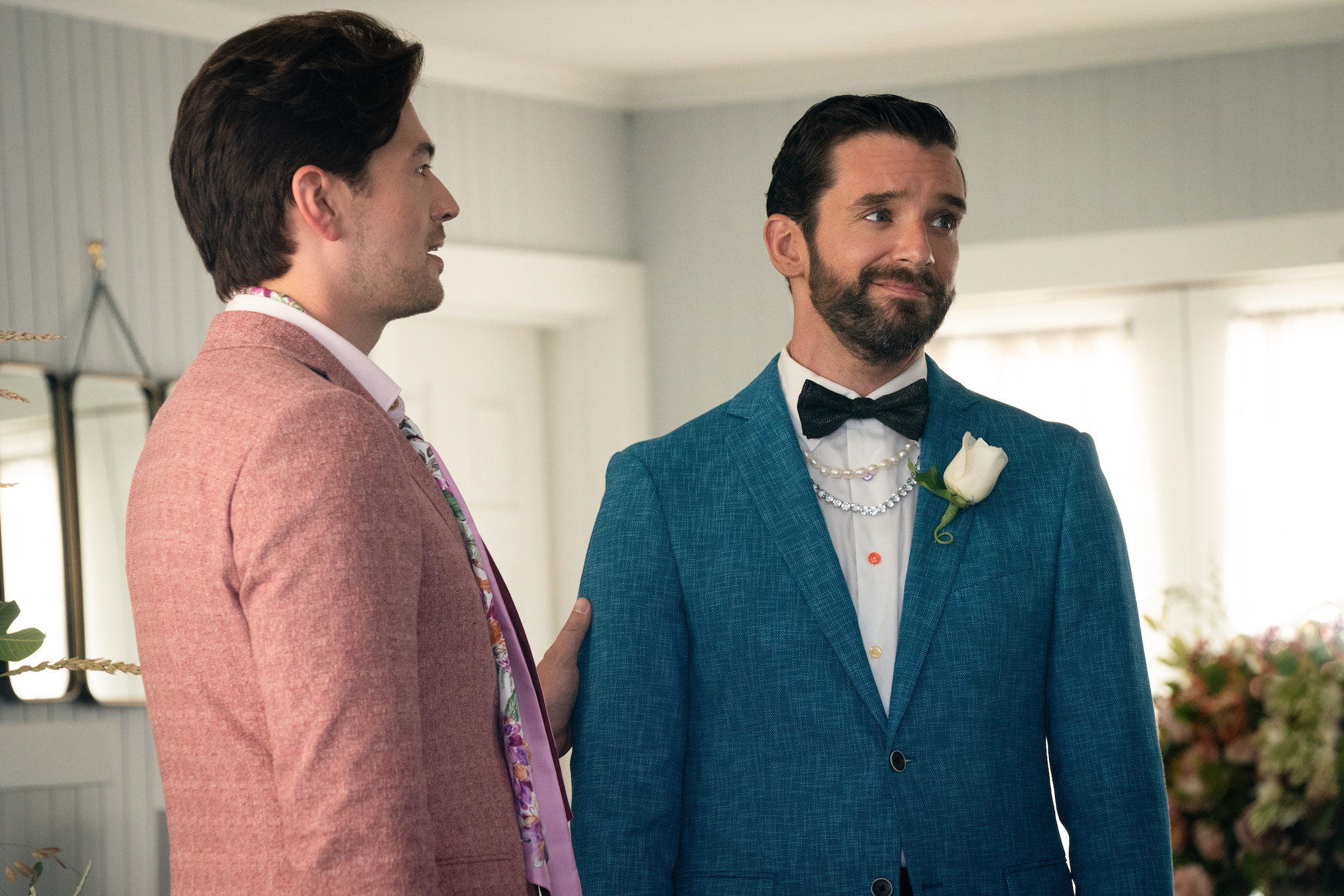
Image Gallery
Select an image to open it in a new tab.





Akira Tanaka
International Academic Trends Correspondent
