Visiting the Crown Jewels at the Louvre: Location, Highlights, and Essential Guide
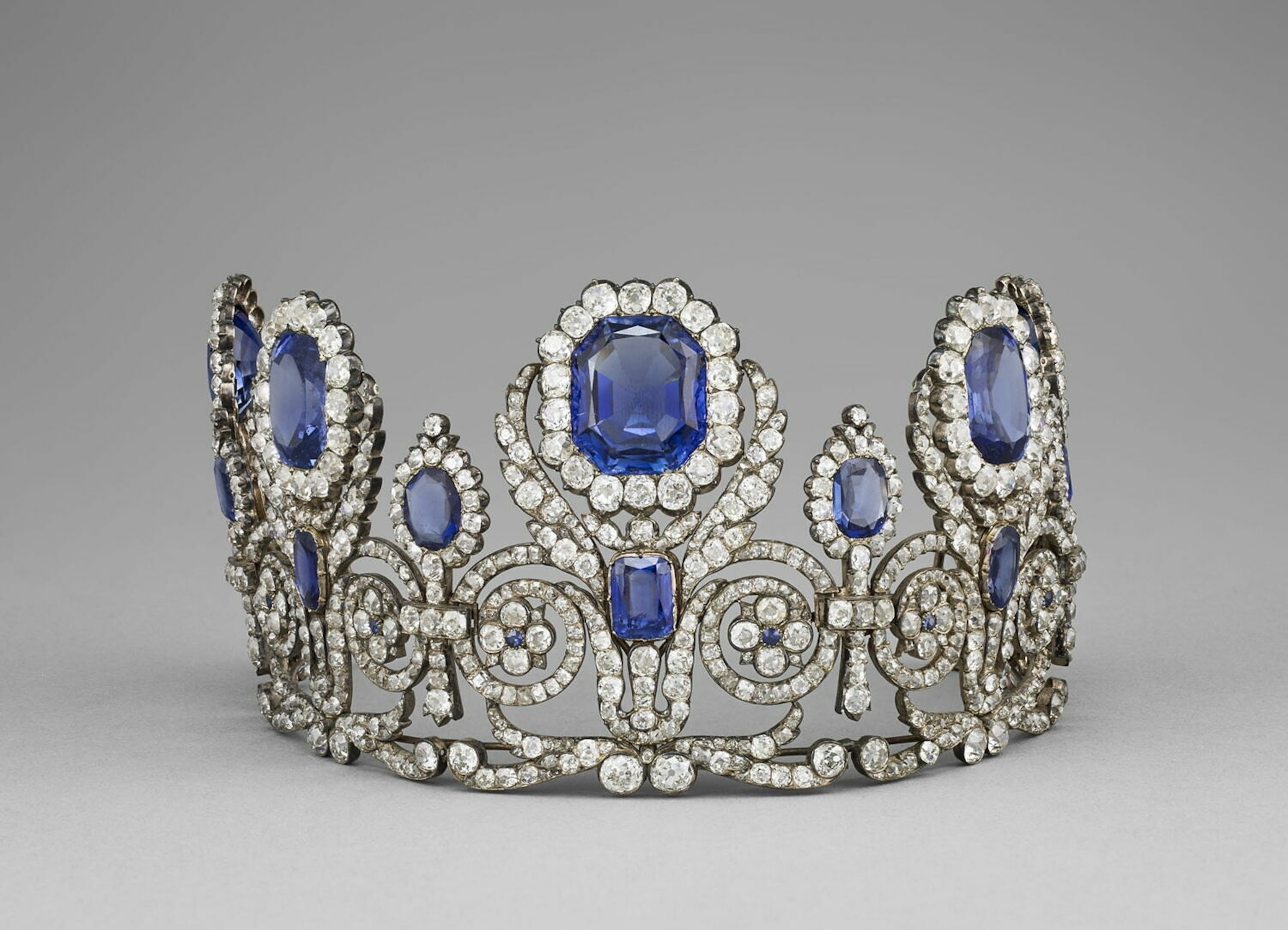
The French Crown Jewels are on permanent display inside the Louvre Museum in Paris, housed within the magnificent Galerie d'Apollon (Room 705) on the first floor of the Denon Wing. The collection features historic gems, royal crowns, and 19th-century diamond parures, including the world-famous 140.64-carat Regent Diamond and the Crown of Louis XV.
Accessing this treasury requires a standard Louvre admission ticket with a mandatory timed-entry reservation. Because the Galerie d'Apollon is one of the museum's most sought-after galleries alongside the Mona Lisa, understanding where to look, how to navigate the hall, and the turbulent history behind these surviving masterpieces will dramatically enrich your visit.
Where to Find the Crown Jewels in the Louvre
Locating specific collections within the Musée du Louvre can be overwhelming given the palace's vast footprint spanning three wings—Denon, Sully, and Richelieu across multiple levels. The French Crown Jewels (Diamants de la Couronne) are located entirely within a single, celebrated hall: The Galerie d'Apollon (Room 705).
Gallery Location and Access Route
The Galerie d'Apollon sits on the first floor (premier étage) of the Denon Wing. To reach the hall efficiently from the main glass Pyramid entrance:
- Pass through Security: Enter beneath the Pyramid and descend to the central reception area (Hall Napoléon).
- Enter the Denon Wing: Scan your timed ticket at the Denon entrance portal.
- Ascend to the First Floor: Follow signs toward the Mona Lisa (La Joconde) or Italian Painting galleries via the Grand Staircase (Escalier Daru), where the Winged Victory of Samothrace stands.
- Navigate to Room 705: From the landing of the Winged Victory, turn right toward the Salon Carré. Pass through the Salon Carré to enter the northern threshold of the Galerie d'Apollon.
Pyramid Entrance ➔ Denon Wing ➔ Escalier Daru (Winged Victory) ➔ Salon Carré ➔ Galerie d'Apollon (Room 705)
The gallery itself is a architectural precursor to the Hall of Mirrors at Versailles. Designed by Charles Le Brun under King Louis XIV and completed centuries later with ceiling paintings by Eugène Delacroix, the hall underwent a major restoration completed in early 2020. Three central glass showcases present the royal gem collection under specialized illumination and high-security casing.
Masterpieces of the Louvre Jewel Collection
Unlike monarchies that preserved their coronation regalia intact over centuries, the French treasury suffered repeated dismemberment through theft, political revolution, and state sales. What remains at the Louvre represents a curated assembly of surviving stones, remounted 19th-century sets, and reclaimed historical artifacts.
The Regent Diamond (Le Régent)
The undisputed centerpiece of the collection is The Regent Diamond, widely regarded as one of the finest and purest brilliant-cut diamonds in existence.
- Weight and Characteristics: Weighing 140.64 carats, the stone displays a delicate pale blue-white clarity and exceptional brilliance.
- Origins: Mined in 1698 at the Kollur Mine in Golconda, India, the rough stone originally weighed over 410 carats. It was acquired by Thomas Pitt, Governor of Fort St. George in Madras, who had it cut in London.
- French Royal History: In 1717, Philippe II, Duke of Orléans—then Regent of France acting for the young Louis XV—purchased the gem for the French Crown for £135,000.
- Royal Uses: The Regent was set into the coronation crown of Louis XV in 1722, worn on the hat of Louis XVI, and later mounted into the hilt of Napoleon Bonaparte’s imperial sword by jeweller Étienne-Néry François. Following Napoleon's downfall, the diamond remained part of the state treasury and was mounted on the crowns of King Charles X and Empress Eugénie.
The Sancy and Hortensia Diamonds
Flanking the Regent are two additional diamonds of immense historic significance:
- The Sancy Diamond (55.23 carats): A pale yellow, double-rose-cut diamond with a complex history spanning medieval European royalty. Named after Nicolas de Harlay, Seigneur de Sancy, who owned it in the late 16th century, it was owned by King James I of England, King Charles I, and Cardinal Mazarin before joining the French Royal Treasury. It was stolen during the French Revolution, sold to Russian prince Paul Demidoff, and eventually repurchased by the French state from the Waldorf-Astaker (Astor) family in 1978 for display at the Louvre.
- The Hortensia Diamond (20.00 carats): A distinct salmon-pink, flat-cut pentagonal diamond. Named after Hortense de Beauharnais, Queen of Holland and daughter of Empress Josephine, the stone was stolen from the royal treasury during the 1792 revolution, recovered from an attic in Paris, and preserved through subsequent regime changes.
Royal Crowns: Louis XV and Empress Eugénie
While most pre-revolutionary French coronation crowns were destroyed or melted down during the French Revolution, two exceptional examples survive in the Galerie d'Apollon:
The Coronation Crown of Louis XV (1722)
Created by royal jeweler Augustin Duflos for the 9-year-old Louis XV’s coronation at Reims Cathedral, this crown represents the golden age of French lapidary art. Traditionally, diamonds set in French coronation crowns were leased or temporary; after the ceremony, the precious gems were replaced with paste (colored glass) copies so the real jewels could return to the treasury. The Crown of Louis XV displayed today retains its original silver-gilt framework set with high-grade historical glass replicas, showing the precise positions where the Regent and Sancy diamonds once sat.
The Crown of Empress Eugénie (1855)
Commissioned by Emperor Napoleon III for his wife, Empress Eugénie, on the occasion of the 1855 Universal Exposition in Paris, this crown was designed by court jeweler Alexandre-Gabriel Lemonnier. Unlike older crowns, it was constructed from solid gold and set with 2,480 diamonds and 56 emeralds. Because it was privately created for the Second Empire, it escaped the mandatory auctions of 1887 and remains one of the few fully intact imperial crowns in Europe.
19th-Century Parures and Reclaimed Heritage
The showcase dedicated to 19th-century royal women features intricate parures (matching jewelry sets comprising tiaras, necklaces, bracelets, and brooches) created during the Bourbon Restoration, the July Monarchy, and the Second French Empire:
- The Sapphire Parure of Queen Marie-Amélie: A magnificent set featuring Sri Lankan sapphires and diamonds, originally owned by Empress Josephine, adapted for Queen Marie-Amélie (wife of King Louis-Philippe), and later acquired by the Louvre.
- The Emerald Parure of the Duchess of Angoulême: Created in 1820 by the jeweler Bapst, featuring 1,031 diamonds and 40 emeralds set in gold and silver.
- Empress Eugénie’s Bow Brooch (Noeud de Corsage): A magnificent diamond bow created in 1855 by François Kramer for Empress Eugénie. Sold at the 1887 auction to a private collector, the piece was successfully repurchased by the Friends of the Louvre (Société des Amis du Louvre) at auction in 2008 for over €6.7 million and returned to the nation.
- Empress Eugénie’s Reliquary Brooch: Set with two large table-cut diamonds from the old royal collections, this brooch demonstrates the 19th-century practice of remounting historic stones into contemporary settings.

Summary of Famous French Crown Jewels at the Louvre
The following table details the primary historical jewels, gems, and crowns on view in the Galerie d’Apollon:
| Object / Gemstone Name | Date / Era | Primary Materials & Carat Weight | Historical Significance |
|---|---|---|---|
| The Regent Diamond | 1698 (Mined) / 1717 (Acquired) | Cushion-cut diamond; 140.64 carats | Worn by Louis XV, Louis XVI, Charles X, and mounted on Napoleon I's sword. |
| The Sancy Diamond | 16th Century | Pale yellow double rose-cut diamond; 55.23 carats | Owned by Charles the Bold, James I, and Cardinal Mazarin; bought by France in 1978. |
| The Hortensia Diamond | 1691 (Cataloged) | Salmon-pink pentagonal cut diamond; 20.00 carats | Owned by Queen Hortense of Holland; survived the 1792 treasury robbery. |
| Crown of Louis XV | 1722 | Silver-gilt, historical glass replicas, rubies | Only surviving French Royal Ancien Régime crown framework. |
| Crown of Empress Eugénie | 1855 | Gold, 2,480 diamonds, 56 emeralds | Designed by Lemonnier for the 1855 Universal Exposition; escaped the 1887 sale. |
| Emerald Parure (Duchess of Angoulême) | 1820 | 40 emeralds, 1,031 brilliant-cut diamonds | Created by Bapst; classic example of Bourbon Restoration craftsmanship. |
| Empress Eugénie’s Bow Brooch | 1855 | Diamonds set in silver and gold | Corsage bow sold in 1887 and bought back by the Louvre in 2008. |
| Tiara of the Duchess of Angoulême | 1819 | 40 emeralds, 1,028 diamonds | Commissioned by the Duke of Angoulême; remounted from royal gems. |
The Turbulent History Behind the Collection
Understanding why the French Crown Jewels collection is smaller than the British Royal Collection requires examining three crucial historical turning points: the Revolution of 1789, the Great Theft of 1792, and the Parliamentary Auction of 1887.
The Great Treasury Theft of 1792
Before the French Revolution, the crown jewels were stored at the Hôtel du Garde-Meuble de la Couronne (now the Hôtel de la Marine) on the Place de la Révolution (Place de la Concorde). In September 1792, amid the political chaos following the storming of the Tuileries Palace, thieves breached the building over several nights.
A vast proportion of the royal treasury vanished, including the French Blue Diamond (later recut into the Hope Diamond), the Regent, the Sancy, and countlessly mounted ornaments. While French police under the Directory managed to recover the Regent, Hortensia, and Sancy diamonds over subsequent years, hundreds of smaller stones were permanently lost or cut into new gems across Europe.
The Infamous 1887 Sale of the Crown Jewels
The greatest destruction of the French royal treasury occurred not under revolution, but under democratic vote. In May 1887, the National Assembly of the Third French Republic—fearful that royalist or imperialist factions might use the Crown Jewels to fund a restoration of the monarchy—voted to auction off the nation's gem collection.
1792 Theft (Gardes-Meubles) ➔ 1887 State Auction ➔ 2000s–Present Re-acquisition Efforts
The 1887 sale took place over several weeks in the Tuileries. Thousands of diamonds, pearls, emeralds, and sapphires were broken out of their historic settings and sold to international jewellers, including Charles Lewis Tiffany, who acquired a significant share of the stones and established Tiffany & Co.'s prominence in North America.
Only a tiny fraction of items was spared from auction on grounds of artistic or historical merit:
- The Regent, Sancy, and Hortensia diamonds.
- The Crown of Louis XV (stripped of real stones).
- A small selection of mineralogical specimens sent to the Muséum national d'Histoire naturelle.
Ongoing Heritage Re-acquisition
In recent decades, the Musée du Louvre, backed by public funding and private philanthropic groups like the Société des Amis du Louvre, has actively monitored international auctions to repurchase dispersed items. Major successes include buying back Empress Eugénie’s Corsage Brooch (2008), her Pearl Tiara (1992), and specific elements of the Duchess of Angoulême’s parures.
Practical Visitor Guide: Tickets, Timing, and Museum Rules
Visiting the Galerie d'Apollon requires planning, as the Louvre enforces strict entry quotas to manage gallery capacity.
Booking Tickets and Entry Requirements
- Mandatory Advance Reservation: All visitors must reserve a specific date and time slot online through the official Musée du Louvre Ticketing Portal. Walk-up ticket sales at the Pyramid are rarely available.
- Included Admission: Access to the Galerie d'Apollon (Room 705) is included in the standard general admission ticket (€22 for regular adult entry). There is no separate ticket or surcharge for the crown jewel gallery.
- Pass Holders: Visitors holding a Paris Museum Pass or European Union residents under 26 (who receive free entry) must still book a free time-slot reservation online prior to arrival.
Best Times to Visit Room 705
Because Room 705 sits directly along the major tourist highway connecting the Winged Victory of Samothrace to the Mona Lisa and the Red Rooms (French Romantic Paintings), it experiences severe congestion during peak hours.
- Early Morning Entry (09:00 AM): Book the first time slot of the day. Proceed directly through security to the Denon Wing and ascend immediately to Room 705 before tour groups arrive.
- Wednesday and Friday Evening Hours: The Louvre extends opening hours until 21:00 (9:00 PM) on select evenings. Visitor density drops significantly after 18:00.
- Avoid Midday Peak (11:00 AM – 15:00 PM): Lines to enter Room 705 can stall inside the Salon Carré during peak afternoon hours.
Security and Viewing Etiquette
- Photography Rules: Non-commercial photography and video recording without flash are permitted inside the Galerie d'Apollon. Flash photography is strictly prohibited to protect the historic gilt woodwork and ceiling frescoes.
- Security Barriers: The central showcases containing the Regent Diamond and crowns are equipped with reinforced security glass, motion sensors, and proximity monitoring. Do not lean against or touch the glass cases, as this triggers security alarms.
- Accessibility: Room 705 is fully accessible via elevators located in the Denon Wing. Wheelchair users should consult staff at the information desk under the Pyramid for specific elevator keycard access to the 1st floor mezzanine.
Frequently Asked Questions
What room are the Crown Jewels in at the Louvre?
The Crown Jewels are located in Room 705, known as the Galerie d'Apollon, on the first floor (premier étage) of the Denon Wing.
Are the French Crown Jewels real diamonds and gems?
Yes, the vast majority of stones on display—including the Regent (140.64 carats), Sancy (55.23 carats), and Hortensia (20 carats) diamonds, as well as the emeralds on Empress Eugénie's crown—are genuine historical gems. The notable exception is the Crown of Louis XV, which holds glass replica stones because its original diamonds were removed per tradition after the 1722 coronation.
Why did France sell its Crown Jewels in 1887?
The Third French Republic sold the majority of the royal jewel collection at auction in 1887 to prevent potential royalist usurpers from using the treasure to fund a political coup or restoration of the monarchy. The sale also served as a symbolic political statement breaking with France's monarchical past.
How long does it take to view the Galerie d'Apollon?
A focused visit to the Galerie d'Apollon takes approximately 20 to 30 minutes. This allows time to appreciate the Le Brun and Delacroix ceiling decorations, examine the central jewel showcases, and read the curatorial text panels.
Is access to the Crown Jewels included in standard Louvre admission?
Yes. Your standard Louvre general admission ticket grants full access to all permanent collections, including the Galerie d'Apollon, without additional fees.
Recommended Next Steps for Your Visit
To ensure a seamless experience viewing the crown jewels during your trip to Paris:
- Reserve Tickets Early: Visit the official Louvre ticket site 4 to 6 weeks in advance of your travel date to secure an early morning (09:00 AM) entry slot.
- Download the Official Map: Save the Louvre’s digital floor plan to your smartphone, identifying the Denon Wing, 1st Floor, Room 705.
- Combine Your Route: Pair your visit to the Galerie d'Apollon with adjacent Denon Wing highlights: the Winged Victory of Samothrace (Escalier Daru), the Mona Lisa (Room 711), and the French Romantic Masterpieces (Rooms 700–702 featuring Delacroix and Géricault).
- Explore Related Collections: If you want to see additional surviving royal French artifacts, visit the Hôtel de la Marine at Place de la Concorde, where the jewels were kept before 1792, or the Galerie de Minéralogie at the Jardin des Plantes to view raw royal gemstone specimens.
Image Gallery
Select an image to open it in a new tab.


Lars Thomsen
Global Labor Markets and Economic Strategy Editor
