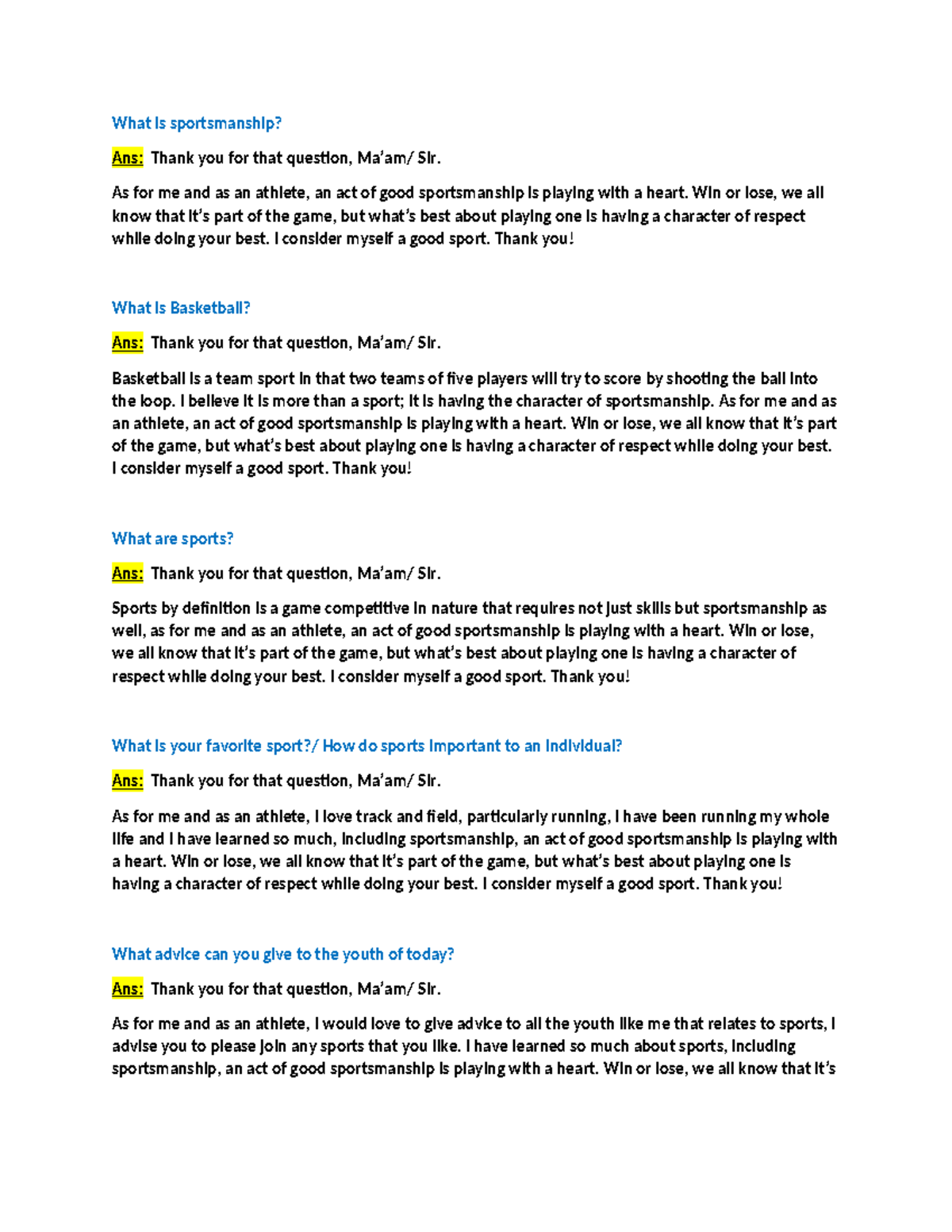
Sportsmanship is an ethical framework that governs conduct within competitive environments, emphasizing fairness, integrity, respect, and grace regardless of the outcome. It transcends mere adherence to the rules, requiring participants to uphold the spirit of the game by honoring opponents, officials, and the fundamental value of fair play.
The Foundation of Sportsmanship
At its core, sportsmanship is the moral compass of competitive play. While the term is often associated with athletics, its principles are universal and applicable to any domain involving competition, including business, academic debate, and professional gaming. To understand sportsmanship, one must distinguish between the "letter of the law"—the explicit rulebook—and the "spirit of the law," which involves the unwritten expectations of character and mutual respect.
An individual practicing strong sportsmanship prioritizes the integrity of the activity over the immediate desire for victory. This does not mean they lack a competitive drive; rather, it suggests that the victory is only meaningful if it is earned within a framework of honesty. When a player acknowledges an error that the referee missed or assists an opponent who has suffered an injury, they are reinforcing the social contract that makes organized competition possible.
Key Dimensions of Sportsmanship
To effectively analyze what sportsmanship entails, it is helpful to break the concept down into four primary dimensions. These pillars provide a roadmap for how participants, coaches, and spectators should conduct themselves.
- Fairness: This involves total adherence to the rules. It means rejecting performance-enhancing substances, illegal tactical maneuvers, and any attempt to deceive officials. Fairness assumes that for a contest to be valid, all participants must operate under identical conditions.
- Respect for Authority: Officials, referees, and judges are the arbiters of the environment. Disputing calls through intimidation or persistent verbal abuse undermines the system. Even when a decision appears incorrect, a sportsman accepts the outcome with the understanding that fallibility is part of the human element in sports.
- Respect for Opponents: An opponent is not an enemy; they are a necessary partner in the pursuit of excellence. Without a worthy opponent, the struggle to improve is diminished. Respect entails acknowledging their skills and successes, and treating them with dignity whether they win or lose.
- Resilience and Grace: How an individual reacts to defeat is the ultimate test of character. A sportsman avoids making excuses for failure, instead focusing on what lessons can be drawn from the experience. Similarly, victory is celebrated without demeaning the loser, acknowledging the shared effort that led to the result.
The Evolution of Conduct in Competitive Environments
While the definition of sportsmanship remains rooted in classical notions of honor, its application has evolved. In 2026, as digital competition and professional sports continue to integrate complex data analytics and high-stakes financial incentives, the pressure to cut corners has increased.
Modern sportsmanship is increasingly challenged by the "win-at-all-costs" mentality. When athletic success is tied to multi-million-dollar contracts, endorsements, or national prestige, the temptation to engage in "gamesmanship"—the practice of using questionable tactics to gain an advantage without technically breaking the rules—becomes significant. True sportsmanship acts as the vital counterweight to this trend. It maintains the legitimacy of the activity; if a sport loses its perceived integrity, it loses its audience, its sponsors, and its cultural relevance.
Comparison Table: Sportsmanship vs. Gamesmanship
| Feature | Sportsmanship | Gamesmanship |
|---|---|---|
| Primary Motivation | Integrity and mutual growth | Victory at any cost |
| View of Rules | Upholds both letter and spirit | Exploits loopholes and gray areas |
| View of Opponent | A respected collaborator | An obstacle to be neutralized |
| Reaction to Error | Admits fault; honors fairness | Conceals fault; exploits official error |
| Outcome Perception | Respects the process | Only the result matters |
Practical Applications: How to Cultivate Sportsmanship
Cultivating sportsmanship is a proactive process that begins with setting expectations before the competition starts. Whether you are a coach, a player, or a parent supporting a participant, the following steps are essential for fostering a healthy competitive environment:
- Establish Clear Ethical Benchmarks: Before competition begins, articulate what behavior is acceptable. This includes discussing how to handle frustration, how to address officiating, and the importance of acknowledging the opponent.
- Model the Desired Behavior: Leadership sets the tone. Coaches and high-profile players must demonstrate the same level of discipline they expect from others. If a coach berates an official, the players will inevitably adopt that posture.
- Focus on Process-Oriented Goals: Shift the focus from the scoreboard to the quality of the performance. By rewarding effort, strategic execution, and adherence to the game's spirit, you reduce the anxiety that often leads to poor conduct.
- Institutionalize Accountability: Leagues and organizations must have clear consequences for unsportsmanlike conduct. Penalties should be consistently applied to ensure that the rules are not just suggestions, but binding requirements for participation.
Common Misconceptions
One frequent misunderstanding is that sportsmanship implies a lack of intensity. Some argue that being "polite" or "fair" reduces the competitive nature of the game. In reality, the most intense rivalries in history are often those where both sides respect each other’s capabilities. When both participants are playing at their peak, held accountable by high standards of conduct, the competition is arguably more intense than one defined by cheap tricks and broken rules.
Another misconception is that sportsmanship is the responsibility only of the winner. It is arguably more difficult to maintain grace in defeat than in victory. The "good loser" is not someone who enjoys losing, but someone who understands that the contest was a shared experience and who possesses the emotional maturity to move forward without bitterness.
The Role of Technology in Verification
In 2026, technology serves as a double-edged sword for sportsmanship. Automated line calls, VAR (Video Assistant Referee) systems, and real-time tracking have removed much of the human error that previously caused disputes. These tools support the goal of fairness. However, they also create a new issue: the tendency for players to "game" the technology. Players may purposefully fall to trigger a review or attempt to hide minor infractions that they know the high-speed cameras might miss. Technology can enforce the letter of the law, but it cannot instill the spirit of the game. That remains a human responsibility.
Frequently Asked Questions
Is gamesmanship always considered unethical? Gamesmanship is often viewed as a "gray area." While it may technically fall within the rules, it is often discouraged because it undermines the spirit of the game. Whether it is unethical depends on the level of competition and the extent to which the tactic involves deception.
How can I teach sportsmanship to young athletes? The best method is through consistent reinforcement and reflection. After every game, ask athletes to reflect on their own behavior—not just their performance. Reward moments where they showed integrity, even if it cost them a favorable result.
Does sportsmanship apply in individual sports? Yes. In individual sports like tennis, golf, or chess, sportsmanship is vital. Participants are often self-governing; for example, in golf, a player may call a penalty on themselves for a movement that no one else noticed. This is the highest form of personal integrity.
Can a professional athlete be successful without sportsmanship? While some athletes have achieved success while disregarding these principles, they rarely sustain a positive legacy. Over time, a reputation for poor sportsmanship isolates an athlete from peers, fans, and opportunities, proving that character is a long-term asset in any professional field.
What should I do if my opponent is clearly not playing with sportsmanship? Maintain your composure. Responding with retaliation only brings you down to their level and risks your own standing with officials. Rely on the officials to enforce the rules and maintain your focus on your own performance and personal standards.
Conclusion: The Persistent Value of Character
The definition of sportsmanship is not a stagnant academic exercise; it is an active, ongoing commitment to the integrity of human competition. By prioritizing fairness, respect, and grace, participants ensure that their respective activities remain challenging, rewarding, and honorable. Regardless of the environment—be it a professional stadium or a local league—upholding these standards defines the difference between a simple contest and a truly meaningful pursuit of excellence. Your next action should be to review the specific codes of conduct relevant to your field or organization and commit to being an advocate for the spirit, not just the rules, of your game.

Image Gallery
Select an image to open it in a new tab.

Celine Dubois
Contemporary Living and Global Arts Columnist
