Martin Luther King Jr.: Important Events in the Life of a Civil Rights Icon

The life of Martin Luther King Jr. was defined by his relentless pursuit of racial equality, economic justice, and nonviolent social change. From his early upbringing in Atlanta to his pivotal leadership in the Southern Christian Leadership Conference (SCLC) and his tragic assassination in 1968, his journey fundamentally reshaped American law, policy, and social conscience.
Early Life and Theological Foundations
Born Michael King Jr. on January 15, 1929, in Atlanta, Georgia, the future leader grew up in a household deeply rooted in the traditions of the Black Church. His father, Martin Luther King Sr., was a prominent pastor at Ebenezer Baptist Church. The younger King’s education was an essential prerequisite to his later work; he attended Morehouse College, where he was exposed to the philosophy of nonviolent protest, and later earned a Ph.D. in systematic theology from Boston University in 1955.
His theological training was not merely academic; it provided the framework for his commitment to "agape"—a selfless, redemptive goodwill for all people—which he identified as a central tenet of the Civil Rights Movement. During his time in Boston, he met Coretta Scott, whom he married in 1953. Their partnership proved vital, as she became a significant activist in her own right, supporting his mission through decades of intense scrutiny and danger.
The Montgomery Bus Boycott: A Catalyst for Change
In 1954, King accepted the pastorate at the Dexter Avenue Baptist Church in Montgomery, Alabama. This appointment thrust him into the center of the local movement against segregated public transportation. On December 1, 1955, Rosa Parks was arrested for refusing to surrender her seat to a white passenger, triggering the Montgomery Bus Boycott.
King was chosen as the president of the Montgomery Improvement Association (MIA), the organization tasked with coordinating the boycott. For 381 days, he faced arrest, physical intimidation, and the bombing of his home. The event concluded in 1956 when the Supreme Court ruled that segregation on public buses was unconstitutional. This victory established King as a national figure and solidified his adherence to the strategy of nonviolent civil disobedience, influenced heavily by the teachings of Mahatma Gandhi and his own Christian faith.
The SCLC and the Rise of Direct Action
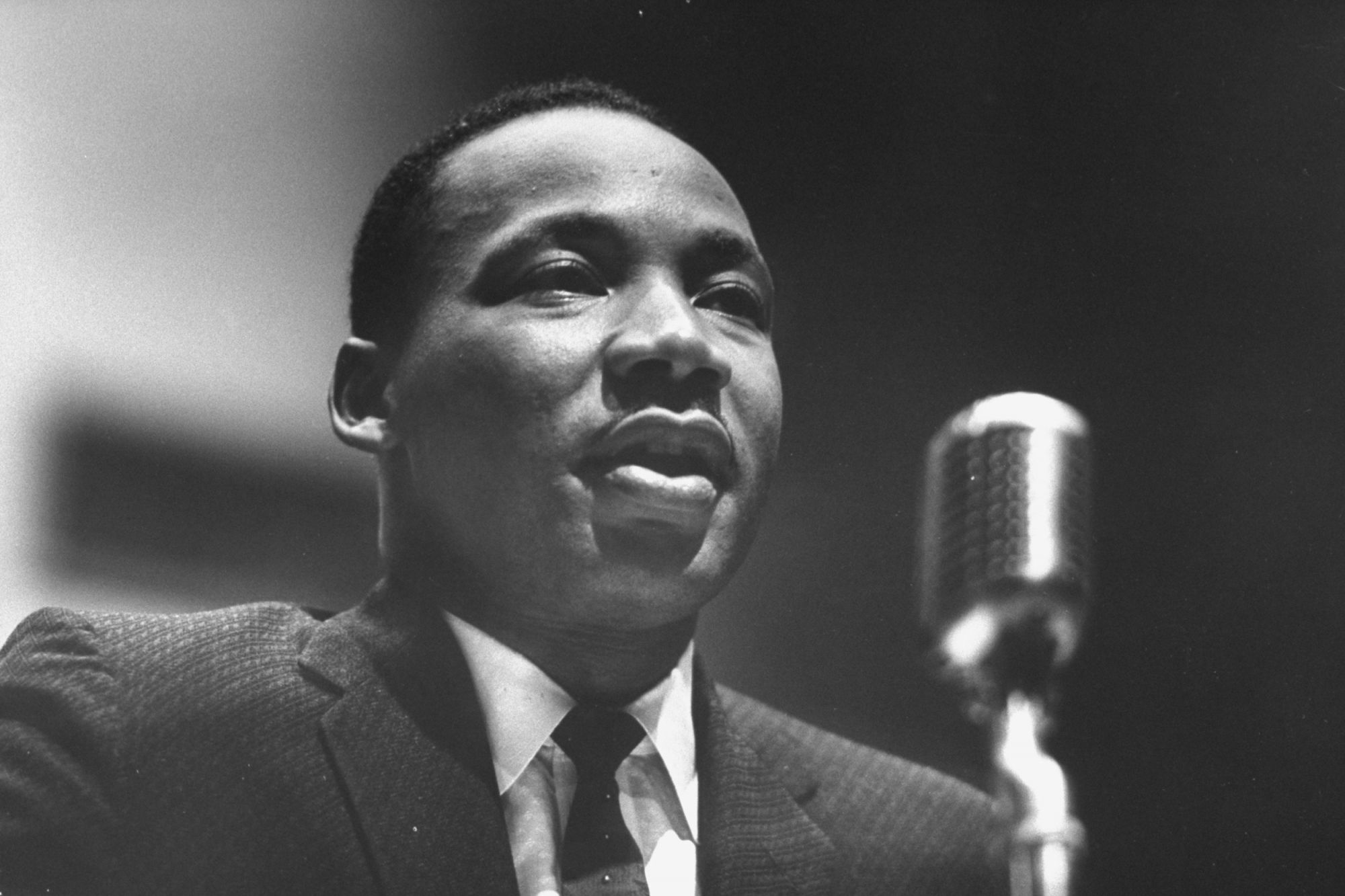
Following the success in Montgomery, King helped form the Southern Christian Leadership Conference (SCLC) in 1957. The SCLC sought to leverage the moral authority of the Black church to coordinate protest activities across the South. Unlike local initiatives, the SCLC focused on regional campaigns, prioritizing mass action to force federal intervention.
Under King’s leadership, the organization participated in several landmark moments:
- The Albany Movement (1961–1962): A campaign to desegregate public facilities in Albany, Georgia, which taught King valuable lessons about the difficulty of maintaining unified strategy in the face of varying opposition tactics.
- The Birmingham Campaign (1963): Perhaps the most critical strategic offensive, this campaign utilized mass demonstrations to pressure the city’s business community. The images of police commissioner Eugene "Bull" Connor using fire hoses and attack dogs against children protesters garnered national outrage and became a turning point in federal civil rights policy.
While imprisoned in Birmingham, King wrote his famous "Letter from Birmingham Jail," a seminal document that articulated the moral necessity of breaking unjust laws and criticized white moderate clergy for their silence.
The March on Washington and Legislative Triumphs
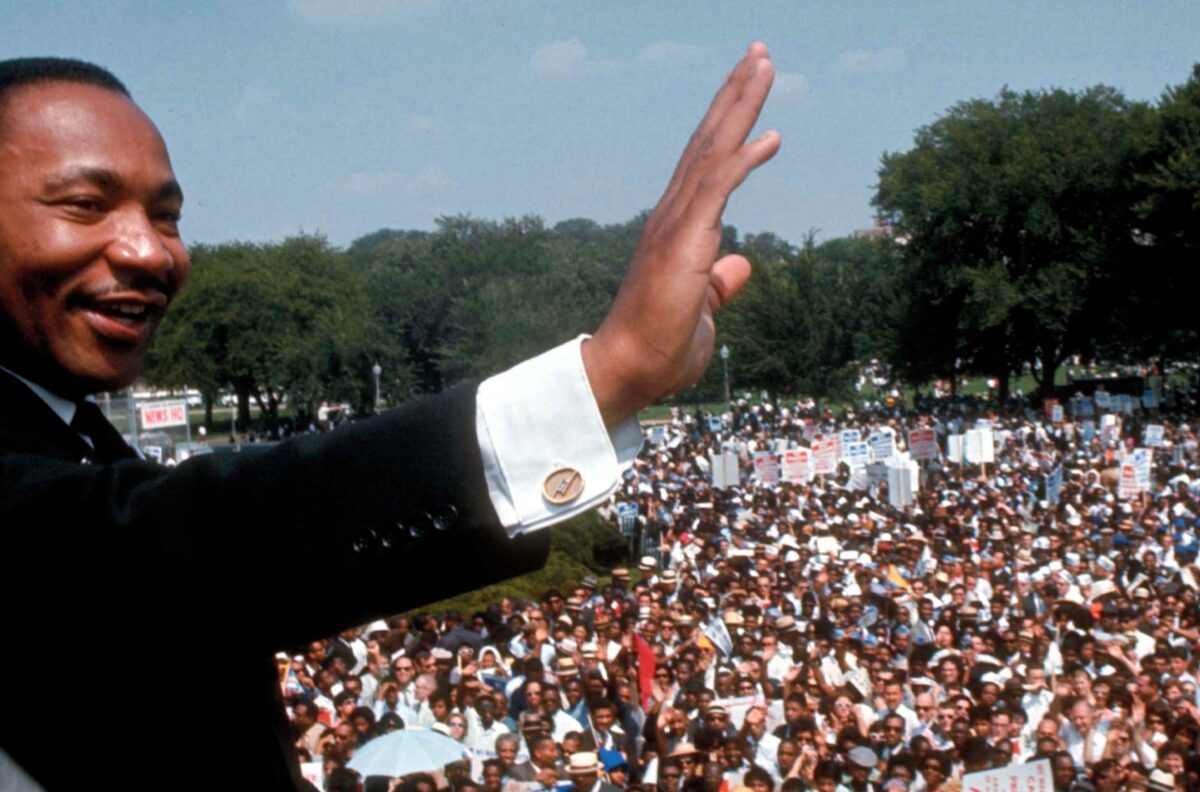
The climax of the early 1960s movement occurred on August 28, 1963, during the March on Washington for Jobs and Freedom. Addressing a crowd of over 250,000 people from the steps of the Lincoln Memorial, King delivered his "I Have a Dream" speech. This address successfully captured the nation's attention, shifting the public discourse from regional grievances to a national moral imperative.
This momentum was instrumental in the passage of landmark federal legislation:
- Civil Rights Act of 1964: This legislation prohibited discrimination based on race, color, religion, sex, or national origin. It ended the application of "Jim Crow" laws in the workplace and public accommodations.
- Voting Rights Act of 1965: Following the violence against protesters during the Selma to Montgomery marches—often called "Bloody Sunday"—King and the SCLC intensified pressure on the federal government, directly leading to this act, which outlawed discriminatory voting practices like literacy tests.
Chronology of Key Events
| Year | Event | Significance |
|---|---|---|
| 1955 | Montgomery Bus Boycott | Launched King into national prominence. |
| 1957 | SCLC Founded | Created a formal structure for nonviolent resistance. |
| 1963 | Birmingham Campaign | Exposed the brutality of segregation via media. |
| 1963 | March on Washington | Highlighted the demand for economic and civil rights. |
| 1964 | Civil Rights Act | Codified federal protection against discrimination. |
| 1965 | Voting Rights Act | Guaranteed the right to vote for all citizens. |
| 1968 | Assassination | Triggered national mourning and further legislation. |
Expanding the Scope: The Chicago Campaign and Beyond
By 1966, King turned his attention to systemic inequality in Northern urban centers, specifically the Chicago Freedom Movement. He began to broaden his focus beyond legal desegregation to address economic disparity, housing discrimination, and the cycle of poverty.
This period was marked by intense frustration as King encountered entrenched political machines and public opposition that was often as rigid as what he had faced in the South. He started to articulate a more radical critique of American society, questioning the nation's involvement in the Vietnam War and arguing that the military-industrial complex diverted resources away from the poor. This shift in rhetoric alienated some of his political allies in the federal government, including the Johnson administration, and solidified his opposition from those who viewed his critique of capitalism as a threat to the national status quo.
The Poor People’s Campaign and Final Days
In his final months, King launched the Poor People’s Campaign. He believed that legal rights were insufficient without economic security. He traveled to Memphis, Tennessee, to support striking sanitation workers who were protesting low wages and unsafe working conditions. It was during this time that he delivered his "I've Been to the Mountaintop" speech.
On April 4, 1968, while standing on the balcony of the Lorraine Motel in Memphis, Martin Luther King Jr. was assassinated. His death sparked riots in more than 100 American cities, reflecting a profound sense of grief and rage. Within a week, the Fair Housing Act was passed, serving as a final, if somber, testament to the legislative impact of his life’s work.
Frequently Asked Questions
What was the primary philosophy of Martin Luther King Jr.? His philosophy was rooted in nonviolent direct action. He believed that by using civil disobedience to expose the violence inherent in segregation, he could force the majority to confront the morality of their actions and appeal to the conscience of the nation.
How did the Birmingham Campaign change the movement? It brought the reality of segregation into the living rooms of the American public through television. The sight of peaceful demonstrators—including children—being subjected to state-sponsored violence forced the federal government to stop treating civil rights as a regional issue and accept it as a national emergency.
What was the focus of his later years? In the mid-to-late 1960s, King shifted focus toward "human rights" rather than just civil rights. This included an intense focus on poverty, the economic impact of urban slums, and a vocal opposition to the Vietnam War, which he linked to the neglect of social programs at home.
Why is the 1964 Civil Rights Act considered his greatest legislative victory? It effectively dismantled the legal apparatus of segregation. By outlawing discrimination in public life and employment, it provided the structural foundation for modern equality, though King himself noted that legal changes were only the first step toward true equality.
Recommendation for Further Engagement
To fully appreciate the impact of these events, it is recommended to review the primary documents archived at the Martin Luther King Jr. Research and Education Institute at Stanford University. These records include his correspondence, sermons, and drafts of his speeches, which provide a nuanced view of the strategic decisions made during the most turbulent periods of the Civil Rights Movement.
Image Gallery
Select an image to open it in a new tab.

Declan O'Connor
Higher Education and Campus Culture Reporter
