Kelly Goodlett and the Breonna Taylor Case: A Full Legal and Historical Analysis
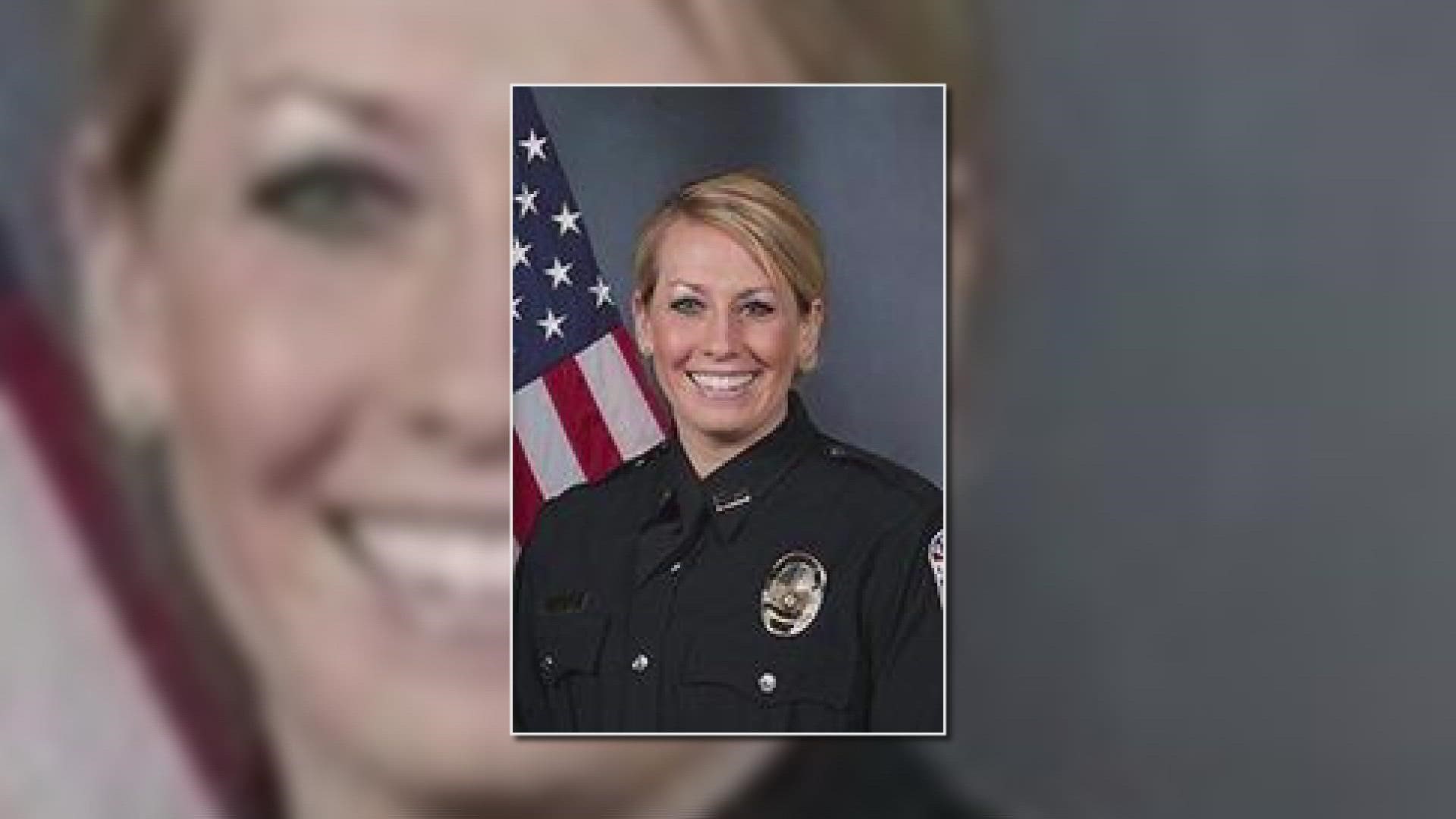
Kelly Goodlett is a former Louisville Metro Police Department (LMPD) detective who became a central figure in the federal investigation into the 2020 death of Breonna Taylor. In 2022, Goodlett pleaded guilty to one count of conspiring to violate Taylor's civil rights by falsifying the search warrant affidavit that led to the fatal raid and subsequently covering up the deception.
The case of Kelly Goodlett represents a pivotal moment in the intersection of American law enforcement procedures, the Fourth Amendment, and federal oversight. Unlike other officers involved in the raid who faced state-level charges or internal disciplinary actions, Goodlett’s legal trajectory was defined by her admission of guilt regarding the investigative failures and fraudulent claims that preceded the entry into Breonna Taylor’s home. As of 2026, her cooperation with the Department of Justice (DOJ) and her testimony against former colleagues remain the cornerstone of the federal government’s effort to address systemic issues within the LMPD.
The Role of Kelly Goodlett in the Search Warrant Preparation
The events leading to the March 13, 2020, raid on Breonna Taylor's apartment were built upon a series of investigative steps led by the LMPD’s Place-Based Investigations (PBI) unit. Kelly Goodlett, then a detective, worked closely with fellow detective Joshua Jaynes to secure a series of "no-knock" warrants targeting various locations and individuals associated with an investigation into a local drug trafficking operation.
The core of the legal failure—and the subsequent criminal charge against Goodlett—rested on the affidavit used to justify the search of Taylor’s Springfield Drive apartment. Goodlett and Jaynes sought to establish a "nexus," or a direct legal link, between Taylor’s residence and the primary suspect of their investigation, Jamarcus Glover. To do this, the detectives claimed they had verified that Glover was receiving packages at Taylor’s home.
The Postal Inspector Discrepancy
The most consequential falsehood in the warrant affidavit was the claim regarding the United States Postal Service. In the document submitted to a Jefferson County circuit judge, it was stated that a postal inspector had confirmed Glover was receiving packages at Taylor's address.
In reality, federal investigators later determined that Goodlett and Jaynes knew this was false. While they had inquired about packages, the postal inspector had actually informed the police that there were no suspicious packages going to that address and that Taylor’s home was not a known drop-off point for the suspect’s illegal activities. Despite this explicit clarification, the information remained in the affidavit. Goodlett’s role was not merely passive; she was accused of helping Jaynes draft the language and failing to correct the document despite knowing it contained a material lie that misled the issuing judge.
The Conspiracy and the "Garage Meeting"
The legal definition of conspiracy requires an agreement between two or more persons to commit an unlawful act. In Goodlett’s case, the conspiracy charge (18 U.S.C. § 371) was substantiated by her actions both before the warrant was signed and in the months following the public outcry over Taylor’s death.
As the shooting gained national attention and local investigations began to scrutinize the validity of the warrant, the pressure on the PBI unit intensified. According to the DOJ, in May 2020, after news broke that a postal inspector had publicly contradicted the claims in the warrant affidavit, Goodlett and Jaynes met in a garage to align their stories.
During this meeting, the two detectives allegedly discussed the discrepancy and formulated a plan to deceive investigators. They agreed to claim that a different officer had provided the information or that they had simply misinterpreted the findings. This meeting was a critical piece of evidence used by the DOJ to prove "consciousness of guilt." It transformed a case of potential administrative negligence into a federal criminal conspiracy to obstruct justice and deprive an individual of their constitutional rights.

Federal Charges and the Guilty Plea
In August 2022, U.S. Attorney General Merrick Garland announced federal civil rights charges against four current and former LMPD officers: Kelly Goodlett, Joshua Jaynes, Kyle Meany, and Brett Hankison. Goodlett was the first to face a formal information charge—a legal document often used when a defendant has already agreed to plead guilty and cooperate with the government.
The Plea Agreement
On August 23, 2022, Kelly Goodlett officially entered a guilty plea in federal court. By doing so, she became the first officer convicted in connection with the events surrounding Breonna Taylor’s death. The plea agreement included several critical stipulations:
- Admission of Falsification: Goodlett admitted that she knew the warrant affidavit lacked probable cause and contained false information.
- Obstruction Acknowledgment: She admitted to the conspiracy to cover up the false statement after the raid occurred.
- Cooperation Clause: She agreed to provide "substantial assistance" to the government. This included testifying against her former colleagues, Joshua Jaynes and Kyle Meany, in their respective federal trials.
Because of this cooperation, Goodlett’s sentencing was delayed for several years. In the federal system, a cooperating witness is typically not sentenced until after the trials of their co-conspirators are completed, as the "usefulness" of their testimony is a primary factor in determining a sentencing reduction (often referred to as a 5K1.1 motion).
Legal Precedents and Accountability in 2026
By 2026, the Goodlett case has established a significant precedent for how federal authorities handle "warrant fraud." Historically, officers who falsified affidavits often faced internal discipline or state-level perjury charges, which are notoriously difficult to prosecute. The use of 18 U.S.C. § 241 (Conspiracy Against Rights) and 18 U.S.C. § 371 in the context of a search warrant highlights a shift toward federalizing police misconduct when it results in a loss of life.
The legal complexity of the case was further highlighted by a 2024 ruling by U.S. District Judge Charles Simpson. The judge ruled that the "causation" of Breonna Taylor’s death was not the false warrant itself, but rather the decision of Taylor's boyfriend to fire at the officers, who then returned fire. While this ruling led to the dismissal of some of the most serious charges against other officers (specifically those carrying life sentences), it did not absolve Goodlett. Her crime was the act of conspiracy and the violation of Fourth Amendment protections against unreasonable searches, which remains a federal felony regardless of the subsequent gunfire.
Key Milestones in the Kelly Goodlett Case
The following table outlines the progression of the legal proceedings and the administrative actions involving Kelly Goodlett and the associated warrant investigation.
| Date | Event | Legal Impact |
|---|---|---|
| March 2020 | Search Warrant Execution | Fatal raid results in the death of Breonna Taylor. |
| May 2020 | The "Garage Meeting" | Goodlett and Jaynes meet to coordinate false statements regarding the postal inspector. |
| August 2022 | Federal Charges Filed | DOJ officially charges Goodlett with conspiracy to falsify the warrant. |
| August 2022 | Resignation from LMPD | Goodlett leaves the force as part of her plea negotiation. |
| August 23, 2022 | Official Guilty Plea | Goodlett enters a plea in federal court; becomes a cooperating witness. |
| 2024–2025 | Federal Trials | Goodlett provides testimony in the trials of Joshua Jaynes and Kyle Meany. |
| 2025–2026 | Sentencing Phase | Final sentencing hearings for Goodlett following her "substantial assistance." |
Impact on the Broader LMPD Investigation
Kelly Goodlett’s admission of guilt was a catalyst for the DOJ’s broader investigation into the Louisville Metro Police Department. In March 2023, the DOJ released a "Patterns and Practices" report which found that the LMPD frequently engaged in unconstitutional conduct, including the use of excessive force and the execution of searches based on invalid warrants.
Goodlett’s testimony provided an "inside look" at the PBI unit’s culture. She described an environment where the pressure to secure warrants and make arrests sometimes led to the "cutting of corners." Her cooperation was instrumental in proving that the falsification of the Taylor warrant was not an isolated clerical error, but a deliberate act supported by a chain of command that failed to provide adequate oversight.
Frequently Asked Questions
What exactly did Kelly Goodlett admit to?
Kelly Goodlett admitted to one count of conspiracy. Specifically, she acknowledged that she and another detective added a false claim to a search warrant affidavit, stating they had verified package deliveries with a postal inspector when they had not. She also admitted to meeting with that detective in a garage to coordinate a cover-up once the discrepancy became public.
Was Kelly Goodlett present during the shooting of Breonna Taylor?
No. Kelly Goodlett was involved in the investigative work and the drafting of the search warrant, but she was not part of the tactical team that executed the raid at Breonna Taylor's apartment on the night of March 13, 2020. Her criminal liability stems from the preparation of the warrant and the subsequent conspiracy, not the tactical execution of the entry.
Why was her sentencing delayed until 2025/2026?
Under federal law, when a defendant agrees to cooperate with the prosecution, their sentencing is often postponed until their cooperation is complete. This allows the judge to evaluate the truthfulness and importance of their testimony in other trials (such as those of Joshua Jaynes and Kyle Meany) before determining a final sentence.
Did she serve time in prison?
The plea agreement for a federal conspiracy charge carries a maximum penalty of five years in prison and a fine of up to $250,000. While the prosecution may recommend a lighter sentence in exchange for her cooperation, the final decision rests with the federal judge. By 2026, the resolution of her sentencing has become a matter of public record, often involving a combination of supervised release and potential incarceration depending on the judge's assessment of her assistance.
How did her case affect the other officers?
Goodlett's guilty plea was a significant blow to the defense of Joshua Jaynes and Kyle Meany. Because she was a direct participant in the drafting of the warrant, her testimony provided first-hand evidence of intent and conspiracy that the government otherwise would have had to prove through circumstantial evidence.
Future Implications for Law Enforcement
The legacy of Kelly Goodlett’s case is seen in the 2026 law enforcement landscape through more rigorous warrant review processes. Many departments, including the LMPD, have since implemented "Breonna’s Law" or similar reforms that ban or severely limit no-knock warrants and require a higher level of verification for information included in affidavits.
Furthermore, the Goodlett case serves as a warning regarding the "Blue Wall of Silence." Her decision to plead guilty and testify against her colleagues broke the traditional mold of police solidarity in the face of misconduct allegations. For legal scholars, the case underscores the importance of the "exclusionary rule" and the "Franks hearing" process, which allows defendants to challenge the veracity of a warrant. If the information in the affidavit is proven to be a deliberate lie or a reckless disregard for the truth, the evidence gathered can be suppressed, and the officers involved can face federal prosecution.
For those tracking the final stages of this case in 2026, the focus has shifted from the initial shock of the raid to the slow, methodical application of federal civil rights law. Kelly Goodlett remains a controversial figure—a symbol of the failures that led to a tragedy, yet also the primary witness used by the government to dismantle the conspiracy that allowed those failures to occur.
Next Steps for Researchers and Legal Analysts: For those seeking further primary documentation, the federal court filings for the Western District of Kentucky (Case No. 3:22-cr-00086) provide the most accurate record of the "Information" filed against Goodlett, her plea agreement, and the subsequent sentencing memorandums. Analysts should also monitor the DOJ’s Civil Rights Division for updates on the ongoing LMPD consent decree, which was heavily influenced by the findings in the Goodlett investigation.
Image Gallery
Select an image to open it in a new tab.
Ingrid Bjornson
Global Cyber Policy and Regulation Analyst
