
The original Candace Bushnell columns were a weekly series titled "Sex and the City," which ran in The New York Observer from November 1994 to February 1996. These dispatches served as the foundation for the 1996 book of the same name and the subsequent HBO television franchise. Today, readers can access them through the compiled book Sex and the City, digital archives on the Observer website, or physical microfiche collections in major research libraries.
The Genesis of the Sex and the City Columns
Before it was a global media franchise, Sex and the City was a gritty, cynical, and sharply observed newspaper column. In the early 1990s, Candace Bushnell was a freelance journalist in New York City writing for various lifestyle publications. She caught the attention of Peter Kaplan, the legendary editor of The New York Observer, a weekly newspaper printed on distinctive salmon-colored paper known for its high-society gossip and intellectual bite.
Kaplan gave Bushnell a platform to write about her own life and the lives of her friends—the "urban elite" who spent their nights at Bowery Bar and their weekends in the Hamptons. Bushnell created the character of Carrie Bradshaw as a pseudonym to protect her privacy (and the privacy of her parents), though the column was widely understood to be semi-autobiographical.
The columns functioned as a form of "gonzo journalism" for the Manhattan dating scene. They weren't just about romance; they were about the shifting power dynamics between men and women in an era where women were achieving unprecedented financial independence but still navigating archaic social structures.
Where to Find the Original Columns in 2026
For those looking to read the source material that started a revolution in television, there are three primary ways to access the original columns.
1. The 1996 Collected Volume
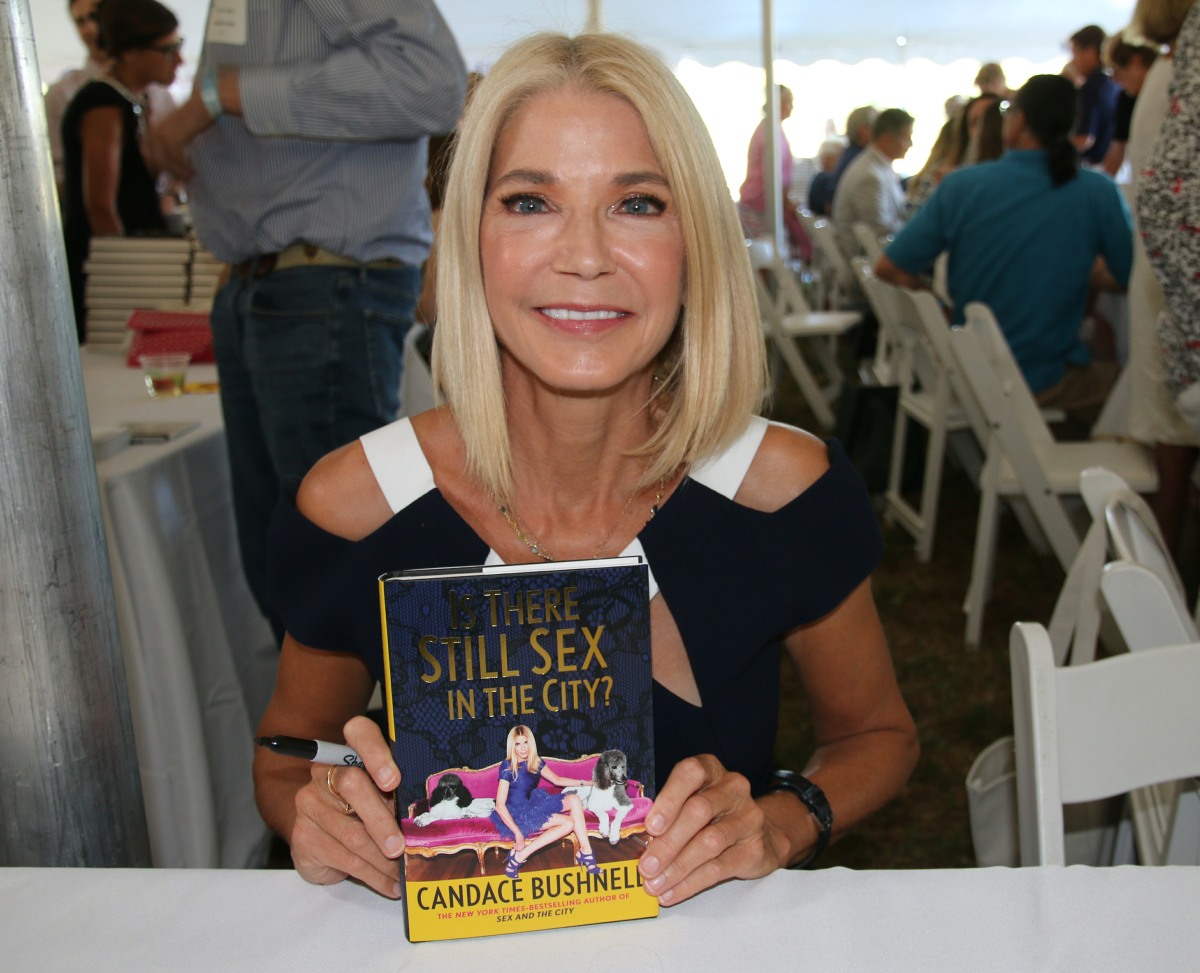
The most straightforward way to read the columns is by purchasing the book Sex and the City, first published by Warner Books in 1996. Unlike the TV show, the book is not a narrative novel. It is an anthology of the original newspaper columns, edited for flow. While some minor edits were made for the transition from newsprint to book format, the tone and content remain faithful to the 1994–1996 run.
2. The Observer Digital Archives
The New York Observer (now simply known as Observer) has digitized much of its back catalog. While some early 90s content is occasionally subject to "link rot" or paywall changes, many of the original "Sex and the City" columns can be found by searching the author’s name in the Observer digital archives. These digital versions are particularly valuable because they often include the original publication dates and the context of the surrounding "Society" news of that specific week.
3. Academic and Public Library Archives
For researchers seeking the columns exactly as they appeared on the salmon-colored newsprint, the New York Public Library (NYPL) and various university archives maintain microfiche or physical copies of The New York Observer. Reading them in this format provides the full context of the advertisements and neighboring articles, which illustrates the hyper-specific Manhattan world Bushnell was documenting.

Column vs. Television: Key Differences in Tone and Content
Readers coming to the original columns from the HBO series often experience a "tonal shock." The columns are significantly darker, more cynical, and less focused on "happy endings" than the television adaptation.
The Portrayal of Carrie Bradshaw
In the columns, Carrie is less of a "relatable protagonist" and more of a detached social observer. She is often seen drinking heavily, smoking, and engaging in self-destructive behavior without the whimsical voiceover that softened her character on TV. The original Carrie is an "urban anthropologist" first and a romantic second.
The Evolution of the Supporting Cast
The "four friends" dynamic that defined the show—Carrie, Miranda, Charlotte, and Samantha—is much looser in the columns.
- Samantha Jones: Appears early as a "producer" and a "modelizer," embodying the same sexual freedom seen on screen but with a more predatory, hardened edge.
- Miranda and Charlotte: They exist in the columns but are often composite characters or members of a larger circle of friends. Charlotte, for instance, is far less of a "pollyanna" and more of a pragmatic social climber in the original text.
- Stanford Blatch: Based on a real friend of Bushnell’s, he appears as a fixture of the social scene rather than just a sidekick.
The Real "Mr. Big"
The columns introduced Mr. Big in the very first installment. He was based on Ron Galotti, then the publisher of Vogue. In the columns, the relationship between Carrie and Big is even more volatile and transactional than the show depicts. It captures the specific 90s "Master of the Universe" archetype—men who were wealthy, powerful, and emotionally unavailable.
Detailed Comparison: Columns vs. TV Franchise
The following table highlights the structural and thematic differences between the original newspaper columns and the media empire that followed.
| Feature | Original Columns (1994-1996) | HBO Series & Movies |
|---|---|---|
| Primary Format | Weekly Newspaper Dispatch | Narrative Dramedy |
| Central Theme | Social Hierarchy & Cynicism | Friendship & Romantic Love |
| Carrie's Tone | Detached, Observational, Hardened | Whimsical, Emotional, Vulnerable |
| The "Core Four" | Loose collection of acquaintances | Inseparable best friends |
| Ending Tone | Open-ended and often bleak | Generally optimistic/Romantic |
| Setting Focus | Specific 90s NYC nightlife (Bowery Bar, etc.) | Aspirations and luxury lifestyle |
| Language | Raw, often profane, journalistic | Polished, pun-heavy, scripted |
Essential Themes Explored in the Original Columns
To understand the impact of the columns, one must look at the specific social phenomena Bushnell identified. Many terms now common in the dating lexicon originated or were popularized in these weekly pieces.
Modelizers
One of the most famous columns defined the "Modelizer"—a man who exclusively dates models. Bushnell used this to explore the intersection of beauty, status, and the disposable nature of relationships in Manhattan. It wasn't just about the men; it was about the ecosystem that allowed this behavior to flourish.
Toxic Bachelors
Bushnell explored the concept of the "Toxic Bachelor," the high-earning man who reached a certain age and decided that he no longer needed to provide emotional labor in exchange for companionship. This was a direct critique of the "Bachelor of the Year" culture prevalent in 90s New York.
The "Bicycle Boy"
In a particularly famous column, Bushnell described the "Bicycle Boy," the man who refuses to grow up, living in a rent-controlled apartment with a roommate and a mountain bike, even as he approaches middle age. This served as a counterpoint to the "Mr. Big" archetype, showing that the lack of commitment crossed all socioeconomic lines.
Monogamy vs. The City
A recurring theme was the impossibility (or perceived impossibility) of monogamy in a city of eight million people. Bushnell argued that New York provided too many "better" options, leading to a state of perpetual dissatisfaction. This was a radical departure from the "marriage-plot" narratives that dominated women's media at the time.
Requirements for Researching 1990s Journalism
If you are a student or historian researching the original columns in 2026, keep the following prerequisites and tips in mind:
- Contextual Awareness: You must understand the economic climate of the mid-90s. The "dot-com" bubble was beginning, and New York was transitioning from the gritty 80s into the sanitized "Disney-fied" version of the late 90s.
- Terminology: The columns use language that was specific to the time. Terms like "Euro-trash," "Modelizer," and "The Hamptons set" carry specific weight in the context of the Observer's readership.
- Verification of Sources: When reading online snippets, ensure you are reading the original column and not a revised version from a later "Best Of" collection. The raw columns often contain mentions of specific New York figures that were later removed for legal or privacy reasons.
Common Misconceptions About the Columns
Misconception: The columns are about finding "The One." In reality, the columns are more about the failure to find "The One" and the subsequent realization that life continues regardless. The columns are much more comfortable with the idea of being alone than the TV show ever was.
Misconception: Carrie Bradshaw is a hero. In the original text, Carrie is often a "fly on the wall" who participates in the very behaviors she critiques. She is not presented as a moral compass but as a participant-observer in a shallow world.
Misconception: The book Sex and the City is a novel. As mentioned, it is an anthology. If you buy the book expecting a plot with a beginning, middle, and end, you will be disappointed. It is a series of snapshots.
Frequently Asked Questions
Did Candace Bushnell actually date Mr. Big?
Yes. The character of Mr. Big was based on Ron Galotti, a high-profile magazine executive with whom Bushnell had a well-documented relationship. While the events in the columns are fictionalized, the emotional core and the archetype of the "Big" personality were drawn directly from her life.
Are the original columns still relevant in 2026?
The columns remain relevant as a historical record of a specific time in New York City. While dating apps have replaced the "meeting at a bar" culture described by Bushnell, the underlying themes of status, the fear of aging, and the difficulty of finding connection in a hyper-competitive environment remain universal.
Is there a difference between the 1996 book and the columns?
The book Sex and the City (1996) is a collection of the columns. Some columns were grouped together by theme rather than chronological order, and minor edits were made for clarity, but the essential content is identical.
Can I read the columns for free?
You can find many of them for free via the Observer online archives or through your local public library's digital subscription to newspaper archives (like ProQuest or LexisNexis).
Why was Carrie Bradshaw created?
Bushnell created the character because she wanted to write about her own dating life without her parents knowing the intimate details of her sexual encounters. The pseudonym allowed her to be more honest and provocative than she could have been writing under her own name in the first person.
How many columns were there in total?
Bushnell wrote the column for approximately 15 months, resulting in roughly 65 installments. Not all of them made it into the final 1996 book, as some were deemed too topical or "of the moment" to have long-term appeal.
Practical Recommendation for Readers
If you are interested in the origins of this cultural phenomenon, start by reading the original 1996 book. It provides the most cohesive experience of Bushnell’s voice. Once you have finished the book, use the Observer digital archives to look up columns from 1994 specifically. Seeing them in their original journalistic context—surrounded by 90s social gossip and political commentary—will give you a much deeper appreciation for why they were so revolutionary at the time. They were never meant to be a romantic comedy; they were meant to be a mirror held up to a very specific, very flawed, and very fascinating world.
Image Gallery
Select an image to open it in a new tab.



Zara El-Hashem
Sociocultural Dynamics and Academics Writer
