
To watch the Planet of the Apes movies in the most logical way, you should follow either the Release Date order (starting with the 1968 original) or the Timeline order (starting with the 2011 reboot). While the 1968–1973 original series, the 2001 remake, and the 2011–2024 reboot series exist in distinct continuities, they share a thematic lineage centered on the collapse of human civilization and the rise of a new simian society.
The Planet of the Apes franchise is one of the most enduring and complex pillars of science fiction cinema. Since the first film debuted in 1968, the series has undergone numerous reinventions, including a direct five-film sequence, a short-lived live-action TV show, an animated series, a controversial remake, and a critically acclaimed modern reboot saga. For a viewer in 2026, navigating these different eras requires an understanding of how the timelines diverge and where the various "Caesars" fit into the overarching narrative.
The Three Distinct Eras of the Franchise
Before diving into specific watch orders, it is essential to categorize the films into their respective "universes." Unlike the Marvel Cinematic Universe, where almost everything is interconnected, the Apes franchise is split into three main branches:
- The Original Classic Era (1968–1973): This consists of five films that form a closed-loop paradox. It begins in the far future and ends with time travel that creates the very future seen in the first movie.
- The Burton Remake (2001): A standalone attempt by director Tim Burton to reimagine the original novel by Pierre Boulle. It does not connect to the 1960s films or the modern reboots.
- The Reboot/Modern Era (2011–Present): Starting with Rise of the Planet of the Apes, this series explores the biological origin of the apes' intelligence. As of 2026, this is the "active" timeline, with the most recent entry being Kingdom of the Planet of the Apes (2024).
Option 1: The Release Date Watch Order
For first-time viewers, the release date order is generally recommended. It allows you to experience the evolution of the special effects—from groundbreaking prosthetic makeup by John Chambers to the industry-leading performance-capture work by Andy Serkis and Wētā FX. More importantly, it preserves the "twist" endings that have become a hallmark of the series.
- Planet of the Apes (1968)
- Beneath the Planet of the Apes (1970)
- Escape from the Planet of the Apes (1971)
- Conquest of the Planet of the Apes (1972)
- Battle for the Planet of the Apes (1973)
- Planet of the Apes (2001) – Note: This can be skipped if you only want the main canon.
- Rise of the Planet of the Apes (2011)
- Dawn of the Planet of the Apes (2014)
- War for the Planet of the Apes (2017)
- Kingdom of the Planet of the Apes (2024)
Option 2: The Chronological (Timeline) Watch Order
Watching the films chronologically is more complicated because the original 1970s series involves a temporal loop. However, if you want to follow the story from the first spark of ape intelligence to the distant future, the order would look like this:
The Modern Prequel/Reboot Timeline
- Rise of the Planet of the Apes: Set in the early 21st century.
- Dawn of the Planet of the Apes: Set 10 years after Rise.
- War for the Planet of the Apes: Set 2 years after Dawn.
- Kingdom of the Planet of the Apes: Set approximately 300 years after the death of Caesar in War.
The Original Continuity (The Loop)
- Escape from the Planet of the Apes: Set in 1973 (as apes travel back from the future).
- Conquest of the Planet of the Apes: Set in 1991.
- Battle for the Planet of the Apes: Set in the early 21st century (framing story in 2670 AD).
- Planet of the Apes (1968): Set in 3978 AD.
- Beneath the Planet of the Apes: Set in 3978 AD (immediately following the 1968 film).
Deep Dive: The Original 1960s and 70s Tetralogy
The original five films are famous for their social commentary, exploring themes of racism, animal rights, and nuclear proliferation. Understanding how they fit together requires paying close attention to the time-travel mechanics introduced in the third film.
Planet of the Apes (1968) and Beneath (1970)
The first film follows astronaut George Taylor (Charlton Heston) as he crashes on a planet where talking apes rule and primitive humans are treated as vermin. The famous ending reveals that this "planet" is actually Earth, thousands of years after a nuclear holocaust. The sequel, Beneath the Planet of the Apes, picks up immediately after, introducing a subterranean race of mutant humans who worship a nuclear bomb. This film ends with the total destruction of Earth, which would have ended the franchise if not for a creative pivot in the next entry.
The Causal Loop: Escape, Conquest, and Battle
In Escape from the Planet of the Apes, the chimpanzees Cornelius and Zira manage to fix Taylor’s ship and travel backward in time to 1973, before the world was destroyed. Their arrival creates a paradox: they are "future" apes who give birth to a son, Milo (later named Caesar), in the "past."
Conquest of the Planet of the Apes shows Caesar leading a slave revolt in 1991, and Battle for the Planet of the Apes depicts the early days of apes and humans trying to live together. This implies that the future seen in the 1968 original was actually caused by the time travel in the third film, creating a circular timeline where the beginning leads to the end, and the end leads back to the beginning.
The 2001 Tim Burton Outlier
The 2001 Planet of the Apes, starring Mark Wahlberg, is a standalone reimagining. While it follows the basic premise of an astronaut arriving on an ape-dominated planet, it changes the origin of the apes (they are descendants of lab animals on a space station) and features a vastly different ending involving "General Thade" replacing Abraham Lincoln on the Lincoln Memorial.
Because this film was not well-received by critics and did not spawn a sequel, it does not "fit" into the other two main timelines. It is best viewed as a "what-if" scenario or an alternate universe.
The Modern Reboot Era: The Caesar Trilogy and Kingdom
In 2011, 20th Century Fox (now owned by Disney) rebooted the franchise with Rise of the Planet of the Apes. This series does not use time travel. Instead, it uses a grounded, sci-fi explanation: a viral drug (ALZ-112/113) designed to cure Alzheimer’s increases ape intelligence but proves fatal to humans, causing the "Simian Flu" pandemic.
The Rise of Caesar
The modern trilogy—Rise, Dawn, and War—is primarily a character study of Caesar, played through performance capture by Andy Serkis. We see him grow from a laboratory orphan to a revolutionary leader and, finally, a messianic figure who leads his people to a promised land. Unlike the 1970s films, which were often campy, this trilogy is a somber, gritty epic that focuses on the breakdown of communication between two competing species.
Kingdom of the Planet of the Apes (2024)
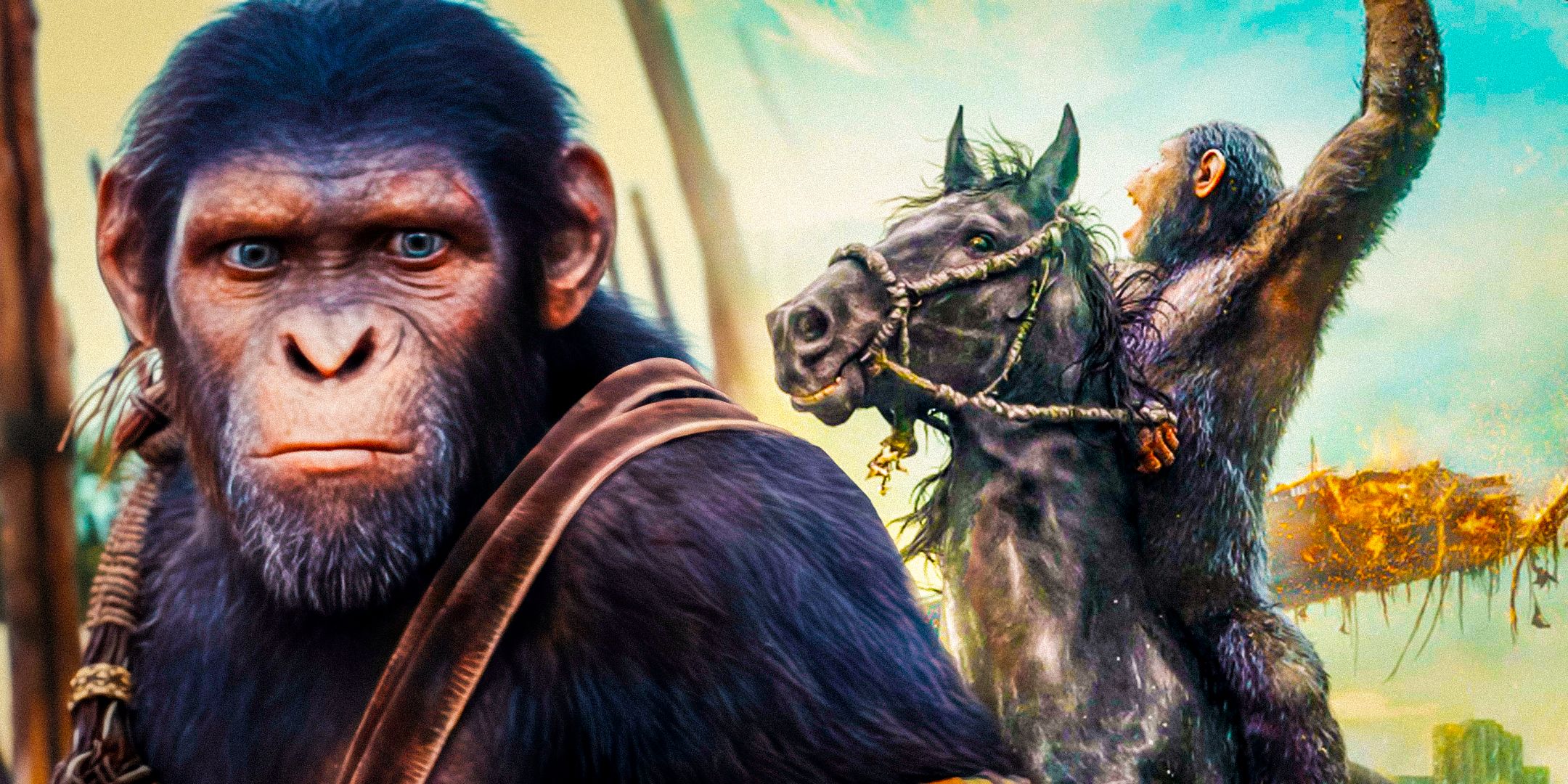
As of 2026, Kingdom of the Planet of the Apes is the bridge to the next chapter of the franchise. Directed by Wes Ball, it takes place centuries after Caesar’s death. By this time, many ape clans have never heard of Caesar, while others have perverted his teachings to build empires. The humans have regressed into a feral state, much like they were in the 1968 original. This film fits into the timeline as a "soft reboot" that continues the continuity of the Serkis trilogy but introduces a new protagonist, Noa.
Comprehensive Comparison of Apes Movies
The following table summarizes the key details of every film in the franchise to help you distinguish between the various timelines.
| Film Title | Release Year | Main Protagonist | Key Theme/Conflict | Timeline |
|---|---|---|---|---|
| Planet of the Apes | 1968 | George Taylor | Human vs. Ape Society | Original |
| Beneath the Planet of the Apes | 1970 | Brent / Taylor | Mutants & Nuclear War | Original |
| Escape from the Planet of the Apes | 1971 | Cornelius / Zira | Time Travel & Fear | Original |
| Conquest of the Planet of the Apes | 1972 | Caesar (Roddy McDowall) | Slave Rebellion | Original |
| Battle for the Planet of the Apes | 1973 | Caesar (Roddy McDowall) | Warring Ape Factions | Original |
| Planet of the Apes | 2001 | Leo Davidson | Survival & Reimagining | Remake |
| Rise of the Planet of the Apes | 2011 | Caesar (Andy Serkis) | Scientific Hubris | Reboot |
| Dawn of the Planet of the Apes | 2014 | Caesar (Andy Serkis) | Failed Diplomacy | Reboot |
| War for the Planet of the Apes | 2017 | Caesar (Andy Serkis) | Extinction & Legacy | Reboot |
| Kingdom of the Planet of the Apes | 2024 | Noa | Lost History / Discovery | Reboot |
How the Movies Fit Together: Continuity vs. Homage
One of the most frequent questions from fans is: "Is the 2011 reboot a prequel to the 1968 movie?"
The answer is technically no, but spiritually yes.
The modern reboot series (Rise through Kingdom) is its own distinct timeline. In the original 1968 universe, the apes rose to power because Cornelius and Zira traveled back from the future and had a child. In the modern universe, the apes rose to power because of a laboratory virus. These are two mutually exclusive origins.
However, the modern films are filled with "Easter eggs" and homages to the 1968 original. In Rise of the Planet of the Apes, we hear news reports about a missing spacecraft called the Icarus—the same ship George Taylor flew in the original movie. In Kingdom of the Planet of the Apes, the world is slowly beginning to look like the world Taylor found: humans are mute, and apes are the dominant builders.
Essentially, the modern reboot is a new path to the same destination. While they aren't in the same literal timeline, they both explore the inevitable transition of Earth from a human-dominated planet to an ape-dominated one.
Frequently Asked Questions
Can I watch the new movies without seeing the old ones?
Yes. The modern series (Rise, Dawn, War, and Kingdom) is entirely self-contained. You do not need any knowledge of the 1960s films to understand the plot. However, seeing the original 1968 film will enhance your appreciation for the world-building and the various references the modern directors include.
Is Caesar in the 1970s the same Caesar from the reboots?
No. They are different characters with the same name. The 1970s Caesar is the son of time-traveling chimps Cornelius and Zira. The modern Caesar is the son of a laboratory chimp named "Bright Eyes" and was raised by a human scientist (Will Rodman). Both characters share a similar arc of leading a revolution, but their biological origins are different.
Where does the Planet of the Apes TV show fit in?
The 1974 live-action television series is generally considered part of the original 1960s continuity, set about 900 years before George Taylor arrives. The 1975 animated series, Return to the Planet of the Apes, is its own separate continuity with a more technologically advanced ape civilization. Neither is required viewing for the main movie experience.
Does the 2001 movie connect to Kingdom of the Planet of the Apes?
No. The 2001 Tim Burton film is completely isolated from all other entries. There are no narrative links between it and the modern films produced by Disney/20th Century Studios.
What happened to the humans in the new timeline?
In the modern reboot timeline, the "Simian Flu" killed the vast majority of the human population. By the time of War for the Planet of the Apes, the virus had mutated, causing the surviving humans to lose their ability to speak and their higher cognitive functions. By Kingdom of the Planet of the Apes, humans have become "feral," living in the wild as a primitive species.
Recommendation for 2026 Viewers
If you are looking for the best cinematic experience, the "Hybrid Order" is often the most rewarding. Start with the 1968 original to understand the franchise's cultural impact and its famous twist. Then, skip directly to the modern era starting with Rise of the Planet of the Apes (2011) and watch through Kingdom of the Planet of the Apes (2024). This allows you to see the "end" of the human story first, and then witness the detailed "beginning" and "middle" of the ape ascension.
If you find yourself becoming a superfan, you can then return to the 1970s sequels (Beneath through Battle) to appreciate the experimental, often bizarre sci-fi storytelling that defined the early era of the franchise. Regardless of how you choose to watch them, the Planet of the Apes remains a profound look at what it means to be "human" and the cyclical nature of power and civilization.
Image Gallery
Select an image to open it in a new tab.
Akira Tanaka
International Academic Trends Correspondent
