
In Wisconsin auto insurance claims, subrogation allows an insurer that paid for your vehicle repairs or medical treatments to recover those costs from the at-fault driver’s insurance company. However, under Wisconsin’s strict "Made Whole" doctrine, an insurer cannot collect subrogation reimbursement until you are fully compensated for all economic and non-economic losses resulting from the accident.
Professional Advice Limitation
This article provides technical and legal informational analysis regarding Wisconsin insurance statutes and case law as of 2026. It does not constitute formal legal advice. Auto accident victims and policyholders navigating complex subrogation disputes or lien claims should consult a licensed Wisconsin personal injury attorney.
Understanding Auto Insurance Subrogation in Wisconsin
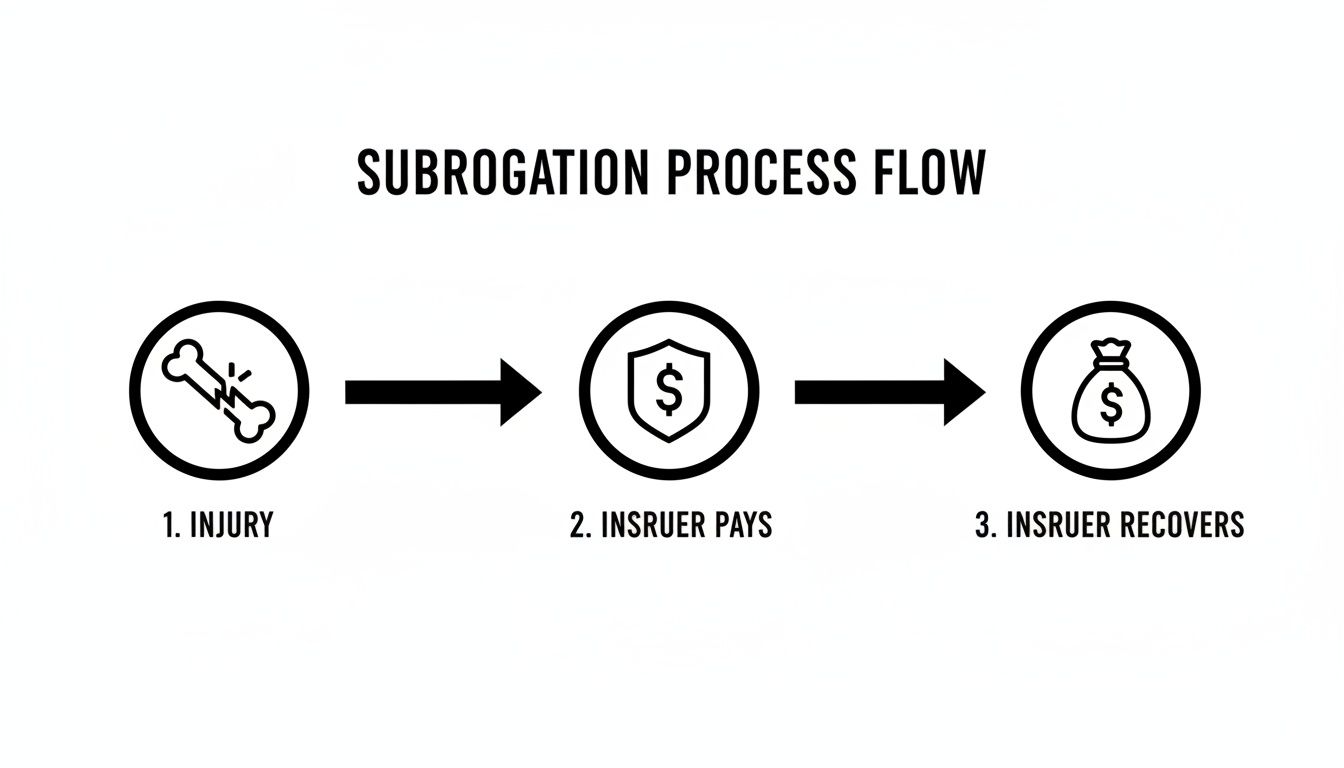
Subrogation is a legal doctrine and contractual provision that transfers an injured party’s right to collect damages from the person who caused the harm to the insurance carrier that already paid out benefits. In motor vehicle accident claims, subrogation prevents a policyholder from collecting twice for the same loss (double recovery) while ensuring that the ultimate financial responsibility rests on the negligent driver.
When an auto accident occurs in Wisconsin, multiple insurance coverages may pay out money immediately to cover your initial bills:
- Collision Coverage: Pays to repair or total out your vehicle, regardless of who caused the collision.
- Medical Payments Coverage (Med Pay): An optional coverage under Wisconsin auto policies (Wis. Stat. § 632.32(4)(b)) that pays medical bills for you and your passengers up to policy limits, regardless of fault.
- Health Insurance: Pays for hospital care, emergency services, surgeries, and rehabilitation resulting from the crash.
Once these insurers pay out benefits, they establish a subrogation interest or lien against any settlement or court award you subsequently receive from the at-fault driver’s liability insurer. How that subrogation interest is enforced—and whether the insurance company can actually collect a single dollar—depends heavily on specific Wisconsin judicial precedents and statutory frameworks.
- ACCIDENT OCCURRENCE
- First-Party Insurer Pays Benefits (Med Pay / Collision / Health)
- First-Party Insured Pursues Claim Against At-Fault Driver's Liability
- Insured Obtains Settlement or Jury Award
- Is Insured "Made Whole"?
- YES: Subrogated Insurer can recover funds.
- NO: Subrogated Insurer gets $0 reimbursement (Garrity/Rimes).
- Self-Funded ERISA Plan?
- YES: Plan may enforce priority lien.
- NO: Subject to Wisconsin's Made Whole Doctrine.
- Is Insured "Made Whole"?
The Core Rule: Wisconsin’s "Made Whole" Doctrine (Garrity and Rimes)
The cornerstone of Wisconsin subrogation law is the Made Whole Doctrine. Unlike states that allow insurers to enforce immediate subrogation liens against any personal injury settlement, Wisconsin strictly prioritizes the injured policyholder over the insurance company.
The rule dictates that an insurer has no right to subrogation or reimbursement until the injured party has been fully compensated—or "made whole"—for all past and future damages caused by the accident.
Key Precedents: Garrity and Rimes
The doctrine rests primarily on two seminal Wisconsin Supreme Court decisions:
- Garrity v. Rural Mutual Insurance Co. (1977): The court established that an insurer cannot compete with its own policyholder for funds from an at-fault party’s limited insurance coverage when the total available funds are insufficient to cover the victim's entire loss.
- Rimes v. State Farm Mutual Agricultural Insurance Co. (1982): The court extended the Garrity principle, holding that even if an injured party settles a claim and executes a release, the subrogated insurer cannot claim reimbursement from those settlement proceeds unless it is established that the settlement fully compensated the victim for all elements of damage, including medical expenses, lost earnings, pain and suffering, and loss of earning capacity.
The Mechanism of a Rimes Hearing
When an at-fault driver has limited policy limits—such as Wisconsin's mandatory minimum liability limit of $25,000 per person (Wis. Stat. § 344.15)—the settlement amount is frequently lower than the victim's actual total damages.
If a Med Pay carrier or health insurer demands reimbursement from a policyholder’s settlement, the policyholder can request a Rimes Hearing. A Rimes hearing is an evidentiary proceeding before a trial judge (or occasionally a referee) to calculate the true value of the plaintiff’s damages.
If the judge determines that the total damages equal $100,000, but the plaintiff settled for the policy limit of $50,000, the plaintiff has not been made whole. Consequently, the subrogated insurer receives zero dollars from the settlement proceeds, allowing the injured person to keep the full recovery.

Comparative Fault and Its Impact on Subrogation
Wisconsin applies a modified comparative negligence system under Wis. Stat. § 895.045. Under this statutory framework, an injured plaintiff can recover damages only if their negligence is not greater than the negligence of the person against whom recovery is sought (often referred to as the 51% bar rule). If the plaintiff bears fault, their total damages are reduced in proportion to their percentage of negligence.
| Example of Comparative Negligence Impact on Total Recovery | |
|---|---|
| Total Assessed Damages: | $100,000 |
| Plaintiff Contributory Negligence: | 20% |
| Maximum Net Recoverable Amount: | $80,000 ($100,000 - 20%) |
Comparative fault complicates subrogation rights significantly:
- Reduction of Subrogation Interest: When an auto insurer asserts a subrogation claim directly against an at-fault party's carrier for physical damage (such as collision repairs), the subrogated claim is reduced by the insured's percentage of comparative fault.
- Made Whole Recalculation: For personal injury subrogation, courts must factor comparative fault into the Rimes analysis. If a judge finds the plaintiff suffered $100,000 in damages but was 20% at fault, the plaintiff's "made whole" threshold is $80,000. If the plaintiff collects less than $80,000 from all available sources, the subrogated insurer cannot collect reimbursement.
Federal ERISA Preemption vs. Wisconsin Subrogation Law
While Wisconsin’s Made Whole doctrine provides robust protections for policyholders, federal preemption creates a major exception that frequently affects auto accident recoveries: Self-Funded ERISA Health Plans.
Under the Employee Retirement Income Security Act of 1974 (ERISA), 29 U.S.C. § 1144, self-funded employer health plans are governed by federal law rather than state insurance laws (known as the "deemer clause").
In the landmark decision FMC Corp. v. Holliday (1990), the U.S. Supreme Court ruled that self-funded ERISA plans preempt state subrogation laws, including state-level Made Whole doctrines.
- Is the Health Plan Governed by Wisconsin Insurance Law or ERISA?
- Fully Insured Health Plan
- Wisconsin Insurance Law Applies
- State "Made Whole" Doctrine (Garrity / Rimes) Protects Insured.
- Self-Funded ERISA Plan
- Federal Law Applies (29 U.S.C. § 1144)
- Made Whole Doctrine Can Be Plan-Disclaimed (Insurer can enforce 100% lien if plan language explicitly dictates priority.)
- Fully Insured Health Plan
Fully Insured vs. Self-Funded Plans
- Fully Insured Plans: The employer purchases insurance from an insurance carrier (e.g., UnitedHealthcare, Dean Health, Network Health). These plans remain subject to Wisconsin insurance regulations. Consequently, the Made Whole doctrine applies, protecting the auto accident victim.
- Self-Funded (Self-Insured) ERISA Plans: The employer directly funds medical claims out of its own general assets and merely contracts a third-party administrator (TPA) to process claims. If the ERISA plan agreement contains explicit language abrogating the Made Whole rule and asserting first-priority reimbursement, federal law overrides Wisconsin law. The plan can demand 100% reimbursement from the auto settlement, even if the victim was not fully compensated.
Attorneys representing auto accident victims in Wisconsin must audit the plan summary description (SPD) and Form 5500 filings to verify whether a health plan is genuinely self-funded before agreeing to subrogation payouts.
Collision Deductible Recovery and Legal Fee Allocations
Beyond medical claims and health insurance liens, subrogation impacts day-to-day auto insurance claims involving property damage and attorney fees.
Deductible Reimbursement Rules
When your vehicle is damaged in a collision caused by another driver, you have two options:
- File a claim against the at-fault driver's property damage liability policy.
- File a claim through your own collision coverage (paying your deductible) to get your vehicle repaired immediately.
If you use your own collision coverage, your auto insurer will pursue subrogation against the at-fault driver's insurance carrier to recoup the money paid for repairs, plus your deductible.
Under Wisconsin insurance guidelines, insurers participating in Inter-Company Arbitration or direct negotiations must return your deductible on a first-dollar or proportional basis:
- Full Recovery: If your insurer recovers 100% of its paid claim from the tortfeasor's insurer, it must refund 100% of your collision deductible.
- Comparative Fault Reduction: If your insurer settles the subrogation claim at 80% because of disputed comparative fault, your deductible refund is generally reduced by that same 20%.
The Ruckel Rule and Attorney Fee Deductions
When an injured driver hires a personal injury attorney who secures a settlement that includes funds owed to a subrogated auto or health insurer, a conflict over attorney fees often arises.
Under Wisconsin case law (Ruckel v. Gassere, 2002 WI 87), a subrogated carrier cannot automatically sit back and harvest the benefits of a trial lawyer’s efforts without contributing to the legal fees incurred to generate that recovery.
If the Made Whole doctrine does not bar subrogation (i.e., the plaintiff was fully compensated), the subrogated insurer must either:
- Pay its proportionate share of the plaintiff's legal fees and court costs (typically a one-third reduction of the subrogation lien), or
- Independently participate in the litigation to protect its subrogation interest.
If the subrogated insurer names its own counsel or actively participates, it may avoid paying a portion of the plaintiff's attorney fees, provided it actively represents its own rights in court.
Wisconsin Auto Subrogation Framework Comparison
The table below contrasts how different insurance coverage types handle subrogation claims, the legal authority governing them, and whether policyholders are protected by the Made Whole rule.
| Coverage Type | Primary Governing Law | Made Whole Protection Applies? | Attorney Fee Deduction Required? | Key Practical Consideration |
|---|---|---|---|---|
| Auto Medical Payments (Med Pay) | Wisconsin Insurance Law; Garrity / Rimes | Yes | Yes (under Ruckel principles) | Policyholders cannot be forced to repay Med Pay out of a limited settlement if damages exceed total recovery. |
| Collision Coverage (Property) | Wisconsin Tort Law / Inter-Company Arbitration | No (Property subrogation handled via arbitration) | Depends on carrier agreement | Collision deductibles must be refunded to the insured proportionally based on subrogation recovery percentage. |
| Fully Insured Health Plans | Wisconsin Insurance Law; Wis. Stat. Ch. 632 | Yes | Yes | State-regulated health plans must prove the insured was made whole before asserting lien rights. |
| Self-Funded ERISA Health Plans | Federal Law (29 U.S.C. § 1144); FMC Corp. | No (If plan contains clear override language) | No (Unless specified in plan language) | Federal preemption overrides Wisconsin state law. The plan can collect first-priority reimbursement. |
| Medicare / Medicaid (ForwardHealth) | Federal Statutory Priority / Wis. Stat. § 49.89 | No | Statutory formula applies | Government liens have statutory priority rights that operate outside general Rimes hearings. |
Practical Steps for Policyholders Navigating Subrogation
Managing subrogation claims correctly ensures you do not inadvertently surrender settlement funds to insurance companies that have no legal right to collect them.
Step 1: Notify All Carriers Immediately
Always report an auto accident to your own auto insurance carrier and health insurance provider promptly. Failing to notify your insurer can breach your policy contract, potentially jeopardizing coverage.
Step 2: Track All Medical Payments and Out-of-Pocket Expenses
Maintain a complete inventory of:
- Emergency room bills and doctor fees.
- Physical therapy and prescription receipts.
- Lost wages documented by employer verification.
- Out-of-pocket costs, such as your collision deductible and rental car expenses.
This documentation serves as the evidentiary foundation for proving your total damages during a Rimes analysis.
Step 3: Request Plan Documents from Health Insurers
If a health insurer places a lien on your personal injury settlement, issue a written request for the Summary Plan Description (SPD) and Form 5500. Verify whether the plan is:
- A fully insured policy bound by Wisconsin’s Made Whole doctrine.
- A self-funded ERISA plan with valid, unambiguous subrogation priority language.
Step 4: Do Not Sign Subrogation Releases Prematurely
Never sign a release or settlement agreement from an at-fault driver’s insurance company without identifying all subrogated interests. Settling a claim without resolving outstanding subrogation liens can expose you to breach-of-contract lawsuits from your health or auto insurer.
Step 5: Demand a Rimes Assessment Before Lien Satisfaction
If the at-fault driver’s policy limits are insufficient to cover your total economic and non-economic losses, inform subrogated carriers in writing that you have not been made whole under Garrity and Rimes. Demand that they waive their subrogation liens or submit to a formal Rimes hearing before a circuit court judge.
Frequently Asked Questions
What happens if my medical bills exceed the at-fault driver’s insurance limits in Wisconsin?
If your total damages (medical bills, pain and suffering, lost wages) exceed the at-fault driver’s liability coverage limits, Wisconsin’s Made Whole doctrine protects you. First-party insurers (like your Med Pay carrier or fully insured health plan) cannot take money from your liability settlement because you have not been fully compensated for your total loss.
Can my auto insurer take my collision deductible from my settlement?
No. Your auto insurer cannot keep your deductible if it successfully recovers funds through subrogation. Under Wisconsin claims practices, if your insurer recovers 100% of its physical damage payout from the tortfeasor’s carrier, it must refund your full collision deductible. If subrogation is settled at a lower percentage due to comparative fault, your deductible refund is reduced proportionally.
What is a Rimes Hearing, and when is it necessary?
A Rimes hearing is a judicial proceeding in Wisconsin to determine the total monetary value of an injured party's damages following an accident. It is necessary when a subrogated insurer demands reimbursement from a settlement, but the injured party asserts that the settlement was insufficient to make them whole. If the judge rules that total damages exceed the settlement amount, the subrogated insurer receives no reimbursement.
How does ERISA affect auto insurance subrogation in Wisconsin?
Self-funded ERISA health plans are governed by federal law, which preempts Wisconsin's Made Whole doctrine. If an employer's health plan is self-funded and contains explicit language granting the plan first-priority reimbursement rights, the plan can demand repayment from an auto accident settlement even if the injured person was not fully compensated. Fully insured health plans, however, must still follow Wisconsin's Made Whole rule.
Can an insurance company subrogate against me if I was at fault for the accident in Wisconsin?
Yes. If you caused an auto accident in Wisconsin, the injured party's auto or health insurance company can step into the shoes of the injured party and file a subrogation claim or lawsuit against you (or your auto liability insurer) to recover the money paid out for medical bills and property repairs.
Strategic Guidance for Wisconsin Auto Claims
Navigating subrogation law requires a strategic balancing of statutory rules, contract language, and judicial precedents. When handling an auto insurance claim in Wisconsin:
- Assert the Made Whole Protection Early: Do not assume subrogation claims or health insurance liens are automatically valid. Formally invoke Garrity and Rimes whenever available settlement funds fall short of total damages.
- Audit Health Plan Governance: Distinguish between state-regulated insurance policies and self-funded ERISA plans immediately upon receiving notice of a medical lien.
- Account for Comparative Fault: Factor comparative negligence percentages into both liability recovery calculations and subrogation reductions under Wis. Stat. § 895.045.
- Protect First-Party Policy Benefits: Ensure that your auto carrier refunds your full or proportional collision deductible once property damage subrogation concludes.
By asserting your rights under Wisconsin’s Made Whole doctrine and verifying the legal status of subrogated claimants, you ensure that insurance recoveries prioritize your full physical and financial restoration over corporate reimbursement.
Image Gallery
Select an image to open it in a new tab.



Celine Dubois
Contemporary Living and Global Arts Columnist
