What the Bachelor Degree Types Really Mean: A Practical Guide to Academic Credentials
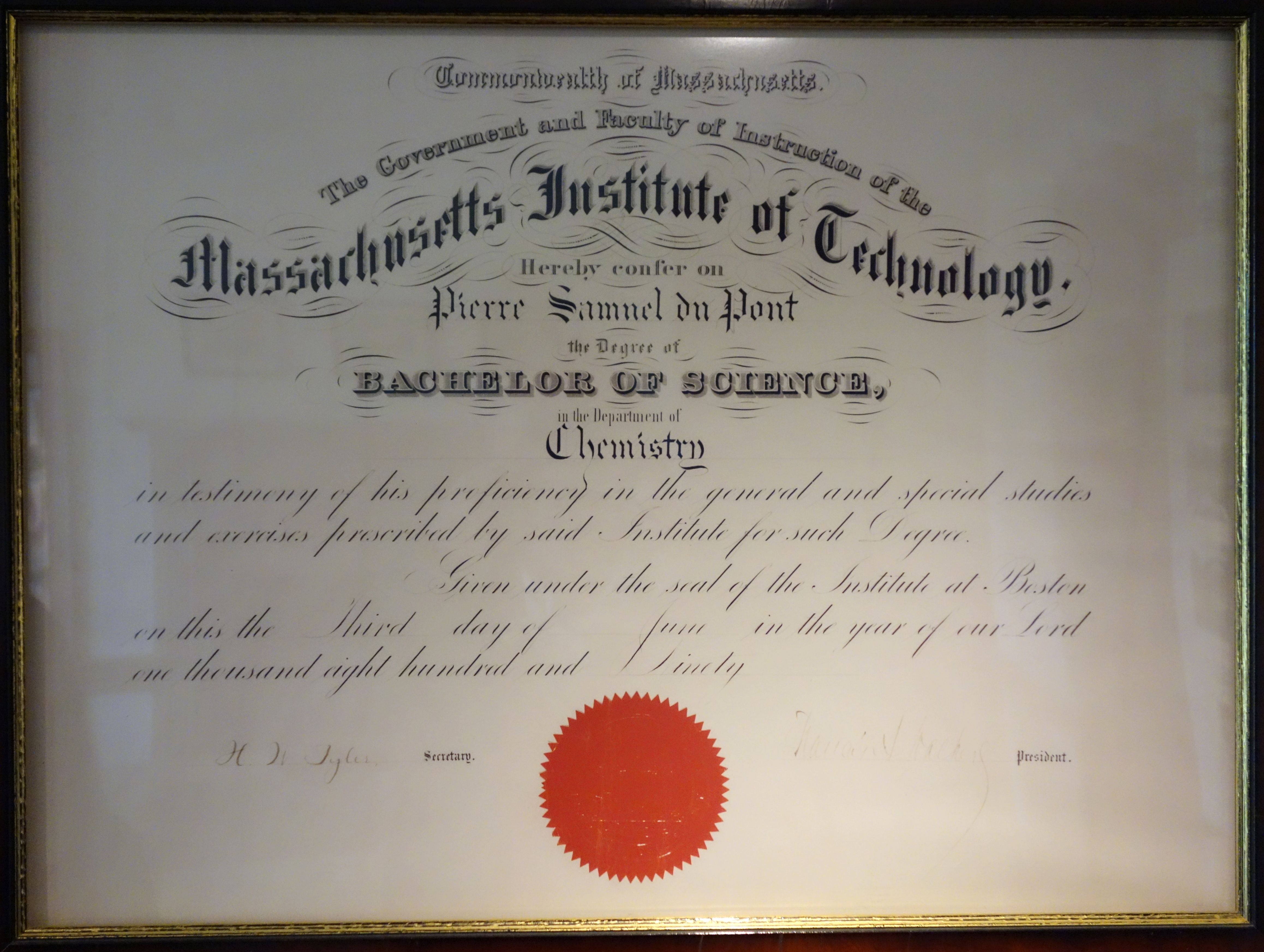
Navigating the landscape of higher education can feel like trying to decipher a foreign language, especially when confronted with the alphabet soup of undergraduate credentials. Understanding what bachelor degree types really mean goes far beyond recognizing three- or four-letter abbreviations like B.A., B.S., or B.F.A. These designations serve as structural indicators of your academic focus, the types of skills you will develop, and the theoretical or practical frameworks that will shape your education. Far from being mere administrative labels, these degree types communicate distinct educational philosophies to graduate schools and prospective employers alike.
When evaluating undergraduate options, students often focus entirely on the major—such as psychology, business, or biology—while treating the specific degree type as an afterthought. However, two students graduating with the same major from different institutions, or even from different departments within the same university, might experience vastly different curricula depending on whether they earn a Bachelor of Arts or a Bachelor of Science. This guide breaks down the structural differences between major undergraduate degree types, examines how they shape your academic trajectory, and helps you determine which path aligns best with your professional and personal goals.
The Foundations of Undergraduate Credentials
At its core, a bachelor’s degree is an undergraduate academic credential awarded by colleges and universities upon the completion of a course of study, typically lasting four to five years of full-time study. Historically rooted in the medieval European university system, the modern undergraduate degree has evolved to accommodate a rapidly changing global economy. Today, these credentials provide foundational knowledge, critical thinking skills, and specialized training necessary for modern careers.
The foundational distinction among undergraduate credentials lies in the balance between broad liberal arts exploration and focused, technical specialization. While all bachelor’s degrees require a core curriculum consisting of general education requirements—such as composition, mathematics, humanities, and natural sciences—the remaining credit hours are distributed differently based on the degree type.
Understanding these foundational differences requires looking at how universities allocate credit hours:
- General Education Core: Foundational courses designed to build broad intellectual competencies, communication skills, and cultural awareness.
- Major Requirements: In-depth study within a specific academic discipline, ranging from 30 to over 60 credit hours.
- Electives: Flexible coursework allowing students to pursue secondary interests, complete a minor, or take specialized classes outside their primary department.
The specific combination of these elements dictates whether a program culminates in a Bachelor of Arts, a Bachelor of Science, or a more specialized professional credential.
Bachelor of Arts (B.A.): The Liberal Arts Philosophy
The Bachelor of Arts (B.A.) degree is rooted in the classical liberal arts tradition, which emphasizes broad intellectual development, effective communication, and humanistic inquiry. A B.A. program typically requires fewer specialized courses within the primary major, leaving more room for electives, foreign language study, and multidisciplinary exploration.
Characteristics and Curriculum Focus
Students pursuing a B.A. generally spend a significant portion of their coursework engaging with qualitative analysis, historical contexts, social theories, and creative expression. Common fields offering a B.A. include English, history, philosophy, political science, foreign languages, and sociology. Even in fields like psychology or communication, universities frequently offer both B.A. and B.S. tracks, with the B.A. track emphasizing behavioral theories, cultural contexts, and qualitative research methods.
A defining feature of many B.A. programs is the foreign language requirement. Institutions often mandate that candidates demonstrate reading or conversational proficiency in a modern or classical language, reinforcing the liberal arts objective of global literacy and cultural engagement.
Career Implications and Skill Development
Employers value B.A. graduates for their adaptability, strong written and verbal communication skills, and ability to synthesize complex qualitative information. Rather than training for a single technical job function, B.A. programs cultivate transferable skills such as:
- Critical reading and textual analysis
- Persuasive written and oral communication
- Cross-cultural awareness and empathy
- Project management and independent research
These competencies make B.A. holders well-suited for careers in writing, public relations, human resources, non-profit management, education, and government service, while also providing a solid foundation for advanced study in law, the humanities, and the social sciences.
Bachelor of Science (B.S.): The Quantitative and Technical Approach
The Bachelor of Science (B.S.) degree focuses heavily on quantitative analysis, empirical research, technical proficiency, and specialized skill development. If the B.A. philosophy prioritizes breadth and humanistic context, the B.S. philosophy prioritizes depth, scientific methodology, and measurable outcomes.
Characteristics and Curriculum Focus
B.S. programs typically require a higher concentration of credits within the major, alongside rigorous prerequisites in mathematics, statistics, and laboratory sciences. Common fields offering a B.S. include computer science, engineering, physics, chemistry, finance, and nursing.
The coursework within a B.S. track is designed to immerse students in technical applications. For example, a student pursuing a B.S. in Psychology will spend more time designing quantitative experiments, analyzing statistical data sets using software like SPSS or R, and studying neurobiology than their B.A. counterparts. Mathematics requirements often extend well into calculus, linear algebra, and advanced statistics.
Career Implications and Skill Development
B.S. graduates are typically prepared for immediate entry into specialized technical, analytical, or scientific roles. The curriculum emphasizes hard skills that can be directly applied in the workplace, such as:
- Advanced data analysis and statistical modeling
- Software development and systems architecture
- Laboratory experimentation and safety protocols
- Quantitative financial forecasting and risk assessment
Because of this technical grounding, B.S. holders are heavily recruited in sectors like technology, healthcare, engineering, data science, and corporate finance. However, many B.S. programs also incorporate general education requirements to ensure graduates retain essential communication and problem-solving capabilities.
Comparing Undergraduate Degree Paths
To clearly understand how these major degree pathways differ in structure and academic focus, review the following comparison of common undergraduate credentials.
| Degree Type | Primary Focus | Math / Science Requirements | Language / Humanities Requirements | Common Career Fields |
|---|---|---|---|---|
| Bachelor of Arts (B.A.) | Qualitative analysis, communication, and liberal arts breadth | Moderate (algebra, basic statistics) | High (often includes foreign language proficiency) | Communications, human resources, public policy, education |
| Bachelor of Science (B.S.) | Quantitative analysis, empirical research, and technical depth | High (calculus, advanced statistics, lab sciences) | Moderate (standard general education humanities) | Engineering, computer science, finance, healthcare |
| Bachelor of Fine Arts (B.F.A.) | Studio practice, performance, and creative skill mastery | Minimal | Moderate (art history, aesthetic theory) | Graphic design, theatre, fine arts, music performance |
| Bachelor of Applied Science (B.A.S.) | Technical application combined with management and leadership | Moderate to High (applied mathematics) | Moderate | Applied technology, technical management, healthcare administration |
Specialized and Professional Bachelor Degrees
Beyond the traditional B.A. and B.S., universities offer specialized undergraduate degrees tailored to specific industries or professional tracks. These programs are designed to provide immersive, career-specific training from day one, often balancing theoretical coursework with hands-on studio work, clinical hours, or professional internships.
Bachelor of Fine Arts (B.F.A.)
The Bachelor of Fine Arts (B.F.A.) is the premier undergraduate credential for students pursuing professional careers in the visual, performing, or applied arts. Unlike a B.A. in Art—which approaches art history and theory from an academic perspective—a B.F.A. is a conservatory-style, studio-intensive program. Up to two-thirds of the curriculum may consist of practical studio work, critiques, rehearsals, and portfolio development. Graduates are prepared for careers as professional artists, designers, actors, and musicians.
Bachelor of Applied Science (B.A.S.)
The Bachelor of Applied Science (B.A.S.) is designed primarily for students who have earned an Associate of Applied Science (A.A.S.) or possess significant technical training. This degree bridges the gap between hands-on technical skills and leadership responsibilities. The curriculum typically combines advanced technical coursework with business management, communication, and organizational leadership, preparing skilled technicians to step into supervisory and administrative roles.
Professional Degrees: B.B.A., B.S.W., and B.Arch.
Certain fields utilize specialized professional acronyms that signal comprehensive preparation for a licensed profession or specific industry:
- Bachelor of Business Administration (B.B.A.): Offers specialized training in functional business areas like accounting, supply chain management, marketing, or entrepreneurship.
- Bachelor of Social Work (B.S.W.): Serves as the first professional degree for social workers, incorporating mandatory supervised field placements and clinical internships.
- Bachelor of Architecture (B.Arch.): A professional degree program, often lasting five years, designed to meet the educational requirements for architectural licensure.
Does the Degree Type Matter to Employers and Graduate Schools?
A common question among prospective students is whether an employer or graduate admissions committee will view a B.A. differently than a B.S. in the same field. The short answer is: It depends on the industry and your specific career trajectory.
Employer Perspectives
In technical fields such as software engineering, data analytics, or accounting, employers frequently look for a B.S. or specialized professional degree because it guarantees a baseline level of quantitative and technical coursework. Conversely, in fields like marketing, content creation, human resources, or corporate communications, a B.A. is often viewed equally or even favorably due to its emphasis on writing and interpersonal analysis.
For many employers, the specific title of the degree matters less than the portfolio, relevant internships, technical certifications, and demonstrated competencies you bring to the table. A well-rounded candidate with a B.A. who has completed rigorous coding bootcamps or data internships can easily compete with a B.S. graduate in certain technology sectors.
Graduate School Considerations
When applying to graduate or professional schools, admissions committees examine your transcript to ensure you have completed the necessary prerequisite coursework.
- If you are applying to a Ph.D. program in molecular biology, a B.S. with extensive laboratory experience is practically mandatory.
- If you are applying to law school, medical school (provided you have completed your science prerequisites), or a master's program in public administration, admissions committees care very little about whether your undergraduate credential was a B.A. or a B.S., focusing instead on your cumulative GPA, letters of recommendation, and entrance exam scores.
Common Myths and Misconceptions
Misunderstandings about undergraduate degree types persist, often leading students to make suboptimal academic choices. Clarifying these misconceptions helps ensure you select a program based on reality rather than academic folklore.
- Myth 1: A B.S. is always harder than a B.A. Difficulty is subjective and varies by institution, professor, and discipline. While a B.S. involves more calculus and hard sciences, a B.A. often requires extensive essay writing, rigorous theoretical critique, and advanced foreign language acquisition, which many students find equally challenging.
- Myth 2: You cannot get a job with a B.A. Employers hire for skills, critical thinking, and cultural fit. Thousands of successful business leaders, executives, and public figures hold B.A. degrees.
- Myth 3: You can easily switch your major from a B.A. to a B.S. track at any time. Because B.S. programs have strict sequencing for mathematics and laboratory sciences, switching late in your academic career can add extra semesters and tuition costs to your undergraduate timeline.
Practical Guidance for Choosing Your Path
Selecting the right undergraduate degree type requires a deliberate alignment of your academic strengths, career aspirations, and personal learning preferences. Follow these steps to make an informed decision:
- Audit Your Strengths and Preferences: Assess whether you genuinely enjoy quantitative problem-solving and empirical research (favoring a B.S.) or qualitative analysis, writing, and theoretical debate (favoring a B.A.).
- Research Target Industries: Look at job postings in your desired field. Note whether employers frequently mention specific degree requirements or if they prioritize general undergraduate completion combined with practical portfolios.
- Consult Academic Advisors: Speak with department chairs at your prospective universities to understand the exact curriculum differences between their B.A. and B.S. tracks.
- Plan for Prerequisites Early: If you intend to pursue graduate or professional school, review their admissions prerequisites before choosing your undergraduate track to ensure you do not miss vital foundational courses.
By looking past the abbreviations and understanding the distinct philosophies behind each bachelor degree type, you can build an educational foundation that accurately supports your long-term professional and intellectual goals.
Image Gallery
Select an image to open it in a new tab.





Akira Tanaka
International Academic Trends Correspondent
