To rent a dunk tank for an event, you must first verify your venue has a level setup area and a high-volume water source. After selecting a reputable party rental vendor, confirm their insurance coverage and delivery logistics. Standard rentals in 2026 typically range from $225 to $500 per day.
Understanding the Logistics of Dunk Tank Rentals
Renting a dunk tank is a classic choice for school carnivals, corporate team-building events, and community fundraisers. However, while the concept is simple—hit a target, drop a person in water—the logistical requirements are more substantial than renting a bounce house or a standard party tent. A fully loaded dunk tank weighs several thousand pounds and requires specific environmental conditions to operate safely and effectively.
Before placing a deposit, you must evaluate your site for two primary factors: space and surface. A standard dunk tank typically features a 350-to-500-gallon tub. When the tank is being towed or moved into place, it requires a clear path at least 6 feet wide. Once set up, the footprint usually spans approximately 8 feet in width and 10 to 15 feet in depth to allow for the "throwing lane" where participants stand.
The surface must be completely level. Because water is heavy (roughly 8.34 pounds per gallon), a 500-gallon tank adds over 4,000 pounds of pressure to a small area. If the ground is soft or uneven, the tank can tilt, which may cause the trigger mechanism to malfunction or, in extreme cases, lead to a structural failure. While grass is the most common surface, be aware that the area will inevitably become saturated with water, potentially leading to mud and turf damage by the end of the event.
Identifying the Different Types of Dunk Tanks
In 2026, the rental market offers several variations of the traditional dunk tank. Choosing the right one depends on your venue's accessibility and your target audience.
Traditional Towable Dunk Tanks
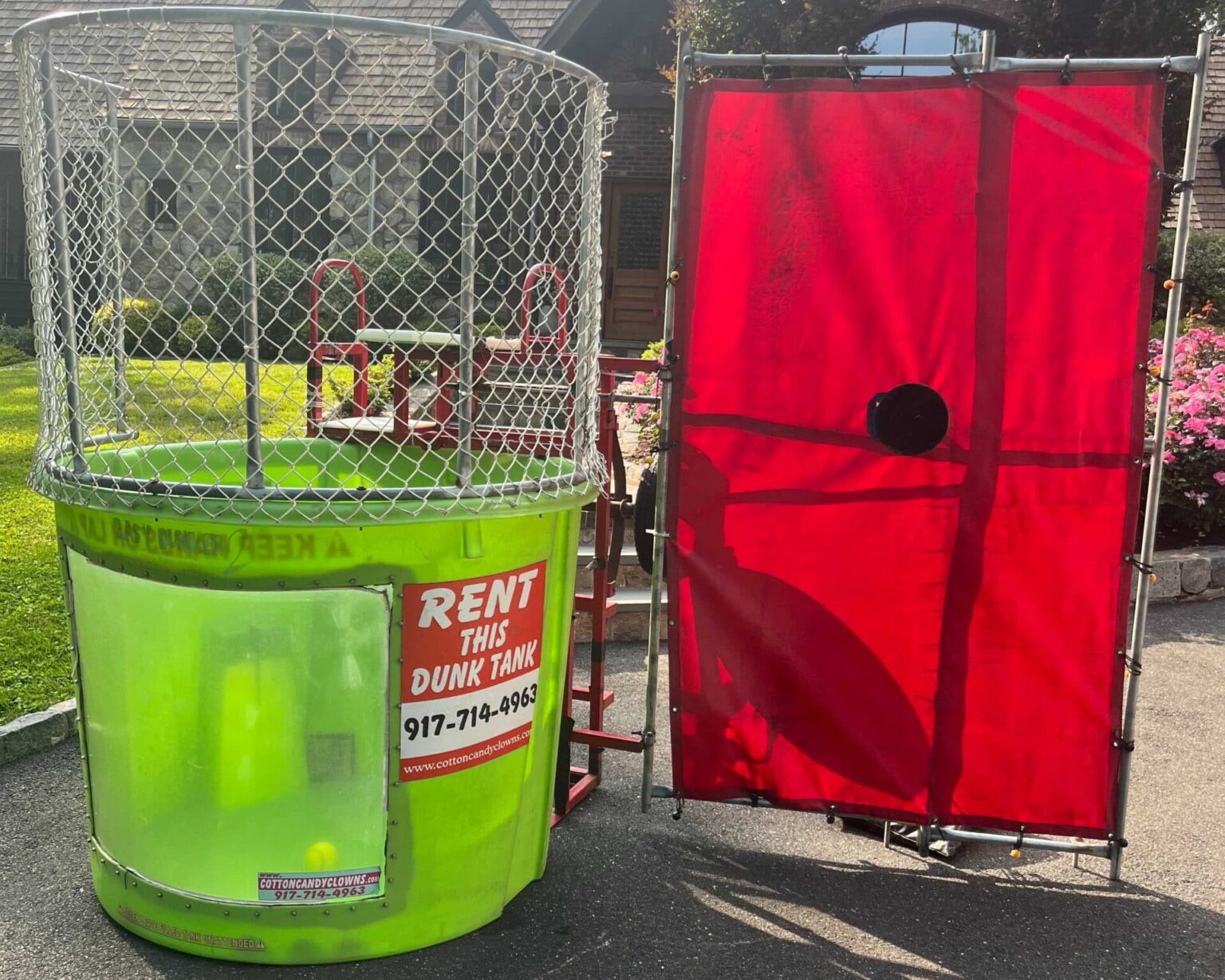
These are the industry standard. They are built on a trailer frame and towed directly to the setup site. They are incredibly durable and feature large, clear windows so the audience can see the "dunkee" submerge. The primary limitation is access; because they are rigid frames, they cannot be moved through standard backyard gates or up flights of stairs.
Foldable or Collapsible Tanks
For events in tight spaces or indoor venues, some companies offer "fold-and-go" models. These use a heavy-duty vinyl liner supported by a steel frame. While they offer more flexibility in placement, they often take longer to set up and may have lower weight capacities for the person sitting on the bench.
"Silly Shower" or Reverse Dunk Tanks
If water conservation or safety for younger children is a concern, consider a "reverse" dunk tank. Instead of a person falling into a tank, a bucket of water is tipped over their head when the target is hit. These are much lighter, use significantly less water, and are often preferred for indoor events where a 500-gallon spill would be catastrophic.
Water Requirements and Filling Timelines
The most common mistake event organizers make is underestimating the time and water volume required to fill a dunk tank. Most rental companies provide the tank and the balls, but they do not provide the water. You are responsible for ensuring a garden hose can reach the setup location.
Filling a 500-gallon tank with a standard residential garden hose (which typically delivers 5 to 9 gallons per minute) takes between 60 and 90 minutes. If your event starts at 10:00 AM, the tank should be in place and the water turned on by 8:30 AM at the latest. If you are using a well-water system, be cautious; filling a dunk tank at a high flow rate can occasionally stress older well pumps or temporarily deplete the pressure for the rest of the facility.
Furthermore, consider the temperature. If you are hosting a morning event in a cooler climate, the water from the hose will be quite cold. Some organizers choose to fill the tank the night before to allow it to reach ambient temperature, though this requires a secure location to prevent unsupervised use or accidents overnight.
Safety Standards and Liability Management
Safety is the paramount concern when operating any water-based amusement. Most reputable rental companies will require you to sign a liability waiver, but as the organizer, you hold the primary responsibility for the "dunkee" and the participants.
The Dunkee's Safety
The person on the bench must be physically capable of falling into water and swimming to the side. Most rental contracts in 2026 stipulate that the person being dunked must be at least 18 years old (or 12 with a parent present) and must not exceed a weight limit, usually around 250 pounds. They should also wear water shoes to prevent slipping on the tank floor and avoid wearing glasses or loose jewelry.
Operational Rules
- No Diving: The tank is usually only 4 feet deep. Diving or jumping into the tank can lead to serious injury.
- Target Only: Participants should only throw the provided balls at the target. They should never attempt to trigger the seat by hand while someone is sitting on it.
- Supervision: A dunk tank should never be left unattended while it contains water. When the operator takes a break, the area must be roped off or the seat must be locked in the "down" position.
Insurance Requirements
If you are renting for a public event, your organization's insurance provider may require a Certificate of Insurance (COI) from the rental company. This document proves that the vendor carries general liability insurance. Ensure the vendor lists your organization as "additionally insured" for the duration of the event to protect against claims resulting from equipment failure.
Cost Analysis and Comparison
Pricing for dunk tank rentals varies based on your geographic location, the time of year, and the duration of the rental. Peak summer months (June through August) often see higher prices and lower availability.
| Feature | Traditional Dunk Tank | Splash Bucket/Shower |
|---|---|---|
| Average Daily Rental | $250 - $450 | $150 - $275 |
| Water Volume | 350 - 500 Gallons | 5 - 10 Gallons per drop |
| Setup Time | 15 Minutes + 1 Hour Fill | 20 Minutes |
| Weight Limit | ~250 lbs | N/A (Person stands) |
| Target Audience | Teens and Adults | All ages / Children |
| Space Required | Large (Trailer Access) | Compact / Indoor Friendly |
In addition to the base rental fee, ask about delivery charges. Because dunk tanks are heavy and bulky, companies often charge a fee based on the mileage from their warehouse. Some may also offer an "attendant" for an additional $30 to $50 per hour, which is highly recommended for public events to ensure all safety rules are strictly enforced.
Finding and Vetting a Rental Vendor
To find a reliable provider, start by searching for local "party rental" or "event inflatable" companies. However, do not choose based on price alone. A cheap rental may involve rusted trigger mechanisms, leaky liners, or—most dangerously—a lack of proper insurance.
When vetting a company, ask the following questions:
- Is your equipment inspected? Many states require annual safety inspections for amusement devices.
- How do you sanitize the tanks? In 2026, hygiene standards are high. The tank should be scrubbed with a mild bleach solution or specialized antimicrobial cleaner between every rental to prevent the spread of waterborne bacteria.
- What is your weather policy? Most companies will offer a refund or a rain check if high winds or lightning are forecast, but you need to know their specific cutoff time for cancellations.
- Do you provide a ground cloth? A heavy-duty tarp under the tank can help protect the grass and reduce mud buildup around the throwing area.
The Logistics of Drainage and Teardown
What goes in must come out. Draining 500 gallons of water at the end of an event requires a plan. Most dunk tanks feature a large 2-inch or 3-inch drain valve at the bottom. When opened, the water will rush out with significant force.
You must ensure that this water has a place to go where it won't cause flooding or property damage. If the tank is on a parking lot, ensure the water flows toward a storm drain and not into a building’s foundation. If it is on a field, be aware that the immediate area will become very soft, which can make it difficult for the rental company to hook up their trailer and pull the tank away without ruts forming in the grass.
Some vendors carry long "lay-flat" hoses that can be attached to the drain valve to direct the water 50 feet or more away from the setup site. If your venue has strict drainage rules, ask the rental company if they provide this equipment.
Maximizing the Value of Your Rental
If you are using the dunk tank for a fundraiser, the rental cost is an investment that needs to be recouped. To maximize your return, consider these strategies:
- Target "VIPs": High-profile figures such as school principals, local politicians, or corporate CEOs will draw a much larger crowd than anonymous volunteers.
- Tiered Pricing: Charge $5 for three balls, but offer a "guaranteed dunk" for $25 where the participant can simply walk up and push the button.
- Social Media Teasers: Post "Save the Date" videos of your volunteers getting ready to get wet. This builds anticipation and increases foot traffic to your booth.
- Sponsorship: Ask a local business to "sponsor" the tank. In exchange for a banner on the side of the tank, they cover the rental fee, allowing 100% of the ball sales to go directly to your cause.
Common Mistakes to Avoid
Even with careful planning, small oversights can disrupt your event. Avoid these frequent pitfalls:
- Using an Extension Cord for Water? While you don't need power for the tank itself, if you are using an electric pump to drain it or lights for an evening event, ensure you use heavy-duty, outdoor-rated cords with GFCI (Ground Fault Circuit Interrupter) protection.
- Ignoring the Throwing Distance: For adults, the standard throwing distance is 20 feet. For children, it's usually 10 to 12 feet. Marking these lines clearly with tape or cones prevents participants from standing too close and potentially getting hit by a ricocheting ball.
- Forgetting the Towels: It seems obvious, but many organizers forget to provide a changing area or a stack of clean towels for the volunteers being dunked.
Frequently Asked Questions
Can I set up a dunk tank indoors?
Yes, but it is risky. You must have a way to fill the tank (usually via a long hose from a janitor’s closet) and, more importantly, a way to drain it. Because splashing is inevitable, the floor must be water-resistant (like polished concrete or tile), and you should use professional-grade floor squeegees to manage the overflow. Most organizers prefer the "Splash Bucket" style for indoor use to minimize the volume of standing water.
How much space do I actually need for the setup?
Plan for a rectangular area of at least 10 feet by 20 feet. This accounts for the tank itself, the backdrop/target wing, and a safe buffer zone behind the tank where people should not walk while balls are being thrown. You also need to ensure the "throwing lane" remains clear of foot traffic.
Do I need to add chlorine to the water?
For a standard one-day rental, chlorine is usually not necessary if you are using municipal tap water. However, if the event spans multiple days, you must treat the water to prevent algae and bacterial growth, just as you would with a swimming pool. Consult with the rental company before adding any chemicals, as some can damage the vinyl liners or the metal tank.
What happens if it rains on the day of my event?
Most rental companies have a "weather policy" included in the contract. Generally, if there is light rain, the dunk tank can still operate (after all, the person in the tank is already wet). However, if there are high winds (usually over 20-25 mph) or any sign of lightning, the tank must be closed immediately. Metal tanks and large target backdrops can act as lightning rods or wind sails.
Is there a weight limit for the person being dunked?
Yes. Most commercial dunk tanks are rated for a maximum weight of 250 pounds. Exceeding this limit can put undue stress on the trigger mechanism, causing it to jam, or it can cause the seat to collapse prematurely, leading to injury. Always check the specific weight rating of the unit provided by your vendor.
Final Recommendations for a Successful Rental
To ensure your dunk tank rental goes smoothly, start your search at least four to six weeks before your event, especially if it falls on a Saturday in the summer. Once you have selected a vendor, do a physical walkthrough of your venue. Check the path from the street to the setup spot for any narrow gates, low-hanging branches, or steep inclines that might prevent a trailer from entering.
On the day of the event, have a dedicated "Dunk Tank Captain." This person’s sole job is to manage the hose, monitor the safety of the participants, and ensure the dunkees are taking breaks and staying hydrated. With proper planning and a focus on safety, a dunk tank can be the highlight of any 2026 event, providing both entertainment and a high return on investment for charitable causes.
Image Gallery
Select an image to open it in a new tab.
Celine Dubois
Contemporary Living and Global Arts Columnist
