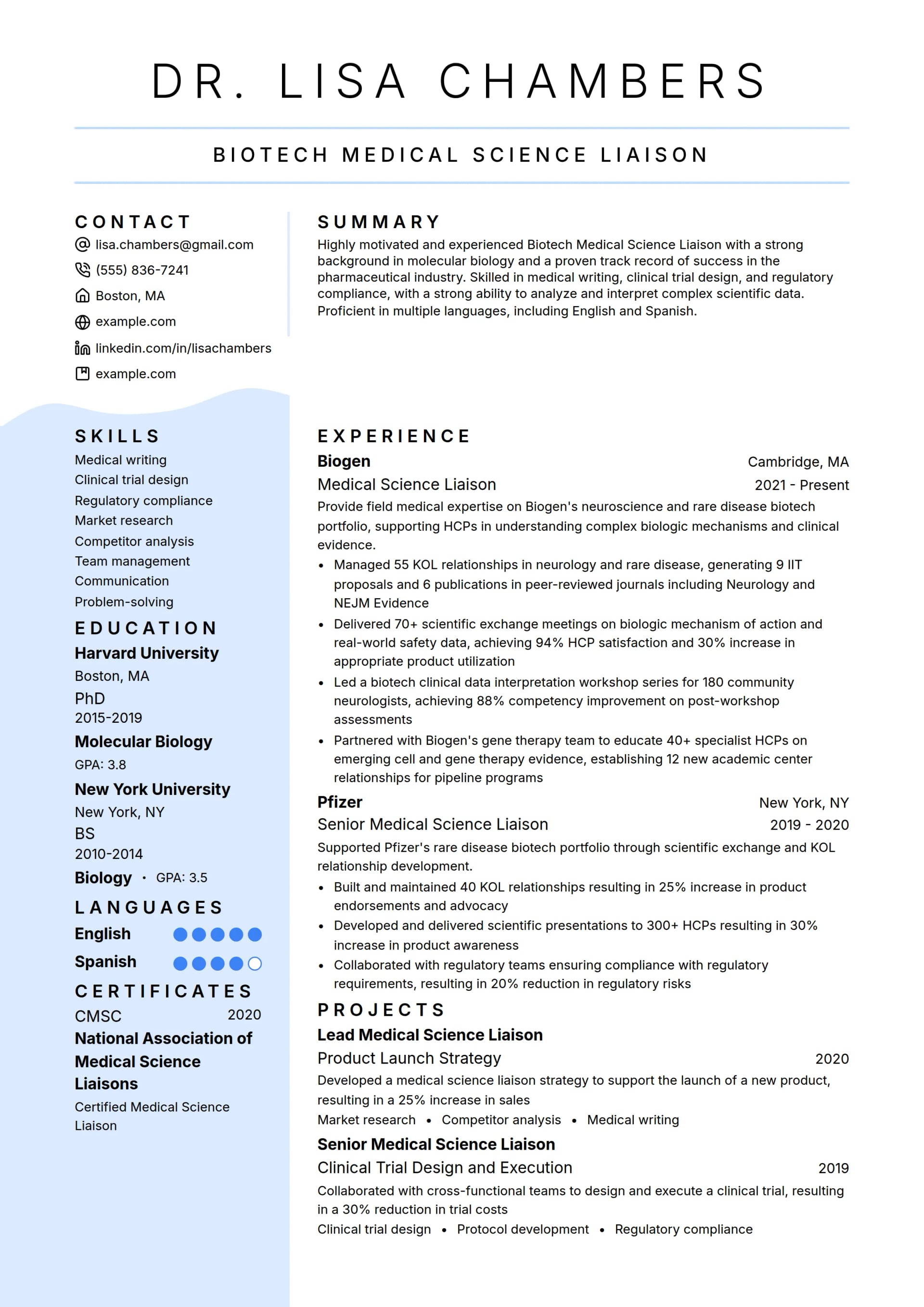
Navigating the biotechnology job market requires a targeted resume that effectively balances rigorous scientific methodologies, regulatory compliance knowledge, and quantifiable commercial impact. Unlike standard corporate resumes, a competitive biotech CV must instantly communicate complex technical competencies—such as assay development, mammalian cell culture, or current Good Manufacturing Practices (cGMP)—while remaining accessible to hiring managers, human resources personnel, and automated tracking systems. Whether you are transitioning from academic research into industry or scaling up to a senior leadership role, structuring your professional history around measurable achievements, specialized instrumentation, and regulatory frameworks is essential for securing interviews in this competitive sector.
Understanding the Biotech Resume Landscape
The biotechnology sector differs significantly from traditional tech and general corporate fields. Hiring managers in biotech look for proof of technical competence, adherence to strict regulatory standards, and an understanding of the product development lifecycle. Your resume must bridge the gap between academic rigor and commercial enterprise, demonstrating that you can operate efficiently under standard operating procedures (SOPs) while contributing to innovation and bottom-line goals.
The Role of Applicant Tracking Systems in Life Sciences
Most mid-sized and large biotechnology companies utilize Applicant Tracking Systems (ATS) to screen resumes before a human recruiter ever reads them. These systems parse your resume for specific keywords related to the job description, such as specific assay names, regulatory frameworks, software platforms, and laboratory techniques.
To ensure your resume passes through these automated filters, avoid overly complex graphics, multi-column layouts, and non-standard font choices. Instead, use a clean, linear layout with standard section headings. Incorporate industry-specific terminology naturally within your bullet points, ensuring that acronyms are spelled out upon first use followed by the acronym in parentheses (e.g., Polymerase Chain Reaction [PCR]).
Academic vs. Industry Formatting
A common pitfall for candidates transitioning out of academia (such as Postdoctoral researchers or PhD graduates) is submitting an academic Curriculum Vitae (CV) instead of an industry resume.
- Academic CVs focus heavily on publications, teaching experience, conference presentations, and exhaustive lists of research interests. They can span multiple pages.
- Industry Resumes are typically restricted to one or two pages. They prioritize problem-solving, project management, cross-functional collaboration, and the commercial or translational impact of your work over long lists of publications.
While publications remain important for discovery research roles, they should be curated selectively, highlighting only those papers that directly demonstrate your capability to deliver results relevant to the target position.
Core Components of an Exceptional Biotech Resume
A high-performing biotechnology resume is built upon a modular structure that places the most critical information where hiring managers look first. Every section must serve a distinct purpose, driving the narrative of your scientific and professional capabilities.
Contact Information and Professional Links
Keep your contact information concise at the very top of the first page. Include your full name, phone number, professional email address, and location (City, State/Country—full street addresses are unnecessary).
Enhance this section by including a hyperlink to your LinkedIn profile and, if applicable, your Google Scholar profile or an online portfolio showcasing data science projects or technical documentation samples. Ensure your LinkedIn profile matches the employment dates, job titles, and core competencies listed on your resume.
Crafting a Targeted Summary Statement
Instead of a generic objective statement, use a powerful three-to-four-line summary statement that acts as your professional elevator pitch. This section should immediately define your core discipline (e.g., downstream process development, clinical operations, bioinformatics), total years of relevant experience, and one or two signature achievements.
- Example: "Bioprocess Engineer with 6+ years of experience in scale-up and optimization of mammalian cell culture systems for monoclonal antibody production. Proven track record of improving yield by 35% while maintaining strict adherence to cGMP guidelines. Adept at leading cross-functional tech transfer initiatives from bench scale to 2,000L bioreactors."
Showcasing Technical Competencies and Laboratory Skills
Hiring managers often skim resumes specifically to verify technical proficiency. Create a dedicated "Technical Skills" or "Core Competencies" section near the top of your resume, organized logically by category. This prevents your critical skills from getting buried inside narrative bullet points.
| Category | Example Competencies and Techniques |
|---|---|
| Molecular & Cell Biology | Mammalian cell culture, PCR, RT-qPCR, Flow Cytometry, Western Blotting, CRISPR gene editing |
| Analytical Chemistry & Assays | HPLC, UPLC, Mass Spectrometry (LC-MS/MS), ELISA, Surface Plasmon Resonance (SPR) |
| Bioprocess & Engineering | Fermentation, Tangential Flow Filtration (TFF), Chromatography (AKTA systems), Scale-up |
| Regulatory & Quality | cGMP, GLP, FDA regulations, ICH guidelines, CAP/CLIA, Root Cause Analysis (RCA) |
| Software & Data Analysis | Python, R, GraphPad Prism, Benchling ELN, Empower CDS, SAS, SQL |
Detailing Professional Experience with Impact
Your professional experience section forms the core of your resume. Rather than merely listing daily responsibilities, structure your bullet points to show how your work drove project milestones, resolved technical challenges, or ensured regulatory compliance.
Use the Action-Context-Result (ACR) framework to write impactful bullet points. Start with a strong action verb, describe the technical context or challenge, and conclude with a quantifiable metric or outcome.
- Weak: "Performed assays for clinical trials and wrote reports."
- Strong: "Executed high-throughput ELISA assays for Phase II clinical trial samples, reducing turnaround time by 20% and ensuring 100% compliance with Good Clinical Practice (GCP) standards."
Education and Certifications
List your degrees in reverse chronological order, including the degree title, major, institution name, and graduation year. For PhD and Master's graduates, you may include the title of your dissertation if it is directly relevant to the target role.
Include relevant professional certifications that validate your regulatory or operational knowledge. Valuable credentials in the biotech sector include:
- Regulatory Affairs Certification (RAC)
- Project Management Professional (PMP)
- Certified Quality Engineer (CQE) or Certified Quality Auditor (CQA)
- Six Sigma Green or Black Belt (particularly valuable in biomanufacturing and operational excellence roles)

Tailoring Your Resume by Sub-Sector and Function
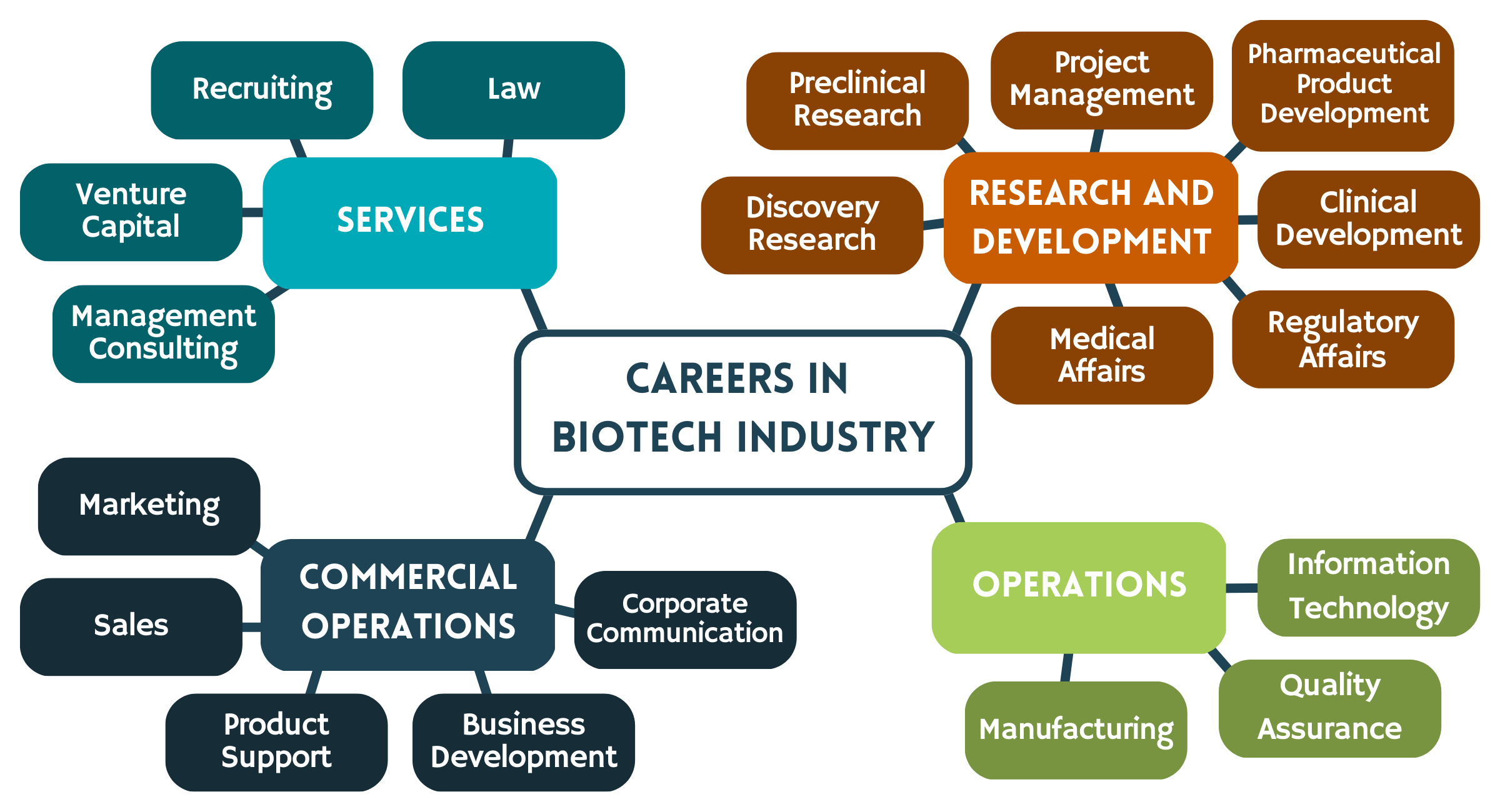
The biotechnology industry is vast, encompassing everything from early discovery research to commercial-scale manufacturing and regulatory affairs. Your resume must reflect the specific norms, terminology, and priorities of your target sub-sector.
Research and Development (R&D)
For roles in discovery biology, medicinal chemistry, or target validation, your resume must highlight your experimental design capabilities, familiarity with cutting-edge instrumentation, and scientific curiosity.
- Key Focus Areas: Experimental design, assay optimization, troubleshooting complex biological systems, and contributions to patent applications or peer-reviewed literature.
- Resume Tip: Emphasize your ability to independently design and execute experiments that generate actionable data for pipeline advancement.
Clinical Operations and Regulatory Affairs
In clinical development and regulatory affairs, compliance, documentation accuracy, and project management take precedence over bench science.
- Key Focus Areas: Protocol development, site monitoring, interaction with regulatory bodies (FDA, EMA), safety reporting, and adherence to ICH-GCP guidelines.
- Resume Tip: Highlight your experience managing clinical trial milestones, interacting with Contract Research Organizations (CROs), and successfully submitting IND (Investigational New Drug) or BLA (Biologics License Application) packages.
Biomanufacturing and Process Development
Roles in process development, tech transfer, and manufacturing science and technology (MSAT) require a heavy emphasis on operational efficiency, yield optimization, and quality systems.
- Key Focus Areas: Scale-up, tech transfer, deviation investigations, Corrective and Preventive Actions (CAPA), and adherence to cGMP.
- Resume Tip: Quantify your impact using metrics related to yield improvement, batch success rates, reduction of cycle times, and successful completion of regulatory audits.
Common Pitfalls to Avoid in Biotech Resumes
Even highly qualified scientists can be overlooked due to avoidable resume errors. Being aware of these pitfalls ensures your application survives initial screening rounds.
- Overloading with Academic Jargon: While technical depth is necessary, writing overly dense paragraphs that obscure your actual contributions will frustrate recruiters. Keep sentences concise and impact-driven.
- Ignoring Transferable Skills: If you are moving from academia to industry, do not assume industry hiring managers understand how your academic publications or grant writing translate into commercial value. Frame your experience around project management, budgeting, cross-functional collaboration, and strict timeline execution.
- Failing to Proofread Acronyms and Units: Typos in scientific units (e.g., writing mg instead of mcg, or confusing specific assay parameters) signal a lack of attention to detail, which is a major red flag in a regulated environment.
- Outdated Formatting: Avoid objectives that state what you want from the company; focus instead on what value you bring to their scientific pipeline.
Strategic Next Steps for Your Job Search
Once your resume is optimized, complement your application strategy with targeted networking within professional life sciences organizations (such as MassBio, BIO, or local biotech hubs). Tailor your resume for every single position by carefully analyzing the job description to match your skills with their exact technical requirements. By combining a mathematically rigorous, compliance-aware resume with proactive networking, you position yourself effectively for long-term career growth in the biotechnology sector.
Image Gallery
Select an image to open it in a new tab.

Simon Caldwell
Enterprise Technology and Systems Editor
