Understanding the PPP Exchange Rates: A Complete Guide to Purchasing Power Parity

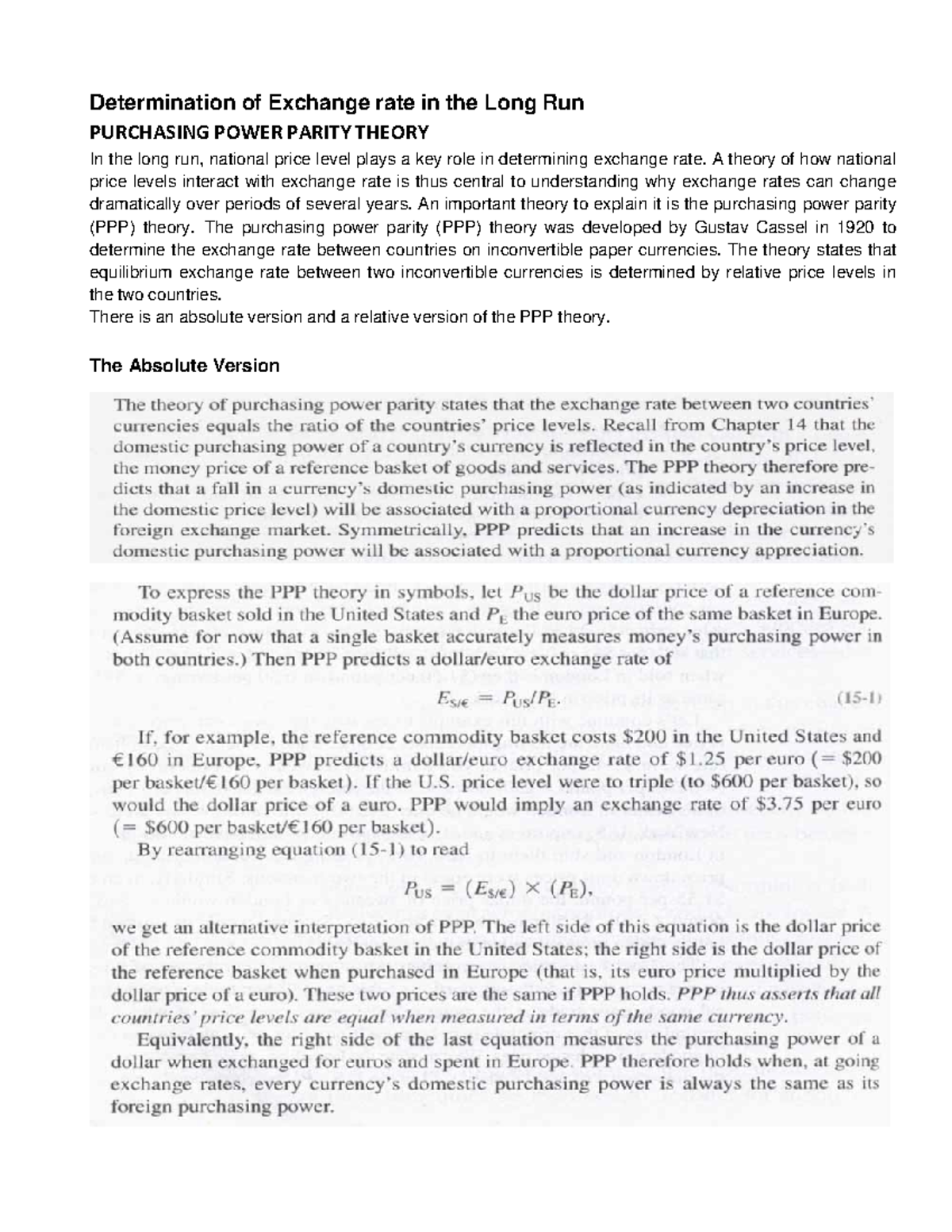
Purchasing Power Parity (PPP) exchange rates are economic conversion rates used to equalize the purchasing power of different currencies by eliminating differences in price levels between countries. Unlike nominal market exchange rates driven by currency traders and interest rates, PPP rates reflect the actual cost of a standardized basket of goods and services across international borders, providing a more accurate baseline for comparing real living standards and economic output.
Introduction to Purchasing Power Parity
When economists analyze the global economy, comparing the gross domestic product (GDP) of the United States with that of India or China using nominal exchange rates often yields distorted results. Nominal exchange rates fluctuate daily based on market speculation, capital flows, and short-term macroeconomic events. They do not account for the fact that a dollar, euro, or yen stretches much further in a developing nation where labor and non-tradable goods are significantly cheaper.
To solve this distortion, economists rely on Purchasing Power Parity (PPP). Rooted in the economic concept of the Law of One Price—which asserts that an identical good should cost the same everywhere when expressed in a common currency—PPP provides an alternative exchange rate framework. It evaluates how many units of a country's currency are needed to purchase the same basket of goods and services that a US dollar (or another base currency) would buy in the United States.
Understanding PPP exchange rates is essential for policymakers, international investors, multinational corporations, and researchers who need to evaluate long-term economic productivity, poverty thresholds, and structural wealth distribution without the distortion of volatile financial markets.
The Core Concept: How PPP Differs from Nominal Exchange Rates
To fully grasp PPP exchange rates, one must understand the fundamental divergence between nominal exchange rates and purchasing power parity.
The nominal exchange rate is the rate at which you can trade one currency for another in the foreign exchange (Forex) market. These rates are determined by supply and demand dynamics, central bank monetary policies, geopolitical events, and market sentiment. For example, if the nominal exchange rate between the US Dollar and the Euro is 1:0.90, you can exchange one dollar for ninety euro cents.
In contrast, the PPP exchange rate is calculated by comparing the cost of a comprehensive basket of goods and services in different countries. If a basket of consumer goods costs $1,000 in the United States and the equivalent basket costs 40,000 Pesos in a fictional country, the implied PPP exchange rate is 40 Pesos to 1 US Dollar, regardless of what the open currency market says.
Tradable vs. Non-Tradable Goods
The divergence between nominal and PPP exchange rates is primarily driven by the division between tradable and non-tradable goods and services:
- Tradable Goods: Items such as microchips, oil, automobiles, and smartphones can be shipped across borders and arbitraged globally. Their prices tend to converge toward international parity.
- Non-Tradable Goods: Services such as haircuts, domestic labor, rent, healthcare, and public transportation cannot be easily exported. These services are almost always significantly cheaper in developing nations due to lower local wage structures and operational costs.
Because non-tradable services make up a large portion of a nation's GDP, nominal exchange rates often undervalue the total economic output of low- and middle-income countries. PPP exchange rates correct this bias.
The International Comparison Program (ICP) and Calculation Methodology
Calculating PPP exchange rates is not a simple desktop exercise; it requires massive data collection efforts coordinated globally. The primary engine behind these calculations is the International Comparison Program (ICP), managed by the World Bank in partnership with regional organizations, national statistical offices, and international bodies like the OECD and Eurostat.
The Survey Process
- Basket Definition: Statisticians construct a detailed, globally representative basket of goods and services. This basket includes hundreds of distinct items, ranging from staple foods and clothing items to complex machinery and construction projects.
- Price Collection: National statistical agencies collect thousands of local retail and wholesale prices for these exact items within their borders, ensuring strict quality equivalence.
- Aggregation: Using sophisticated index number formulas (such as the EKS—Eltetö-Köves-Szulc method or the Geary-Khamis method), prices are weighted by their share of national expenditures to compute aggregate PPP exchange rates for GDP and its major components.
Through this rigorous process, analysts can determine a country's Price Level Index (PLI). The PLI is the ratio of a country's PPP exchange rate to its nominal market exchange rate. If a country has a PLI of less than 100, it is generally considered "cheaper" than the base country (usually the United States), meaning its price levels are lower and its PPP-adjusted GDP will exceed its nominal GDP.
Practical Applications of PPP Exchange Rates
Economists, financial analysts, and international organizations utilize PPP exchange rates for several critical evaluations where nominal exchange rates would provide misleading conclusions.
1. Comparing Living Standards and Economic Well-Being
When measuring how wealthy average citizens are, nominal GDP per capita can be deeply misleading. For instance, a worker earning $5,000 a year in a developing nation may enjoy a standard of living higher than what that same nominal amount would buy in a high-cost-of-living financial hub like New York City or London. By using GDP per capita based on PPP, analysts get a clearer picture of actual purchasing power and material well-being across different populations.
2. Assessing Global Poverty Lines
The World Bank relies heavily on PPP exchange rates to establish and update the international poverty line. By converting local incomes into a common standard (such as the historic $1.90 or current $2.15-a-day thresholds), researchers can measure extreme poverty consistently across countries with vastly different price structures.
3. Long-Term Economic Projections
Multinational corporations and sovereign institutions use PPP adjustments to forecast long-term market growth and structural shifts in the global economy. Because nominal exchange rates are prone to sharp, short-term volatility, relying on them for multi-decade strategic planning can introduce severe analytical errors.
| Feature / Metric | Nominal Exchange Rate | Purchasing Power Parity (PPP) Exchange Rate |
|---|---|---|
| Primary Driver | Forex market supply and demand, interest rates, speculation | Price differentials of a standard basket of goods and services |
| Primary Use | International trade, financial transactions, tourism, investment | Comparing real GDP, living standards, and productivity |
| Volatility | High (fluctuates second-by-second) | Low (updated periodically via statistical surveys) |
| Inclusion of Services | Dictated by global capital flows and currency values | Reflects local costs of non-tradable services and labor |
| Main Governing Body | Central banks and foreign exchange markets | International Comparison Program (ICP) & World Bank |
Limitations and Criticisms of PPP
While PPP exchange rates offer profound analytical value, they are not without significant limitations. Economists and policymakers must navigate several structural challenges when applying PPP data.
Methodological and Data Collection Challenges
Collecting prices for identical goods across vastly different cultural and regulatory environments is immensely difficult. For example, ensuring that a "medical consultation" or a "public education service" is of equivalent quality in two different countries introduces subjective biases into the data collection process. Furthermore, ICP benchmark surveys are not conducted annually due to their immense cost and logistical complexity; intervening years rely on statistical extrapolations and inflation adjustments, which can introduce estimation errors.
The Balassa-Samuelson Effect
Economic theory demonstrates that price levels naturally vary systematically with a country's level of economic development. Under the Balassa-Samuelson effect, productivity growth tends to be higher in the tradable goods sector than in the non-tradable services sector. As a country develops and productivity in tradables rises, wages increase across the entire economy, driving up the prices of non-tradable services. Consequently, price levels are systematically lower in poor countries than in rich countries, a structural phenomenon that static PPP models must constantly account for.
Inapplicability to International Trade and Finance
It is vital to recognize that PPP exchange rates are analytical constructs, not trading rates. An importer cannot walk into a commercial bank and execute a trade transaction using the PPP exchange rate. Actual international trade, debt servicing, and cross-border capital investments are entirely governed by nominal market exchange rates. Therefore, PPP is fundamentally unsuited for short-term financial management or currency hedging strategies.
Common Misconceptions Regarding PPP
Because macroeconomic concepts are often simplified in public discourse, several persistent myths surround purchasing power parity.
- Myth: PPP is a forecast of where nominal exchange rates will eventually go.
- Reality: While the long-run version of PPP theory suggests that exchange rates should move toward parity over extended periods, empirical evidence shows this rarely happens in practice due to trade barriers, transportation costs, capital flows, and structural economic differences.
- Myth: PPP-adjusted GDP measures the size of a country's financial footprint in global markets.
- Reality: Nominal GDP remains the correct metric for measuring international trade weight, global financial transactions, and external debt obligations. PPP GDP measures domestic economic activity and internal resource generation.
- Myth: All goods in the PPP basket are identical.
- Reality: While statisticians strive for equivalence, consumer preferences vary wildly by geography. Adjustments must be made for local substitutes, making absolute comparability an ongoing statistical hurdle.
Step-by-Step Guide: How to Find and Apply PPP Data
For researchers, students, or business analysts looking to utilize PPP data in their work, following a structured approach ensures accurate application:
- Identify the Analytical Objective: Determine whether your project requires comparing standard of living (use PPP) or evaluating trade balances and financial debt (use nominal rates).
- Access Reputable Data Sources: Retrieve official PPP conversion factors and GDP metrics from recognized international repositories, such as the World Bank World Development Indicators (WDI) database, the OECD Data Explorer, or the International Monetary Fund (IMF) World Economic Outlook (WEO) database.
- Select the Appropriate Base Currency: Ensure your comparisons utilize a consistent base currency (typically US Dollars) across all evaluated economies.
- Calculate Real Values: Divide local currency values by the specific PPP conversion factor to yield internationally comparable figures.
- Acknowledge Limitations in Reporting: When presenting findings, explicitly state that comparisons rely on PPP-adjusted figures to account for domestic price level differentials.
Frequently Asked Questions
What is the main difference between nominal GDP and PPP GDP?
Nominal GDP measures a country's economic output evaluated at current market exchange rates, making it useful for international trade and finance. PPP GDP adjusts that output to account for differences in local price levels, providing a more accurate reflection of actual domestic purchasing power and living standards.
Why are price levels lower in developing countries?
Price levels are lower primarily because non-tradable services—such as labor, housing, haircuts, and local transportation—are significantly cheaper due to lower prevailing wage rates and operating costs in developing economies.
Can I use PPP exchange rates to trade currencies on the Forex market?
No. PPP exchange rates are theoretical statistical constructs used for macroeconomic comparison. Currency trading and international financial settlements must be executed at prevailing nominal market exchange rates.
How often are PPP exchange rates updated?
Comprehensive benchmark surveys conducted by the International Comparison Program (ICP) typically occur every several years (such as every three to six years), with interim years calculated using statistical extrapolations based on national inflation rates.
What is the Law of One Price?
The Law of One Price is an economic principle stating that in an efficient market with no transaction costs or trade barriers, identical goods must sell for the same price everywhere when expressed in a common currency. PPP builds upon this concept by scaling it up to an entire basket of goods and services.
Conclusion and Next Actions
Purchasing Power Parity exchange rates serve as an indispensable lens for looking past the daily noise of currency markets to evaluate true economic reality. By neutralizing international price disparities, PPP allows economists and decision-makers to measure living standards, track global poverty, and assess structural productivity on a level playing field. To deepen your practical application, consult the World Bank's International Comparison Program publications or explore the OECD's comparative price level datasets to analyze real-world economic metrics firsthand.
Image Gallery
Select an image to open it in a new tab.


Ingrid Bjornson
Global Cyber Policy and Regulation Analyst
