
Coconut oil manufacturing involves extracting lipids from the kernel or meat of mature coconuts using either dry or wet processing methods. The process ranges from traditional cold-pressing for virgin oils to large-scale industrial refining, bleaching, and deodorizing (RBD) for commercial-grade oils, each requiring specific machinery, moisture controls, and purification steps.
Understanding the Raw Material: The Coconut Lifecycle
The manufacturing process begins with the selection of high-quality raw materials. As of 2026, the global industry continues to prioritize the Cocos nucifera (coconut palm) for its high lipid yield. For optimal oil extraction, coconuts must reach full maturity, which typically occurs 10 to 12 months after the flower opens. At this stage, the moisture content in the kernel decreases, and the fat content reaches its peak.
Upon harvesting, the coconuts undergo "seasoning." This involves storing the nuts in a dry, ventilated area for several weeks. Seasoning allows the water (liquid endosperm) to be absorbed further by the kernel (solid endosperm), making the meat firmer and easier to separate from the shell. This stage is critical because processing immature nuts results in lower oil yields and a higher percentage of free fatty acids (FFA), which can lead to rapid rancidity.
Dehusking and Deshelling
Once seasoned, the fibrous outer layer, known as the husk or coir, is removed. In large-scale operations in 2026, hydraulic dehusking machines are standard, though manual dehusking remains prevalent in smaller cooperatives. After dehusking, the hard internal shell is cracked. This is a delicate phase where the coconut water is collected—often as a valuable by-product—and the white kernel is exposed.
Paring: White Kernel vs. Whole Kernel
Manufacturers must decide whether to produce "white" or "whole" kernel oil. Paring is the process of removing the thin, brown skin (testa) that adheres to the white meat. If the testa is left on, the resulting oil (whole kernel) often has a slightly higher antioxidant profile but a darker color. If the testa is removed (white kernel), the oil is clear and commands a higher price in the cosmetic and premium food markets.
The Dry Processing Method: RBD Coconut Oil
Dry processing is the most common industrial method for producing commercial-grade coconut oil. It relies on the creation of "copra," which is the dried meat of the coconut.
Copra Production and Drying
The meat is removed from the shell and dried until its moisture content drops from approximately 50% to between 6% and 8%. This drying is achieved through sun-drying, kiln-drying, or modern indirect hot-air dryers. In 2026, indirect drying is the preferred industrial standard because it prevents the meat from being contaminated by smoke or soot, which can introduce polycyclic aromatic hydrocarbons (PAHs) into the oil.
Mechanical Extraction (Expeller Pressing)
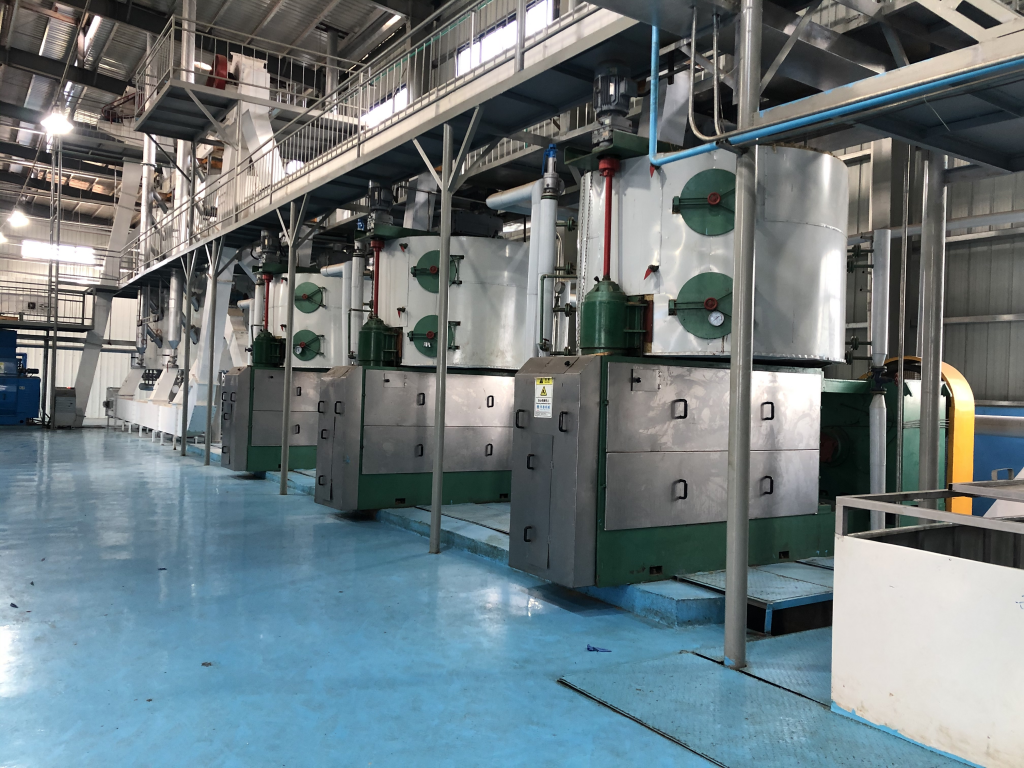
Once the copra is dried, it is cleaned of any mold or debris and fed into a hammer mill to be reduced to small chips. These chips are then steamed in a cooker to stabilize the proteins and lower the viscosity of the oil. The cooked copra enters an expeller press—a high-pressure screw press. As the screw turns, it squeezes the oil through small gaps in the barrel while the solid fiber, known as "coconut cake" or "copra meal," is extruded as a byproduct.
The RBD Refining Process
The oil extracted from copra is "crude" and generally unfit for human consumption due to impurities and high acidity. It must undergo the RBD (Refining, Bleaching, and Deodorizing) process:
- Refining (Neutralization): The oil is treated with a food-grade alkali (usually caustic soda) to neutralize free fatty acids. This process produces soap stock, which is separated from the oil.
- Bleaching: The oil is heated and mixed with bleaching earth (activated clay) or activated carbon. This removes pigments, such as chlorophyll and carotene, and absorbs residual soap and metal ions.
- Deodorizing: The oil is subjected to high-vacuum steam distillation at temperatures between 230°C and 250°C. This removes volatile compounds responsible for the "coconutty" odor and flavor, resulting in a bland, shelf-stable oil with a high smoke point.
The Wet Processing Method: Virgin Coconut Oil (VCO)
Wet processing differs fundamentally by starting with fresh coconut meat rather than dried copra. This method avoids the high-heat refining steps, preserving the natural antioxidants and the characteristic aroma of the coconut. This is the primary method for producing Virgin Coconut Oil (VCO).
Coconut Milk Extraction
The fresh meat is disintegrated into a fine mash and pressed to extract "coconut milk," which is an emulsion of oil, water, and proteins (principally globulin and albumin). High-efficiency screw presses or hydraulic presses are used to ensure maximum milk recovery.
Separation Techniques
The challenge of wet processing is breaking the emulsion to separate the oil from the water and proteins. As of 2026, three primary methods dominate the industry:
- Centrifugation: This is the most advanced and efficient method. The milk is fed into a high-speed centrifuge (often exceeding 8,000 RPM). The centrifugal force separates the constituents based on their density: oil (lightest), water, and solids (heaviest). Multi-stage centrifugation ensures a purity level that meets international Codex Alimentarius standards for fats and oils.
- Fermentation: An older, traditional method where the milk sits in tanks for 24 to 48 hours. Naturally occurring enzymes or added bacterial cultures break down the protein membranes, allowing the oil to float to the top. While cost-effective, this method requires strict climate control to prevent spoilage.
- Chilling and Thawing: The milk is subjected to rapid cooling to solidify the oil droplets, followed by a controlled thaw. This change in state destabilizes the emulsion, allowing for easier mechanical separation.
Technical Comparison of Manufacturing Methods
The following table compares the two primary industrial pathways for coconut oil production as they stand in 2026.
| Feature | Dry Processing (RBD) | Wet Processing (VCO) |
|---|---|---|
| Raw Material | Copra (Dried meat) | Fresh Coconut Meat |
| Extraction Tool | High-pressure Expeller | Centrifuge or Fermentation |
| Refining Needed | Yes (Chemical/High Heat) | No (Physical Separation) |
| Moisture Content | < 0.1% | < 0.1% |
| Flavor/Aroma | Bland / Neutral | Strong Coconut Aroma |
| Antioxidant Level | Lower (due to refining) | High (Phenolic compounds preserved) |
| Primary Use | Frying, Industrial food, Soap | Direct consumption, Cosmetics |
| Shelf Life | 2+ Years | 1.5 - 2 Years |
Quality Control and Technical Specifications
Maintaining quality in coconut oil manufacturing requires rigorous monitoring of chemical and physical parameters. Manufacturers in 2026 adhere to stringent protocols to ensure safety and marketability.
Free Fatty Acids (FFA)
FFA levels are a primary indicator of oil quality. In VCO, FFA should be less than 0.2%, while crude oil before refining can have levels as high as 5%. High FFA indicates that hydrolysis has occurred, usually due to poor drying of copra or the use of damaged nuts.
Peroxide Value (PV)
PV measures the extent of primary oxidation. A high peroxide value suggests the oil has begun to turn rancid. For premium coconut oil, the PV is typically kept below 3 meq/kg.
Moisture and Volatile Matter
Moisture is the enemy of shelf stability. Even in wet-processed oil, the final product must be passed through a vacuum dryer to reduce moisture to below 0.1%. Any remaining water facilitates microbial growth and enzymatic activity that degrades the oil.
By-products and Sustainable Integration
Modern coconut oil manufacturing is characterized by "zero-waste" initiatives. The industry in 2026 utilizes every part of the nut:
- Coconut Meal: The cake remaining after oil extraction is rich in protein and fiber. It is processed into animal feed or gluten-free flour for human consumption.
- Coconut Shells: These are used as fuel for the plant’s boilers or processed into activated carbon, which is used in water filtration systems and even within the oil bleaching process itself.
- Coconut Water: During the deshelling of fresh nuts for VCO, the water is captured, pasteurized, and packaged as a hydrating beverage.
- Aqueous Effluent: The water separated from coconut milk in wet processing contains sugars and proteins. In advanced facilities, this is treated through anaerobic digestion to produce biogas for electricity.
Common Challenges and Troubleshooting in Production
Manufacturing high-quality oil is not without operational difficulties. Technical staff must be trained to identify and resolve specific issues during the run.
- Yellowish Tint in Oil: This often occurs in dry processing if the copra was dried at too high a temperature (scorching) or if mold was present. It can be corrected by increasing the dosage of bleaching earth, though this adds to the cost.
- High Sedimentation: If the filtration stage is bypassed or if the filter cloths are worn, fine particles of coconut meat (fines) can remain in the oil. Over time, these settle and can ferment, ruining the batch.
- Soapiness in RBD Oil: If the neutralization process is not followed by thorough washing, residual sodium soap can remain in the oil, giving it a "soapy" taste and causing it to foam when heated.
Operational Costs and Scaling
For those entering the manufacturing space in 2026, scale dictates the technology. Small-scale "micro-mills" focusing on VCO utilize cold-press hydraulic systems that prioritize quality over volume. These operations have lower capital expenditure (CAPEX) but higher labor costs per liter.
Conversely, industrial-scale RBD plants require significant investment in steam boilers, vacuum systems, and refining towers. These facilities benefit from economies of scale, processing thousands of tons of copra monthly to supply the global food processing and biofuel sectors.
Frequently Asked Questions
What is the difference between cold-pressed and expeller-pressed oil?
Cold-pressed oil is extracted at temperatures that do not exceed 49°C (120°F), which preserves the natural enzymes and nutrients. Expeller-pressed oil is squeezed through a screw press; while no external heat is necessarily added, the friction of the process can generate temperatures up to 80°C or 90°C. Most VCO is cold-pressed to maintain its "virgin" status.
Is chemical solvent extraction used for coconut oil?
While rare compared to seed oils, solvent extraction (using hexane) can be used to recover residual oil from the coconut meal after expeller pressing. This "second-grade" oil is strictly for industrial use, such as soap making, and is not sold for direct consumption without extensive refining.
Why does my coconut oil turn solid at room temperature?
Coconut oil has a high concentration of saturated fatty acids (about 90%), primarily lauric acid. These fats have a melting point of approximately 24°C (75°F). Below this temperature, the oil will solidify into a white fat. This is a natural physical property and does not indicate the oil has gone bad or was manufactured incorrectly.
Can I make virgin coconut oil at home?
Yes, using the "kitchen-scale" wet process. You can grate fresh coconut meat, squeeze out the milk, and allow it to sit in a glass jar. After 24 hours, the oil will naturally separate from the water and curd. However, home-produced oil often has a higher moisture content and shorter shelf life than industrially centrifuged oil.
What is "fractionated" coconut oil?
Fractionated coconut oil is a processed version where the long-chain fatty acids are removed, leaving only the medium-chain triglycerides (MCTs), primarily caprylic and capric acid. This process involves heating the oil above its melting point and then cooling it slowly to separate the different fats. The result is an oil that remains liquid even in the refrigerator and is highly prized in the pharmaceutical and skincare industries.
Practical Recommendation for Manufacturers
When establishing or optimizing a coconut oil manufacturing line in 2026, the primary focus should be on moisture management. Whether producing RBD from copra or VCO from fresh milk, the presence of water is the single most significant factor in oil degradation. Investing in high-efficiency vacuum drying and moisture-testing equipment (such as Karl Fischer titrators) is essential for ensuring a product that meets international quality standards and achieves a long shelf life. Furthermore, integrating a "circular" approach—using shells for energy and meal for food—is no longer just an environmental choice but a financial necessity to maintain competitive margins in the global fats and oils market.
Image Gallery
Select an image to open it in a new tab.
Celine Dubois
Contemporary Living and Global Arts Columnist
