Why the Primacy Recency Effect Matters for Memory and Cognitive Efficiency

The primacy recency effect—collectively known as the serial position effect—describes the cognitive tendency to recall the first and last items in a series more accurately than those in the middle. By understanding how the brain prioritizes these positions, individuals can strategically structure information for better retention, improved learning outcomes, and more effective communication in professional and personal settings.
Understanding the Mechanisms of the Serial Position Effect
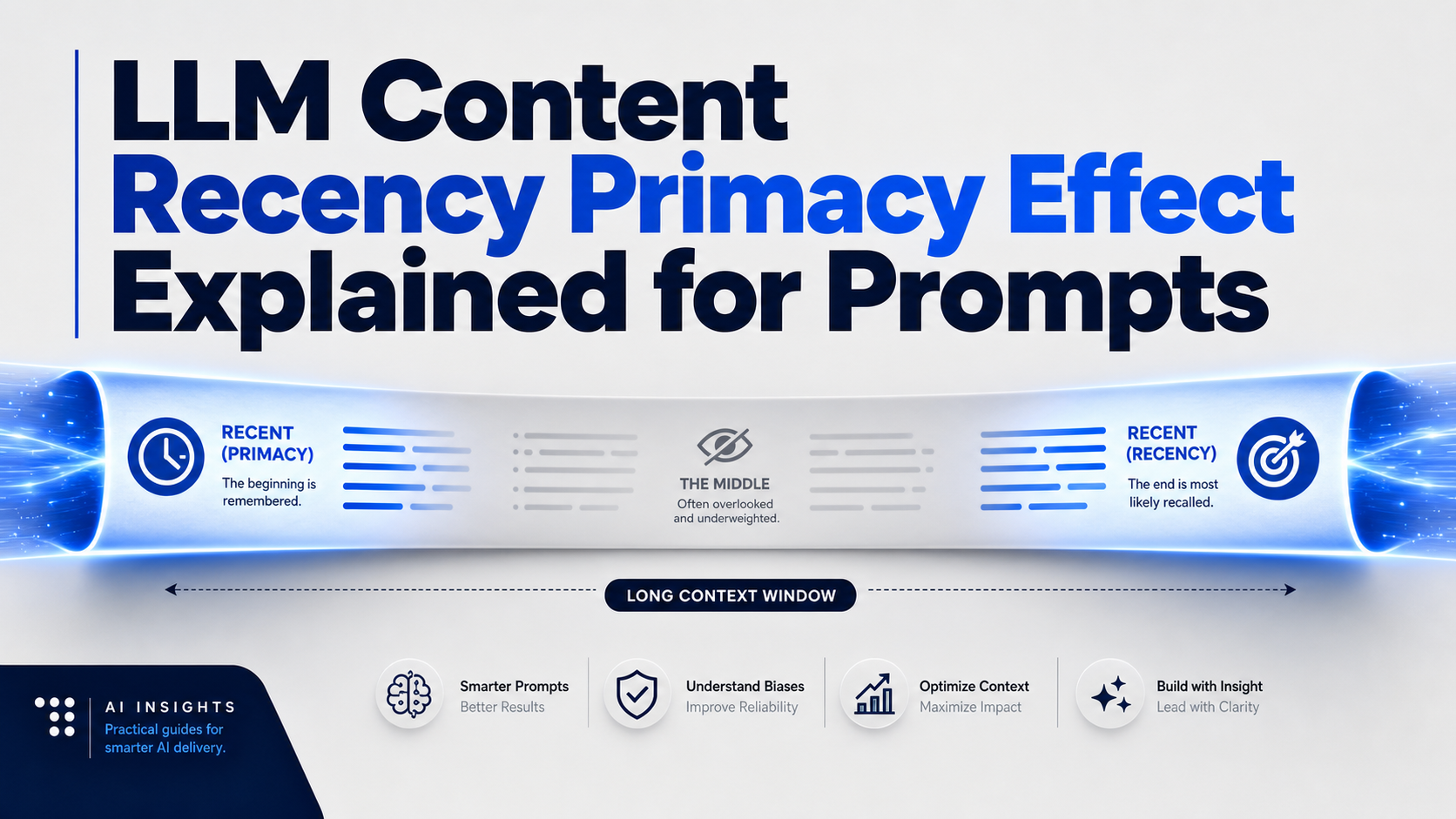
The serial position effect is a foundational concept in cognitive psychology, first codified by Hermann Ebbinghaus in his pioneering work on memory. It posits that our ability to encode and retrieve information is heavily influenced by where that information appears in a sequence. The phenomenon is divided into two distinct but related components: the primacy effect and the recency effect.
The primacy effect refers to the superior recall of items presented at the beginning of a list. When we encounter a new sequence, our cognitive resources are fresh and uncluttered. As we process the first few items, we have more time to rehearse them mentally, facilitating their transfer from short-term working memory into long-term storage. Because these early items are not subject to the interference of preceding information, they gain a "first-mover advantage" in our neural pathways.
Conversely, the recency effect accounts for the superior recall of items at the end of a series. This is primarily attributed to the short-term memory buffer. Because these items were the most recently processed, they are still present in our immediate working memory when we are asked to recall the list. Unlike the middle items, which have been pushed out of the working memory by subsequent inputs and have not yet been consolidated into long-term memory, the final items remain accessible and "fresh."
Why the Middle of a Sequence Often Fades
The "middle-sequence slump" is the most significant hurdle in information retention. When we present information in long, unbroken segments, the items in the center suffer from a lack of unique processing. They are squeezed between the rehearsal-heavy beginning and the accessible end.
From a psychological perspective, this is a result of both proactive and retroactive interference. Proactive interference occurs when older memories (the start of the list) make it difficult to learn new information (the middle). Retroactive interference happens when newer information (the end of the list) displaces or obscures the information that came before it. Consequently, the middle content acts as a bottleneck, often becoming the least accurately recalled portion of any presentation, lecture, or list.
Table: Comparison of Serial Position Phases
| Phase | Memory Type | Cognitive Driver | Retention Likelihood |
|---|---|---|---|
| Primacy (Start) | Long-term memory | Increased rehearsal | High |
| Middle | Working memory | Interference / Decay | Low |
| Recency (End) | Short-term memory | Immediate access | High |
Strategic Applications for Enhanced Memory
Understanding these memory mechanics allows for the optimization of how we present and consume information. To mitigate the natural decay of the middle segment, consider the following evidence-based strategies:
1. Chunking Information
Instead of presenting a monolithic block of information, break content into smaller, distinct clusters. By creating "mini-sequences," you artificially increase the number of "starts" and "ends" in your presentation. If you are delivering a 30-minute training session, dividing it into three 10-minute segments creates three primacy peaks and three recency peaks, significantly reducing the amount of "middle" content that risks being lost.
2. The Power of Emphasis
If you have mission-critical information that must be remembered, never place it in the middle of a list. Always assign your most important facts to the opening or closing of your communication. Start with a strong hook or the primary conclusion (primacy), and end with a summary or a clear call to action (recency).
3. Active Engagement Techniques
To combat the middle-segment slump, introduce high-engagement activities during the middle portion of a presentation. Changing the stimulus—such as moving from a lecture to a group discussion, a practical demonstration, or an interactive poll—forces the brain to re-allocate attention. This resets the cognitive "clock," potentially turning the middle of the session into a new "primacy" event.
Practical Implications in Modern Professional Life
In 2026, the volume of data we encounter daily is higher than ever. Whether you are crafting a marketing pitch, designing a user interface, or studying for a certification, the primacy recency effect remains a critical constraint on human bandwidth.
In digital design, for instance, this effect dictates user experience (UX) layout. Designers frequently place the most important navigation items or conversion buttons at the far left (the beginning of a visual scan) or the far right (the end of the interaction path). Placing primary actions in the center of a dense menu often results in lower interaction rates because the brain tends to skip over the middle-ground content.
When preparing for exams or high-stakes meetings, the application is equally clear: avoid "cramming" in long, uniform blocks. By interspersing study sessions with breaks, you leverage the serial position effect to maintain higher levels of encoding efficiency throughout the entire duration of your prep time.
Frequently Asked Questions
Does the primacy recency effect apply to visual memory? Yes, it applies to both auditory and visual information. Research indicates that the human brain processes serial order similarly regardless of the sensory input, meaning the position of elements in a chart or a slide deck affects retention just as much as the order of words in a speech.
How long does the recency effect last? The recency effect is highly volatile and time-sensitive. If there is a delay of even a few seconds filled with distracting tasks between the end of the sequence and the recall attempt, the recency advantage often disappears completely.
Can I eliminate the middle-segment slump? You cannot eliminate it entirely because of inherent cognitive constraints, but you can manage it. By adding "cognitive hooks"—such as summaries, mnemonic devices, or sudden shifts in tone—you can make middle content more salient and less susceptible to the interference that causes it to be forgotten.
Does age impact the serial position effect? There is evidence to suggest that the primacy effect—which relies on long-term memory consolidation—can be more affected by aging compared to the recency effect, which relies on intact working memory. However, active rehearsal strategies can help bolster primacy recall across all age groups.
How does this affect public speaking? In public speaking, your introduction and your conclusion are the most "expensive" parts of your speech in terms of audience attention. Therefore, you should lead with your most impactful statement and end with the most vital takeaway. The body of the speech serves to support these bookends.
Next Actions for Better Retention
To begin applying these concepts immediately, review your next project or presentation outline. Identify the three most important points you wish to convey. Move your most important point to the very beginning, your second most important to the very end, and relegate the supporting details to the middle. If the middle section is too long, subdivide it into shorter modules, each with its own internal summary, to create artificial "ends" and "starts" that keep your audience—or your own brain—consistently engaged. By structuring your information according to how the human brain actually processes sequences, you shift from passive information delivery to active, strategic knowledge transfer.

Image Gallery
Select an image to open it in a new tab.
Mateo Castillo
Decentralized Finance and E-Payments Strategist
