Exploring Paseo de la Castellana: The Architectural and Financial Heart of Madrid

Paseo de la Castellana is Madrid’s primary north-south artery, serving as the city's central axis for finance, government, and high-end commerce. In 2026, it stands as a sophisticated blend of 19th-century elegance and futuristic urban planning, connecting the historic center to the towering business districts of the north.
The Evolution of Madrid’s Grand Axis
Paseo de la Castellana is not merely a road; it is a chronological map of Madrid’s growth over the last two centuries. Originally following the path of an old riverbed, the "Fuente de la Castellana," the avenue was envisioned in the 19th century as an extension of the Paseo del Prado and Paseo de Recoletos. This expansion was designed to accommodate the city’s rising aristocracy and burgeoning administrative needs.
By the mid-20th century, the "Plan Bidagor" and subsequent urban reforms pushed the city northward, transforming the Castellana from a residential boulevard of palaces into a dense corridor of government ministries and corporate headquarters. Today, the avenue stretches over six kilometers, beginning at the Plaza de Colón and terminating at the Nudo Norte, where it integrates into the ambitious Madrid Nuevo Norte project.
Geographic and Functional Segmentation
To understand Paseo de la Castellana, one must view it as a series of distinct zones, each with its own character, economic purpose, and architectural style.
The Southern Stretch: Aristocracy and Culture
The southern end, starting at Plaza de Colón, maintains a connection to Madrid’s traditional "Barrio de Salamanca." Here, the architecture is characterized by palatial buildings, many of which now house embassies, private foundations, or the headquarters of major financial institutions. Landmarks such as the National Library and the National Archaeological Museum sit just off the main path, providing a cultural anchor to the otherwise business-focused transit.
The Central Hub: Nuevos Ministerios and AZCA
As the avenue moves north toward the Nuevos Ministerios complex, the atmosphere shifts. Nuevos Ministerios is a massive government enclave designed in the 1930s, reflecting a mix of rationalism and classicism. Directly across from it lies AZCA, Madrid’s first dedicated financial district.
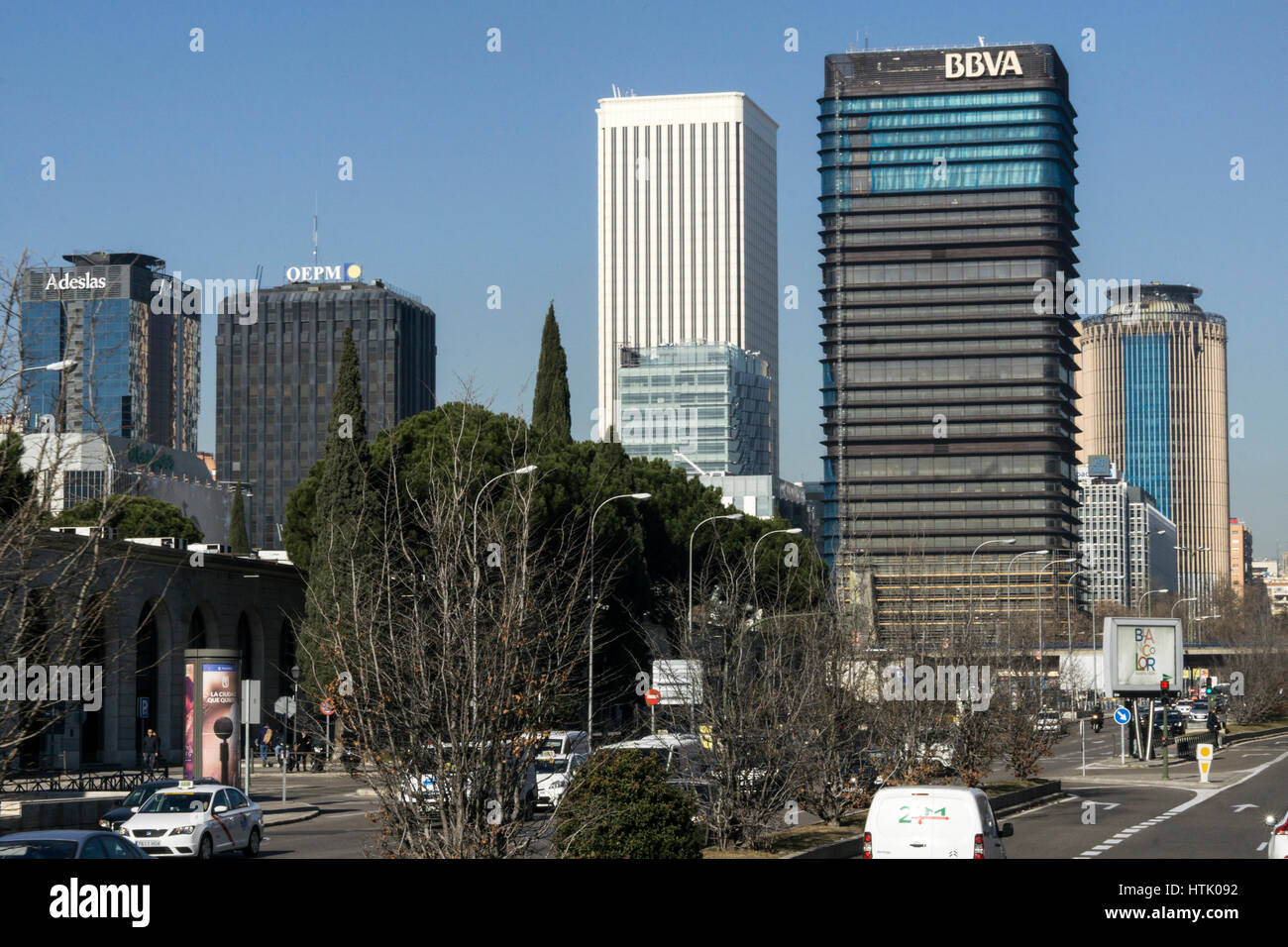
Conceived in the 1960s, AZCA was intended to be "Madrid’s Manhattan." It features iconic structures like the Torre Picasso and the Torre BBVA. In 2026, AZCA is undergoing a significant revitalization project to improve its subterranean plazas and pedestrian connectivity, aiming to soften its concrete-heavy aesthetic with more green spaces and modern retail experiences.
The Northern Frontier: Plaza de Castilla and the CTBA
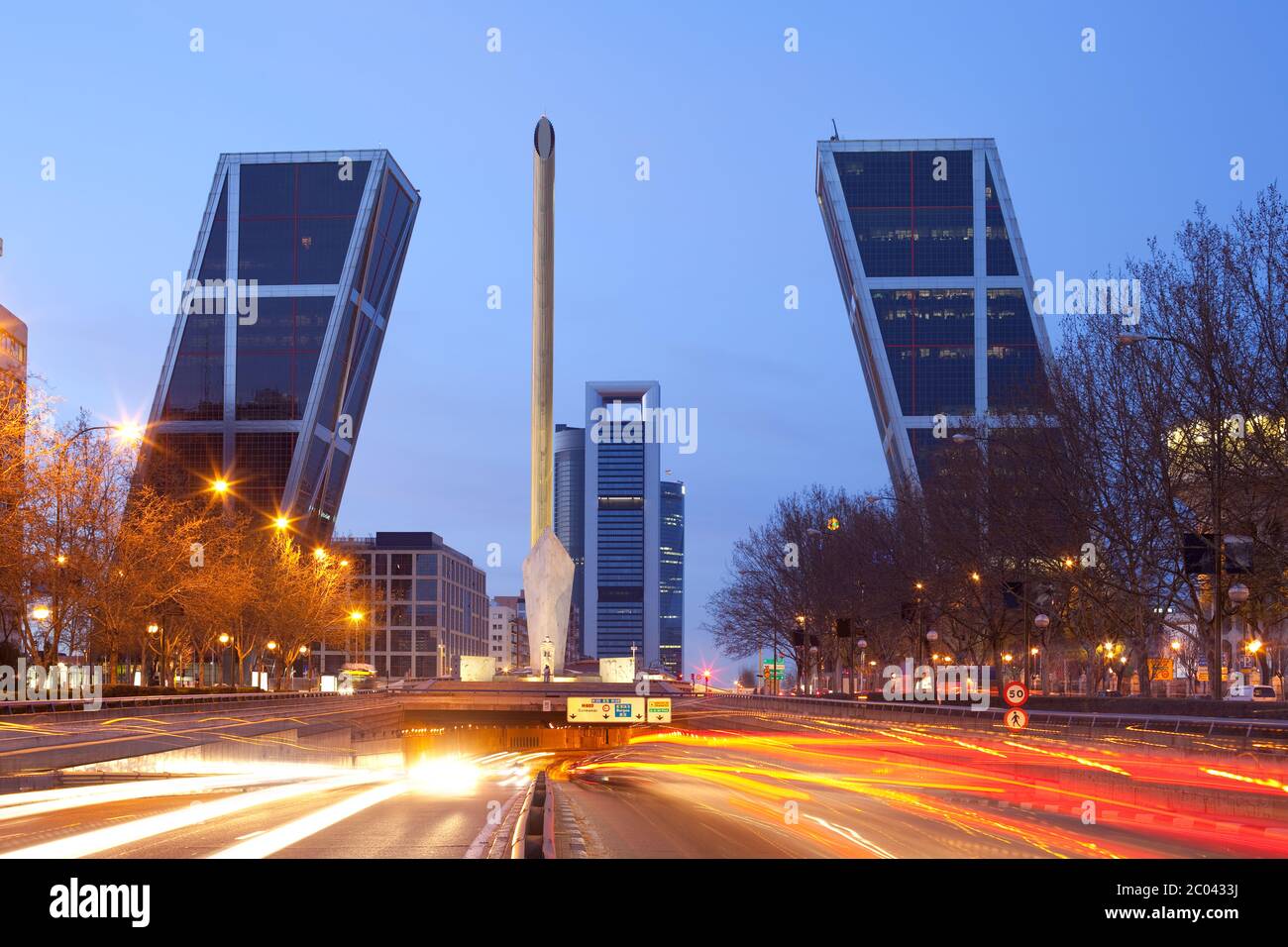
The northernmost section of the Castellana represents 21st-century Madrid. The Plaza de Castilla is famous for the "Gate of Europe" (Puerta de Europa), the twin leaning towers that serve as a symbolic gateway. Beyond this point lies the Cuatro Torres Business Area (CTBA), which actually comprises five major skyscrapers following the completion of the Caleido tower. These buildings define the city's skyline and house the world’s leading consulting firms, banks, and technology giants.

Key Landmarks and Architectural Icons
A journey along the Castellana offers a masterclass in architectural history. Below are the most significant structures that define the avenue’s identity in 2026.
| Landmark | Location | Primary Use | Notable Feature |
|---|---|---|---|
| National Library | Plaza de Colón | Cultural/Public | Neoclassical facade and massive historical archives. |
| Nuevos Ministerios | Castellana 67 | Government | Massive arcade and central garden; home to transport and labor ministries. |
| Santiago Bernabéu | Castellana 142 | Sports/Events | 2026 state-of-the-art retractable roof and 360-degree LED screen. |
| Torre Picasso | AZCA District | Corporate | Designed by Minoru Yamasaki; once the tallest building in Spain. |
| Torre de Cristal | CTBA | Corporate | Currently the tallest building in Spain at 249 meters. |
| Caleido (Fifth Tower) | CTBA | Education/Retail | Shaped like an inverted "T"; houses the IE University campus. |
The Santiago Bernabéu Transformation
In 2026, the Santiago Bernabéu Stadium stands as more than just the home of Real Madrid. Following its extensive multi-year renovation, it has become a year-round engine for the Castellana’s economy. The stadium’s wrap-around metallic skin and retractable pitch allow it to host NFL games, concerts, and international conventions without damaging the playing surface. Its integration into the streetscape includes new pedestrian zones and luxury retail, making it a focal point for visitors even on non-match days.
Transportation and Connectivity
Paseo de la Castellana is the most interconnected corridor in Spain. Its infrastructure is designed to move hundreds of thousands of people daily through a multi-modal system.
- Metro de Madrid: Line 10 runs almost the entire length of the avenue, with key stops at Colón, Gregorio Marañón, Nuevos Ministerios, Santiago Bernabéu, Cuzco, Plaza de Castilla, and Begoña.
- Cercanías (Commuter Rail): The Nuevos Ministerios and Chamartín stations are vital hubs. Chamartín, located at the northern end, is currently the center of a massive expansion to accommodate more high-speed (AVE) trains, linking Madrid to both the north of Spain and the airport.
- Sustainable Mobility: In 2026, the Castellana features segregated bike lanes and expanded sidewalks as part of the city’s "30-Day Air" initiative. The BiciMAD electric bike-sharing system has high-density docking stations every few hundred meters.
- Bus Rapid Transit: Numerous EMT bus lines utilize dedicated central lanes, ensuring that surface transit remains efficient even during peak congestion.
Business and Real Estate Landscape
The Castellana is the most expensive commercial real estate market in Spain. Prime office space here is sought after by "Big Four" accounting firms, law firms, and multinational corporations.
- Prime Office Rents: As of 2026, the "Prime" zone (Colón to María de Molina) commands the highest prices per square meter, driven by the limited supply of historic buildings refurbished with modern LEED and BREEAM sustainability certifications.
- The Rise of Flexible Spaces: Following the global shift in work patterns, many older buildings along the Castellana have been converted into premium coworking spaces and "flex" offices to cater to tech startups and satellite corporate teams.
- Residential Luxury: While primarily commercial, the areas bordering the southern Castellana (such as Almagro and El Viso) remain the most prestigious residential addresses in the city, favored by diplomats and high-net-worth individuals.
The Future: Madrid Nuevo Norte
The evolution of Paseo de la Castellana continues with Madrid Nuevo Norte, one of Europe’s largest urban regeneration projects. In 2026, the groundwork for the northern extension of the avenue is visible. This project will extend the Castellana by several more kilometers, covering the existing railway tracks at Chamartín and creating a new Central Business District (CBD) with dozens of new buildings, including what is projected to be the tallest skyscraper in the European Union.
This expansion aims to fix the historic "fracture" in the north of the city, providing 10,500 new homes and over 200,000 square meters of green space. The "Park of the Central Wind" will serve as the new green lung at the end of the extended Castellana, utilizing sustainable watering systems and local flora to combat the urban heat island effect.
Practical Information for Visitors and Professionals
Navigating the Axis
If you are visiting for business, the section between Nuevos Ministerios and Plaza de Castilla is likely where your meetings will occur. For luxury shopping and dining, focus on the area between Plaza de Colón and Glorieta de Emilio Castelar.
Dining and Leisure
The Castellana is home to some of Madrid’s most acclaimed restaurants. Many of the "sky bars" in the CTBA and the upscale eateries in the AZCA area offer high-end Spanish and international fusion cuisine. During the evening, the terraces along the avenue are popular spots for "after-work" drinks among the city's professional class.
Safety and Access
Paseo de la Castellana is extremely safe and well-monitored. Most public spaces are accessible to individuals with reduced mobility, including modern elevators at all major Metro stations along the route.
Frequently Asked Questions
What is the best way to travel the entire length of Paseo de la Castellana?
The most efficient way is taking Metro Line 10. If you prefer to see the architecture, the Bus Line 27 is legendary among locals; it travels nearly the entire length of the axis from Glorieta de Embajadores through the Castellana to Plaza de Castilla, offering a "surface tour" for the price of a standard bus ticket.
Is Paseo de la Castellana inside the Madrid Central (ZBE) restricted zone?
As of 2026, parts of the southern Castellana border the low-emission zones (ZBE). While the main avenue is generally accessible to most vehicles, side streets in the Centro and Salamanca districts have strict "Environmental Badge" requirements. It is always recommended to use public transport or "Zero Emission" vehicles to avoid fines.
How has the Santiago Bernabéu changed the area?
The stadium has transitioned from a weekend-only venue to a daily commercial hub. This has increased pedestrian traffic and elevated property values in the Hispanoamérica and Nueva España neighborhoods. It also means the area is much busier on weeknights due to concerts and corporate events.
Where can I find the best views of the Castellana skyline?
For a view of the southern and central sections, the rooftop terrace of the Círculo de Bellas Artes (near Alcalá) is excellent. For the northern skyscrapers, the Caleido Garden or the upper floors of the hotels in the Four Towers (like the Eurostars Madrid Tower) offer spectacular vistas of the city and the Sierra de Guadarrama.
Recommendations for Action
Whether you are in Madrid for business or leisure, Paseo de la Castellana demands a dedicated visit. To truly experience its scale, start at Plaza de Colón in the morning and walk north toward Nuevos Ministerios. Use this time to observe the transition from 19th-century mansions to mid-century modernism.
For the afternoon, take the Metro or a taxi to the Cuatro Torres area to witness the future of Spanish urbanism. If you are a professional looking for office space or investment opportunities, prioritize the Madrid Nuevo Norte information center to understand how the avenue’s extension will redefine the city's economic center over the next decade.
For real-time transport updates and event schedules at the Bernabéu, consult the official Madrid City Council website or the CRTM (Consorcio Regional de Transportes de Madrid) portal.
Image Gallery
Select an image to open it in a new tab.


Mateo Castillo
Decentralized Finance and E-Payments Strategist
