Securing Distributed Systems: Comprehensive Microservices Security in the Cloud
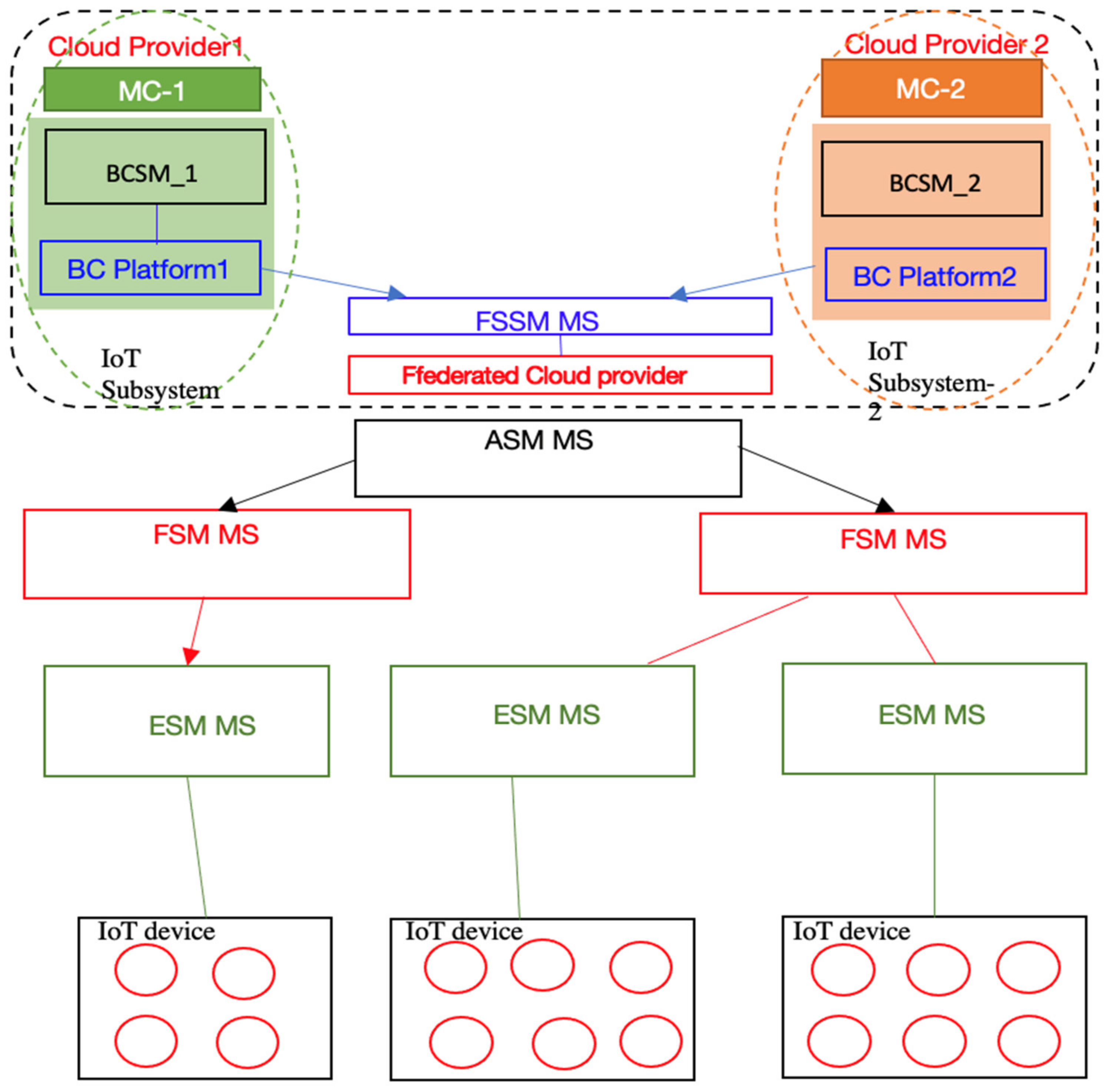
Microservices security in the cloud requires a defense-in-depth model that secures communication channels, strictly enforces identity and access management across ephemeral containers, continuously monitors container images and runtimes for vulnerabilities, and ensures robust data encryption both at rest and in transit.
Understanding the Shift from Monolithic to Microservices Security
Securing modern cloud-native applications requires a fundamental departure from traditional perimeter-defense models. In a monolithic architecture, security measures typically focus on a hard, well-defined edge. Once a user or request breaches this perimeter, it often enjoys broad access across internal components.
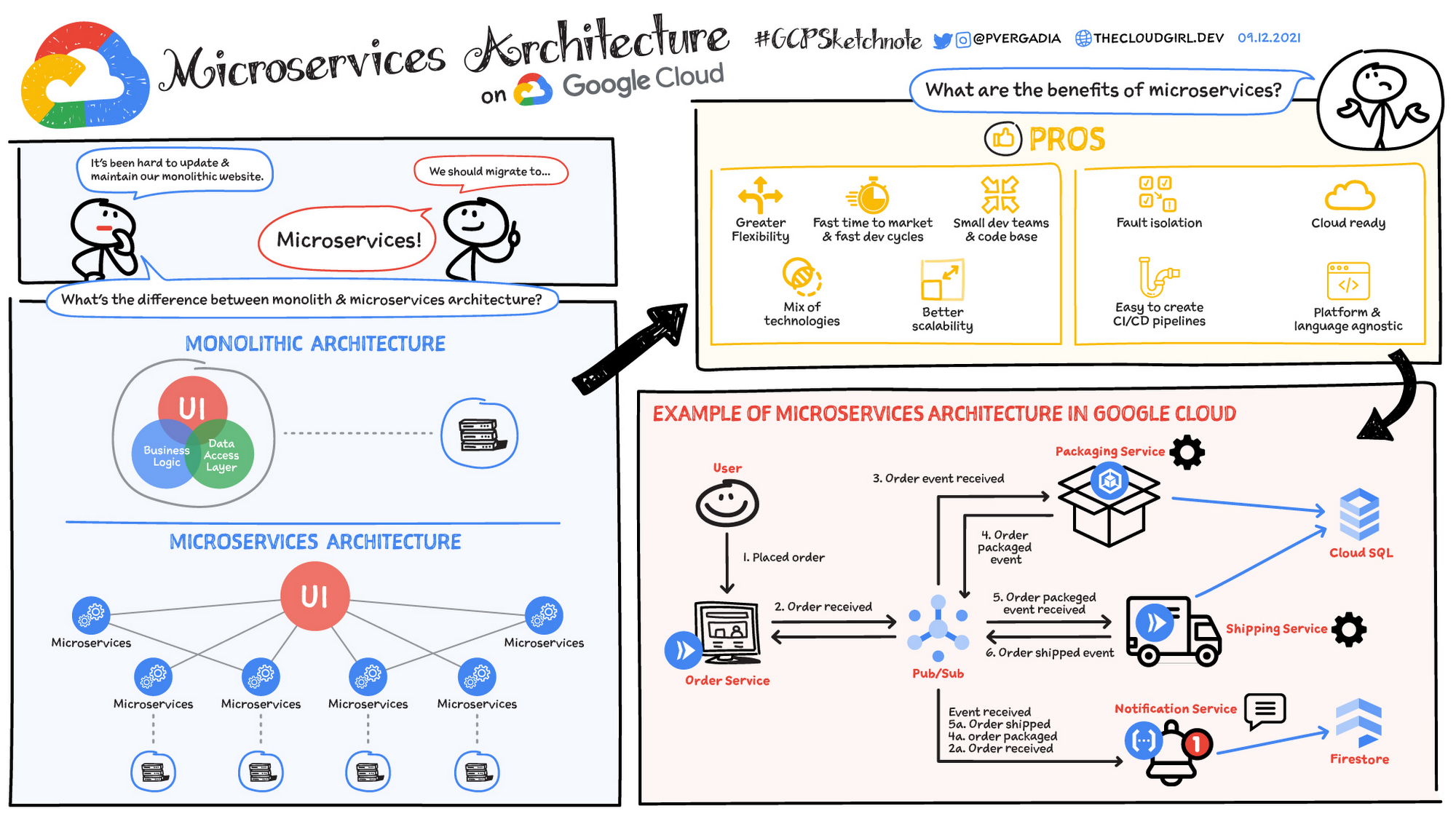
Microservices break monolithic applications down into dozens or hundreds of loosely coupled, independently deployable services. While this design improves scalability, agility, and fault tolerance, it expands the attack surface exponentially.
Each microservice communicates over a network—frequently across containerized environments orchestrated by platforms like Kubernetes—creating countless internal pathways for potential lateral movement. If an attacker compromises a single low-privilege service, they can potentially pivot to critical backend databases or administrative components unless rigorous internal barriers exist.
Cloud-native environments are also highly dynamic. Containers scale up and down in seconds, IP addresses change constantly, and infrastructure is provisioned through code. Traditional security tools that rely on static IP addresses, manual firewall configurations, and long-lived credentials cannot keep pace.
Consequently, cloud security architects must adopt a zero-trust mindset, assuming that the network is always hostile and that every single request, service-to-service call, and API interaction must be authenticated, authorized, and encrypted.
Core Pillars of Cloud Microservices Security
Establishing a resilient security posture across a distributed cloud ecosystem relies on several interconnected pillars. Neglecting any single component can introduce vulnerabilities that compromise the entire application stack.
Identity and Access Management (IAM) for Services
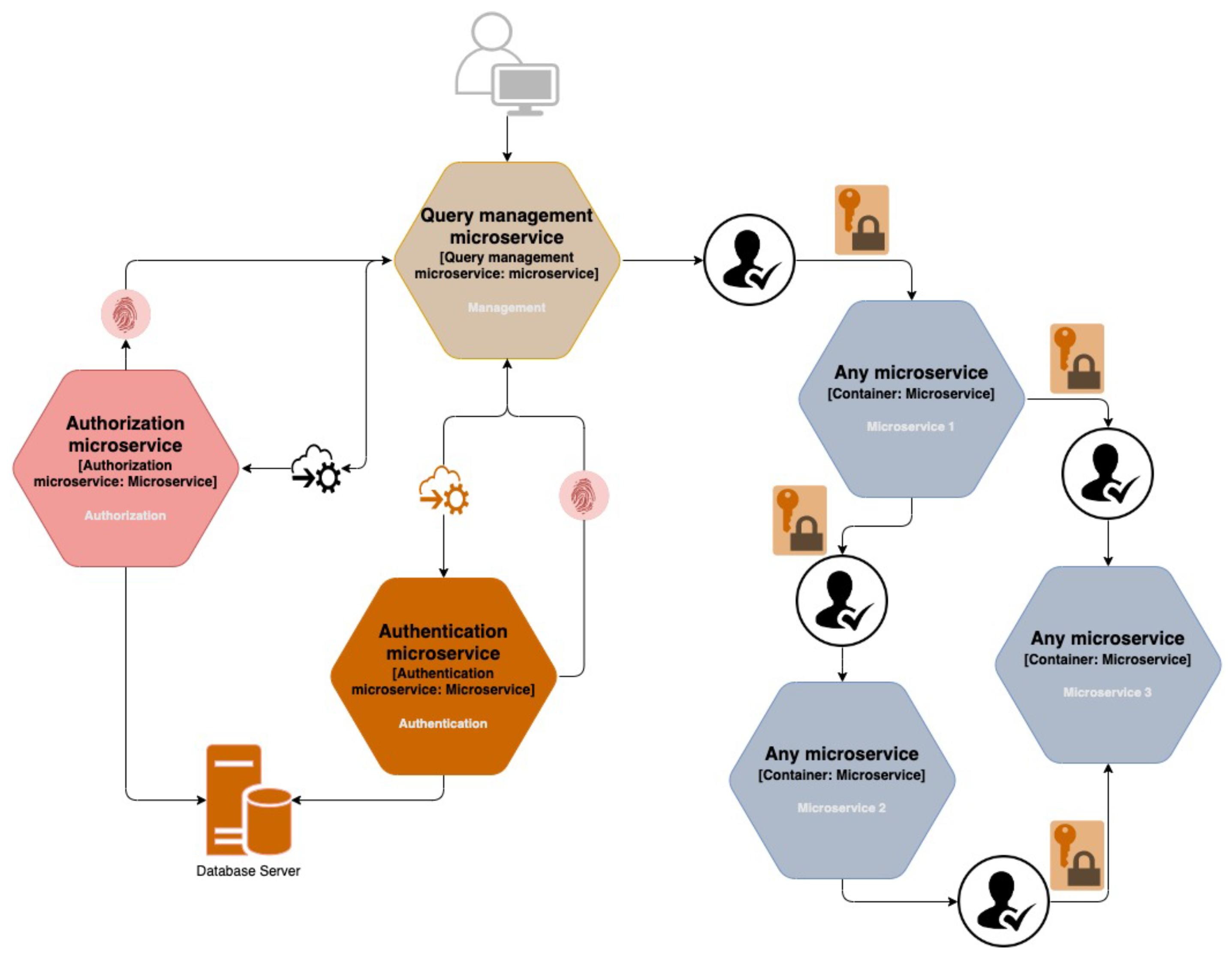
In a microservices architecture, machines talk to machines just as often as humans talk to machines. Traditional user-password paradigms are insufficient for service-to-service authentication.
- Service Accounts and Roles: Every microservice should run with its own dedicated service account possessing the absolute minimum required permissions (the Principle of Least Privilege).
- Token-Based Authentication: Utilizing short-lived JSON Web Tokens (JWTs) or OAuth 2.0 access tokens ensures that even if a token is intercepted, its window of exploitation is tightly limited.
- Workload Identity: Modern cloud providers and orchestrators offer workload identity federation, binding cloud provider IAM roles directly to container orchestrator service accounts without storing long-lived credentials inside container images.
Securing Communication Channels (Data in Transit)
Because microservices frequently traverse internal and external networks, encrypting data in transit is non-negotiable.
- Mutual TLS (mTLS): Implementing mTLS ensures that not only is the traffic encrypted, but both the client and server microservices cryptographically verify each other’s identities before exchanging data.
- Service Meshes: Tools like Istio, Linkerd, or Consul automate the injection of sidecar proxies that handle mTLS transparently, sparing developers from implementing cryptographic handshakes in application code.
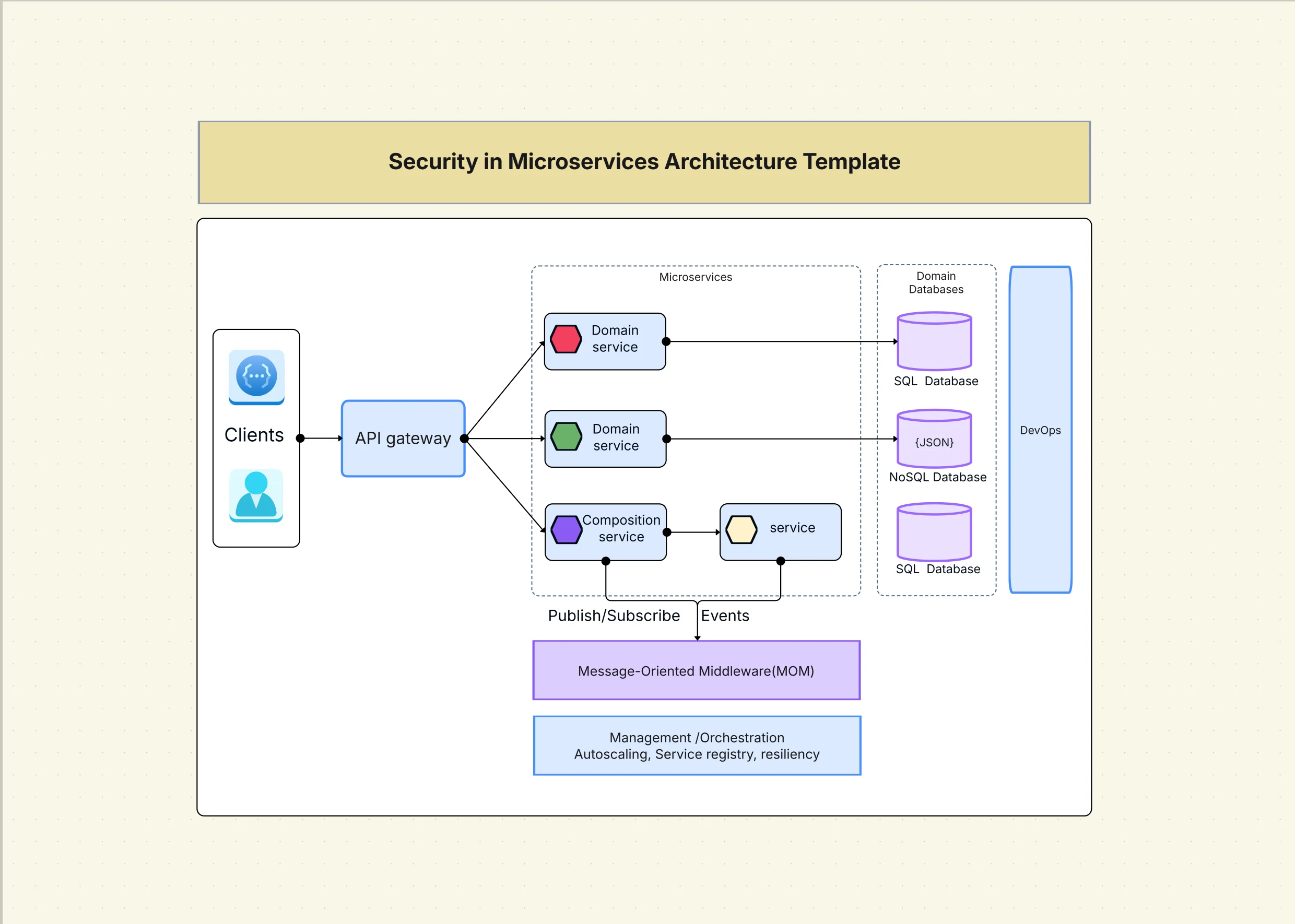
- API Gateways: External traffic should always enter through a centralized API gateway that terminates TLS, validates client credentials, performs rate limiting, and screens for common web application attacks before routing requests to internal services.
Data Protection (Data at Rest)
Microservices often utilize distributed databases, cache layers, and persistent volumes. Protecting data at rest requires a combination of strong encryption algorithms and granular storage policies.
- Encryption Keys Management: Use cloud-native Key Management Services (KMS) to generate, rotate, and manage encryption keys. Ensure keys are stored separately from the encrypted data volumes.
- Database-Level Security: Beyond encrypting storage disks, implement row-level and column-level security within databases to restrict what individual microservices can read or write.

Container Security and Runtime Defense
Containers form the execution bedrock of most cloud microservices. Securing the container lifecycle requires shifting security left into the development pipeline and maintaining vigilance during runtime execution.
- Container Security Lifecycle
- [1. Build Phase]
- Static analysis, base image hardening
- [2. Registry Phase]
- Vulnerability scanning, digital signing
- [3. Runtime Phase]
- Behavioral monitoring, network isolation
- [1. Build Phase]
Build and Registry Phases
Security begins long before deployment. Developers must build container images using minimal, hardened base images (such as Alpine Linux or distroless images) to reduce the number of installed packages and potential software vulnerabilities.
Automated container image scanners integrated into the CI/CD pipeline should inspect dependencies for known Common Vulnerabilities and Exposures (CVEs) before images are pushed to a container registry. Furthermore, implementing image signing (using tools like Cosign) ensures that the orchestrator only runs cryptographically verified binaries.
Runtime Isolation and Hardening
Once containers are deployed to the cloud, runtime security mechanisms must prevent container escapes and malicious execution.
- Rootless Containers: Configure containers to run as non-root users by default, mitigating the impact of potential container breakout exploits.
- Linux Kernel Security Modules: Leverage tools like AppArmor, SELinux, or seccomp profiles to restrict the system calls a container can make to the host kernel.
- Ephemeral Filesystems: Ensure container root filesystems are read-only where possible, forcing applications to write ephemeral data only to dedicated, monitored mount volumes.
Comparison of Cloud Microservices Security Strategies
Different architectural approaches offer varying trade-offs regarding operational complexity, performance overhead, and security depth.
| Security Strategy | Primary Focus | Operational Complexity | Performance Impact | Best Suited For |
|---|---|---|---|---|
| API Gateway Filtering | Perimeter and ingress traffic control | Low to Medium | Low | Public-facing web applications and mobile backends |
| Service Mesh (mTLS) | Service-to-service encryption & identity | High | Low to Medium | Large-scale internal microservices architectures |
| Runtime Security Agents | Behavioral anomaly detection & syscall auditing | Medium | Medium | Highly regulated environments (finance, healthcare) |
| Static Code Analysis (SAST) | Vulnerability identification prior to build | Low | None (Compile-time) | All CI/CD software pipelines |
Policy Enforcement and Governance
As microservices ecosystems scale, manual security reviews become impossible. Automated policy-as-code frameworks allow organizations to codify security requirements and enforce them programmatically across the infrastructure.
Tools like Open Policy Agent (OPA) enable security teams to write declarative rules that govern cloud resources and container configurations. For example, an OPA policy can automatically block the deployment of any Kubernetes pod that runs as the root user, exposes privileged ports, or lacks required resource limits.
Integrating these policies into admission controllers ensures that non-compliant workloads are rejected before they ever touch the cluster.
Observability, Logging, and Incident Response
Security in the cloud is not just about prevention; it requires rapid detection and forensic capability. Because microservices generate immense volumes of telemetry data, centralized observability is essential.
- Distributed Tracing: Implementing distributed tracing (using frameworks like OpenTelemetry) allows security analysts to trace a single user request across dozens of microservices, identifying anomalies or unauthorized data exfiltration paths.
- Centralized SIEM Integration: Aggregate access logs, audit logs, and container runtime alerts into a Security Information and Event Management (SIEM) platform.
- Immutable Logging: Ensure that log storage is write-once-read-many (WORM) to prevent attackers from tampering with forensic evidence after a breach.
Common Misconfigurations and Troubleshooting
Even with advanced tooling, misconfigurations frequently undermine microservices security. Below are common pitfalls and remediation strategies.
- Over-Permissive IAM Roles: Assigning wildcard permissions (
*) to cloud service accounts. Remediation: Regularly audit permissions using cloud posture management tools and scope roles down to specific resource ARNs. - Unencrypted Internal Traffic: Assuming traffic inside a Virtual Private Cloud (VPC) is inherently safe. Remediation: Enable mTLS across all service-to-service communications regardless of network boundaries.
- Exposed Management Dashboards: Leaving administrative tools, debugging endpoints, or database management UIs unauthenticated or exposed to the public internet. Remediation: Place all internal administrative tools behind robust identity-aware proxies and internal-only load balancers.
- Stale Secret Management: Hardcoding API keys, database credentials, or private certificates into environment variables or source code repositories. Remediation: Adopt dedicated secrets managers (such as HashiCorp Vault or cloud native secret stores) and enforce automated secret rotation policies.
Practical Next Steps for Implementation
Organizations looking to harden their cloud microservices architecture should proceed methodically:
- Audit Current Inventory: Map all running microservices, their data stores, and external entry points.
- Enforce Identity: Implement workload identity and remove all static credentials from container definitions.
- Secure Transit: Roll out a service mesh or configure application-level mTLS for internal communication.
- Automate Governance: Implement container image scanning in CI/CD pipelines and policy-as-code enforcement at the orchestrator layer.
Image Gallery
Select an image to open it in a new tab.


Celine Dubois
Contemporary Living and Global Arts Columnist
