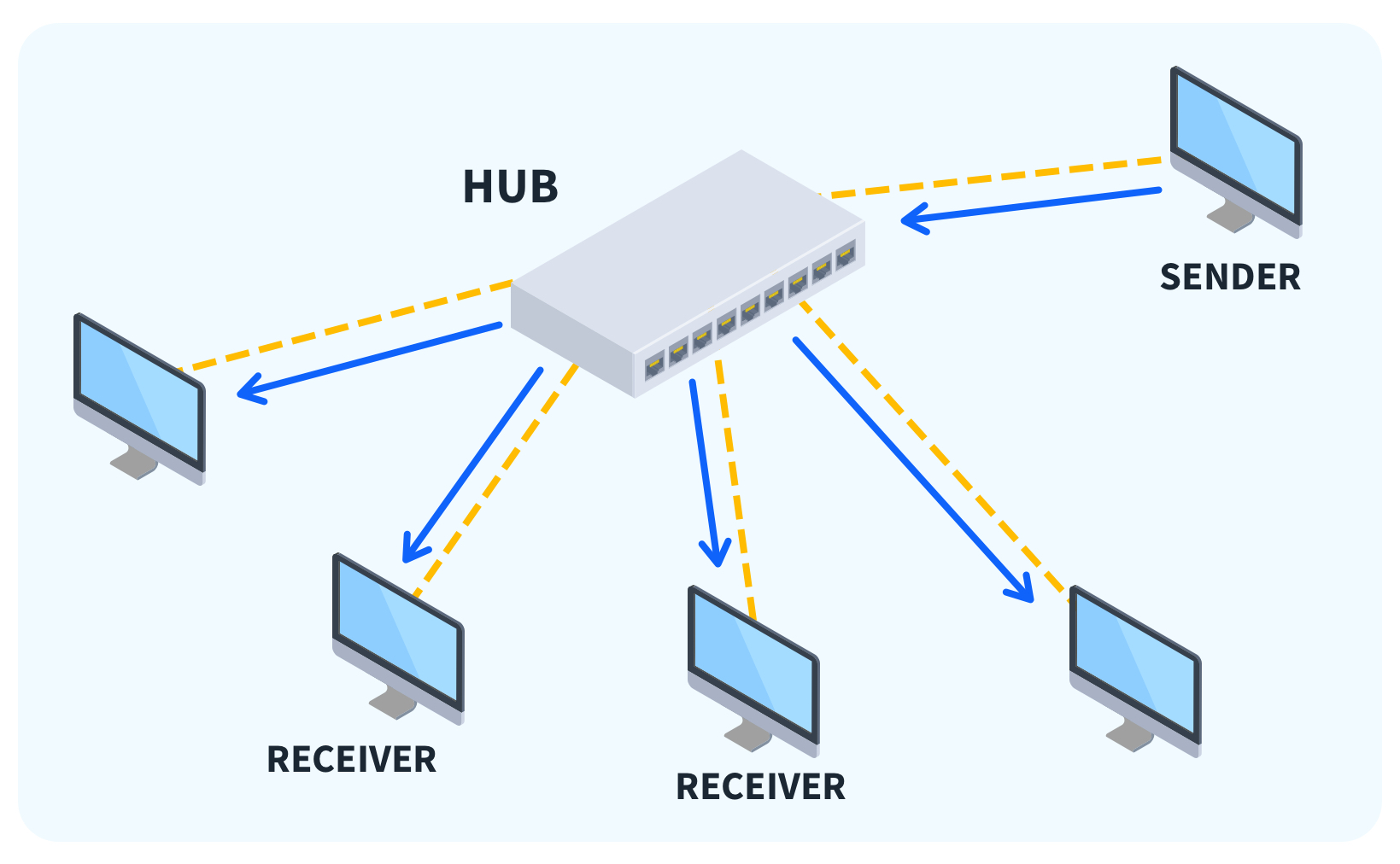
Computer network information services encompass the structured protocols, software systems, and directory architectures that distribute data, manage resources, and resolve identifiers across local and wide-area networks. By bridging the gap between raw physical connectivity and user-facing applications, these services ensure that devices, servers, and users can reliably locate, authenticate, and communicate with one another within complex digital environments.
The Evolution and Core Purpose of Network Information Services
To understand how modern digital communication operates, one must look past physical cables, switches, and routers to examine the software logic running on top of them. At its foundation, computer networking establishes physical and logical pathways between machines. However, raw data packets traveling between IP addresses are insufficient for scalable human or machine interaction. Users do not want to remember numerical addresses, and system administrators cannot manually configure every single device on a sprawling enterprise network every time a change occurs.
This operational reality led to the creation of network information services. These services provide an abstraction layer, turning raw hardware connectivity into a manageable, organized directory of resources. Early networking environments relied on flat text files—such as the original local HOSTS.TXT file on ARPANET—to map machine names to numerical addresses. As networks scaled into thousands of interconnected nodes, these static files became impossible to maintain.
The core purpose of a network information service is centralization, automation, and synchronization. Whether managing user identities across an entire corporate campus, mapping human-readable domain names to machine-readable addresses, or distributing system configuration parameters across Unix-like systems, these services eliminate administrative redundancy. They establish a single source of truth for network data, ensuring that every connected device operates with accurate, up-to-date information regarding identity, routing, and access permissions.
Foundational Protocols and Architectural Frameworks
Network information services operate through a client-server architecture relying on standardized protocols. A client requests data—such as a user password hash, a printer configuration, or a domain name resolution—while a centralized directory or database server responds with the requested information.
Domain Name System (DNS)
Perhaps the most ubiquitous network information service is the Domain Name System. DNS acts as the phonebook of the internet, translating user-friendly domain names (such as example.com) into computer-routable IP addresses (such as 192.0.2.1). Operating primarily on UDP and TCP port 53, DNS utilizes a hierarchical, distributed database architecture.
- Root Level: The top of the hierarchy, managed by root name servers.
- Top-Level Domains (TLDs): Categories such as
.com,.org, and country-code extensions like.uk. - Authoritative Name Servers: Servers that hold the actual DNS records for specific domains.
- Resolvers: Recursive or forwarder servers (often managed by ISPs or public providers like Cloudflare or Google) that query the hierarchy on behalf of end-user applications.
Network Information Service (NIS) and NIS+
Developed originally by Sun Microsystems as Sun Yellow Pages (YP)—though renamed to NIS due to a trademark dispute—Network Information Service is a directory service protocol used primarily in Unix environments. NIS allows a group of machines within a Local Area Network (LAN) to share a common set of configuration files, including user account databases (passwd and shadow), host tables, and network group definitions.
In an NIS architecture, a master server maintains the definitive system maps. Slave servers replicate these maps for redundancy and load balancing. When a user attempts to log into any client workstation on the NIS domain, the workstation queries the NIS server to verify credentials, eliminating the need to maintain local user accounts on every individual machine. While powerful for local administration, traditional NIS lacks robust native encryption and fine-grained access control, leading to its gradual replacement by more secure directory frameworks in modern enterprise networks.
Lightweight Directory Access Protocol (LDAP) and Active Directory
For enterprise environments requiring comprehensive management of users, computers, printers, and security policies, LDAP serves as the underlying protocol for querying and modifying directory services. Microsoft’s Active Directory (AD), built on top of LDAP and DNS, is the most widely deployed enterprise information service in corporate IT. AD structures network entities in a hierarchical, object-oriented tree format, categorizing resources into domains, trees, and forests. This allows administrators to enforce group policies, manage authentication tokens via Kerberos, and control access permissions uniformly across thousands of endpoints.
Comparison of Core Network Information Services
To better understand how these distinct services serve different layers of a computer network, the table below compares their primary functions, target environments, and underlying protocols.
| Service Type | Primary Function | Target Environment | Underlying Protocols | Common Security Considerations |
|---|---|---|---|---|
| DNS | Resolves domain names to IP addresses | Global Internet & Local Networks | UDP/TCP 53 (DNSSEC, DoH, DoT for security) | Vulnerable to cache poisoning and DDoS without DNSSEC. |
| NIS | Shares Unix system configuration files | Local Area Networks (LANs) | RPC (Remote Procedure Call) | Weak native authentication; data transmitted in clear text unless tunneled. |
| LDAP / Active Directory | Centralized user authentication and resource management | Enterprise IT Infrastructure | TCP 389 (LDAP), 636 (LDAPS), Kerberos | Requires strict access control lists and encrypted channels to prevent credential harvesting. |
| DHCP | Dynamically assigns IP addresses and network parameters | All IP-based Networks | UDP 67, 68 | Vulnerable to rogue DHCP servers and exhaustion attacks without snooping. |
Prerequisites and Infrastructure Requirements
Deploying and maintaining reliable network information services requires careful architectural planning, hardware sizing, and security provisioning. Unlike stateless packet-forwarding routers, information service servers maintain stateful databases that are critical to daily operations; if an enterprise directory service goes offline, authentication and resource resolution grind to a halt.
Hardware and Network Topologies
- Redundancy and High Availability: Critical information services—especially DNS and directory controllers—require a minimum of two independent servers (primary and secondary/replica) to prevent single points of failure.
- Low Latency Connectivity: Because every network login, application lookup, and web navigation request depends on these services, round-trip times (RTT) between clients and directory servers must be kept minimal, typically under 20 milliseconds within local data centers.
- Storage and Memory Sizing: Directory services like Active Directory store all object data in RAM-cached databases (such as the NTDS.dit file in Windows environments). Sufficient physical memory must be allocated to ensure directory indexes fit within cache, preventing costly disk input/output bottlenecks during peak authentication hours.
Security and Protocol Hardening
Modern network information services handle sensitive operational data, making them prime targets for malicious actors. Administrators must implement rigorous security baselines:
- Encryption in Transit: Plain-text protocols like standard LDAP (port 389) or unencrypted DNS must be replaced with secure alternatives such as LDAPS (LDAP over SSL/TLS on port 636) and DNS over HTTPS (DoH) or DNS over TLS (DoT).
- Access Control Lists (ACLs): Principle of least privilege must govern directory access. Ordinary users should only read necessary directory attributes, while administrative privileges must be strictly audited and separated using role-based access control (RBAC).
- Firewall Segmentation: Information service ports must be isolated behind secure network perimeters or internal firewalls, exposing only necessary recursive resolvers or public-facing authoritative name servers to external traffic.
Operational Limitations and Common Administrative Mistakes
Even well-designed network information services can suffer from performance degradation, security breaches, or synchronization failures due to common configuration oversights.
Replication Latency and Split-Brain Syndromes
In multi-master directory architectures, changes made on one domain controller must replicate to all other replicas. When network partitions occur, administrators may introduce conflicting modifications on isolated servers. Once connectivity is restored, replication engines may fail to resolve conflicting object versions automatically, leading to inconsistent user permissions or authentication failures across the network.
Stale DNS Records and TTL Misconfigurations
Time-to-Live (TTL) values dictate how long recursive resolvers cache DNS records. Setting TTLs excessively high prevents rapid failover during disaster recovery scenarios, as clients continue querying dead IP addresses long after traffic has been rerouted. Conversely, setting TTLs too low can overwhelm authoritative name servers with excessive query volume.
Neglecting Logging and Audit Trails
Many organizations deploy network information services and fail to enable detailed security auditing. Without comprehensive logging of authentication requests, failed login attempts, and schema modifications, detecting unauthorized lateral movement by attackers within an enterprise network becomes nearly impossible.
Troubleshooting Network Information Services
When users report connectivity issues, application errors, or login failures, systematic troubleshooting can isolate whether the root cause lies within the local machine, the network transport layer, or the information service itself.
- Verify Local Configuration: Check the machine's network settings to ensure it points to the correct primary and secondary information service addresses (e.g., correct DNS server IPs or LDAP server endpoints).
- Test Basic Connectivity: Use diagnostic tools like
pingortracerouteto verify that the client can reach the service port over the network. - Query the Service Directly:
- For DNS issues, use command-line utilities such as
nslookupordigto query specific authoritative servers and verify record accuracy. - For directory service issues, use LDAP query tools (
ldapsearch) or PowerShell commands (Get-ADUser) to test connectivity and query response times.
- For DNS issues, use command-line utilities such as
- Inspect Service Logs: Review system event logs, DNS analytical logs, or directory service event viewers on the server side to identify database corruption, replication errors, or authentication token rejections.
- Clear Local Caches: Flush local resolution caches (such as running
ipconfig /flushdnson Windows or restarting thesystemd-resolvedservice on Linux) to clear out poisoned or outdated records.
Practical Next Actions for Network Administrators
To ensure optimal performance and security of network information services within an organization, administrators should perform a comprehensive infrastructure audit. Begin by inventorying all active directory controllers, DNS resolvers, and configuration distribution servers. Verify that all legacy, unencrypted protocols are deprecated in favor of secure, encrypted alternatives. Implement automated monitoring for replication health and query response times, and establish documented disaster recovery procedures for restoring core directory databases in the event of a catastrophic system failure.
Image Gallery
Select an image to open it in a new tab.
Lars Thomsen
Global Labor Markets and Economic Strategy Editor
