
Securing full funding for graduate studies requires identifying prestigious international awards early in the admissions cycle. The premier master degree scholarships for 2026 include government-backed programs like Chevening, Fulbright, DAAD EPOS, Australia Awards, MEXT, and Commonwealth Scholarships, alongside institutional awards such as Gates Cambridge, Rhodes, Erasmus Mundus, and Swiss Government Excellence Scholarships.
Graduate education opens doors to high-level research, global career networks, and specialized professional roles. However, tuition costs and living expenses at top institutions present significant financial barriers. Fully funded scholarships mitigate these costs by covering tuition fees, living stipends, return flights, and health insurance.
Because application timelines for 2026 entry generally open between mid-2025 and early 2026, prospective students must understand the specific eligibility criteria, funding packages, and selection priorities of each major award.
High-Impact International Master's Scholarships for 2026
1. Chevening Scholarships (United Kingdom)
Funded by the UK Foreign, Commonwealth & Development Office (FCDO) and partner organizations, Chevening Scholarships offer full financial support for one-year master’s degree programs at any accredited UK university. The award is designed for mid-career professionals who demonstrate leadership potential and strong academic performance.
- Financial Coverage: Full university tuition fees (with a cap applied to specific MBA programs), a monthly living allowance, return economy flights to the UK, and essential travel top-ups.
- Key Requirements: Applicants must hold an undergraduate degree, have a minimum of two years of work experience (equivalent to 2,800 hours), and meet the UK university entry requirements. Candidates must apply to three eligible UK master's courses.
- Mandatory Condition: Scholars must return to their home country for at least two years after completing their studies to contribute to local development.
2. Fulbright Foreign Student Program (United States)
The Fulbright Foreign Student Program enables binational academic exchange for international graduate students seeking master's degrees in the United States. Administered by binational Fulbright Commissions or U.S. Embassies, the program operates in over 160 countries.
- Financial Coverage: Full or partial tuition, a monthly living stipend, accident and sickness health benefits, textbook allowances, and international airfare.
- Key Requirements: Eligibility criteria vary significantly by country of origin. Applicants must hold a bachelor's degree, demonstrate proficiency in English (via TOEFL scores), and pass rigorous panel interviews conducted by local commissions.
- Visa Obligations: Recipients study under the J-1 exchange visitor visa, which includes a mandatory two-year home-country physical presence requirement following degree completion.
3. Erasmus Mundus Joint Master Degrees (European Union)
The European Union’s Erasmus+ Program funds joint master's degrees delivered by consortia of universities across multiple European countries. Students study in at least two different host countries, earning a joint, double, or multiple degree upon graduation.
- Financial Coverage: Comprehensive funding covers university participation costs (tuition and insurance), a monthly living allowance (typically €1,400 per month under the current Erasmus+ framework), and international travel allowances based on travel distance.
- Key Requirements: Candidates must hold a recognized first higher education degree or demonstrate equivalent learning. Applications are submitted directly to individual EMJMD consortia rather than a central government office.
- Mobility Rule: Students must complete academic periods in at least two distinct European countries represented in the academic consortium.
4. DAAD EPOS Scholarships (Germany)
The German Academic Exchange Service (DAAD) offers the Development-Related Postgraduate Courses (EPOS) program, targeting professionals from developing and emerging industrial nations. The award supports master’s study at public German universities in fields such as engineering, agricultural sciences, public health, and economics.
- Financial Coverage: Monthly stipend of €934 for master's candidates, compulsory health and liability insurance, travel allowances, and annual research grants. German university tuition is generally free at public institutions, though administrative fees are covered.
- Key Requirements: Applicants must possess a bachelor's degree (typically completed within the last six years) and at least two years of relevant professional experience. Language requirements depend on the chosen program (English or German).
- Selection Focus: Priority is given to candidates working in public administration, state institutions, or civil society organizations related to sustainable development.
5. Australia Awards Scholarships (Australia)
Managed by the Department of Foreign Affairs and Trade (DFAT), Australia Awards Scholarships focus on human resource development in partner countries, primarily within the Indo-Pacific region.
- Financial Coverage: Full tuition fees, return airfare, a one-off establishment allowance to assist with accommodation and textbooks, a Contribution to Living Expenses (CLE), and Overseas Student Health Cover (OSHC).
- Key Requirements: Applicants must be at least 18 years old, citizens of an eligible participating country, and meet specific academic and English language benchmarks (IELTS or TOEFL).
- Re-entry Commitment: Awardees must leave Australia for a minimum of two years after degree completion. Failure to do so incurs a debt equal to the total cost of the scholarship.
6. Gates Cambridge Scholarships (United Kingdom)
Established by a donation from the Bill & Melinda Gates Foundation, the Gates Cambridge Scholarship supports postgraduate study at the University of Cambridge. It is open to non-UK citizens applying for full-time master’s or doctoral programs.
- Financial Coverage: Covers the full University Composition Fee, a maintenance allowance (approx. £20,000 per year), one economy flight ticket, and visa cost reimbursements. Discretionary funding is available for conference attendance and family allowances.
- Key Requirements: Candidates must apply concurrently for admission to the University of Cambridge and for scholarship funding. Selection criteria focus on intellectual ability, leadership capacity, and a commitment to improving the lives of others.
- Academic Excellence: Applicants must rank at the top of their academic discipline, as admission to Cambridge forms the initial screening layer.
7. Rhodes Scholarship (United Kingdom)
The Rhodes Trust administers the world’s oldest international graduate scholarship, funding postgraduate study at the University of Oxford. The award selects candidates demonstrating exceptional intellect, character, leadership, and commitment to service.
- Financial Coverage: Full Oxford University tuition fees, a dedicated monthly living stipend, health insurance coverage (IHS), and two return flights between Oxford and the scholar's home country.
- Key Requirements: Applicants must fall within specific age brackets (typically 18–24 or up to 28 for mature candidates depending on constituency rules), hold a bachelor's degree with first-class honors or equivalent, and reside in a recognized Rhodes constituency.
- Global Constituency: While traditionally divided into geographic constituencies, the Global Rhodes Scholarship now permits applicants from non-constituency countries to apply.
8. MEXT Japanese Government Scholarships (Japan)
The Ministry of Education, Culture, Sports, Science and Technology (MEXT) of Japan offers scholarships for international graduate students to pursue research and master’s degrees at Japanese universities.
- Financial Coverage: Full waiver of university entrance examination, matriculation, and tuition fees, a monthly allowance of approximately 144,000 JPY, and round-trip economy air travel.
- Key Requirements: Candidates must be nationals of countries maintaining diplomatic relations with Japan, generally under 35 years of age, and willing to learn the Japanese language (preparatory language courses are provided if required).
- Application Routes: Applicants can apply via Embassy Recommendation (through the local Japanese Embassy) or University Recommendation (direct application to a Japanese host university).
9. Swiss Government Excellence Scholarships (Switzerland)
The Swiss Confederation awards Government Excellence Scholarships to promote international research cooperation. The awards target postgraduate researchers and master’s students at public Swiss universities, Federal Institutes of Technology (ETH Zurich, EPFL), and universities of applied sciences.
- Financial Coverage: A monthly stipend of 1,920 CHF, mandatory Swiss health insurance assistance, airfare allowances for non-EU scholars, and housing support allowances.
- Key Requirements: Applicants must hold a recognized bachelor's degree and submit a detailed research proposal or artistic portfolio (for art scholarships). Candidates must secure a academic supervisor at a Swiss university prior to applying.
- Selection Priorities: Selection rests on academic profile, research quality, and institutional alignment with the host Swiss university.
10. Commonwealth Master's Scholarships (United Kingdom)
The Commonwealth Scholarship Commission (CSC) in the UK funds master’s studies for individuals from low- and middle-income Commonwealth countries. The scheme is designed to support sustainable development objectives in partner nations.
- Financial Coverage: Approved university tuition fees, a monthly living allowance (£1,347 per month, or £1,652 per month for universities in the London metropolitan area), return flights, and a warm-clothing allowance where applicable.
- Key Requirements: Applicants must be citizens or permanent residents of an eligible Commonwealth country, hold a upper second-class (2:1) honors degree, and be unable to afford study in the UK without scholarship support.
- Application Mechanism: Applications must be submitted through an official nominating agency (such as national governments or designated non-governmental organizations) alongside direct submission to the CSC portal.
Comparison of Premier 2026 Graduate Scholarships
| Scholarship Name | Primary Host Location | Full Tuition Coverage | Monthly Living Allowance | Work Experience Required? | Mandatory Return Home Clause? |
|---|---|---|---|---|---|
| Chevening | United Kingdom | Yes | Yes | Yes (2 years / 2,800 hrs) | Yes (2 years) |
| Fulbright | United States | Yes | Yes | Varies by country | Yes (2 years J-1 rule) |
| Erasmus Mundus | Multiple (Europe) | Yes | Yes (€1,400/month standard) | No | No |
| DAAD EPOS | Germany | Yes (Fees exempted) | Yes (€934/month) | Yes (2 years minimum) | Encouraged (Dev focused) |
| Australia Awards | Australia | Yes | Yes | Varies by country | Yes (2 years) |
| Gates Cambridge | University of Cambridge | Yes | Yes (~£20,000/year) | No | No |
| Rhodes Scholarship | University of Oxford | Yes | Yes (~£19,000+/year) | No | No |
| MEXT Scholarship | Japan | Yes | Yes (~144,000 JPY/month) | No | No |
| Swiss Govt Excellence | Switzerland | Yes | Yes (1,920 CHF/month) | No | No |
| Commonwealth | United Kingdom | Yes | Yes (£1,347–£1,652/month) | No | Yes |
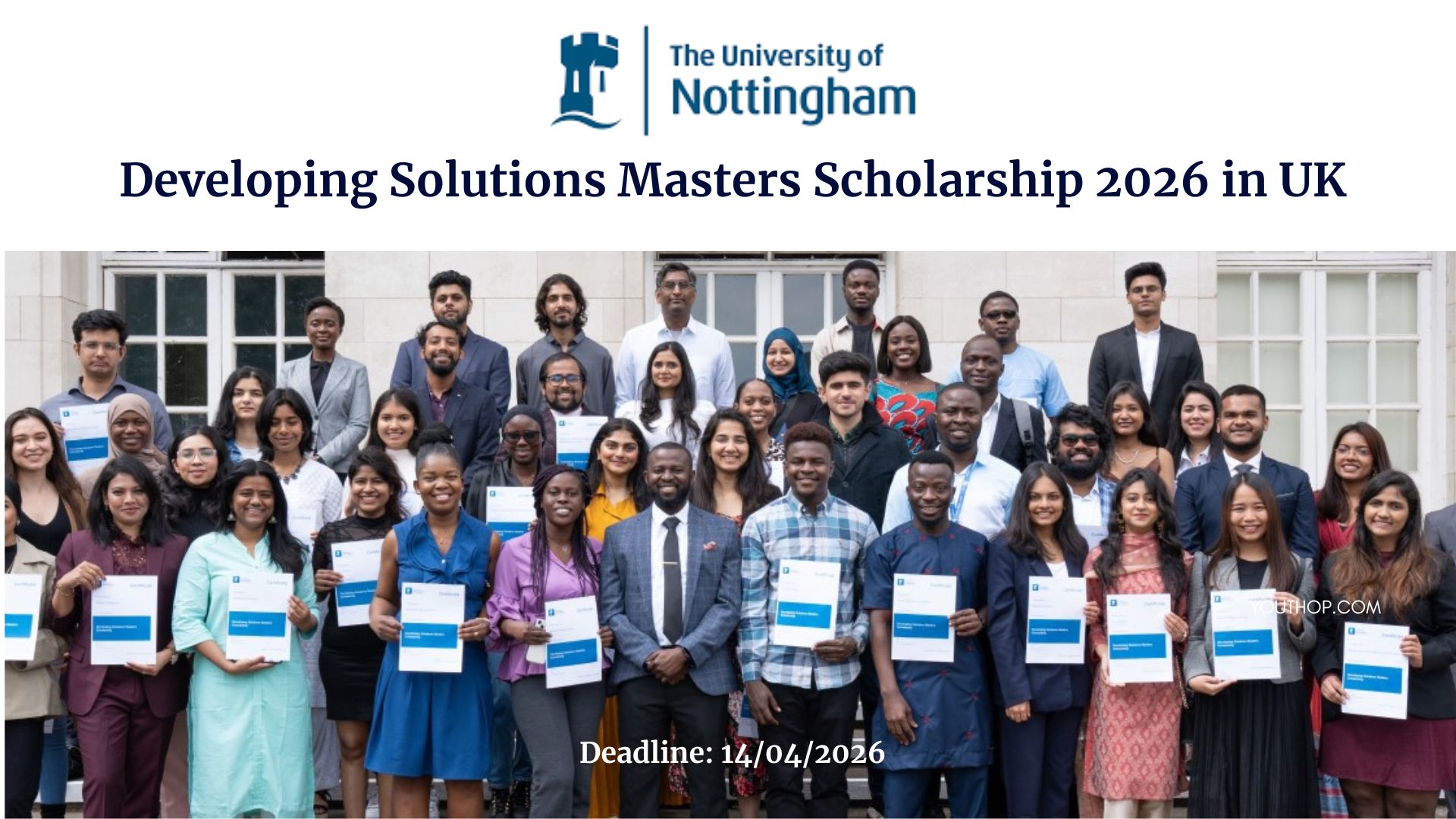
Strategic Application Preparation for 2026 Deadlines
Phase 1: Academic and Language Credential Verification
Most major scholarship committees begin accepting applications between August and November of the year preceding study (mid-to-late 2025 for 2026 entry). Applicants must prepare foundational documents early:
- Academic Transcripts: Request official, certified academic transcripts translated into English or the destination country's official language.
- Standardized Testing: Complete required standardized exams (such as IELTS Academic, TOEFL iBT, GRE, or GMAT) well before deadlines. Test scores generally take up to two weeks to report officially. Ensure score validity extends past the intake date.
- Credential Evaluation: Certain jurisdictions (such as the U.S. or Canada) may require formal credential evaluations through services like WES (World Education Services) to verify degree equivalency.
Phase 2: Drafting Impactful Personal Statements and Proposals
Fully funded scholarship panels review thousands of high-performing candidates. Differentiating an application requires aligning personal narrative with the grant's strategic goals.
SCHOLARSHIP ESSAY STRUCTURE
- Clear Career Vision & Problem Statement
- Alignment with Scholarship's Specific Objectives
- Concrete Evidence of Leadership / Academic Excellence
- Long-Term Impact Plan in Home Country or Global Domain
- Avoid Generic Statements: Replace statements like "I am passionate about public health" with specific project experiences: "While managing a rural sanitation initiative in 2024, I identified systemic gaps in municipal supply chains..."
- Demonstrate Mutual Benefit: Government awards (such as Chevening, Australia Awards, and Fulbright) evaluate candidates on diplomatic and developmental impact. Explain how your return home will foster bilateral trade, educational exchanges, or community development.
- Align with Institutional Faculty: For university-bound awards like Gates Cambridge or Swiss Government Excellence, identify target research supervisors, lab groups, or department publications directly in your proposal.
Phase 3: Securing Strong Academic and Professional References
Referees should provide specific, observed evaluations of your capability rather than generic praise.
- Select Appropriate Referees: Balance academic references (professors who can speak to technical abilities and academic rigor) with professional references (line managers who can verify leadership, teamwork, and project execution).
- Provide Reference Dossiers: Provide your referees with a dossier containing your updated CV, draft statement of purpose, transcript highlights, and the specific evaluation criteria of the scholarship. Allow referees at least four to six weeks before the submission deadline.
Common Application Pitfalls to Avoid
- Ignoring Mandatory Return Clauses: Applying for awards like Chevening or Australia Awards without a clear plan to return home results in immediate disqualification. Selection panels strictly enforce home-country contribution objectives.
- Applying to Unrelated Academic Programs: Your choice of master's degree must connect logically to your undergraduate background and long-term career goals. Sudden shifts in discipline require clear, justified explanations in your application essay.
- Applying at the Deadline: Submitting applications hours before portal closures frequently leads to submission failures due to server overload or missing mandatory attachments. Aim to submit applications 48 to 72 hours prior to the published deadline.
- Misrepresenting Work Experience: Programs like Chevening mandate exact calculations of post-graduate work hours. Exaggerating part-time hours or unverified volunteer work can lead to disqualification during audit phases.
Frequently Asked Questions
Can I apply for multiple global scholarships simultaneously?
Yes. Candidates can apply for multiple independent scholarship schemes (for example, applying to Chevening, Erasmus Mundus, and DAAD in the same cycle). However, if you receive multiple awards, you can only accept one full funding package due to dual-funding restrictions.
Do all master's scholarships require work experience?
No. Government-backed development awards like Chevening and DAAD EPOS require a minimum of two years of professional work experience. However, institutional and merit awards like Gates Cambridge, Rhodes, Erasmus Mundus, and MEXT primary evaluate academic performance and leadership potential, accepting applications directly from final-year undergraduate students.
What level of English language proficiency is required?
Requirements vary by host institution. Generally, top UK, US, and Australian programs require an IELTS Academic score of 6.5 to 7.5 overall (with no sub-band below 6.0) or a TOEFL iBT score of 90 to 100+. Certain non-English speaking destinations (such as DAAD programs taught in English) also accept verified English medium of instruction certificates, though standardized tests remain preferred.
What is the average age limit for international master's scholarships?
Most schemes (such as Chevening, Erasmus Mundus, Gates Cambridge, and Commonwealth) have no upper age limit. However, specific awards maintain age caps due to statutory regulations or bilateral agreements. For instance, MEXT research/master's candidates generally must be under 35 years old, and specific Rhodes constituencies enforce age ceilings between 24 and 28 years.
Are living stipends provided by scholarships taxable?
In most major host countries—including the United Kingdom, Germany, Japan, and Australia—official educational scholarship stipends provided to full-time international students are exempt from local income tax. However, scholars must check the specific tax treaties between their home country and the host nation.
Next Steps for 2026 Applicants
To maximize your chances of securing full funding for 2026 master's programs:
- Identify Target Awards: Match your profile against the funding criteria in the comparison table above. Select 3 to 4 complementary scholarships that align with your background.
- Audit Prerequisites: Confirm English language test score requirements, degree credential evaluations, and work experience hours well before deadlines open.
- Build a Master Calendar: Map out application opening dates, university application windows, and reference submission deadlines between mid-2025 and early 2026.
- Draft Core Materials: Prepare a universal curriculum vitae (CV) tailored to international standards (such as Europass or standard academic CVs) and outline your foundational leadership essays.
Image Gallery
Select an image to open it in a new tab.


Omar Farooq
EdTech Innovation and Virtual Pedagogy Journalist
