Understanding the Definition of Stereotype in Society: Origins, Impacts, and Evolution

A stereotype is a generalized and oversimplified belief or mental representation applied to an entire group of people, disregarding individual differences. In society, these cognitive shortcuts function as a way for the brain to process complex social information quickly, though they frequently lead to inaccurate assumptions, prejudice, and systemic discrimination.
Defining the Stereotype: More Than Just a Generalization
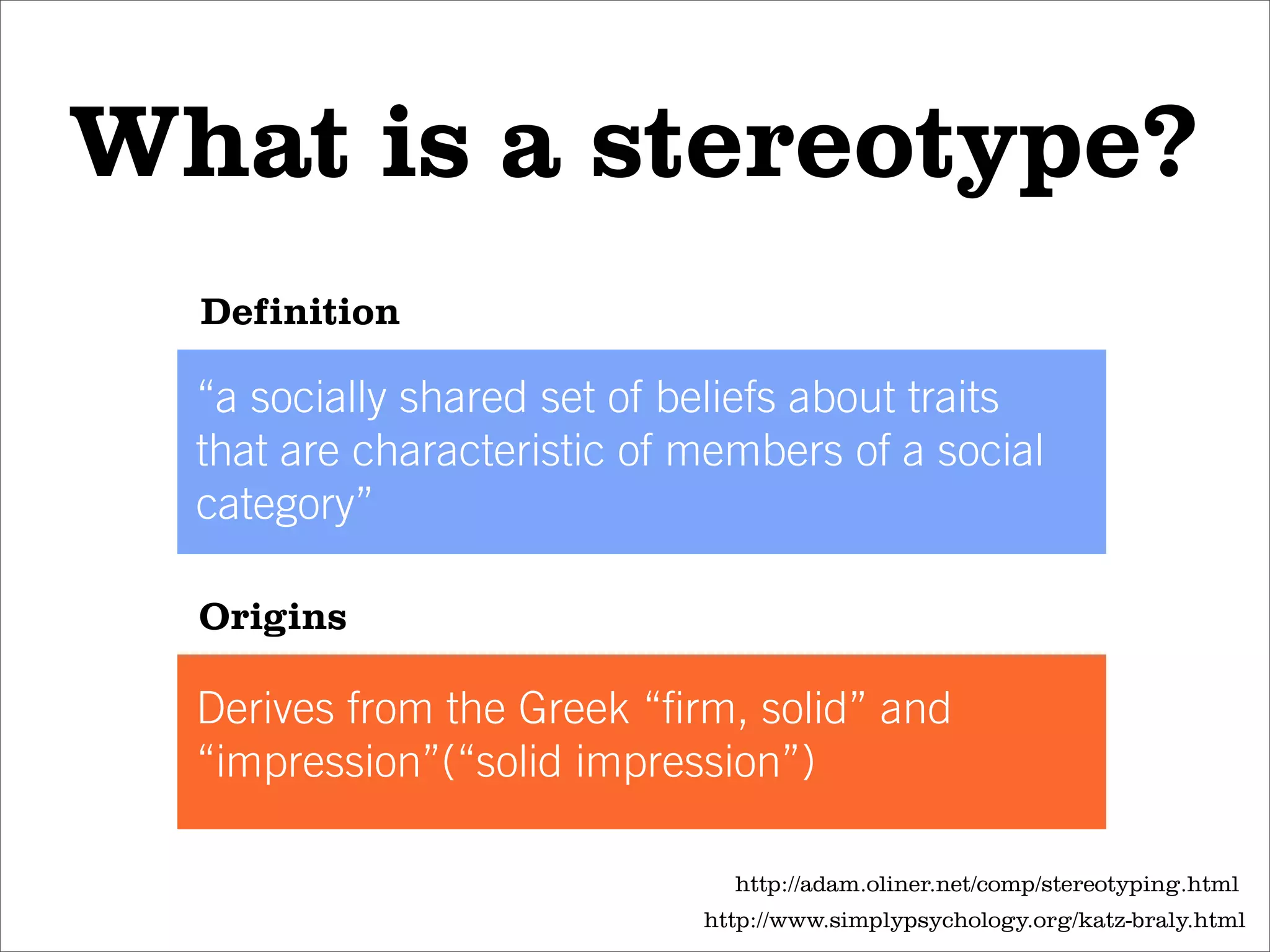
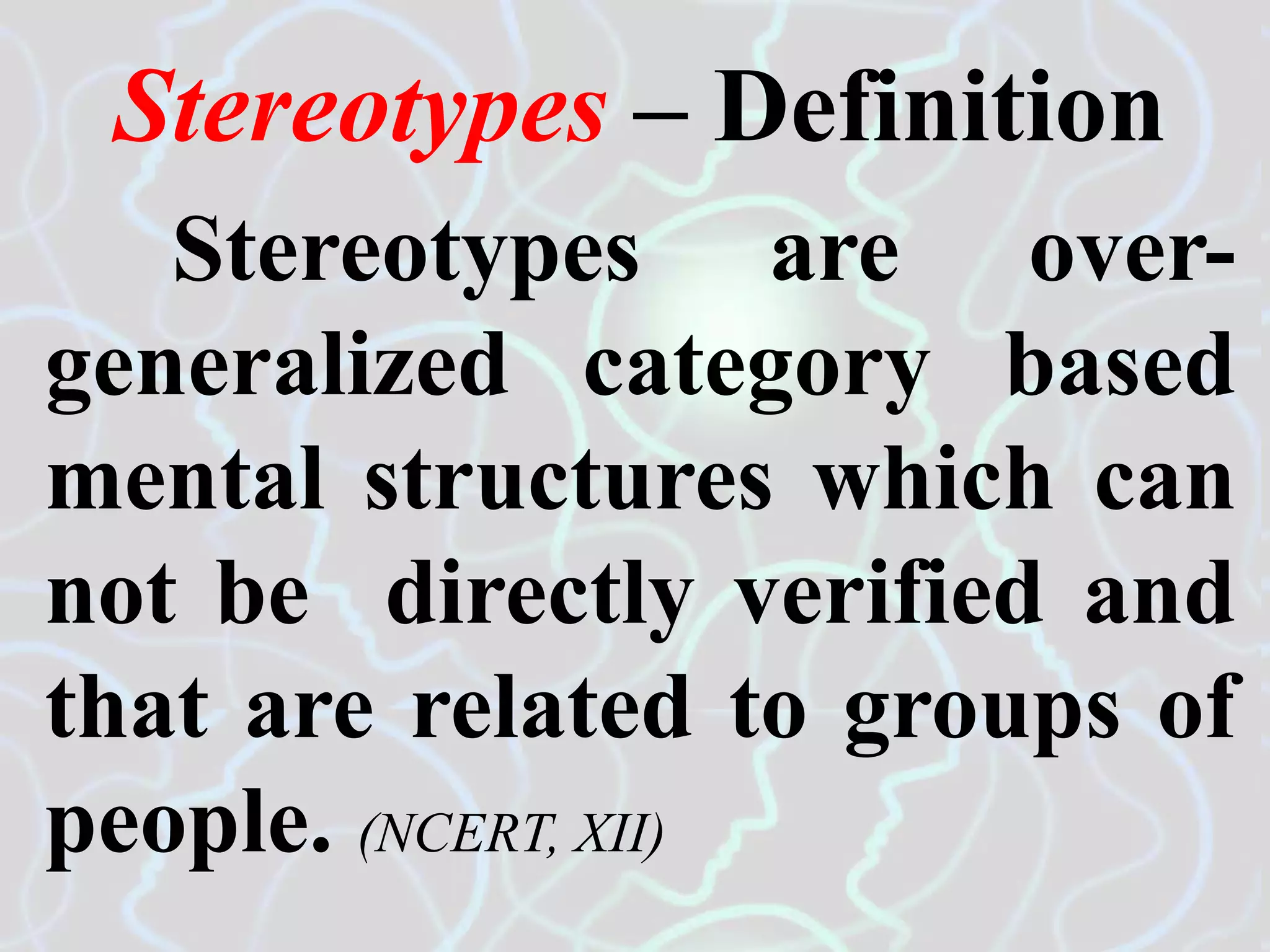
To understand the definition of a stereotype in society, one must first look at its etymological and psychological foundations. The term "stereotype" originates from the Greek words stereos (solid) and typos (impression). Originally used in the printing industry to describe a solid plate of type used for printing multiple copies, the term was adapted into the social sciences by journalist Walter Lippmann in his 1922 book, Public Opinion. Lippmann described stereotypes as "pictures in our heads" that allow us to navigate a world far too complex for direct, detailed perception.
In a modern 2026 sociological context, a stereotype is defined as a cognitive framework consisting of knowledge and beliefs about specific social groups. While the term is often associated with negative traits, stereotypes can also be positive or neutral. However, even "positive" stereotypes—such as the belief that certain ethnic groups are naturally gifted at mathematics—are considered reductive and harmful because they strip individuals of their unique identities and place undue pressure on members of those groups to conform to narrow expectations.
Stereotypes operate at the intersection of psychology and sociology. Psychologically, they are a form of social categorization. Sociologically, they are tools of power and social maintenance, often used to justify existing hierarchies or to differentiate the "in-group" (the group to which an individual belongs) from the "out-group" (those perceived as different).
The Cognitive Roots: Why the Human Brain Stereotypes
The human brain is a biological engine designed for efficiency. In 2026, cognitive scientists continue to emphasize that stereotyping is a byproduct of how we manage "cognitive load." Because we are bombarded with millions of bits of information every second, our brains utilize heuristics—mental shortcuts—to make quick decisions.
Social Categorization and the Out-group Homogeneity Effect
Social categorization is the process by which we group individuals based on shared characteristics such as age, gender, race, or profession. Once a category is formed, the brain naturally tends to exaggerate the similarities within that group while exaggerating the differences between that group and our own. This leads to the out-group homogeneity effect, where we perceive members of other groups as being "all the same," while viewing our own group as diverse and complex.
Schema Theory
Stereotypes function as "schemas"—mental structures that help us organize knowledge. When we encounter a new person, our brain automatically activates the schema associated with their perceived group. This process happens in milliseconds and often occurs without conscious awareness. For example, if a person has a schema that "librarians are quiet," they will likely expect a librarian they meet to be soft-spoken, even before the individual speaks a single word.
Socio-Cultural Construction: How Stereotypes Are Formed
Stereotypes are not innate; they are learned behaviors and beliefs. The construction of these "pictures in our heads" begins in early childhood and is reinforced throughout an individual’s life by several primary agents of socialization.
Family and Peer Influence
Children often adopt the biases and generalizations of their primary caregivers. Observations of how parents react to certain groups, or the jokes told within a peer circle, provide the initial "data points" for a child's developing social schemas. By the time a child reaches school age, they often have a firm grasp on the prevailing stereotypes of their culture.
Media and Digital Algorithms
In 2026, the role of media in shaping stereotypes has transitioned from traditional broadcasting to algorithmic curation. Digital platforms often amplify stereotypical content because it triggers high engagement. Whether through "rage-bait" videos or AI-generated imagery that relies on training data filled with historical biases, the digital environment can reinforce narrow definitions of groups. When users are repeatedly exposed to specific portrayals—such as the depiction of certain neighborhoods as dangerous or specific professions as gendered—these associations become deeply ingrained.
The "Kernel of Truth" Hypothesis
Some sociologists discuss the "kernel of truth" hypothesis, which suggests that some stereotypes may have originated from a small, observable statistical reality. However, the danger lies in the fact that stereotypes take a specific observation and apply it universally, ignoring the socio-economic and historical reasons why that observation might exist. For instance, if a specific group is stereotyped as being "impoverished," the stereotype ignores the systemic barriers and historical policies that contributed to that economic status, instead attributing the trait to the group’s inherent nature.
Distinguishing Key Concepts: Stereotype, Prejudice, and Discrimination
It is essential to distinguish between these three often-conflated terms to understand the full impact of stereotyping on society.
| Term | Domain | Definition | Example |
|---|---|---|---|
| Stereotype | Cognitive (Thoughts) | A generalized belief or mental picture about a group. | Thinking that all older adults are bad with technology. |
| Prejudice | Affective (Feelings) | An unjustifiable (usually negative) attitude toward a group. | Feeling annoyed or impatient when seeing an older adult at a computer. |
| Discrimination | Behavioral (Actions) | Unfair treatment of individuals based on their group membership. | Refusing to hire a qualified 70-year-old for an IT position. |
This table illustrates that while a stereotype is a thought, it provides the "justification" for prejudice (the feeling) and discrimination (the action). One can hold a stereotype without acting on it, but the presence of the stereotype makes the leap to unfair behavior significantly easier.
The Psychological Impact of Stereotyping
The existence of stereotypes has profound consequences for those who are targeted by them. Two of the most significant phenomena in this area are Stereotype Threat and Self-Fulfilling Prophecies.
Stereotype Threat
Identified by social psychologists Claude Steele and Joshua Aronson in the 1990s, stereotype threat occurs when individuals are at risk of confirming negative stereotypes about their social group. When a person is in a situation where a stereotype is relevant (e.g., a woman taking a high-stakes math exam), the anxiety of potentially proving the stereotype true consumes "working memory" and cognitive resources. This leads to a decrease in performance, which ironically "confirms" the stereotype in the eyes of observers. In 2026, research in educational psychology continues to seek ways to mitigate this threat through "identity-safe" environments.
The Pygmalion Effect (Self-Fulfilling Prophecy)
This occurs when an observer’s expectations of a person lead that person to behave in ways that confirm those expectations. If a teacher believes a student from a certain background is less capable (a stereotype), they may unconsciously provide less challenging material or less frequent feedback. The student, receiving less support, performs poorly, thereby "confirming" the teacher’s initial stereotyped belief.
Stereotypes in the Digital Age: AI and Algorithmic Bias
As we navigate 2026, the definition of stereotype in society has expanded to include "algorithmic stereotyping." Artificial Intelligence models are trained on vast datasets of human-generated text and images. Because these datasets contain historical and cultural biases, the AI often replicates and even intensifies stereotypes.
For example, when asked to generate an image of a "CEO," many AI models predominantly produce images of middle-aged white men. When asked to generate an image of a "criminal," they may disproportionately produce images of people from marginalized racial groups. This is a technical manifestation of human stereotyping, where the "solid impression" is now written in code. The danger here is that because AI is often viewed as "objective," these reinforced stereotypes can be more difficult to challenge than those held by a single human being.
Strategies for Mitigating the Harm of Stereotypes
While stereotyping is a natural function of the human brain's need for efficiency, its harmful effects can be mitigated through conscious effort and systemic change.
The Contact Hypothesis
Proposed by Gordon Allport, the contact hypothesis suggests that under the right conditions, contact between members of different groups can reduce prejudice and stereotyping. For this to work, the groups must have equal status, common goals, and support from local authorities or laws. Meaningful interaction allows individuals to see each other as humans rather than as representatives of a category.
Individuation
Individuation is the process of consciously focusing on the specific traits and qualities of an individual rather than their group membership. This requires moving from "System 1" (fast, intuitive, stereotypical) thinking to "System 2" (slow, analytical, effortful) thinking. By asking, "What do I actually know about this specific person?" rather than "What do I think I know about their group?", individuals can break the cycle of automatic stereotyping.
Counter-Stereotypic Imaging
Actively seeking out information and images that contradict common stereotypes can help "rewire" the brain’s schemas. For example, following social media accounts that showcase diversity in fields like STEM, nursing, or stay-at-home parenting can help neutralize the traditional gender and racial stereotypes associated with those roles.
FAQs about Stereotypes in Society
Are all stereotypes negative?
No, some stereotypes are considered "positive" (e.g., "Asian students are good at math" or "Athletes are disciplined"). However, they are still harmful because they ignore individual variation, create "model minority" pressures, and can lead to resentment or exclusion when an individual does not meet the stereotyped expectation.
Can we ever fully stop stereotyping?
Because stereotyping is a byproduct of basic cognitive categorization, it is unlikely that the human brain will stop using these shortcuts entirely. However, we can become aware of our "implicit biases"—the stereotypes we hold unconsciously—and take steps to ensure they do not influence our behavior or decision-making processes.
What is the difference between a stereotype and a generalization?
A generalization is a starting point used to understand a group based on data (e.g., "Statistically, more women enter nursing than men"). A stereotype is an ending point where the generalization is applied to every single individual within that group regardless of facts (e.g., "She is a woman, so she must want to be a nurse").
How do stereotypes affect mental health?
Being the target of persistent stereotyping can lead to "minority stress," which is associated with higher levels of anxiety, depression, and physical health issues. It can also lead to "internalized oppression," where a person begins to believe the negative stereotypes about their own group.
How does the "Model Minority" stereotype hurt people?
The "Model Minority" stereotype, often applied to Asian Americans, suggests that a group has achieved universal success through hard work. This hides the struggles of low-income individuals within that group, ignores the diversity of experiences among different sub-groups, and is often used as a "wedge" to downplay the systemic racism faced by other marginalized groups.
Final Recommendation for Navigating a Stereotyped World
Understanding the definition of a stereotype in society is the first step toward reducing its influence. In 2026, as we live in an increasingly interconnected and algorithm-driven world, the responsibility falls on the individual to practice intellectual humility.
Recognize that your first impression of a person is likely influenced by a lifetime of cultural conditioning and cognitive shortcuts. Practice "active individuation" by seeking out the unique story of every person you meet. In professional settings, advocate for "blind" review processes and diverse hiring panels to counteract the systemic effects of implicit bias. By moving beyond the "solid impression" of the stereotype, we can foster a society that values the complex reality of the individual over the simplified fiction of the group.
Image Gallery
Select an image to open it in a new tab.


Lars Thomsen
Global Labor Markets and Economic Strategy Editor
